4 Days in Barcelona: The Perfect Itinerary
Affiliate disclosure: This post contains affiliate links. If you book or buy something through these links, I may earn a small commission at no extra cost to you. I only recommend things I genuinely use or believe in. Learn more.
Barcelona didn’t ease us in gently. We stepped off the plane and the city just — hit. The warmth, the noise, the scale of it, the way every street seems to lead somewhere worth stopping for. Four days felt like the right amount of time: enough to see the things we came for, enough to get genuinely lost in a neighborhood, enough to sit down for a proper dinner without watching the clock.
If you’re still sorting the logistics — flights, accommodation, travel insurance — our complete trip planning guide covers all of it in one place before you start spending money on anything.
| 4 Days in Barcelona: The Perfect Itinerary Quick Summary | |
|---|---|
| Best time to visit | May–June or September–October — same experience, 25–30% lower prices |
| How many days | 4 days minimum; 5 if you want one genuinely slow day |
| Best base | Eixample — walkable, great metro access, excellent restaurants |
| Getting around | Metro + walking; T-Casual 10-trip card (€12.15) covers everything |
| Don’t miss | Sagrada Família, Passeig de Gràcia, Gothic Quarter, Montserrat |
| Book in advance | Sagrada Família, Casa Batlló, Casa Milà — all sell out weeks ahead |
Table of Contents
Before you go — quick links
- Flights — Google Flights or Skyscanner — fly into Barcelona (BCN)
- Hotels — browse Barcelona hotels on Booking.com
- Tickets — Sagrada Família, Casa Batlló and Montserrat on Viator
- Travel card — Wise — works like a local card in Barcelona
- eSIM — Holafly Spain eSIM (code MILESANDFLAVORS for a discount) — set up before you fly
- Insurance — EKTA — covers theft and medical abroad
Quick Tips for Barcelona
Where to Stay
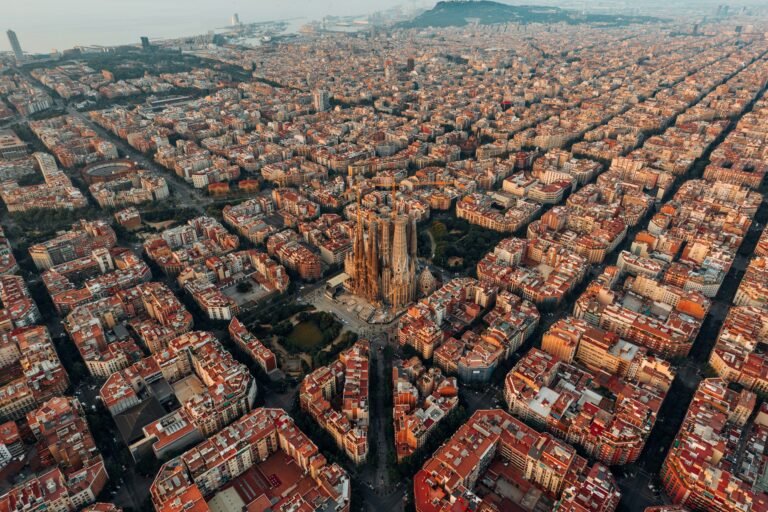
We stayed in Eixample and would make the same call again — it puts you walking distance from the Gaudí buildings, has excellent metro connections to every other neighborhood, and feels like a real part of the city after 8pm rather than a tourist zone. The Gothic Quarter has more atmosphere but more noise at night; El Born is better for a second visit. For our full neighborhood breakdown with honest pros and cons, see our Barcelona accommodation guide.
- Luxury (€180–300+/night): The upper end of Eixample and the Passeig de Gràcia corridor has some of the finest hotels in the city — boutique properties with rooftop pools and the Gaudí buildings visible from the terrace. Browse luxury Barcelona hotels on Booking.com.
- Mid-range (€100–170/night): The sweet spot for Eixample. Solid 3- and 4-star hotels within walking distance of the main sights, with real neighborhood restaurants outside the door. This is where we stay. Browse mid-range Barcelona hotels on Booking.com.
- Budget (€65–95/night): Gràcia and the outer Eixample have the best budget options — a metro stop further from the sights but genuinely local neighborhoods with good value accommodation. Browse budget Barcelona hotels on Booking.com.
Pro tip: Always book free cancellation. Barcelona hotel prices shift regularly — especially seasonally — and rebooking at a lower rate a few weeks before arrival has saved us real money more than once.
Book Before You Arrive
Barcelona rewards advance planning. The Gaudí buildings sell out weeks ahead in peak season, and the Montserrat rack railway goes fast in summer. Book these before anything else:
- Sagrada Família is the single most important booking you’ll make for Barcelona — walk-up queues run 2–3 hours in peak season and tickets do sell out. Book the Nativity Tower access when you do. Book your Sagrada Família tickets here.
- Casa Batlló is the most theatrical of the Gaudí buildings to visit inside — immersive, dramatic, and genuinely unlike anything else. It sells out. Book your Casa Batlló tickets here.
- Casa Milà (La Pedrera) — the rooftop alone justifies the visit. Warrior chimneys, 360-degree city views, and afternoon light that makes it one of the best photo spots in the city. Book your Casa Milà tickets here.
- The Montserrat rack railway sells out in summer — missing the morning train means losing two hours of daylight on the mountain. Book the night before at the latest. Book your Montserrat rack railway tickets here.
- A guided Sagrada Família tour gives you context that the audio guide alone doesn’t — the symbolism and the construction story make the building even more extraordinary. See Sagrada Família guided tour options here.
Your 4 Days in Barcelona: Overview
- Day 1: Eixample — Sagrada Família, Passeig de Gràcia, Casa Milà, Casa Batlló, neighborhood dinner
- Day 2: Gothic Quarter, La Boqueria, La Rambla, Barceloneta beach, terrace cocktails
- Day 3: Montjuïc — MNAC, viewpoints, Olympic area, Magic Fountain evening show
- Day 4: Montserrat full day — mountain, monastery, Basilica, hiking trails
Day 1: Eixample and the Gaudí Buildings
We gave the first day to Eixample and the buildings that make Barcelona unmistakable. Start early — the city is a different place before 10am, and the Gaudí buildings in particular are worth every minute of an early start.
Morning: Sagrada Família
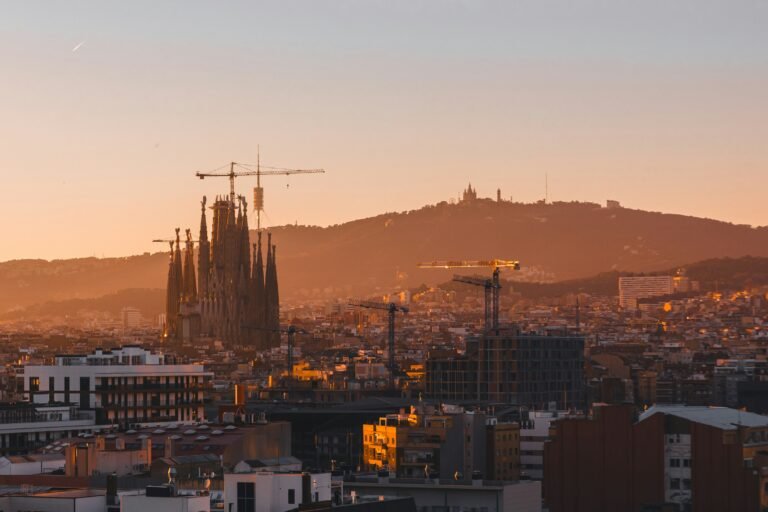
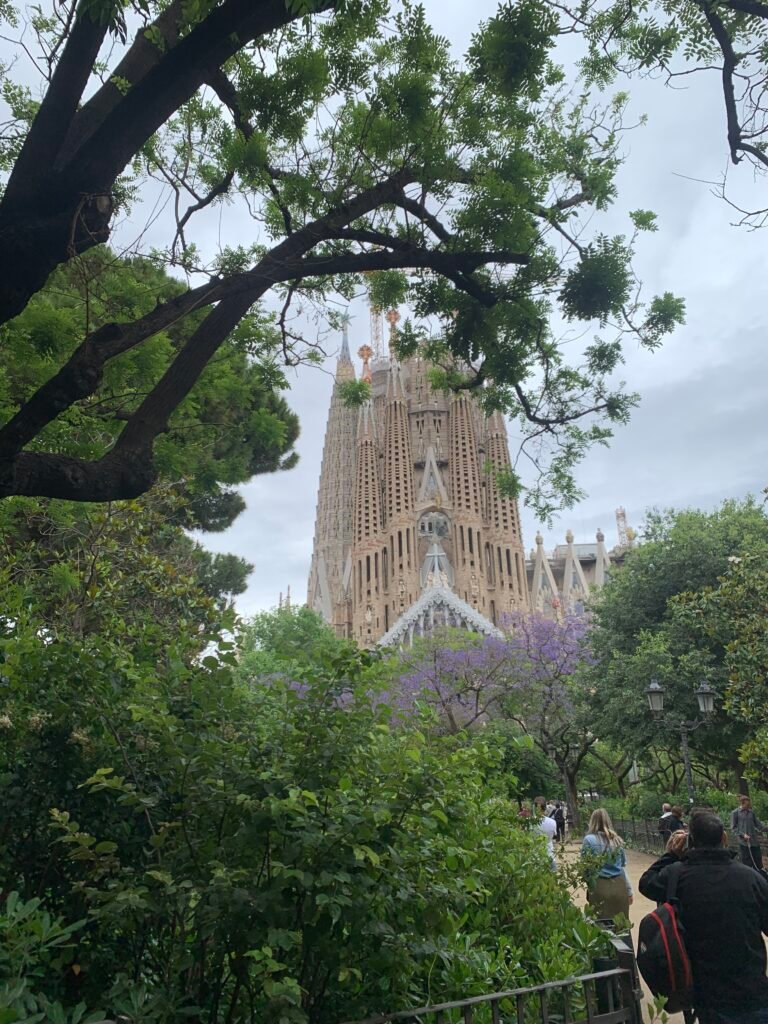
We arrived at 9am on a weekday and had almost an hour before the tour groups descended. I’d read about Sagrada Família, I’d seen the photos, and it still wasn’t enough preparation. The exterior is extraordinary — the Nativity and Passion facades look like they were designed by different civilizations, because in a sense they were. But the interior is something else entirely. The columns branch like trees, the light comes through the stained glass in colors that shift as the morning progresses, and the scale of it only hits you properly when you’re standing inside it.
- Price: From €26 with audio guide; tower access extra and worth it
- Time needed: 1.5–2 hours minimum
- Best time: Opening (9am) or after 5pm
- Book in advance: Sagrada Família tickets via Viator
- Pro tip: Add the Nativity Tower — better views than the Passion side and worth the extra cost
- With kids: Very manageable — even floors, steady queues, and the interior is less echo-loud than you’d expect. Use the app instead of renting the audio guide so you keep your hands free
Afternoon: Passeig de Gràcia, Casa Milà, and Casa Batlló
Walk down Passeig de Gràcia from Sagrada Família. The boulevard itself deserves to be taken slowly — it’s one of the most beautiful streets in Europe, and between the famous Gaudí buildings there are other Modernista masterpieces that most people walk straight past without noticing.
Casa Milà (La Pedrera) — The rooftop is the reason to go. Those chimney warriors against the Barcelona skyline are one of those images that’s everywhere and still manages to be better in person. We went in the late afternoon and the light on the rooftop was genuinely beautiful. The apartment floor below gives real insight into what Gaudí thought a home should feel like — which turns out to be nothing like a normal home.
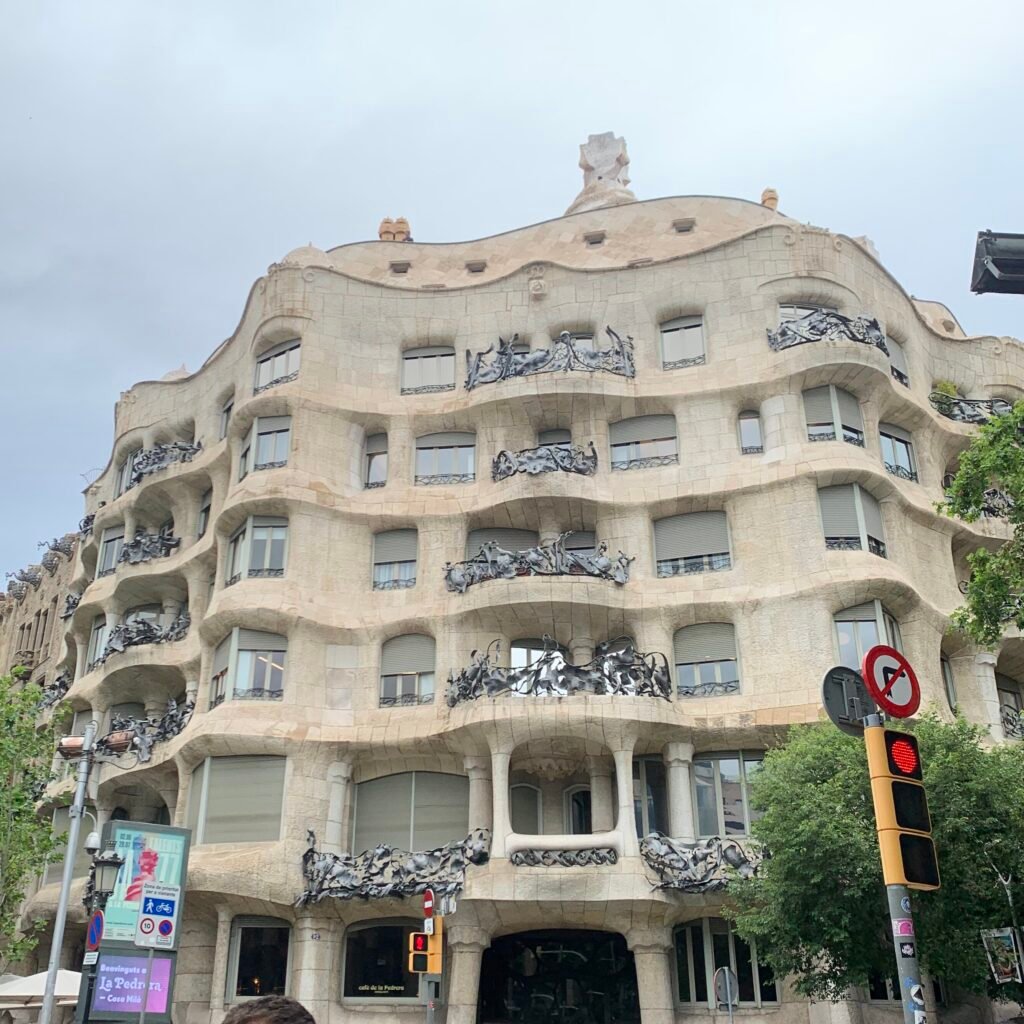
- Price: From €25 | Time needed: 1.5 hours
- Book: Casa Milà tickets via Viator
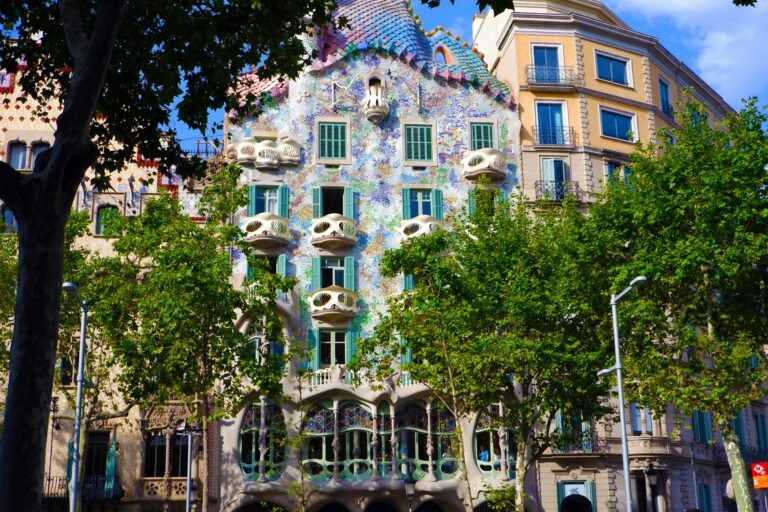
Casa Batlló — The facade stops people mid-stride. Blue and green ceramic scales, balconies shaped like bone, a roofline that reads as a dragon’s back in the right light. If you’re choosing one building to go inside, Casa Batlló’s immersive experience is the more theatrical of the two. If budget is the question, 20 minutes on the pavement outside is still worth the stop — the exterior alone justifies it.
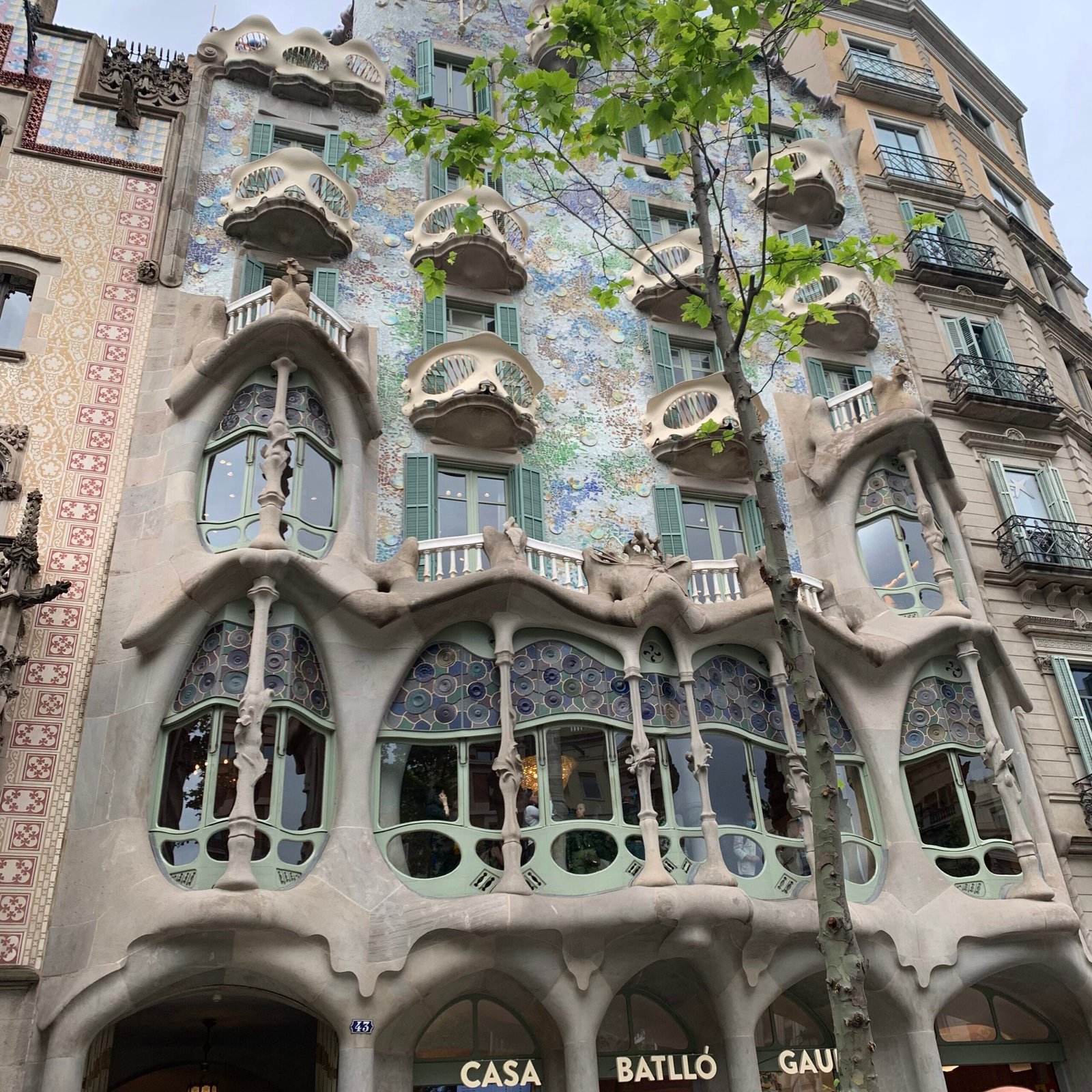
- Price: From €35 | Time needed: 1–1.5 hours
- Book: Casa Batlló tickets via Viator
Evening: Dinner in Eixample
The streets around Carrer d’Enric Granados — the pedestrianized street with the long park running down the middle — have some of the best restaurants in the city. Walk two blocks off Passeig de Gràcia and the prices drop while the quality stays. We had a proper Catalan dinner for €38 for two with wine. Not a tourist restaurant, not a fancy address — just a neighborhood place that happened to be excellent.
Day 2: Gothic Quarter, La Boqueria, and Barceloneta
Morning: Gothic Quarter
The Gothic Quarter doesn’t require a plan — and that’s precisely the point. Give it a full morning and just walk. Every alley leads somewhere: a hidden plaza, a Roman wall fragment, a church that’s been standing for 600 years. We spent three hours here and felt like we’d only started. The Barcelona Cathedral is free before 12:30pm and worth going inside; the real find is the cloister, where a flock of white geese has apparently lived for centuries. Strange, quiet, and completely unforgettable.
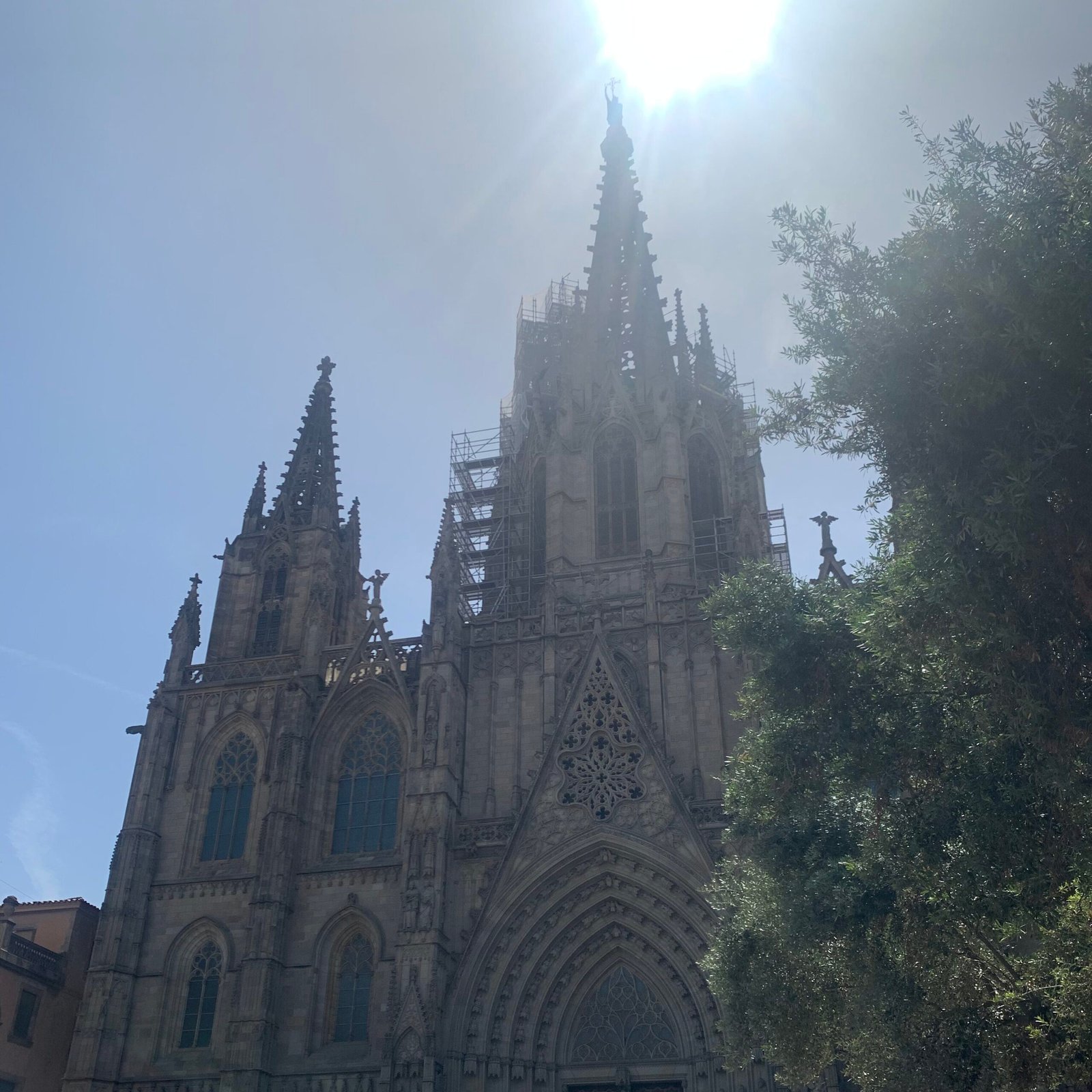
- Price: Free to explore; Cathedral free before 12:30pm
- Best time: Before 10am — the crowds haven’t arrived yet
- Time needed: 2–3 hours minimum
Late Morning: La Boqueria
Ten minutes’ walk from the Gothic Quarter brings you to La Boqueria on La Rambla. Go for the experience — the color, the chaos, the stacked seafood and hanging jamón. But eat at the stalls toward the back of the market, not the front counters facing the street. We had excellent seafood tapas for €13 per person. The fruit stands near the entrance charge tourist prices; the coffee bars at the back don’t.
- Price: Free entry | Best time: Before 11am or after 3pm
Afternoon: La Rambla and Barceloneta Beach
Walk the full length of La Rambla — Plaça de Catalunya down to the Columbus Monument at the port. It’s more touristy than it used to be and everyone knows it, and it’s still worth doing once for the sheer energy of the thing. Keep your bag in front of you.
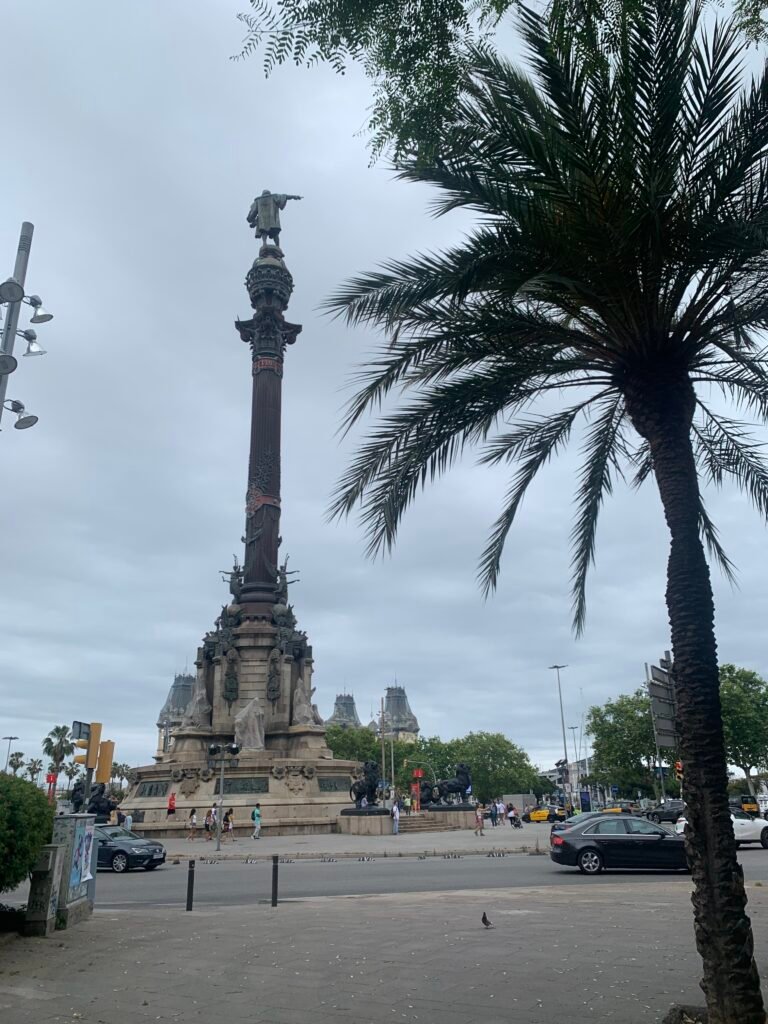
From there, head east to Barceloneta. We spent the afternoon at the beach. The Mediterranean in May is cold — genuinely cold — but the experience of lying by the sea in the middle of a major European city is one of those things that reminds you why you travel. The beach is wide, clean, and very much the city’s living room in summer. One practical note: the seafood restaurants along the beachfront strip are expensive and mostly average. Walk one street back and you’ll find better food for noticeably less.
Evening: Cocktails on a Terrace
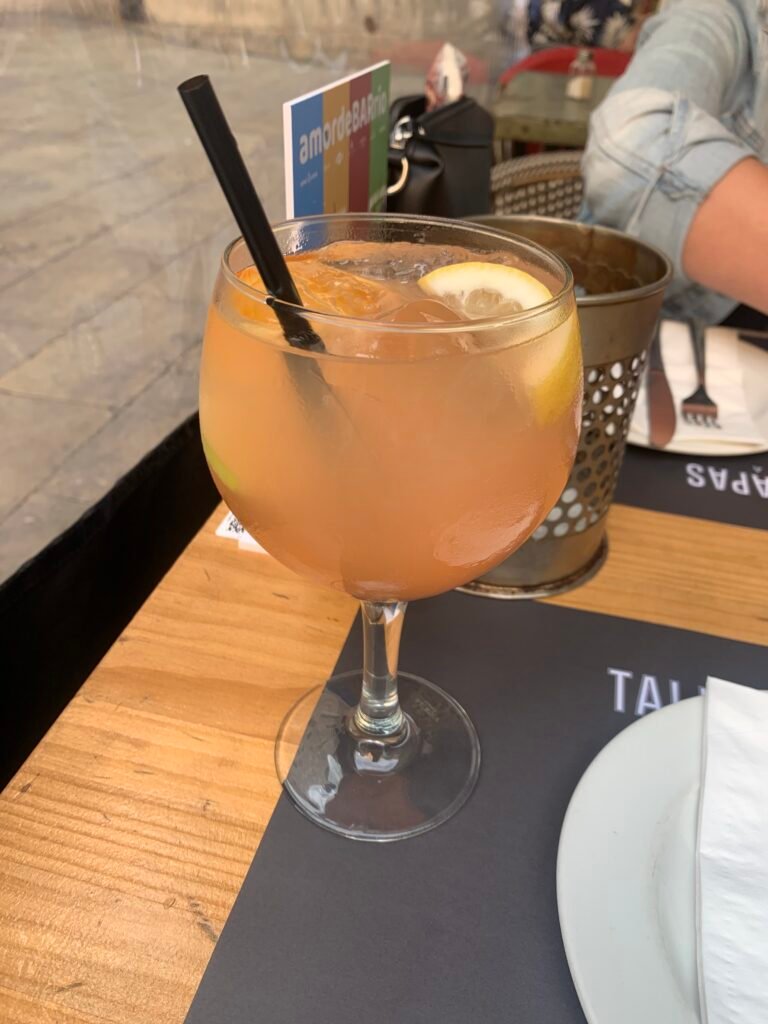
Sangría
Barcelona’s terrace bars come alive around 7pm. Eixample has the most concentrated selection. Dinner doesn’t happen before 9pm here — which takes some adjustment and then quickly feels like the only sensible way to live. Budget €10–15 per cocktail in a mid-range spot.
Day 3: Montjuïc
Montjuïc is the hill above the port, and it holds considerably more than most visitors give it credit for. We gave it a full day and it didn’t feel rushed.
Morning: MNAC
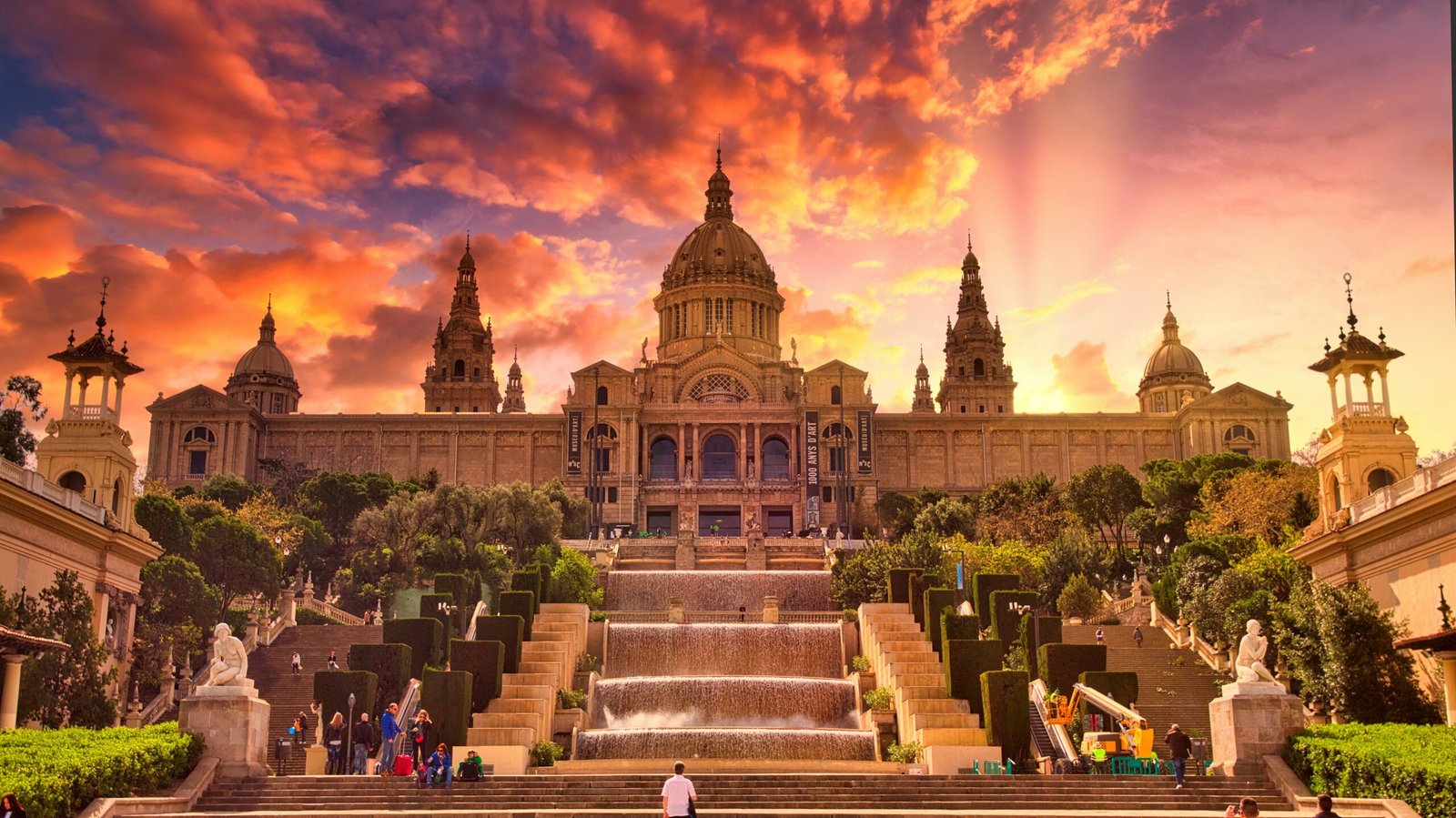
The Museu Nacional d’Art de Catalunya is one of the most dramatically situated buildings in Europe — a domed palace from the 1929 International Exposition, approached via a long cascade of fountains and stairs. The Romanesque art collection inside is world-class. Even if art museums aren’t your priority, the view from the terrace looking back over the city is worth the climb alone.
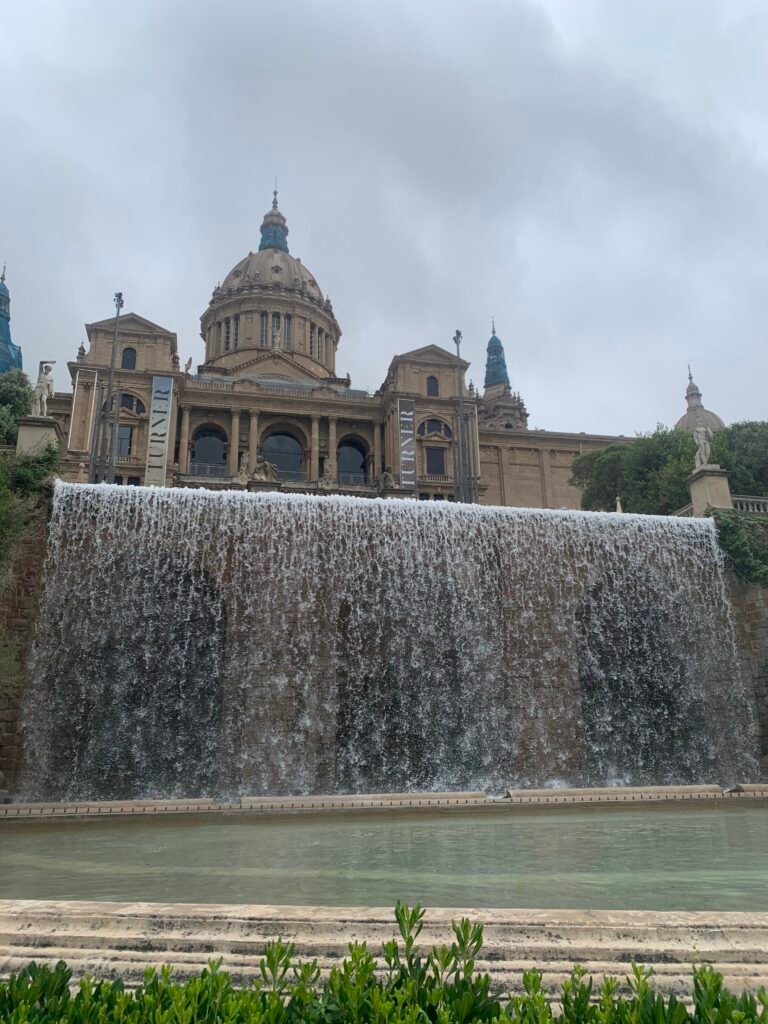
- Museum entry: €12 | Exterior and terrace: Free | Time needed: 1.5–2 hours inside; 30 minutes for the exterior alone
Afternoon: Viewpoints and Montjuïc Castle
From MNAC, walk or take the cable car up to Montjuïc Castle. The views over the port and out toward the Mediterranean are genuinely impressive, and the castle itself is worth 45 minutes. The Funicular de Montjuïc from Paral·lel metro station covers the climb if you’d rather save the legs — it’s included in the T-Casual metro card.
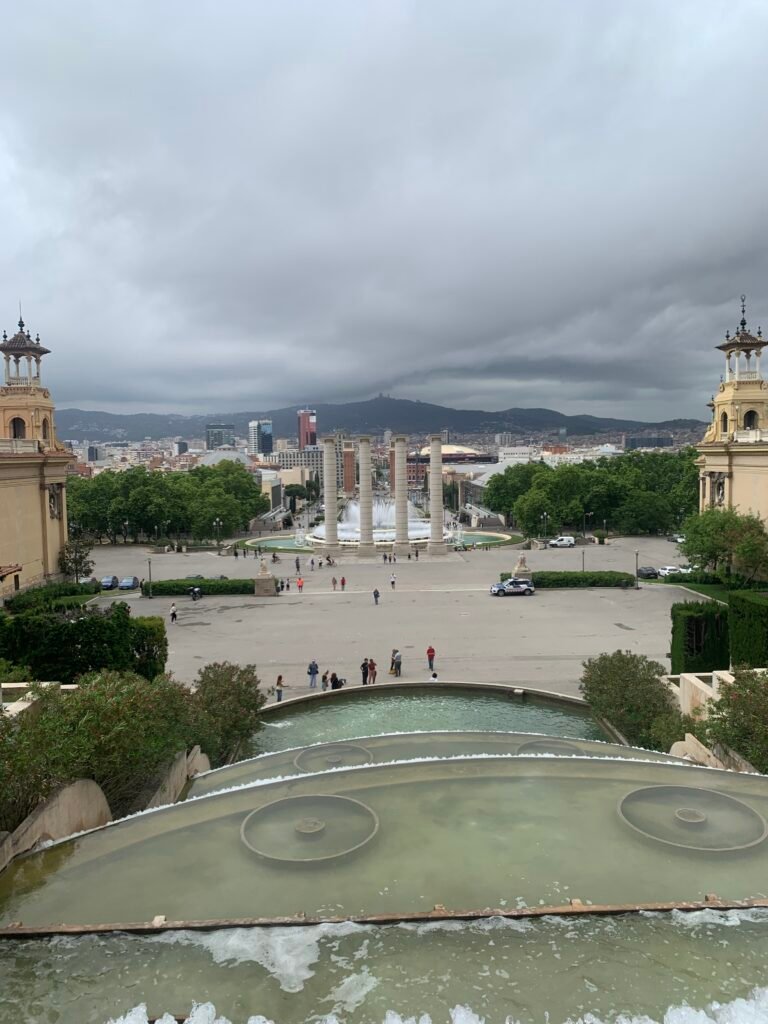
- Funicular: Included in T-Casual card | Castle entry: €5
Evening: Magic Fountain of Montjuïc
Thursday to Sunday evenings from May through October, the Magic Fountain at the base of MNAC puts on a free light and music show. We’d seen photos and still weren’t quite prepared for how good it actually is. Arrive 20 minutes early for a good spot — it draws a crowd. We watched from the steps of MNAC, which gives an elevated view of the full display and made for one of the genuinely memorable evenings of the trip.
- Price: Free | Season: May–October, Thursday–Sunday evenings | Duration: ~25–30 minutes per show
Day 4: Montserrat Day Trip
Montserrat was the part of the itinerary I was least certain about including. It felt like it might be one stop too many for four days. It wasn’t. It ended up being one of the best days of the entire trip.
The mountain looks impossible from a distance — vertical rock faces rising out of the Catalan countryside, a monastery clinging to the side of it at 700 meters. Then you’re there, and it somehow exceeds the image.
Getting there: FGC train from Plaça Espanya to Monistrol de Montserrat (about 1 hour), then the rack railway (cremallera) up to the monastery. Total cost: around €25–30 round trip. The first train leaves Barcelona at 8:36am — take it. We took the 9:30am and regretted losing an hour of morning calm on the mountain. Book your Montserrat rack railway tickets here.
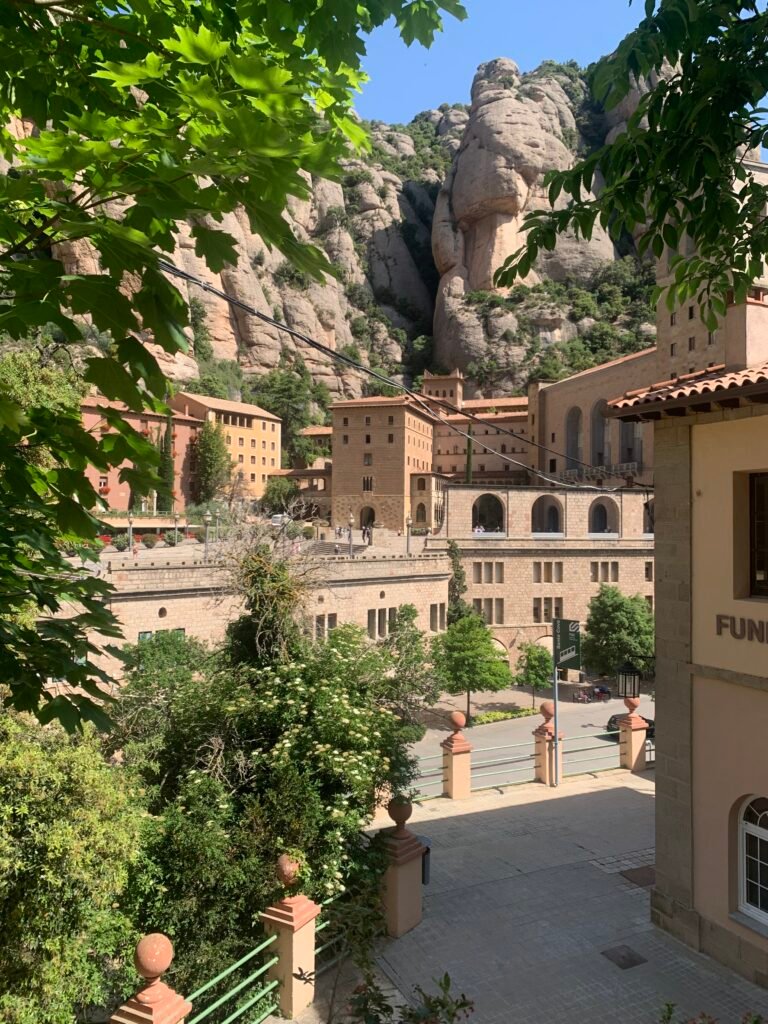
The Monastery and Basilica
The Basilica is free to enter and beautiful — Romanesque and Gothic elements, and a sense of genuine religious life that you don’t get in many monastery-as-attraction settings. The line to see La Moreneta (the Black Madonna) moves steadily. Don’t skip it.
- Basilica entry: Free | Best time to arrive: Before 11am or after 3pm | Time needed: 1 hour
The Trails and Views
The Sant Joan trail above the monastery takes about an hour up and rewards you with views that feel genuinely remote — remarkable for somewhere an hour by train from a major city. The rock formations this close are strange and beautiful in a way that no photograph quite captures.
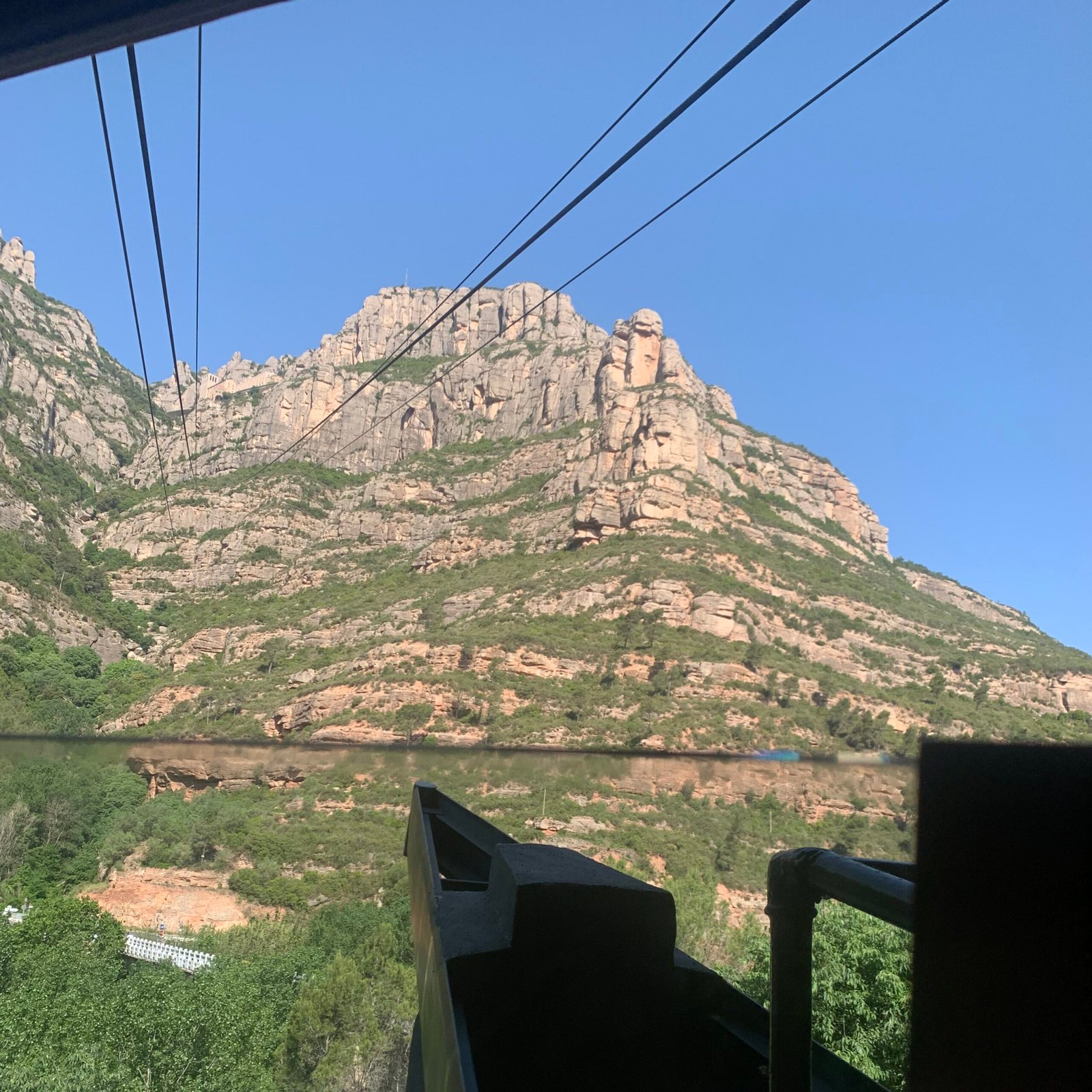
- Sant Joan trail: Free | Time: 1 hour up, 45 minutes down | Tip: Proper shoes — the path is rocky in places
What to Eat in Barcelona
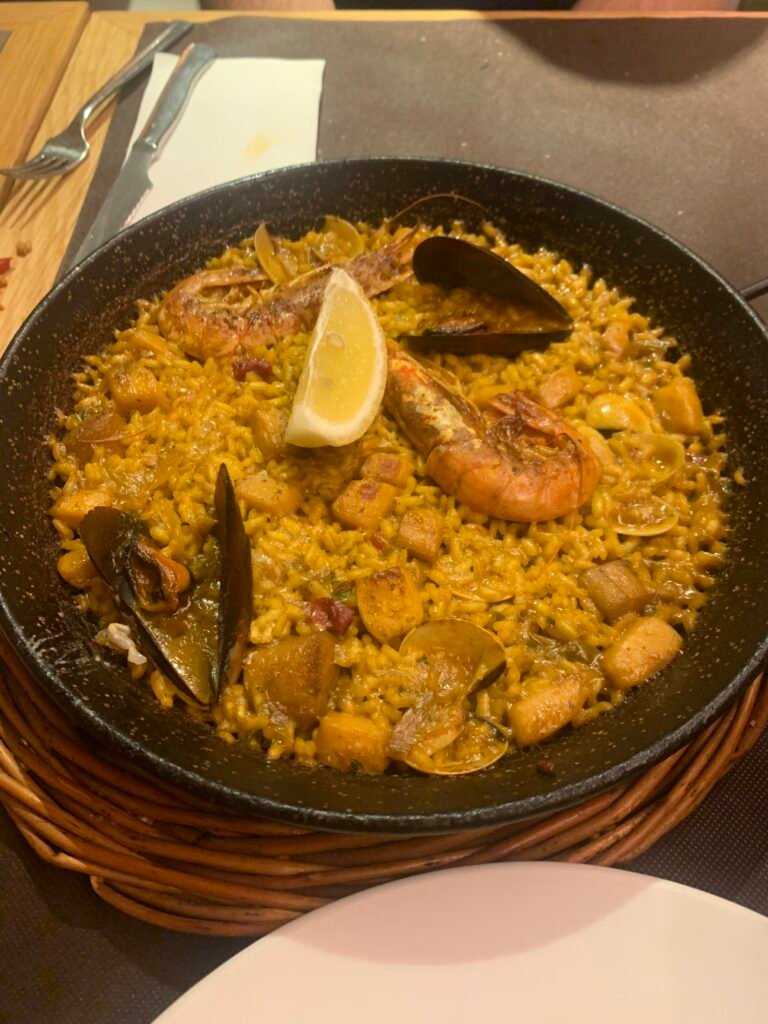
Barcelona is not actually the home of paella — that’s Valencia — but the seafood versions here, and fideuà (noodles instead of rice) and arroz negro (squid ink rice), are genuinely excellent. The rule is simple: restaurants on the Barceloneta beachfront and directly on La Rambla are expensive and mostly average. Walk two blocks in any direction and the quality goes up as the prices come down.
The menú del día is how locals eat on a weekday and how you should eat in Barcelona — a fixed 3-course lunch with a drink for €12–16, at the same restaurants that charge €35–50 at dinner. It’s one of the genuine bargains of European travel.
If You Have Less Time
- 3 days: Drop Montserrat. It deserves a full day — doing it rushed isn’t the same experience. Do Days 1, 2, and 3.
- 2 days: Day 1 (Sagrada Família + Passeig de Gràcia buildings) and Day 2 (Gothic Quarter + Barceloneta). Skip Montjuïc.
Best Time for 4 Days in Barcelona
May–June and September–October are the sweet spot. A 3-star Eixample hotel that costs €95/night in September runs €175–200 in August — on a 4-night trip that’s €320–420 saved before you’ve bought a single ticket. The crowds thin out meaningfully too: morning visits to Sagrada Família feel manageable rather than crushing.
July–August: Very hot (30–35°C), very crowded, peak prices. If summer is your only option, book everything 3–4 months ahead.
November–March: Quiet, cheap, cooler (10–15°C). Good for architecture and museums; beach days are off the table.
Practical Info
Getting there: Most US flights connect through Madrid, London, or a European hub. Budget $500–850 round trip from the East Coast in shoulder season. Google Flights with flexible dates is the best starting point — flying Tuesday or Wednesday instead of Friday can save $150–300 per person.
Getting around: The T-Casual card (10 metro/bus/funicular trips, €12.15) covers four days comfortably if you’re walking a reasonable amount. The metro is clean, frequent, and easy to navigate.
Airport transfer: The Aerobus runs every 5–10 minutes from T1 and T2 to Plaça de Catalunya (€6.75 one way). Easiest option with luggage.
Money: Barcelona is almost entirely cashless. Use a card with no foreign transaction fees — Wise uses real exchange rates and works like a local card in 50+ currencies.
Staying Connected
Spain uses the same mobile networks as the rest of Europe, so an EU SIM works fine — but if you’re flying in from the US, an eSIM is the easier option. Holafly Spain eSIM is worth checking for coverage and current pricing — set it up before you leave and it’s active when you land.
Travel Insurance
Barcelona is generally safe and low-risk, but pickpocketing on Las Ramblas and the metro is genuinely common — and that’s not covered by standard travel insurance either. EKTA covers theft, trip cancellation, and medical — worth having sorted before you fly.
What We’d Do Differently
- Book Sagrada Família for the 9am slot, not mid-morning — we lost the early calm
- Take the 8:36am Montserrat train, not the 9:30am — a wasted hour we’d have liked on the mountain
- Skip the Barceloneta beachfront restaurants entirely — the side streets are better in every way
- Spend one proper evening in El Born — next time
Final Thoughts: 4 Days in Barcelona
Four days in Barcelona is enough to fall for the city and not quite enough to feel done with it. We came home already talking about going back — for El Born properly, for a better look at Park Güell, for that fideuà at the restaurant we noticed but didn’t have time for. That’s what a good trip does.
For a full breakdown of what everything costs — from coffee to Sagrada Família tickets — see our Barcelona budget guide. For everything the city offers without a ticket price, our free things to do in Barcelona guide is worth reading before you finalize your plan. And when you’re ready to book accommodation, our where to stay in Barcelona guide breaks down every neighborhood with honest notes on each one.