3 Days in Chicago Itinerary: The Perfect First-Time Guide
The Chicago skyline hits you differently from the water. You’re on the architecture boat tour, river on both sides, glass towers catching the afternoon light — and you realize this city is beautiful in a way you didn’t see coming. Most people don’t expect that from Chicago. They show up and fall completely in love with a city they almost didn’t book.
Three days is enough to understand why. This itinerary is built for people who already know they’re going to Chicago and want a plan that actually works — not a list of 47 things to squeeze in, but a real day-by-day guide with the best of the city, organized by location so you’re not wasting half your trip in transit.
Contents
- Lili’s Picks
- Quick Summary
- Quick Tips for Chicago
- Your 3 Days in Chicago Itinerary: Overview
- Day 1 — First Impressions & Downtown Icons
- Day 2 — Architecture, the Riverwalk & Chicago’s Best Food Neighborhood
- Day 3 — Views, Museums & a Chicago Farewell
- If You Have Less Time
- Is It Worth It?
- What First-Timers Usually Get Wrong
- Best Time to Visit Chicago
- Practical Info
- Where to Stay in Chicago
- Final Thoughts: Your 3-Day Chicago Itinerary
- Frequently Asked Questions
- More Chicago Guides
Affiliate disclosure: This post contains affiliate links. If you book or buy something through these links, I may earn a small commission at no extra cost to you. I only recommend things I genuinely use or believe in. Learn more.
Lili’s Picks
The tour I’d book
The paid experience I would shortlist for this itinerary is the Chicago Architecture River Cruise on Viator on Day 2. Best if you want: the one paid experience that actually explains the skyline instead of just showing it to you. Why I like using Viator here: it gives you the convenience and security of sorting the ticket before you arrive, while still letting you check the exact terms first — when Reserve Now & Pay Later or free cancellation is available, you can hold the time slot without paying upfront and still protect yourself if your plans shift. Not ideal if: you’re set on a lake cruise instead, since this one runs on the river near the Michigan Avenue bridge. Before booking: confirm the departure point, current duration, route, weather policy, cancellation window, and recent traveler comments for your exact date.
This is where I’d stay
The hotel I would shortlist is citizenM Chicago Downtown in the Loop. Best if you want: a compact, well-designed base within walking distance of Millennium Park, the Riverwalk, and the architecture cruise dock. Why it works: it keeps the whole 3-day itinerary walkable or one L stop away, without the price tag of a full-service luxury hotel. Not ideal if: you want a quieter neighborhood feel or extra room for a longer stay — see our full where-to-stay guide for other areas. Before booking: compare total price, room size, cancellation policy, and recent guest comments for your exact dates.
Travel smarter: compare flights on Google Flights or Skyscanner, sort payments with a Wise card, set up an Airalo US eSIM before you fly, and compare EKTA if you want travel medical cover from outside the US.
Quick Summary
| Best time to visit | May–June or September–October |
| How many days | 3 days minimum, 4–5 ideal |
| Best area to stay | The Loop or River North |
| Getting around | L train + walking — no car needed |
| Don’t miss | Architecture boat tour — non-negotiable |
| Book in advance | Architecture boat tour, Skydeck, popular restaurants |
| Best for | First-timers, couples, families with older kids |
Quick Tips for Chicago
Where to Stay
For a first trip, The Loop or River North is the strongest base — walking distance from Millennium Park, the Riverwalk, and the architecture boat tour, and the L train gets you everywhere else. The hotels below are well-located, have good reviews for quality and breakfast, and sit in a comfortable mid-to-upper range without being unnecessarily expensive.
- Luxury pick: The Langham Chicago — right on the river with extraordinary views. One of the best-located luxury hotels in the city. Check rates on Expedia →
- Luxury alternative: Nobu Hotel Chicago — stylish West Loop base and excellent for food lovers. Check rates on Expedia →
- Mid-range pick: Loews Chicago Hotel — solid choice in River North, good breakfast, walkable to everything. Check rates on Expedia →
- Mid-range alternative: Riu Plaza Chicago — great value in the Magnificent Mile area. Check rates on Expedia →
- Best value: citizenM Chicago Downtown — smart, compact, and very well located for the price. Check rates on Expedia →
For more options in The Loop and River North, see the full Chicago accommodation guide — use the free cancellation filter to book early and keep flexibility.
Experiences Worth Booking in Advance
Two things consistently sell out in Chicago, especially on summer weekends — book these before anything else:
- The architecture boat tour is the single best paid experience in Chicago and the best times can go fast. Book your slot on Viator → — if that date is full, GetYourGuide has more options →
- The Skydeck at Willis Tower is best first thing in the morning, especially if you want clearer views and shorter Ledge waits. Get your Skydeck tickets on Viator → — if that slot is sold out, GetYourGuide has more options →
- If you want a guided food experience, the Chicago food and walking tour is a great way to cover the West Loop food scene. Check availability on Viator → — GetYourGuide has more options →
- Planning to hit multiple paid attractions? A Chicago CityPASS can reduce the overall cost if you’re visiting the Skydeck, Shedd Aquarium, and Field Museum on the same trip. Check CityPASS pricing here →
Your 3 Days in Chicago Itinerary: Overview
- Day 1: Millennium Park, Art Institute, Navy Pier, deep-dish pizza dinner
- Day 2: Architecture boat tour, Magnificent Mile, Chicago Riverwalk, West Loop dinner
- Day 3: Skydeck, Grant Park, Museum Campus, sunset at the Adler Planetarium
The map below groups the itinerary by day, so you can see why the route works before you start booking hotels or timed tickets.
Day 1 — First Impressions & Downtown Icons
Breakfast: Goddess and the Baker
Start the first morning at Goddess and the Baker, right across from Millennium Park on South Wabash. The portions are generous, the coffee is excellent, and the location means you’re on the doorstep of your first stop. The avocado toast and croissants are both worth ordering. Check it on TripAdvisor.
Morning — Millennium Park & The Art Institute
1. Millennium Park
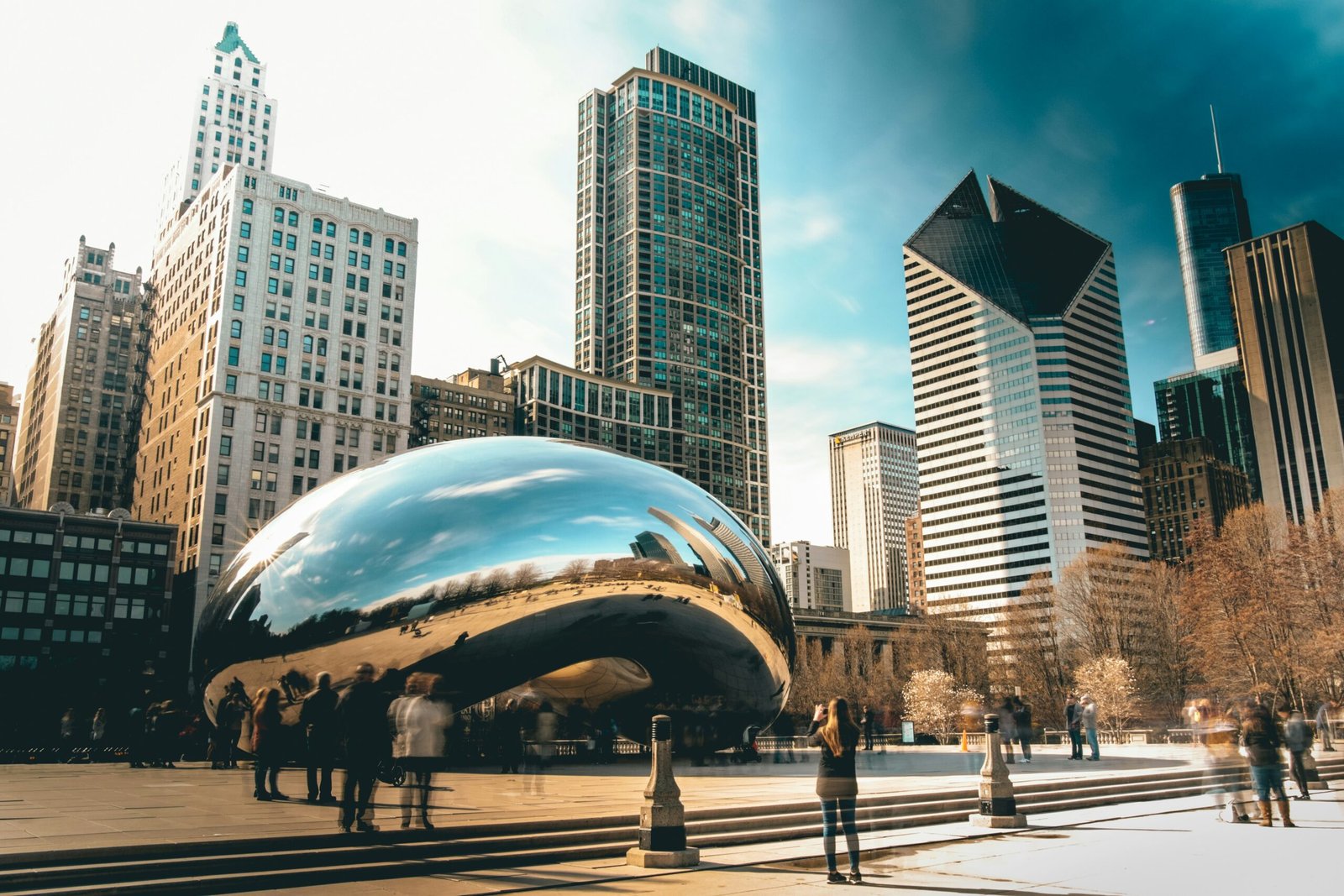
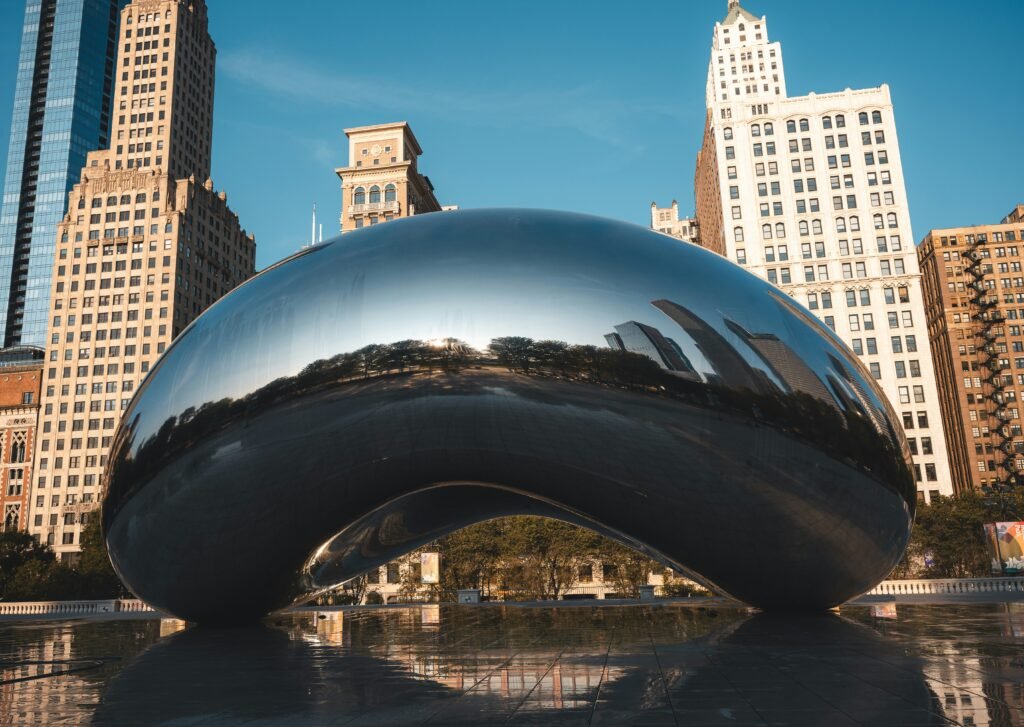
Start here. Cloud Gate — the giant reflective bean — is Chicago’s most recognizable landmark, and it earns its reputation. Walk around it, go underneath it, take your time. The reflections of the skyline from below are unlike anything else in the city.
After Cloud Gate, explore the rest of the park — Crown Fountain and Lurie Garden are both worth seeing. The whole park is free and beautiful.
Price: Free | Best time: Before 9am for photos without crowds | Time needed: 45–60 minutes
Tip: By 10am the Bean is surrounded by tour groups. Go early, get your photos, then move on.
With a toddler: Crown Fountain’s water jets are a hit with small kids in summer — bring a change of clothes.
2. The Art Institute of Chicago
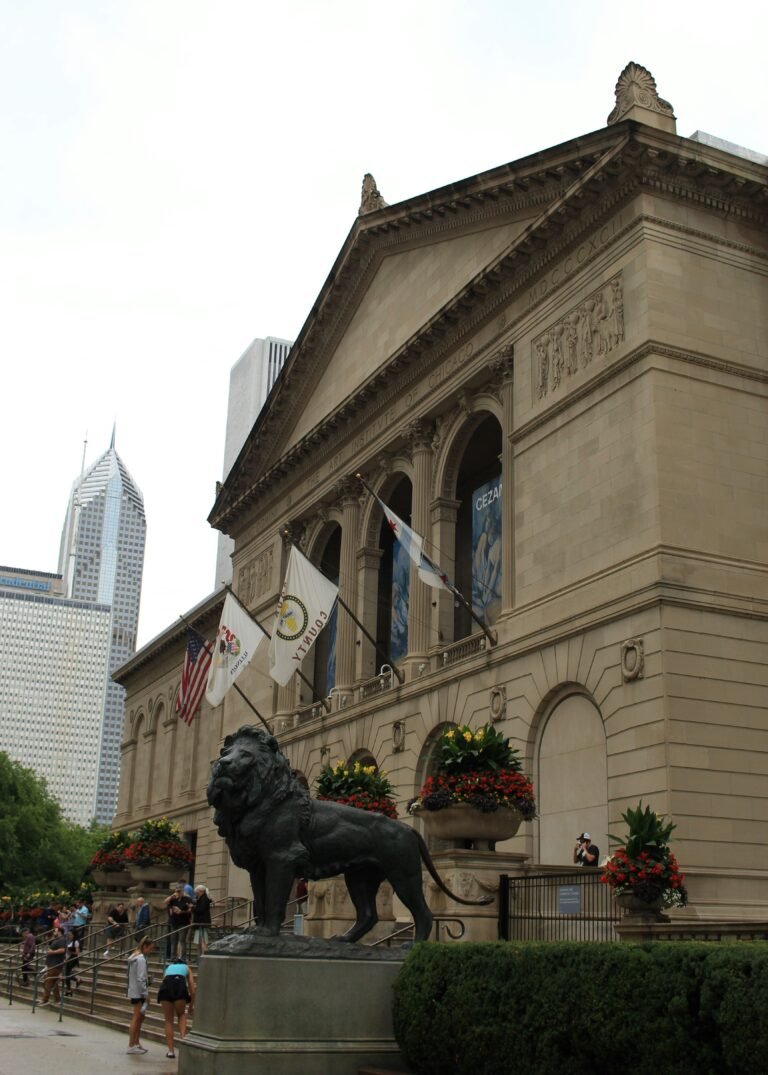
Five minutes south of Millennium Park on Michigan Avenue. This is one of the best art museums in the United States — Grant Wood’s American Gothic, Seurat’s A Sunday on La Grande Jatte, an extraordinary Impressionist collection, medieval armor, architectural fragments. Even if museums aren’t your thing, this one surprises people.
Price: usually around the $30+ range for nonresident adults, with resident/free-day rules changing by category | Closed: Tuesdays — plan around this | Time needed: 2–3 hours | Check: official Art Institute hours and tickets
Tip: Book tickets online in advance — weekend slots sell out. Weekday mornings are significantly quieter.
A guided tour helps you get far more out of the collection in less time. See Art Institute guided tour options on Viator →
Afternoon — Navy Pier & The Lakefront
3. Navy Pier
After the Art Institute, walk north along the lakefront to Navy Pier — about 20 minutes on foot, and the walk itself is one of the best free things you can do in Chicago. The skyline views from the lakefront path are extraordinary.
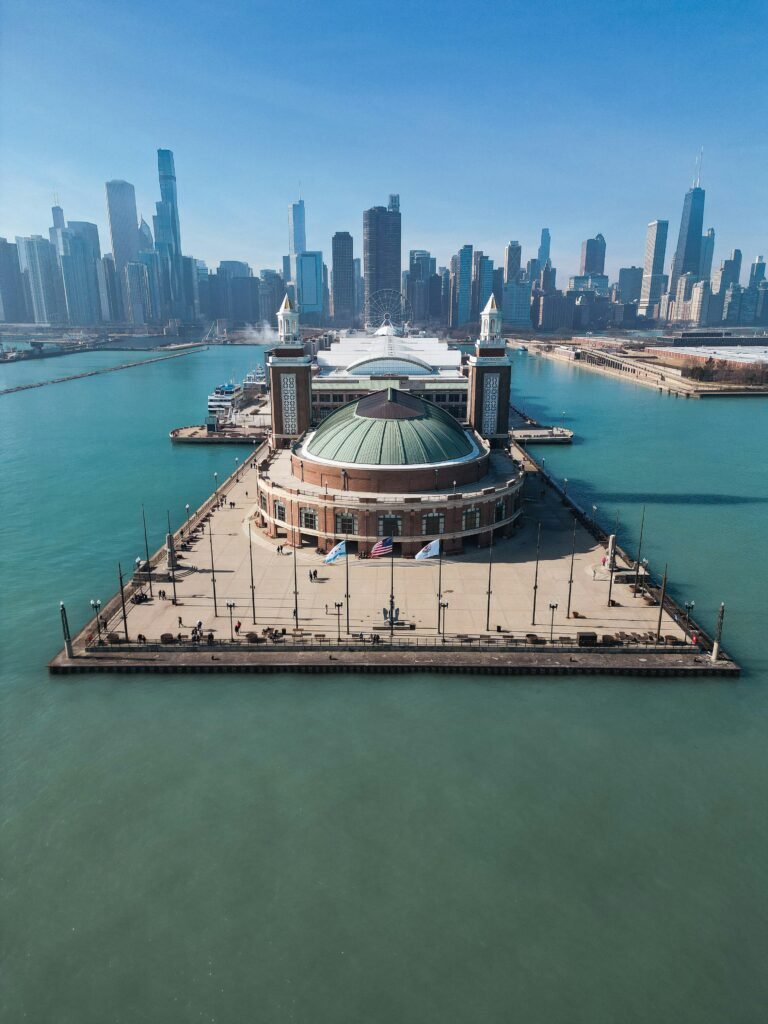
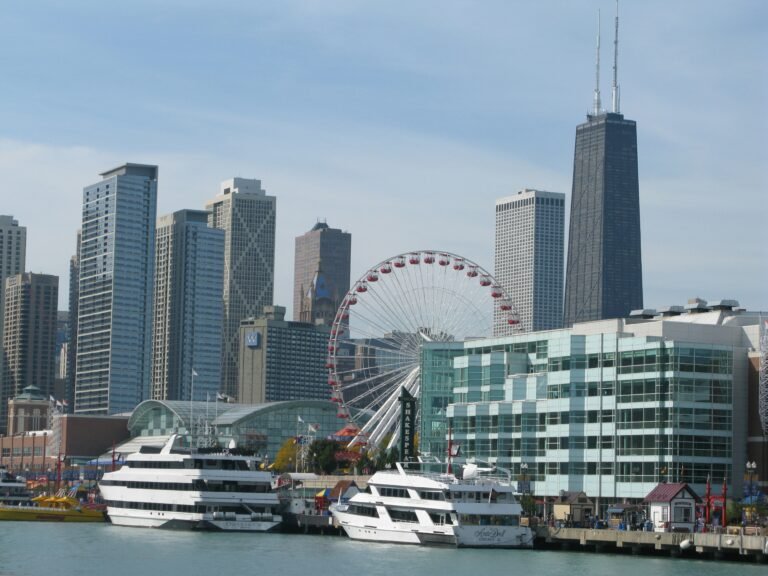
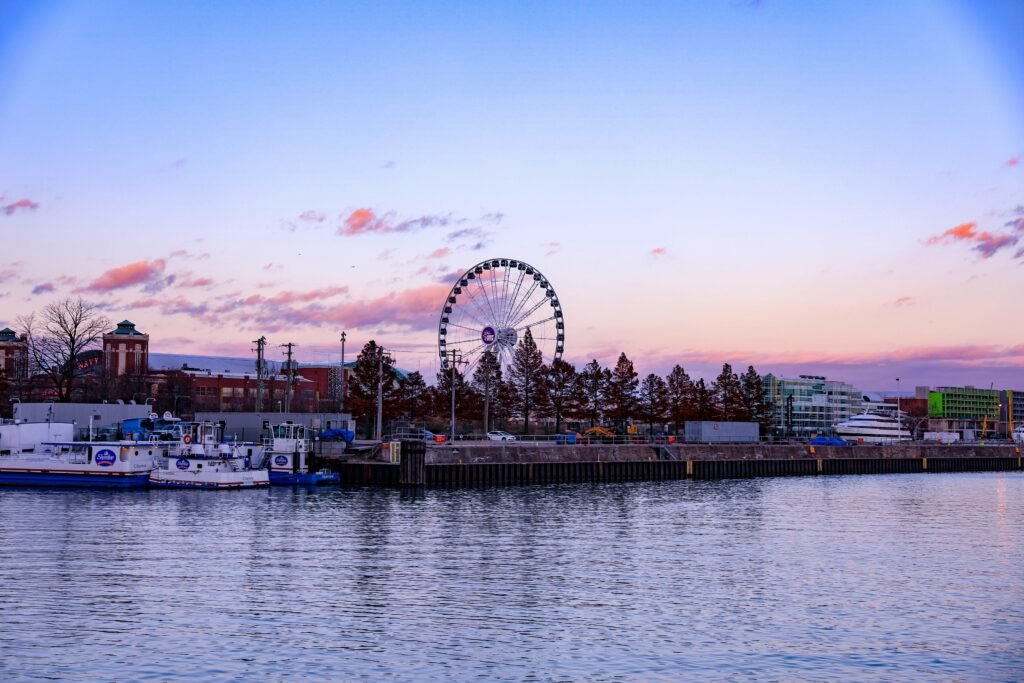
Navy Pier stretches half a mile into Lake Michigan. The Centennial Wheel offers great views of the city and lake. You don’t need to spend money here — walking the pier and watching the boats costs nothing and is well worth an hour. Full guide to what’s actually worth your time there in our Navy Pier guide.
Price: Free to walk / Centennial Wheel ~$20 | Best time: Late afternoon for softer light | Time needed: 45–60 minutes
Tip: Check the Navy Pier events calendar — there are often free outdoor concerts and festivals in summer.
If you want to see the skyline from the water on Day 1, a lake cruise from Navy Pier is the easiest option — shorter and more casual than the architecture river cruise. Book the Navy Pier lake cruise on Viator — 75 minutes, open-air deck, great for an easy first evening on the water.
Sunset: Milton Lee Olive Park
Most visitors have never heard of this place. It sits on a small peninsula between Navy Pier and Ohio Street Beach and offers one of the clearest, most unobstructed views of the Chicago skyline anywhere in the city — completely free, completely uncrowded.
Price: Free | Tip: Arrive 30 minutes before sunset. Bring a jacket — it gets very windy near the water.
Dinner: Giordano’s
End Day 1 with Chicago deep-dish at Giordano’s — the Navy Pier location is convenient after your afternoon on the lakefront. The stuffed version with mozzarella and chunky tomato sauce is the one to order. Deep-dish takes 35–45 minutes to bake, so order a drink and enjoy the wait.
Price: ~$20–30 per person | Tip: One slice is more than enough — don’t over-order. See Giordano’s on TripAdvisor.
Day 2 — Architecture, the Riverwalk & Chicago’s Best Food Neighborhood
Breakfast: Wildberry Pancakes & Cafe
Wildberry Pancakes & Cafe is legendary among Chicago locals. The mixed berry stuffed pancakes are extraordinary, the portions are enormous, and the atmosphere is warm and unhurried. Expect a wait on weekends — arrive before 9am or be prepared for 20–30 minutes. It’s worth it.
Tip: No reservations. Go early. See it on TripAdvisor.
Morning — Architecture Boat Tour & Magnificent Mile
4. Chicago Architecture River Cruise
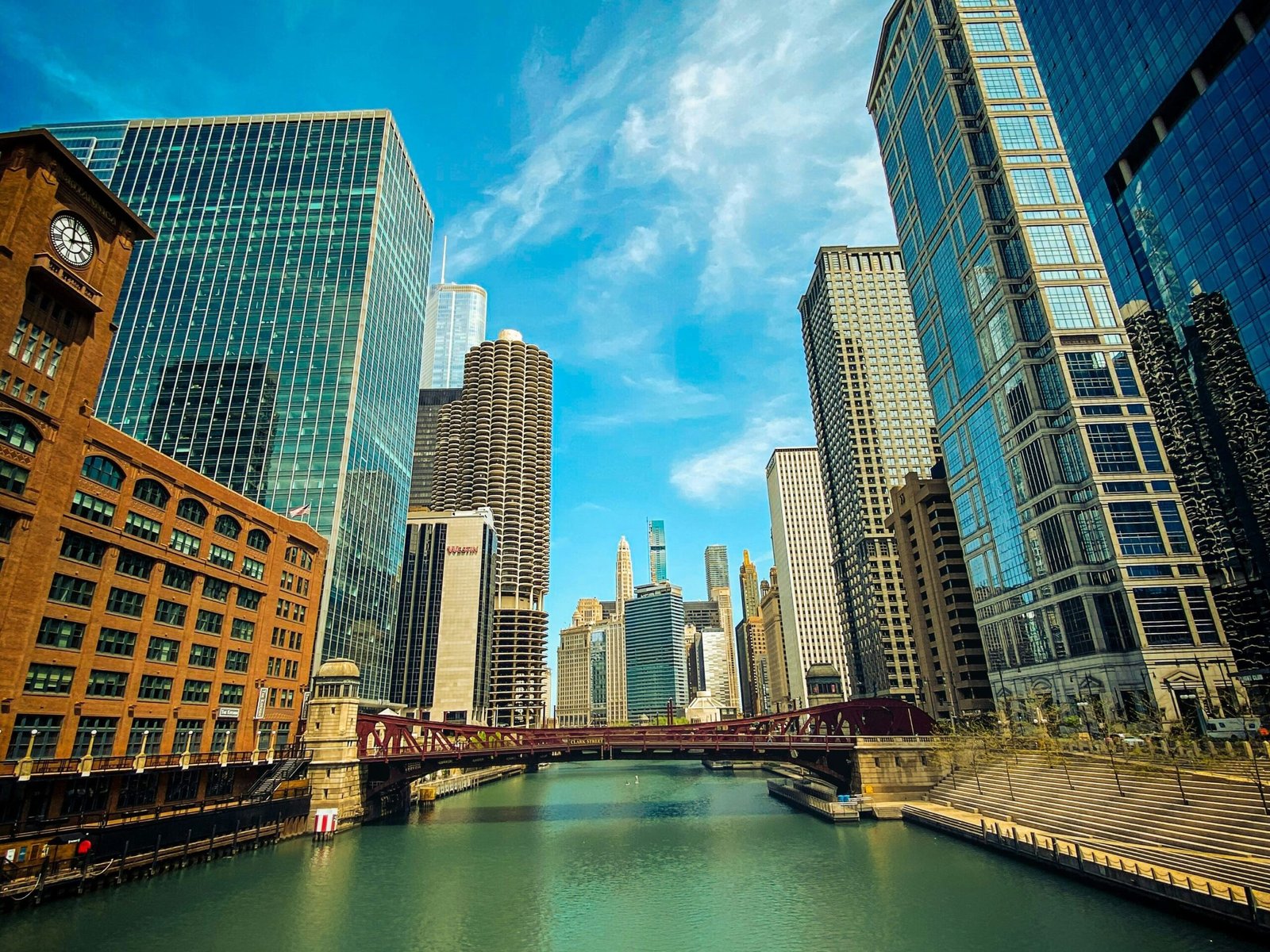
If there’s one paid experience worth prioritizing in 3 days in Chicago, it’s this one. The boat takes you along the Chicago River for 90 minutes while expert guides explain the stories behind the city’s most famous buildings. From the water, the skyline looks completely different — you see angles and details you simply can’t get from street level.
You’ll pass the Wrigley Building, Tribune Tower, Marina City, and dozens of others while learning the history and engineering behind Chicago’s celebrated skyline. It’s the best way to understand the city.
Price: roughly $45–60 per person depending on date and operator | Duration: usually 75–90 minutes | Season: strongest from spring through fall, with reduced winter options | Best time: Morning for clearest light
Tip: Book in advance for summer weekends. This is the one experience to reserve before anything else. Check availability on Viator → If the morning slots are gone, GetYourGuide has more options →
5. The Magnificent Mile
After the boat tour, walk north along Michigan Avenue. Even if shopping isn’t your thing, the architecture alone is worth the walk — Tribune Tower, the historic Water Tower (one of the only buildings that survived the Great Chicago Fire of 1871), and the John Hancock Building all line this stretch.
Price: Free | Time needed: 30–45 minutes walking through
Afternoon — Chicago Riverwalk
6. Chicago Riverwalk
The 1.25-mile path along the Chicago River is one of the best free things to do in the city — lined with restaurants, bars, public art, and some of the most photogenic views in Chicago. Walk the full length at a relaxed pace, stop for a coffee, take your time. The Wrigley Building and DuSable Bridge are particularly beautiful from river level.
Price: Free | Best time: Late afternoon when the light reflects off the buildings | Time needed: 45–60 minutes
For more ideas on how to spend time in Chicago without spending money, our guide to free things to do in Chicago covers the best options by neighborhood.
7. Chicago Theatre Sign
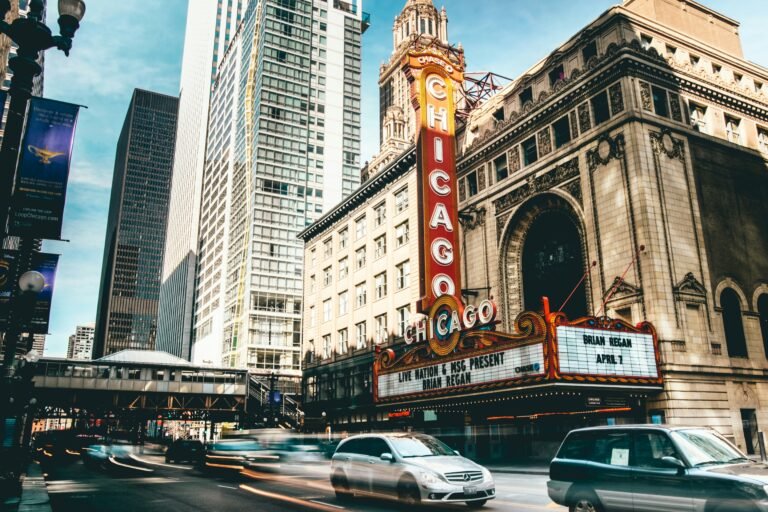
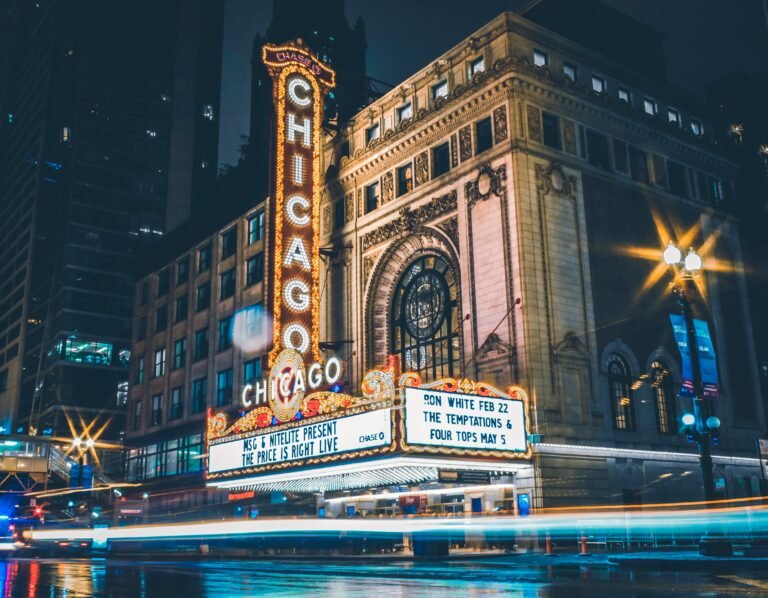
A short walk from the Riverwalk, the Chicago Theatre’s bright red marquee on North State Street has been a city symbol since 1921. A quick photo stop before dinner — the surrounding streets are great for exploring independently.
Price: Free | Time needed: 15 minutes
Sunset: North Avenue Beach
After a day of downtown sightseeing, the lakefront feels like a completely different world. North Avenue Beach in Lincoln Park is open, breezy, and beautiful at golden hour. The walk along the Lakefront Trail back toward downtown at sunset is one of the most pleasant urban walks in America.
Price: Free
Dinner: West Loop Restaurant Row
The West Loop has become one of the most celebrated food neighborhoods in the country. Randolph Street in particular is packed with excellent options for every taste and budget.
Top picks: Avec for Mediterranean-influenced small plates with communal dining, or The Publican for oysters, farmhouse ales, and whole roasted pig. If you want to try multiple things without a reservation, Time Out Market Chicago on Fulton Market has some of the city’s best chefs under one roof — no booking needed.
Price: ~$30–60 per person depending on where you eat | Tip: Book at least a week ahead for the most popular spots on weekend evenings.
Day 3 — Views, Museums & a Chicago Farewell
Breakfast: Mojo Coffee
Located right next to Willis Tower — which is the first stop of the morning — this New Zealand-inspired café does exceptional coffee and a solid breakfast menu. The shakshuka and avocado toast are both worth ordering. Grab your coffee to go if you want to be at the Skydeck right when it opens.
Morning — Skydeck & Grant Park
8. Skydeck Chicago at Willis Tower
The 103rd floor of Willis Tower, with panoramic views of the city, Lake Michigan, and on a clear day four different states. The highlight is The Ledge — four glass boxes that extend out from the building, giving you an unobstructed view straight down 1,353 feet to the street below. Genuinely thrilling. Full comparison against 360 Chicago in our Willis Tower vs 360 Chicago guide.
Price: varies by date, time, and ticket type | Hours: change by season, so check the official Skydeck hours before locking the itinerary | Time needed: 60–90 minutes | Best time: first thing in the morning on a clear day
Tip: The Ledge line is shortest early in the day. Check the weather the night before — clouds significantly reduce the views.
Book timed tickets online so you are choosing a real entry window, not just hoping the line is kind. Get your Skydeck tickets on Viator → — if that slot is sold out, GetYourGuide has more options →
9. Grant Park & Buckingham Fountain
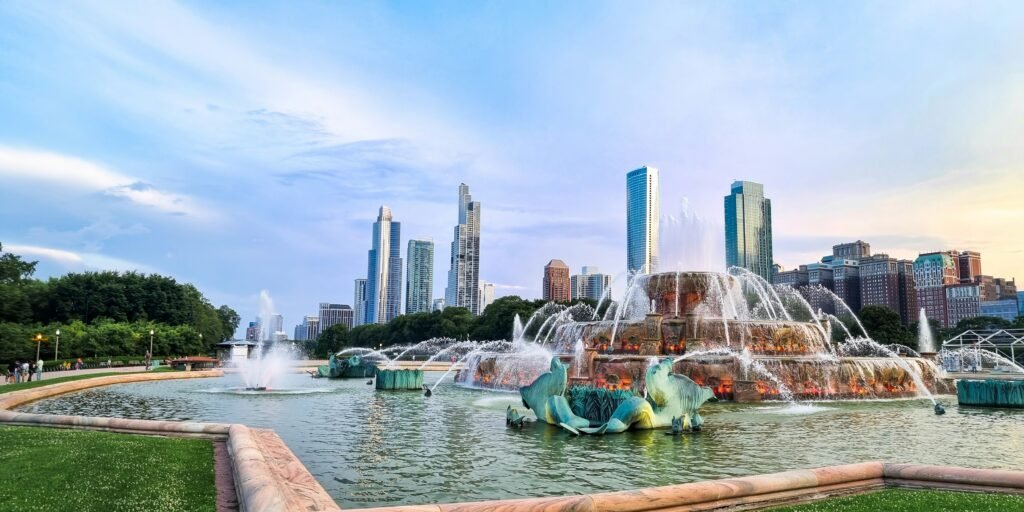
Chicago’s front yard — a massive 319-acre park running along the lakefront, home to Buckingham Fountain, one of the largest and most beautiful fountains in the world. When the fountain is in operation, it produces major water displays hourly; the exact season and maintenance schedule can shift, so treat it as a seasonal bonus rather than a guaranteed winter stop.
Price: Free | Time needed: 30–45 minutes | Tip: The views of the skyline looking west from Grant Park are some of the best in the city.
Afternoon — Museum Campus
10. Museum Campus
The Museum Campus brings together three of Chicago’s best museums on a 57-acre lakefront park south of Grant Park — the Field Museum, the Shedd Aquarium, and the Adler Planetarium. Don’t try to do all three in one afternoon. Pick one or two and give yourself time to actually enjoy them.
The Field Museum is the top choice here — one of the greatest natural history museums in the world, home to SUE, one of the largest and most complete T. rex skeletons ever discovered. The Ancient Egypt galleries, Evolving Planet, and the dinosaur halls are the pieces I’d prioritize if you only have a few hours.
The Shedd Aquarium is better if you’re with kids or love marine life — one of the largest indoor aquariums in the world.
The Adler Planetarium is worth visiting for the views alone — it sits right on the edge of Lake Michigan with one of the best unobstructed skyline views in the city.
Price: $25–40 per person per museum | Time needed: 2–3 hours per museum
Tip: A Chicago CityPASS can make sense if you’re visiting several paid attractions rather than just one museum. Check CityPASS options here →
Sunset: Adler Planetarium
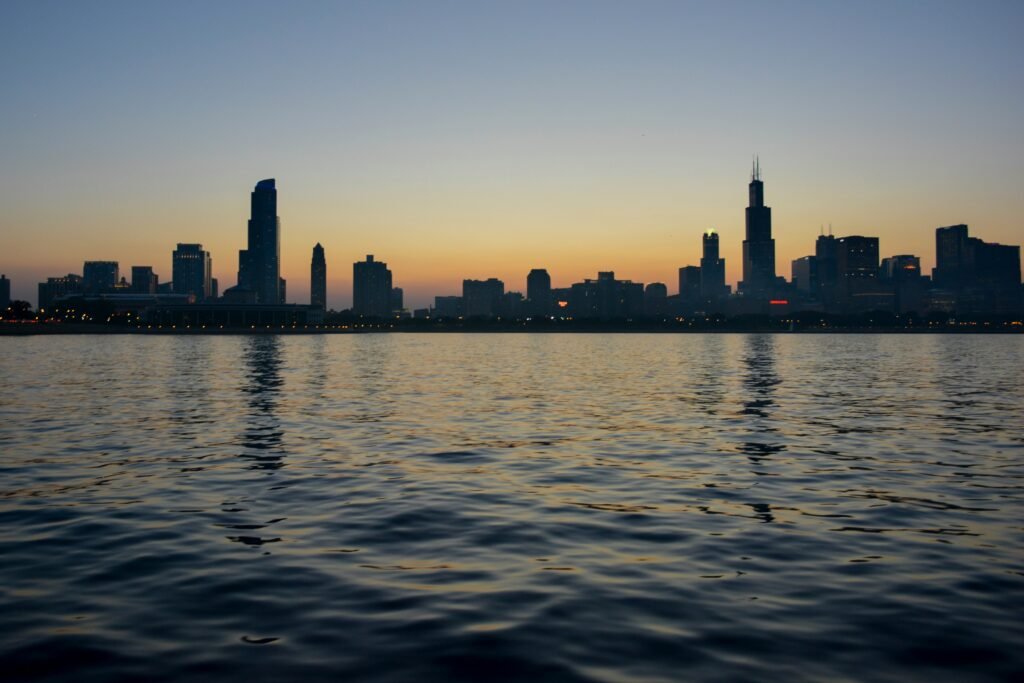
Walk around to the north side of the Adler Planetarium building. The entire downtown skyline reflects off Lake Michigan at golden hour and it’s one of the most spectacular city views in America. You don’t need to go inside — just find the viewpoint on the north side and stay until the light goes.
Price: Free | Tip: Arrive 30–40 minutes before sunset. Bring something warm — it gets cold near the water quickly.
Dinner: Lou Malnati’s Pizzeria
If Day 1 was Giordano’s, Day 3 is Lou Malnati’s — the other Chicago deep-dish institution, and for many locals the definitive version. The buttery crust is what sets it apart. Order the Malnati Chicago Classic and you’ll understand why people ship these pies across the country. A perfect way to close out three days in Chicago.
Price: ~$20–30 per person | Tip: Deep-dish takes 35–45 minutes to bake — order as soon as you sit down. See Lou Malnati’s on TripAdvisor.
If You Have Less Time
1 day in Chicago: Cloud Gate at Millennium Park → Architecture boat tour → Deep-dish pizza at Lou Malnati’s or Giordano’s. That’s the city in one day.
2 days in Chicago: Add the Art Institute, the Chicago Riverwalk, and the Skydeck. Sunset at Milton Lee Olive Park on Day 1.
Is It Worth It?
Yes — without hesitation. Chicago is one of the most underrated cities in the United States and almost everyone who goes comes back surprised by how much they loved it. The skyline, the food, the lake, the architecture — it all adds up to something that’s hard to match anywhere in the country.
It’s worth it if you love architecture, food, and walkable cities with real character. It’s less ideal in January or February — the wind off the lake is brutal and some outdoor experiences are limited. May through October is the window.
What First-Timers Usually Get Wrong
- Leaving the architecture boat tour and Skydeck until the last minute — weekend morning slots can get tight in summer.
- Eating at the first restaurant they see near a tourist attraction — prices are often higher in those spots. Walk a couple of blocks and compare menus before committing.
- Not building in a half-day for the West Loop — it’s consistently cited as the neighborhood most first-timers wish they’d spent more time in.
- Arriving at Wildberry Pancakes at 9am instead of 8am — the wait is real once the morning rush starts.
Best Time to Visit Chicago
Spring (April–May) is excellent — mild weather, smaller crowds, lower prices than summer. Temperatures 40–70°F and the city comes alive after winter.
Fall (September–October) is arguably the best time — comfortable temperatures 45–75°F, beautiful colors in the parks, smaller crowds, and lower hotel prices than summer. For a first visit, fall is the sweet spot.
Summer (June–August) is peak season — warm, vibrant, beach life on the lakefront. But expect higher hotel prices and larger crowds at major attractions. Book everything in advance.
Winter (November–March) — cold and very windy. Hotel prices drop significantly and the city has a quiet local charm in winter, but outdoor experiences are very limited. Not the ideal first visit.
Shoulder season tip: September is the sweet spot — the lake can still be pleasant, crowds thin out after Labor Day, and hotel rates are often lower than July and August peak. Same city, better experience, lower cost.
Once you’ve picked your timing, the next step is locking in where you’ll stay. Our Chicago accommodation guide breaks down all 7 neighborhoods with honest pros and cons — so the location decision is made before you start comparing prices.
Practical Info
Getting to Chicago
O’Hare International Airport (ORD) is the main hub with the widest flight selection, including many direct international routes. Midway Airport (MDW) is smaller and more convenient for many domestic Southwest flights. From O’Hare, the Blue Line airport fare is $5; from Midway, the Orange Line uses the standard CTA fare. Both trains take you directly into the city, which is usually simpler than starting the trip with an expensive taxi.
Getting Around
You do not need a car in Chicago for this itinerary. The L train covers the main areas, and current CTA fares list standard rail rides around $2.50, the O’Hare station fare at $5, and unlimited passes such as the 1-day and 3-day options for heavier transit days. Check the official CTA fare page before you travel because pass products can change. Everything in the central areas (Millennium Park, Riverwalk, Navy Pier, Magnificent Mile) is walkable. Uber and Lyft are available everywhere but costs add up quickly during peak hours.
How Much Does Chicago Cost?
| Expense | Budget-conscious | Comfortable | Splurge |
|---|---|---|---|
| Accommodation | $100–140/night | $160–220/night | $280+/night |
| Food (daily) | $35–50/day | $60–90/day | $120+/day |
| Activities | $40–60/day | $60–90/day | $100+/day |
| Transport (local) | $10–15/day | $15–25/day | $40+/day |
Want the full cost breakdown with real numbers? Our Chicago budget guide covers exactly what a Chicago trip costs — accommodation, food, activities, and where to save without sacrificing the experience.
Money & Paying
Chicago is very card-friendly — cards work in most restaurants, cafes, shops, and on CTA readers. That said, tipping runs 18–20% at many sit-down restaurants, and having the right card means you’re not also paying a foreign transaction fee on top of that. Wise works well for US travel — it keeps currency conversion simpler and works like a regular debit card at most terminals in the city.
Staying Connected
Your home plan may cover the US — check before you travel. If it doesn’t, or if you want a separate data plan, an eSIM is the easiest option. Airalo has US plans you can set up before you fly, so data is ready when you land.
Travel Insurance
Medical costs in the US can be significant without coverage, so check your travel insurance carefully if you’re coming from outside the country. EKTA is one option to compare for medical, trip cancellation, and luggage coverage, but always read the policy wording for your country and trip type before buying.
Where to Stay in Chicago
For a first trip, The Loop is the strongest base — walking distance to Millennium Park, the Riverwalk, and the Art Institute, with excellent L train connections everywhere else. It’s the most practical choice and the hotels here are well-priced relative to their location.
River North is better if food and nightlife are priorities — it has a more vibrant restaurant scene than The Loop and is still very central.
West Loop is ideal if you’re staying longer and want a more local, neighborhood feel. Further from the main sights but the best food area in the city.
Gold Coast is the quieter, more upscale option with direct lakefront access — good for families who want more space and calm.
For a full breakdown of every Chicago neighborhood with honest pros and cons — plus specific hotel picks for each — our Chicago accommodation guide covers everything you need to choose the right area.
Final Thoughts: Your 3-Day Chicago Itinerary
Three days in Chicago is enough to understand why people come back. The skyline, the food, the lakefront, the architecture — it all adds up to something most visitors don’t see coming. This is a city that rewards people who pay attention to it.
Don’t try to do everything. The best moments in Chicago — like in most great cities — are the ones you don’t plan. The lunch that turns into two hours. The viewpoint you find by accident. Leave space for that. A 3-day Chicago itinerary works best when you build in a little room to breathe.
Eat the deep-dish. Do the boat tour. Find the sunset spot nobody knows about. That’s the trip.
Frequently Asked Questions
Is 3 days enough for Chicago?
Yes — 3 days is enough to see Chicago’s highlights without feeling rushed. You can cover Millennium Park, the Art Institute, an architecture boat tour, the Riverwalk, deep-dish pizza, and a neighborhood like Wicker Park or Pilsen comfortably in three days. What you won’t get is the West Loop food scene, a day at the beach, and every museum — but that’s an argument for coming back, not cramming more in.
How much does a 3-day Chicago trip cost?
A realistic budget for 3 days in Chicago is $150–$250 per person per day, not including flights. That covers a mid-range hotel ($130–$200/night), meals at a mix of casual and sit-down restaurants ($50–$80/day), and 1–2 paid activities per day. The architecture boat tour ($40–$55), Skydeck ($35), and Art Institute ($30) are the main paid experiences — the rest of the city’s highlights are free. For a full breakdown with real numbers, our Chicago budget guide covers exactly what a 3-day Chicago trip costs.
What’s the best area to stay in Chicago for 3 days?
The Loop is the best base for a first visit — walking distance to Millennium Park, the Art Institute, and the Riverwalk, with easy L train access everywhere else. River North works well if food and nightlife matter more than proximity to museums. Both areas have a wide range of hotels at different price points. For a full neighborhood breakdown, our Chicago accommodation guide covers every area honestly.
Do I need a car in Chicago?
No — Chicago is one of the easier US cities to visit without a car. The L train covers the main neighborhoods, rideshares are widely available, and everything on this itinerary is walkable or a short ride away. A car is more hassle than help in the city — parking is expensive and downtown traffic is slow. If you’re planning a day trip to the suburbs or want to explore beyond the city, rent one for that specific day only.
Is Chicago safe for tourists?
The areas covered in this itinerary — The Loop, River North, Millennium Park, Lincoln Park, and the main lakefront sights — are busy, well-trafficked, and comfortable for most visitors during normal sightseeing hours. Like any large city, safety varies by block and time of day. Stay aware at night, use transit or rideshare instead of long unfamiliar walks after dark, and check current local advice if you plan to explore beyond the main tourist areas.
What’s the best time of year to visit Chicago?
May–June and September–October are the sweet spots — comfortable temperatures, easier crowds than July–August, and often better hotel value than peak summer. July and August are beautiful but hot and crowded, especially around Millennium Park. Winter (November–March) is cold and windy, but hotel prices can soften and the city has a real energy if cold doesn’t bother you.
More Chicago Guides
- Not sure which neighborhood to stay in? Our Chicago accommodation guide covers all 7 areas with honest pros, cons, and hotel picks for every budget.
- Trying to figure out what this trip will cost? Our Chicago budget guide breaks down exactly what a Chicago trip costs — accommodation, food, activities, and where you can save.
- Want more Chicago without spending more money? Our guide to free things to do in Chicago covers the best no-cost experiences by neighborhood.
- Still in the early planning stage? Our step-by-step trip planning guide covers everything from finding cheap flights to building the right itinerary.