Free Things to Do in Chicago: 20 Best Experiences
Last checked: May 2026. Free-admission policies, beach season, and event schedules can change. Verify the current official pages for Chicago beaches, Art on theMART, Lincoln Park Zoo, and Lincoln Park Conservatory before you build a day around them.
Lincoln Park Zoo is free. Cloud Gate is free. The lakefront — all 26 miles of it — is free. Chicago has more world-class free experiences than almost any other major city in the United States, and most visitors don’t discover half of them. This guide covers 20 actually free things to do in Chicago — not “free if you don’t count the transport” — actually free.
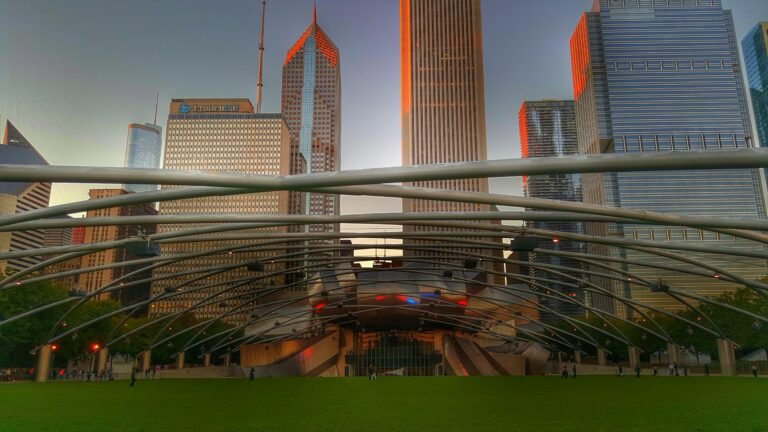
Still planning the trip? Our complete trip planning guide covers everything from finding cheap flights to Chicago to booking the right accommodation, budgeting your days, and making every dollar count on a US city trip.
Contents
- Lili’s Picks
- Quick Summary
- Quick Tips Before You Go
- 20 Free Things to Do in Chicago
- 1. Cloud Gate (The Bean) at Millennium Park
- 2. Crown Fountain at Millennium Park
- 3. Lurie Garden at Millennium Park
- 4. Chicago Riverwalk
- 5. Lincoln Park Zoo
- 6. Lincoln Park — The Honeycomb Pavilion
- 7. Chicago Cultural Center
- 8. Buckingham Fountain at Night
- 9. Milton Lee Olive Park — Sunset Views
- 10. North Avenue Beach
- 11. Pilsen Street Art & Murals
- 12. The 606 Elevated Trail
- 13. Navy Pier — Free Sections
- 14. Chicago Architecture from the Bridges
- 15. Art on the Mart — River Light Show
- 16. Lincoln Park Conservatory
- 17. Wicker Park Neighborhood Walk
- 18. National Museum of Mexican Art
- 19. Maggie Daley Park
- 20. Free Live Music in Chicago
- Is Chicago Worth It for Free Travelers?
- What Most Visitors Get Wrong
- Best Time for Free Experiences in Chicago
- Final Thoughts: Free Things to Do in Chicago
- Frequently Asked Questions
- Before You Go: Practical Notes
- More Chicago Guides
Affiliate disclosure: This post contains affiliate links. If you book or buy something through these links, I may earn a small commission at no extra cost to you. I only recommend things I genuinely use or believe in. Learn more.
Lili’s Picks
The tour I’d book
Free doesn’t mean you should skip paid experiences entirely — the one I’d budget for is the architecture river cruise on Viator. Best if you want: the one paid add-on that actually changes how you see everything free you’ve already walked past. Why I like using Viator here: Reserve Now & Pay Later or free cancellation, where available, means no money at risk if the weather or your schedule changes. Not ideal if: you’re tight on budget this trip — every single thing in this guide works without it. Before booking: morning slots sell out weeks ahead in summer, so book first and confirm the weather policy.
This is where I’d stay
For a base that puts most of this list within walking distance or a short L ride, book citizenM Chicago Downtown in the Loop. Best if you want: a well-designed, well-located base near Millennium Park and the Riverwalk without paying full luxury prices. Why it works: The Loop keeps you close to Cloud Gate, the Art Institute grounds, and the Riverwalk — several of this guide’s free highlights. Not ideal if: you’d rather stay somewhere quieter — see the full where-to-stay guide for other areas. Before booking: compare total price with taxes, cancellation policy, and recent guest comments for your exact dates.
Travel smarter: compare flights on Google Flights or Skyscanner, sort payments with a Wise card, set up an Holafly US eSIM (code MILESANDFLAVORS for a discount) before you fly, and compare EKTA if you want travel medical cover from outside the US.
Quick Summary
| Best free experience | Cloud Gate at Millennium Park |
| Best free neighborhood | Pilsen or Wicker Park |
| Best free sunset spot | Milton Lee Olive Park |
| Best free museum | Chicago Cultural Center (Tiffany glass domes) |
| Best time to visit | May–June or September–October |
| If you’re short on time | Millennium Park + Riverwalk + Milton Lee Olive Park sunset |
The map below shows all 20 locations grouped into five color-coded layers by neighborhood — Millennium Park & Grant Park, Lincoln Park & the North Lakefront, the River and Downtown, the Northwest neighborhoods, and Pilsen on the South Side. Use it to plan your days by walking distance and figure out which spots you can combine without backtracking.
Quick Tips Before You Go
For specific hotel picks by neighborhood, see the full Chicago accommodation guide — always book free cancellation rates. Chicago’s convention calendar causes prices to spike unpredictably, and you can rebook at a lower rate if the price drops before your trip.
If you do want to add a paid experience, the architecture boat tour is the one I’d prioritize — it’s the best single thing you can do in Chicago and morning slots can go first in peak summer. Book the architecture river cruise on Viator. A Chicago CityPASS can save money if you are visiting several paid attractions, but run the math for your exact plans before buying. Check CityPASS availability on Viator.
Visiting from outside the US? Skip the airport SIM kiosk — an eSIM from Holafly is straightforward to set up before you fly. Full logistics details are at the bottom of this guide.
20 Free Things to Do in Chicago
If you add just one paid experience: The architecture boat tour is the one. It gives you the river-level context that changes how you see the city, and the best peak-summer morning slots can go first. Book your spot on Viator →
1. Cloud Gate (The Bean) at Millennium Park
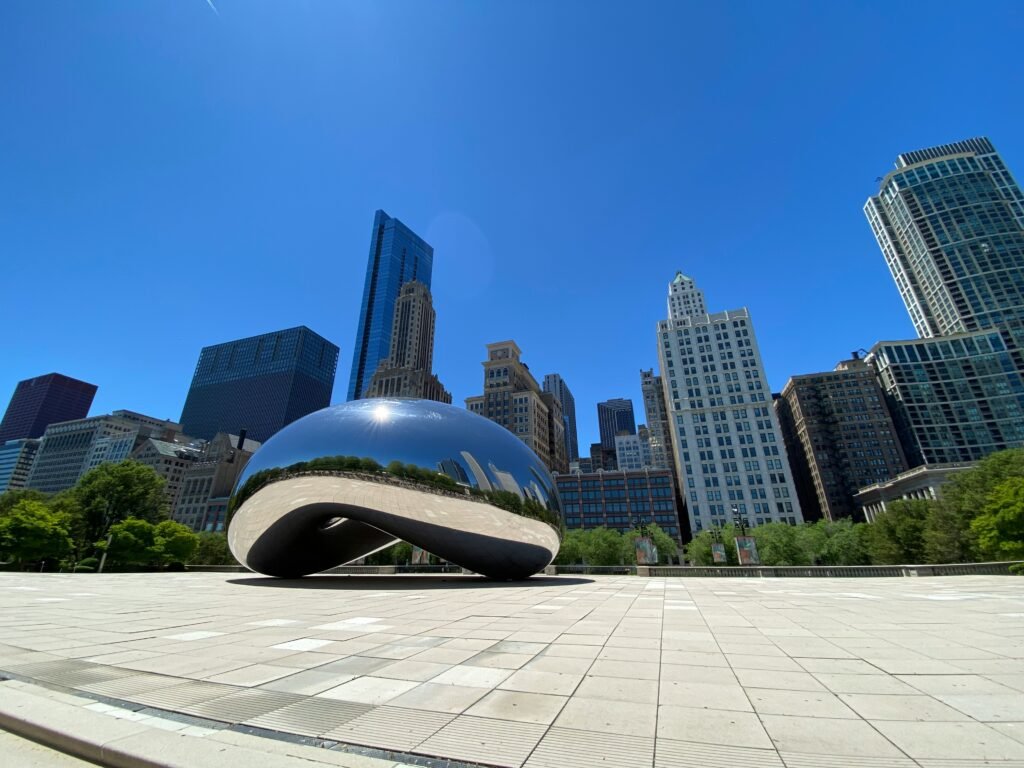
Cloud Gate is where I’d start any free day in Chicago — no question. This giant stainless steel sculpture designed by Anish Kapoor sits in the heart of Millennium Park and reflects the entire Chicago skyline in its curved surface, creating visual experiences impossible to replicate anywhere else.
Walk around it, crouch underneath it, and take your time. The reflection from directly below shows you and the skyline simultaneously in a way that’s completely surreal. It’s completely free and accessible at any hour.
Price: Free | Best time: Before 9am for photos without crowds | Time needed: 45–60 minutes
Tip: By 10am the Bean is surrounded by tour groups. Go early, get your photos, then move on. Early morning on a clear day — when you sometimes have it almost to yourself — is one of the best moments in Chicago.
With kids: Crown Fountain’s water jets, also in Millennium Park, are a huge hit with small children in summer — bring a change of clothes.
2. Crown Fountain at Millennium Park
While Cloud Gate gets most of the attention, Crown Fountain at the south end of Millennium Park is one of the most unusual free experiences in the city. Two 50-foot glass brick towers display high-definition video of Chicago residents’ faces — and in summer, water jets from their mouths at regular intervals while children wade in the shallow pool below. Don’t rush past this on the way to The Bean — it deserves 20–30 minutes.
Price: Free | Best time: Summer mornings or evenings when the water is running
3. Lurie Garden at Millennium Park
Tucked directly behind the main Millennium Park performance stage, Lurie Garden is one of the most underrated free experiences in downtown Chicago — a 2.5-acre public garden that feels like a completely different world. Most visitors walk straight past the entrance without noticing it. Designed by landscape architect Piet Oudolf, it follows prairie naturalism principles — wild grasses, native wildflowers, and seasonal plantings. In late spring and summer, it’s extraordinary.
Price: Free | Best time: Late May through July for peak bloom
Tip: The garden entrance is on the south side of the performance pavilion — look for the hedge wall. Most people miss it entirely because it’s not immediately visible from the main park paths.
4. Chicago Riverwalk
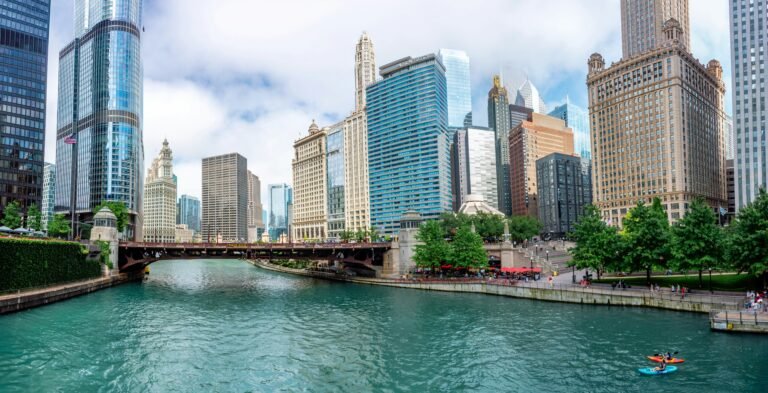
The Chicago Riverwalk is one of the best free things to do in Chicago — a 1.25-mile path running along the south bank of the Chicago River through the heart of downtown. One of the finest stretches of urban waterfront in America, it costs nothing to walk. Lined with public art, outdoor restaurants and bars, and some of the most photogenic architecture in the city. The Wrigley Building and DuSable Bridge are particularly beautiful from river level.
Price: Free | Best time: Late afternoon when light reflects off the buildings | Time needed: 45–60 minutes
Tip: Water taxis run along the river in summer — hop on one for a different perspective on the skyline. For a full list of free experiences by neighborhood, this is one of the best areas to combine with several other items on this list.
5. Lincoln Park Zoo
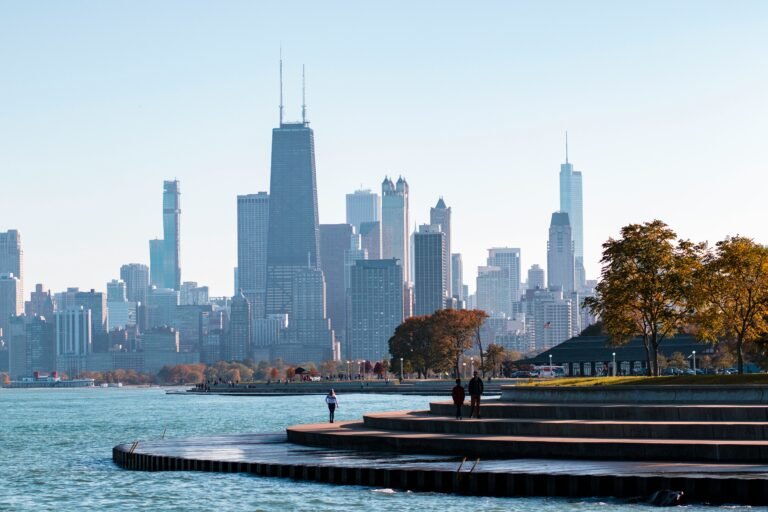
Lincoln Park Zoo has been free to enter for over a century — one of the oldest zoos in the United States and one of the few that charges nothing. Home to hundreds of animals including lions, gorillas, snow leopards, polar bears, and giraffes in thoughtfully designed habitats. The Regenstein African Journey exhibit is particularly impressive. The Honeycomb Pavilion at the South Pond frames the downtown skyline beautifully — one of the best free photo spots in the city.
Price: Free | Best time: Weekday mornings | Time needed: 2–3 hours
With kids: One of the best family-friendly free experiences in Chicago — well-designed habitats, good facilities, and the Nature Boardwalk is one of the nicest free walks in the city for all ages.
6. Lincoln Park — The Honeycomb Pavilion
The Honeycomb Pavilion at Lincoln Park’s South Pond is a wooden structure with hexagonal openings that frames the downtown Chicago skyline in a way that makes for unforgettable photos — and an equally beautiful experience without a camera. Sit inside it on a clear morning and look through the honeycomb pattern at the skyline. One of the most lovely free moments in the city and almost nobody knows it’s there.
Price: Free | Best time: Morning for the best light and fewest people
7. Chicago Cultural Center
The Chicago Cultural Center is one of the most underrated free experiences in the entire city. Originally built as Chicago’s main public library in 1897, this stunning Beaux-Arts building now hosts free exhibitions, performances, and cultural events throughout the year.
Two massive Tiffany glass domes — among the finest examples of stained glass art in the United States — make the interior genuinely extraordinary. Standing beneath either of them and looking up is one of those moments that stops you completely.
Price: Free | Best time: Weekday mornings | Time needed: 30–45 minutes
Tip: Free guided tours run on select days — check the schedule in advance and arrive early as spots are first-come, first-served.
8. Buckingham Fountain at Night
Buckingham Fountain in Grant Park is beautiful during the day — but at night, with its light and music show running, it becomes one of the most impressive fountain spectacles in the country. One of the largest decorative fountains in the world, with a central jet that shoots water 150 feet into the air. The evening light show runs on the hour from dusk, combining colored lights, music, and the illuminated skyline as a backdrop. One of the great free evening experiences in Chicago.
Price: Free | Best time: After dark for the light show | Season: Late April through mid-October
Want to combine free and paid experiences into the perfect Chicago trip? Our 3-day Chicago itinerary maps everything out — which free experiences to do on each day, when to slot in the paid highlights, and how to structure your mornings for the best photos at the Bean and Milton Lee Olive Park.
9. Milton Lee Olive Park — Sunset Views
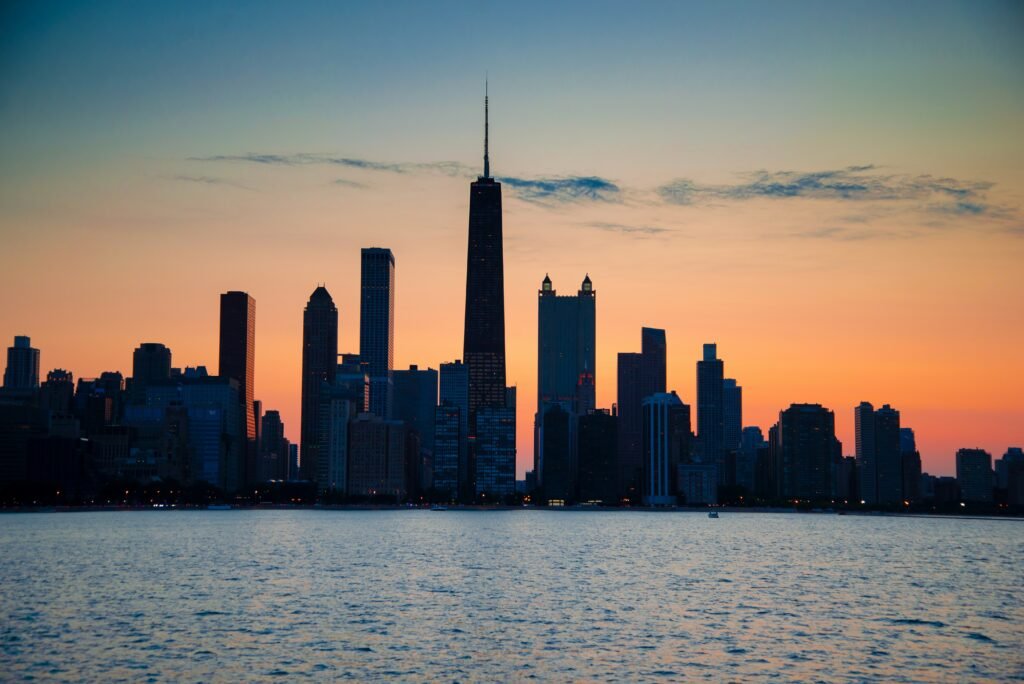
Most visitors to Chicago never find Milton Lee Olive Park — and that’s exactly what makes it special. This small peninsula between Navy Pier and Ohio Street Beach offers one of the most unobstructed, breathtaking views of the Chicago skyline anywhere in the city, and at sunset it’s one of the finest skyline viewpoints in the city. Most visitors only discover it by accident. Arrive 30 minutes before sunset, find a bench facing the skyline, and stay long enough to watch the buildings light up one by one.
Price: Free | Best time: 30–45 minutes before sunset
Tip: Bring a jacket — the wind off the lake picks up significantly after dark, even in summer.
10. North Avenue Beach
Chicago’s lakefront beaches are free, beautiful, and — particularly in summer — one of the most enjoyable free experiences the city offers. North Avenue Beach is the most popular and for good reason: the beach is wide and well-maintained, the volleyball nets are always in use, and the views of the skyline from the water’s edge are extraordinary. The beach house at the north end has a rooftop deck that’s free to access and offers particularly fine skyline views.
Price: Free | Best time: Weekday mornings to avoid weekend crowds | Season: Chicago beach season is seasonal; swimming is only allowed when lifeguards are on duty, typically from late May through Labor Day
11. Pilsen Street Art & Murals
Pilsen is one of Chicago’s most visually striking neighborhoods — a historically Mexican-American community on the Lower West Side covered in extraordinary murals. Large-scale, technically accomplished, and full of cultural and political meaning. Walking through Pilsen feels like moving through an open-air gallery — no admission required. The murals cover entire building facades, alleyway walls, and underpasses.
Price: Free | Best time: Weekend afternoons | Time needed: 2–3 hours
Tip: Combine with lunch at one of the neighborhood’s authentic Mexican restaurants — the tacos in Pilsen are among the best in Chicago and among the most affordable.
12. The 606 Elevated Trail
The 606 is an elevated trail built on a former railway line — 2.7 miles running through four Northwest Side neighborhoods: Wicker Park, Bucktown, Logan Square, and Humboldt Park. Walking or cycling it gives you a completely different perspective on the city. You’re above street level, moving through neighborhoods rather than just past them, with rooftop views and glimpses of the skyline that you can’t get from the ground.
Price: Free | Best time: Weekend mornings | Time needed: 1.5–2 hours
Tip: Rent a Divvy bike at the trailhead for the most enjoyable way to cover the full length.
13. Navy Pier — Free Sections
Navy Pier is free to walk — and walking the full length of the pier, watching the boats come in, and taking in the lake views costs nothing. The Centennial Wheel and indoor attractions have entry fees, but the pier itself, the outdoor areas, and the lakefront views are entirely free. In summer, free outdoor concerts and movie screenings happen regularly — check the Navy Pier events calendar before you visit. Full guide to the paid attractions worth adding in our Navy Pier guide.
Price: Free to walk | Best time: Late afternoon into evening | Time needed: 45–60 minutes
Tip: Summer fireworks at Navy Pier happen every Wednesday and Saturday evening — one of the best free shows in Chicago.
14. Chicago Architecture from the Bridges
The paid architecture boat tour is extraordinary — but you can get an excellent free version by simply walking the bridges along the Chicago River and looking up.
DuSable Bridge (Michigan Avenue), the Clark Street Bridge, and the Wabash Avenue Bridge all offer remarkable eye-level views of the architecture that lines the river. The combination of historic and modern buildings from these vantage points is impressive from every angle and costs exactly nothing.
Price: Free | Best time: Late afternoon when the light reflects off the buildings
Tip: Walk the bridges slowly and look in both directions — the westward views toward the merchandise mart and the eastward views toward Lake Michigan are both worth stopping for.
If you want the full river-level experience — guided commentary on every building as you pass underneath them, the skyline from the water looking up — the architecture boat tour is the one paid experience worth adding to a free-focused Chicago trip. Morning slots sell out weeks ahead in summer. Book the Chicago architecture river cruise on Viator.
15. Art on the Mart — River Light Show
Art on theMART is a free outdoor projection art show on the 2.5-acre south facade of the Merchandise Mart — one of the largest architectural digital art projections in the world. Projected artwork from established and emerging artists lights up the building exterior visible from the Riverwalk and the bridges above. It runs on scheduled evenings, and the program changes by season, so check the current calendar before planning a night around it.
Price: Free | Season: Usually spring through autumn, schedule-dependent | Best viewing: From the Riverwalk on the south bank
16. Lincoln Park Conservatory
Lincoln Park Conservatory is the better fit for a genuinely free Chicago list. The historic glasshouse is free to enter, easy to pair with Lincoln Park Zoo, and gives you palm rooms, fern rooms, orchids, and warm indoor greenery without leaving the neighborhood. On a cold or rainy day, this is one of the easiest free indoor backups in the city.
Price: Free | Best time: Weekday mornings | Time needed: 45-90 minutes
17. Wicker Park Neighborhood Walk
Wicker Park is the neighborhood for travelers who want to see Chicago beyond the tourist trail. Walk along Milwaukee Avenue on a Saturday afternoon, browse the vintage shops, stop for coffee at an independent café, and experience a city that most visitors never find. The weekend farmers market in Smith Park (June–October) is worth timing your visit around.
Price: Free to explore | Best time: Saturday afternoon into evening
18. National Museum of Mexican Art
Located in the heart of Pilsen, the National Museum of Mexican Art is one of the finest cultural museums in Chicago — and entirely free to visit. With over 10,000 works spanning 3,000 years of Mexican art and culture, from pre-Columbian artifacts to contemporary pieces, it’s one of the most overlooked free museums in any American city. The permanent collection alone is worth a dedicated half-day.
Price: Free | Best time: Weekday mornings | Time needed: 2 hours
19. Maggie Daley Park
Maggie Daley Park is one of Chicago’s most underrated free spaces — a 20-acre public park directly behind Millennium Park with a remarkable miniature golf course, a climbing wall, a skating ribbon in winter, and one of the finest children’s play areas in the country. The park sits right on the lakefront and has extraordinary skyline views from its elevated sections. It’s excellent for families and a beautiful free walk for anyone.
Price: Free (mini golf and skating have small fees) | Best time: Morning or late afternoon
20. Free Live Music in Chicago
Chicago has one of the richest music scenes in America — and in summer, much of it is free. The Millennium Park Summer Music Series and Chicago SummerDance usually bring free outdoor music and dancing to public spaces, but exact dates and lineups change each year.
The Chicago Blues Festival is one of the city’s signature free music events, usually held in June. Check the city’s current events calendar before you visit; free concerts, festivals, and park events shift from year to year.
Price: Free | Best time: June–August festival season | Tip: Bring a blanket and picnic for the Jay Pritzker Pavilion concerts — it’s one of the great free summer evenings in any American city.
Is Chicago Worth It for Free Travelers?
Yes — more so than almost any other major US city. The combination of the lakefront, Millennium Park, Lincoln Park Zoo, the Chicago Cultural Center, Pilsen, and the Riverwalk means you could spend three full days in Chicago without paying for a single attraction and still come home with memories that last. Travelers who build their first two days almost entirely around free experiences consistently say those were the best days of the trip.
Add one paid experience and you have an extraordinary Chicago trip for a fraction of what many visitors spend. The architecture boat tour is the one I’d choose — guided commentary, river-level views of the major buildings, and real context for the skyline. Book the architecture river cruise on Viator. The Skydeck is the alternative if heights are your thing — check Skydeck availability on Viator.
What Most Visitors Get Wrong
- Missing Milton Lee Olive Park entirely. It’s the best free sunset spot in the city — a peninsula with unobstructed skyline views that almost nobody on a first trip finds on their own. Put it on Day 1.
- Going to the Bean at 9am instead of 7am. The crowd difference is enormous and the early morning light is the most beautiful time to be there.
- Rushing Pilsen — two hours isn’t enough. The murals alone justify a full afternoon, and the food makes the commute from downtown more than worth it.
- Skipping the Chicago Cultural Center entirely. It’s the most underrated free building in the city — two Tiffany glass domes that most visitors walk right past without knowing they’re there.
Best Time for Free Experiences in Chicago
Summer (June–August) is when Chicago’s free outdoor experiences are at their peak — beach life on the lakefront, free concerts, festivals, outdoor dining on the Riverwalk, and the city at its most vibrant. The downside is crowds at the Bean and other popular spots.
Shoulder season (May, September–October) is the sweet spot for free experiences — the weather is comfortable, the crowds are thinner, and the Bean is significantly more accessible early morning. September hotel rates drop 20–30% compared to July, so you’re saving on both accommodation and enjoying the free experiences more comfortably.
→ Not sure where to stay in Chicago? Our Chicago accommodation guide covers every neighborhood — which ones are walkable to the free experiences, which ones save you money, and what to expect at each price point.
Final Thoughts: Free Things to Do in Chicago
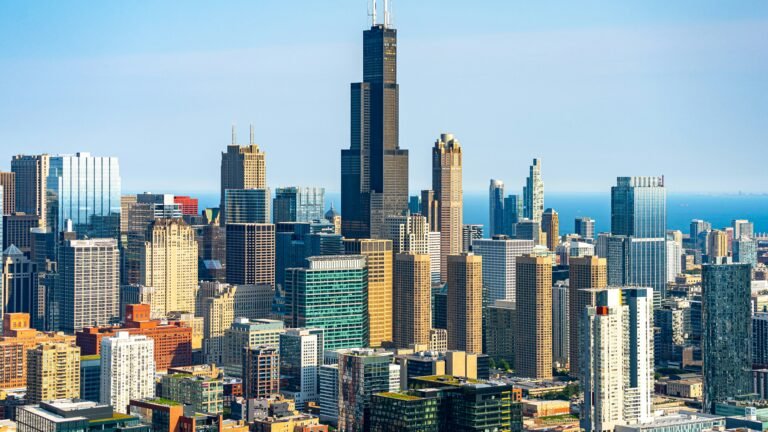
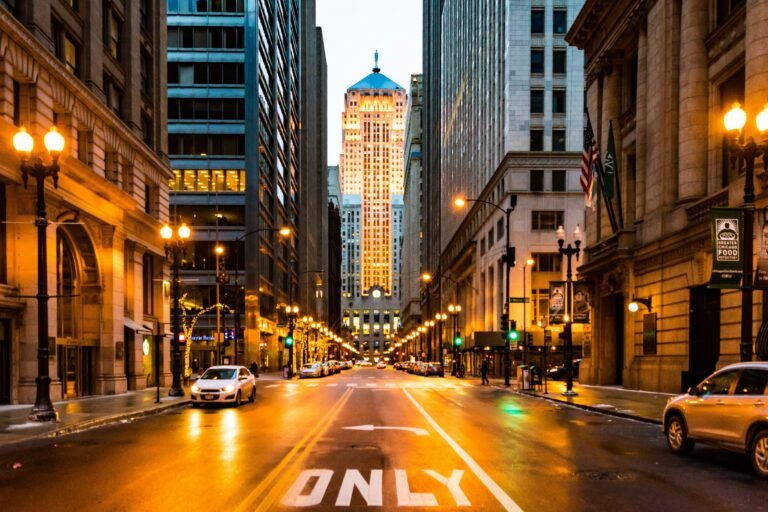
Chicago is one of the most generous cities in America when it comes to free experiences — and it rewards the traveler who knows where to look. The Bean at sunrise, the Riverwalk at golden hour, Milton Lee Olive Park at sunset, the Tiffany glass domes of the Cultural Center, the murals of Pilsen — none of these cost anything and all of them are world-class. Build your Chicago days around these free experiences, add one or two paid highlights when they add something new, and you’ll find that the free Chicago is still Chicago at its finest.
Frequently Asked Questions
What is the best free thing to do in Chicago?
Cloud Gate (The Bean) at Millennium Park — one of the most extraordinary free public artworks in the world, and the best photo opportunity in the city. Go before 9am for the best experience without crowds. The Milton Lee Olive Park sunset is a close second — entirely free, largely unknown to visitors, and one of the most beautiful views of the Chicago skyline available anywhere.
Is Lincoln Park Zoo really free?
Yes — completely free to enter, with no suggested donation or required reservation. It has been free for over a century and remains one of the finest free zoos in the United States. Some special events and the children’s farm area may have small additional fees, but the main zoo is entirely free.
What is free in Chicago in winter?
Most indoor free experiences are available year-round: the Chicago Cultural Center (Tiffany glass domes), the National Museum of Mexican Art, Lincoln Park Conservatory, and Millennium Park itself. The Millennium Park skating ribbon in winter is free to skate if you bring your own skates; rental has a fee. Winter hotel rates can be much lower than summer peak — if cold weather does not bother you, it can be a good-value time to visit.
Are the Chicago lakefront beaches free?
Yes — Chicago’s public lakefront beaches are free to use. No entry fee, no required reservation. North Avenue Beach, Oak Street Beach, and Montrose Beach are the most popular. Swimming is seasonal and only allowed when lifeguards are on duty, typically late May through Labor Day. The lakefront path connecting the beaches is free year-round and one of the finest urban walks in America.
What is the best free neighborhood to explore in Chicago?
Pilsen for street art, authentic Mexican food, and the National Museum of Mexican Art — a distinctly different Chicago experience that most visitors never find. Wicker Park for independent shops, coffee, and the local creative scene. Both neighborhoods are significantly cheaper for food and drink than downtown and both reward slow exploration on foot.
Before You Go: Practical Notes
Travel insurance. If you are visiting Chicago from outside the US, compare travel insurance that includes emergency medical coverage before you fly. US healthcare can be extremely expensive without insurance, so read the policy wording for medical care, trip cancellation, baggage loss, exclusions, and activity coverage. EKTA is one option to compare and is straightforward to quote online.
Connectivity. Roaming on a European or home-country SIM in the US adds up quickly and often delivers slower speeds than a local plan. A US eSIM from Holafly eSIM plans are priced by data and trip length — install before you fly and you’ll have a working connection the moment you land at O’Hare.
Spending without avoidable card fees. Chicago is very card-friendly – restaurants, street food, and the L train are easy to handle without much cash. If your home bank adds foreign transaction fees, compare a travel card before you go. Wise is one option to compare because it shows conversion costs clearly and uses transparent exchange-rate pricing.
More Chicago Guides
- Ready to plan your days? Our 3-day Chicago itinerary combines free and paid experiences into the best possible first visit.
- Want to see everything Chicago has to offer? Our Chicago bucket list covers the 25 best experiences with honest assessments of each.
- Budgeting your trip? Our Chicago budget guide breaks down exactly what everything costs — free and paid — with real numbers.
- Deciding where to stay? Our Chicago accommodation guide covers every neighborhood with honest pros, cons, and price ranges.
- Still in the planning stages? Our complete trip planning guide covers flights, accommodation, travel cards, and every logistical step of planning a US city trip.