Chicago Hop-On Hop-Off Bus: Is It Worth the Money?
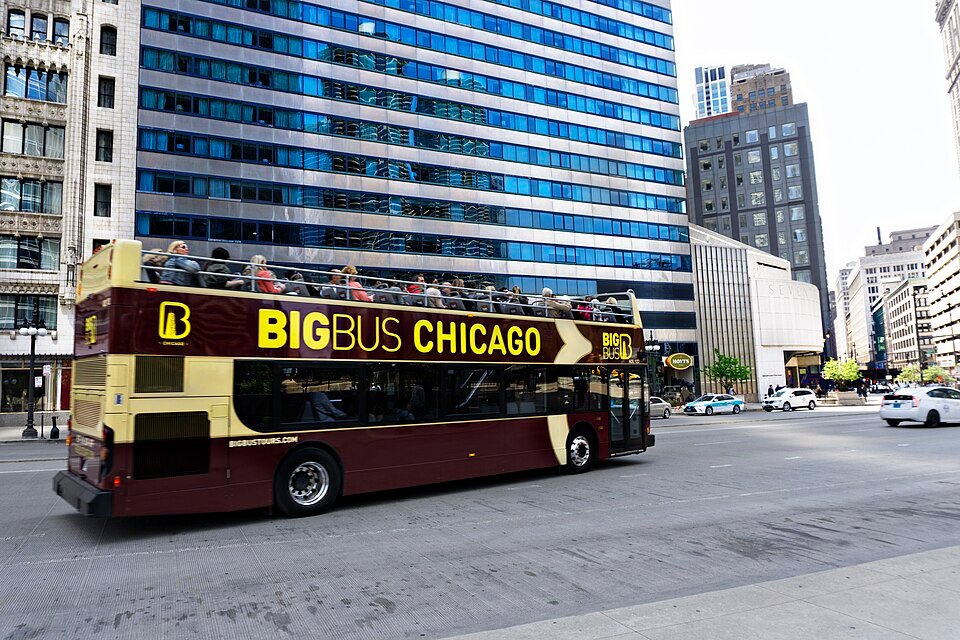
The Chicago hop-on hop-off bus covers the right stops — Millennium Park, Navy Pier, Museum Campus, the Magnificent Mile, Willis Tower — and does it in a single ticket. For a first-time visitor who wants to see a lot without navigating the city’s transit system from scratch, that’s a genuine offer. But the 3.9-star average across more than 2,000 reviews tells a story too. This is a useful tool for a specific kind of traveler, and a mediocre experience for everyone else. Here’s who should buy it.
Contents
Quick answer: Worth it if this is your first day in Chicago and you’d rather orient yourself from a bus than figure out the CTA from scratch. Not worth it if you’re comfortable with public transit, traveling solo, or plan to spend real time at each stop — in those cases CTA trains and buses get you to the same areas faster and with more flexibility. The open-top bus earns its price as a first-day overview; it’s poor value as a primary way to actually see Chicago.
Affiliate disclosure: Some links in this post are affiliate links. If you book through them, I may earn a small commission at no extra cost to you. I only recommend things I would genuinely consider for the same trip. Learn more.
Lili’s Picks
This is what I’d book
If this is your first day in Chicago and you want orientation more than deep sightseeing, the ticket I would shortlist is the Chicago Hop-On Hop-Off Bus Tour on Viator. I would use it as a first-day overview, then switch to walking, CTA, river cruise, or neighborhood time for the rest of the trip.
- Best if you want: an easy first look at the Loop, Magnificent Mile, Museum Campus, Navy Pier, and lakefront without planning every transfer yourself.
- Why it works: Chicago makes more sense once you understand how the river, lakefront, Loop, and museum area sit together.
- Not ideal if: you are comfortable with public transit, traveling solo on a tight budget, or planning long museum stops where the bus pass sits unused.
- Before booking: compare the exact ticket type, route currently operating, first and last bus times, weather forecast, cancellation window, and whether your selected listing shows Reserve Now & Pay Later.
Why I like using Viator here: if your selected listing shows free cancellation or Reserve Now & Pay Later, you can hold the plan while you check the forecast. That matters in Chicago because an open-top bus feels completely different on a sunny 75°F day than it does in lakefront wind or rain.
This is where I’d stay
The hotel I would shortlist for this kind of Chicago trip is the River Hotel on Booking.com. The location is the point: close to the river, the architecture cruise area, Millennium Park, the Magnificent Mile, and several transit options.
- Best if you want: a practical Loop base that makes first-time Chicago logistics easy.
- Why it works: you can pair the hop-on hop-off bus with a river cruise, Millennium Park, and Michigan Avenue without constantly crossing the city.
- Not ideal if: you want a quieter neighborhood feel or a room with lots of space for a longer stay.
- Before booking: compare total price with taxes, room type, cancellation terms, river-view upgrade cost, resort or destination fees, and recent guest comments for your exact dates.
What’s Included
The Chicago hop-on hop-off is operated by Big Bus Tours. The main visitor route is the Red Loop, and Big Bus also lists a shorter Yellow Shuttle route, so check the current route map before you build your day around a specific stop. A 24-hour hop-on hop-off ticket normally lets you board and re-board at designated stops during the ticket window. The buses are open-top double-deckers; in good weather the upper deck gives clear sightlines for photography and a sense of the skyline between stops.
Commentary is audio-based and plays through the bus system. It covers the architecture, history, and context of the neighborhoods the route passes through — generally useful for orientation, though not as immersive as a dedicated architecture cruise or walking tour. Check the current Big Bus listing if you need a specific language option.
Ticket inclusions vary. The basic 24-hour pass is the simple first-day option; longer passes or bundled products may add a sunset tour, walking-tour app, or architecture river cruise. The bundle that pairs the bus with an architecture river cruise is worth comparing if both are already on your Chicago list, because the river cruise adds the one experience the bus cannot replicate.
The Route & Main Stops
The loop covers the core visitor geography of Chicago, running roughly from the Loop to Navy Pier and back through the Magnificent Mile. The main stops worth planning around:
- Millennium Park / Art Institute. The anchor stop for most visitors. Get off here for Cloud Gate (the Bean), Crown Fountain, and the Art Institute entrance. Allow 45 minutes minimum just for Millennium Park.
- Museum Campus. The cluster of major museums on the lakefront south of the Loop — Field Museum, Shedd Aquarium, Adler Planetarium. Any one of these needs at least two hours; plan accordingly and don’t try to do all three in a single afternoon.
- Navy Pier. The Centennial Wheel, the food options, and the lakefront views east. Worth 60–90 minutes; more if you’re eating.
- Magnificent Mile. The stretch of North Michigan Avenue between the Chicago River and Oak Street — flagship stores, the historic Water Tower, and most of the mid-range to luxury hotels in the area. Good for a drop-off if shopping is on the agenda.
- Willis Tower / Loop. The stop nearest to the Skydeck is in the Loop. If Willis Tower is on the list, get off here and budget 90 minutes including the Ledge queue.
| Hop-On Hop-Off Bus | CTA + Walking | |
|---|---|---|
| Price | Usually from around $49 for a 24-hour pass; check your exact date | CTA rail is currently $2.50 per ride; 1-day CTA/Pace pass is currently $5 |
| Commentary | Yes — audio-based, useful for orientation | None |
| Stops | Fixed sightseeing stops on the Big Bus route | Every CTA stop plus anywhere you walk |
| Schedule | Route and frequency vary by season and service day | Frequent on major train lines, but check live service alerts |
| Weather | Open top — exposed to rain, wind, heat, and cold | Stations and vehicles are more protected |
| Best for | First day, families, older travelers, easy orientation | Independent travelers, repeat visitors, strict budgets |
Who Should Buy It
First-time visitors using it as a day-one orientation. The loop covers enough ground to give you a working mental map of Chicago — where the Loop sits relative to the lakefront, how far Navy Pier is from Millennium Park, what the Magnificent Mile actually looks like. This orientation has genuine value on day one, even if you spend the rest of the trip on foot or transit.
Families with children who benefit from the contained logistics — board the bus, sit down, see things from a height, get off when something looks interesting. No navigating the L, no trying to read transit maps with small children in tow.
Visitors with limited mobility who want to see the breadth of the city without committing to long walks between stops. The bus handles the distances; you choose when to get off and how long to stay.
Overcast or slightly rainy days. The open-top bus is more comfortable in mild cloudy weather than direct summer sun, and the reduced crowds at stops make the hop-on hop-off experience smoother. Avoid it in full rain — you’ll be on a covered lower deck and the experience narrows significantly.
Who Should Skip It
Anyone comfortable with public transit. Chicago’s CTA is well-signed, useful, and much cheaper than a sightseeing bus. The Red Line and Blue Line cover many visitor areas, and an Uber or Lyft can fill any gap. A 1-day CTA/Pace pass is currently $5, so transit wins easily if you care more about movement than commentary and open-top views.
Visitors who want to go deep. The hop-on hop-off model works best when you treat it as a sampler — quick looks at many places. If you plan to spend three hours at the Art Institute or a full afternoon at Navy Pier, the bus adds nothing to those experiences and the all-day pass becomes poor value once you’re stationary.
July and August afternoons. Chicago in high summer on an open-top bus without shade is genuinely uncomfortable. The upper deck is exposed, the buses can run late due to traffic, and waiting at a stop in direct sun for the next bus is one of the more unpleasant ways to spend time in a city with excellent indoor alternatives. If you’re visiting in peak summer, book the morning departure and get off before noon.
If You Do Buy It: Tips
- Start at Millennium Park. It’s the most central stop and lets you walk through the park before boarding. The Bean in the morning before crowds is worth 15 minutes of your time even without the bus ticket.
- Go early. The first buses of the day have the best seats, the thinnest crowds, and the most predictable schedules. Afternoon departures are more likely to be affected by Loop traffic.
- Treat it as a sampler, not an itinerary. Get on, stay on for the full loop without stopping (about 90 minutes), get a visual overview of the whole city, then get off at the one or two stops that look most interesting and spend real time there.
- The upper deck, front seats. The views from the front row of the upper deck are significantly better than anywhere else on the bus. Board early at a starting stop to claim them.
- Pair it with the architecture cruise. The combination ticket handles the two best overview experiences in Chicago — the bus for the city’s scale, the river cruise for the buildings up close. Together they make a strong first day.
- Check the weather forecast. An open-top bus in a Chicago lakefront wind with temperatures below 65°F is not a good time. If your selected Viator listing shows free cancellation, that flexibility is useful because weather can make or break this experience.
More from Chicago
The stops on the hop-on hop-off route are a good starting list for a Chicago trip — here’s where to go deeper. The Chicago bucket list covers what’s actually worth prioritizing, in the order that makes sense for a first visit, with honest takes on what to skip.
The architecture river cruise — the single thing Chicago does that no other city can replicate — deserves its own time and guide: our architecture cruise guide covers the operators, best seating, and the buildings worth knowing before you board. For the observation decks, the Willis Tower vs 360 Chicago comparison helps you decide which one — or both — belongs in the itinerary. And for Navy Pier specifically, the Navy Pier guide covers what’s actually worth your time on the pier and what to eat there.
Frequently Asked Questions
Is the Chicago hop-on hop-off bus worth it?
For first-time visitors using it as a day-one orientation tool, yes. The bus covers the main visitor areas and gives you a working sense of Chicago’s geography without needing to navigate the CTA from scratch. For experienced travelers, those comfortable with public transit, or anyone who plans to spend real time at each stop, CTA trains and buses get you to the same areas with more flexibility at a fraction of the price.
How long is the Chicago hop-on hop-off bus loop?
A full sightseeing loop without stopping usually takes around 90 minutes to 2 hours, depending on traffic and the route operating that day. Chicago’s Loop-area traffic can add time during peak hours, particularly on weekend afternoons. A 24-hour ticket lets you ride within the validity period on the included route or routes for your selected ticket type.
What stops does the Chicago hop-on hop-off bus cover?
The main stops include Millennium Park, the Art Institute area, Museum Campus (Field Museum, Shedd Aquarium, Adler Planetarium), Navy Pier, the Magnificent Mile, and the Willis Tower/Loop area. Exact stop locations and schedules are confirmed at booking — stops and frequencies can change seasonally.
How does the hop-on hop-off bus compare to Chicago’s CTA?
The CTA is faster, cheaper, and more flexible for most trips. CTA transit covers many of the same visitor areas for far less money; a 1-day CTA/Pace pass is currently $5. The bus adds recorded commentary and elevated views from the open top deck — useful for first-timers, less so for anyone who wants to move efficiently between specific stops.
What is the best time of day for the Chicago hop-on hop-off bus?
Morning departures are usually best — ideally starting between 9:00 AM and 10:00 AM. Traffic in the Loop is lightest in the morning, buses run more reliably to schedule, and the first stops (Millennium Park, Museum Campus) are less crowded before noon. Avoid peak summer afternoon departures if possible — the open-top deck in direct sun with traffic delays is the least comfortable version of the experience.
Feature photo — Boris Kasimov / CC BY 2.0.