
25 Best Things to Do in NYC: A Local-Style Bucket List
New York doesn’t do subtle. The skyline is as dramatic as the photos, the food is genuinely as good as the reputation, and the particular compressed energy that makes the city feel like it’s running at a frequency other places can’t reach is completely real. What catches most first-time visitors off-guard isn’t the scale or the noise — it’s how much of the best version of the city lives just outside the places everyone tells you to go.
This list covers 25 experiences worth your time: the iconic ones that actually deliver, the free ones most visitors walk straight past, the neighborhoods that show you what New York actually looks like when it’s not performing for tourists, and the food that makes this city genuinely unlike anywhere else.
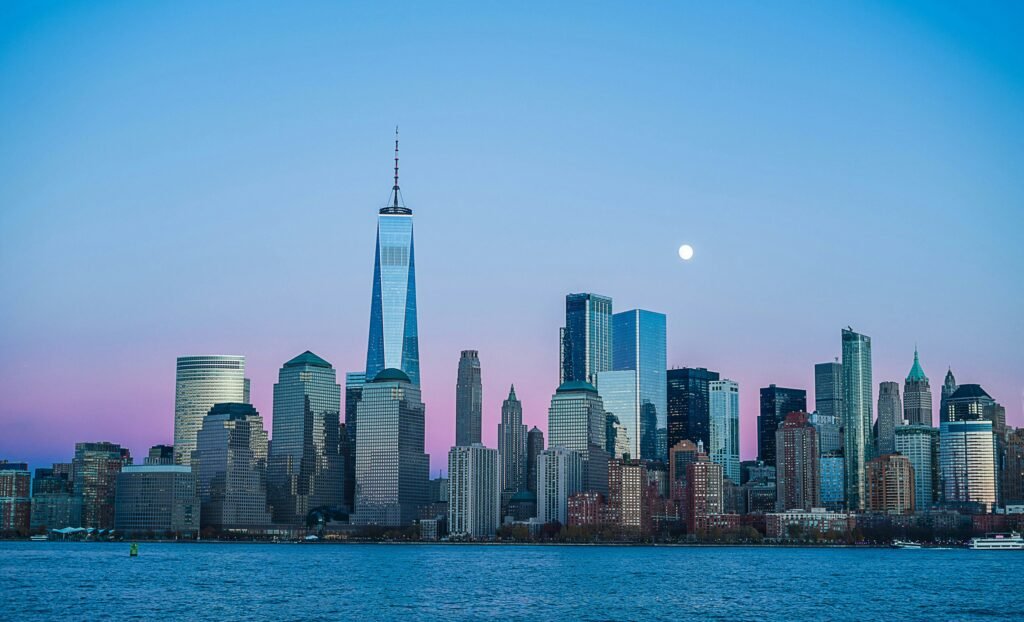
All 25, at a glance
- 1. Brooklyn Bridge — walk east at sunrise
- 2. Central Park — Sheep Meadow on a warm day
- 3. Top of the Rock — Empire State in frame
- 4. The Met — 5,000 years, pick 2–3 wings
- 5. 9/11 Memorial — the reflecting pools
- 6. The High Line — elevated park to Chelsea Market
- 7. Grand Central — the whispering gallery
- 8. Broadway Show — book 2–3 weeks ahead
- 9. Staten Island Ferry — free, Statue of Liberty
- 10. DUMBO — the skyline photo
- 11. MoMA — Starry Night, Water Lilies
- 12. Chelsea Market — the old Nabisco factory
- 13. One World Observatory — 1,776 feet up
- 14. NYPL Reading Room — free, that ceiling
- 15. Times Square — once, after dark
- 16. A Real NYC Pizza Slice — Joe’s Pizza, since 1975
- 17. A Real NYC Bagel — Ess-a-Bagel or Russ & Daughters
- 18. Natural History Museum — the 94-ft blue whale
- 19. Chinatown — Sunday dim sum
- 20. West Village — wander without a map
- 21. Williamsburg — skyline from North 5th Pier
- 22. The Oculus — Calatrava’s white ribs
- 23. Smorgasburg — Saturday in Williamsburg
- 24. Rooftop Bar — three picks, golden hour
- 25. Governors Island — car-free, 10-min ferry
Quick answer: For a first New York trip, prioritize the Brooklyn Bridge at dawn, Central Park, Top of the Rock at sunset, one major museum, the 9/11 Memorial area, DUMBO, one Broadway evening, and at least one food-focused neighborhood like Chinatown or Williamsburg. Five to six days is ideal; three days is the minimum if you group the city by area.
This post contains affiliate links. If you book or buy something through them, I may earn a small commission — at no extra cost to you. I only recommend things I would genuinely consider useful for planning this trip.
Lili’s picks for NYC
New York is a lot to plan. Here’s what I’d have sorted before landing — starting with where to base yourself and the one booking most people leave too late.
Where I’d stay
Pod Times Square for Midtown — compact rooms, but you’ll barely be in them. Walking distance to Central Park and Top of the Rock, subway to Brooklyn in 20–30 minutes. If you want the neighbourhood atmosphere from day one, Pod Brooklyn in Williamsburg puts you on the right side of the river — L train to Manhattan in 12 minutes. For the full breakdown of all six neighbourhoods, see our where to stay in NYC guide.
Book before you arrive
- Top of the Rock — sunset slots sell out weeks ahead in summer. This is the one booking that actually makes or breaks the golden hour view. Lock it in now — no upfront payment on eligible bookings, free cancellation up to 24 hours before if plans shift.
- 9/11 Memorial Museum — timed entry, and weekend slots get tight. Sort this in advance if it’s on your list — no upfront payment on eligible bookings, free cancellation up to 24 hours before.
- Greenwich Village Food Tour — the one I’d book for a first evening. Someone else handles the route, six proper stops, no scrambling for tables. Free cancellation up to 24 hours before if plans change.
Travel smarter
- Wise card — spending USD from a non-US bank means conversion fees on every coffee, taxi, and museum ticket. I use Wise to avoid the markup entirely. Set it up before you fly.
- Holafly eSIM — NYC subway kills your signal underground. Install a US data plan before boarding so maps work from the moment you clear customs at JFK. Code MILESANDFLAVORS for a discount, reusable on future trips too.
- Omio — if Boston or DC is on the same trip, the Amtrak Northeast Regional is worth comparing here.
Contents
- Quick Summary
- NYC Bucket List Map
- Before You Go: NYC Planning Shortcuts
- NYC Bucket List: 25 Best Things to Do
- 1. Walk the Brooklyn Bridge
- 2. Spend a Morning in Central Park
- 3. Top of the Rock — The Best Skyline View in NYC
- 4. The Metropolitan Museum of Art
- 5. 9/11 Memorial & Museum
- 6. Walk the High Line
- 7. Grand Central Terminal
- 8. Watch a Broadway Show
- 9. Staten Island Ferry — The Free Statue of Liberty View
- 10. DUMBO & Brooklyn Bridge Park
- 11. MoMA
- 12. Chelsea Market
- 13. One World Observatory
- 14. New York Public Library — Rose Reading Room
- 15. Times Square (on Your Terms)
- 16. A Proper NYC Pizza Slice
- 17. A Proper NYC Bagel
- 18. American Museum of Natural History
- 19. Chinatown
- 20. West Village
- 21. Williamsburg, Brooklyn
- 22. The Oculus at the World Trade Center
- 23. Smorgasburg
- 24. Rooftop Bar at Sunset
- 25. Governors Island
- Is NYC Worth It?
- What Most Visitors Get Wrong
- Best Time for the NYC Bucket List
- Where to Eat in New York
- Final Thoughts: Your NYC Bucket List
- Before You Go: Practical Notes
- Frequently Asked Questions
- More NYC Guides
Quick Summary
| Best time to visit | April–June or September–November |
| How many days | 5–6 ideal, 3 minimum |
| Best area to stay | Midtown West or Brooklyn |
| Getting around | Subway (OMNY tap-to-pay) + walking |
| Don’t miss | Brooklyn Bridge at dawn + Top of the Rock at sunset |
| Best for | First-timers, couples, food lovers, culture seekers |
NYC Bucket List Map
Use this map to group sights by area before you plan your days. Manhattan is long — Upper Manhattan (Central Park, the Met), Midtown (Times Square, Rockefeller Center), and Lower Manhattan (9/11 Memorial, the Oculus, Brooklyn Bridge) each work as a full day. Brooklyn adds another 20–30 minutes by subway but rewards the trip.
Before You Go: NYC Planning Shortcuts
- Start with the map. New York spreads across five boroughs. Group your days by area — Upper Manhattan, Midtown, Lower Manhattan, and Brooklyn each work as a full day. Use the map below before choosing your route.
- Flights. Fly into JFK for most transatlantic routes, EWR (Newark) for often cheaper fares, or LGA for domestic connections. Compare both on Google Flights and Skyscanner before assuming JFK is the right choice.
- Hotels. Midtown West (Hell’s Kitchen, the 50s west of Fifth Avenue) for logistics; Brooklyn (DUMBO, Williamsburg) for atmosphere and lower prices. See our where to stay in NYC guide for the full neighbourhood-by-neighbourhood breakdown with specific picks.
- Broadway tickets. Book 2–3 weeks ahead for good seats on the shows you actually want to see. For last-minute options, check Broadway show options on Viator — some packages include dinner or a pre-show tour.
- CityPASS. Worth the math only if several included attractions are already on your plan. Do not buy it just because it sounds efficient. Use the Viator CityPASS page to compare current pricing, included attractions, reservation rules, and whether it actually fits your itinerary before buying.
- Cheap flights. The cheap flights guide covers the approach that consistently finds better fares for US city trips.
- Travel card. Read the travel money card guide — particularly useful if you’re arriving from abroad and want to avoid airport exchange desks. If your bank adds foreign transaction fees, compare a Wise travel card before paying for hotels, tickets, and food in USD.
- eSIM. The eSIM guide explains when a dedicated US data plan is worth it over roaming. If your home plan does not include reliable US data, compare a Holafly US eSIM before you fly — code MILESANDFLAVORS for a discount.
The city is endlessly improvable once you’re there. What you can’t fix last-minute is a sold-out Top of the Rock on the one evening the sky goes orange, or a fully booked 9/11 Museum on the only free morning you have. These are worth locking in before anything else.
NYC Bucket List: 25 Best Things to Do
Use the map above before you plan your days. Manhattan is long — Upper Manhattan, Midtown, and Lower Manhattan each work as a full day, with Brooklyn as a dedicated half or full day. Grouping by area saves a lot of unnecessary subway time.
1. Walk the Brooklyn Bridge
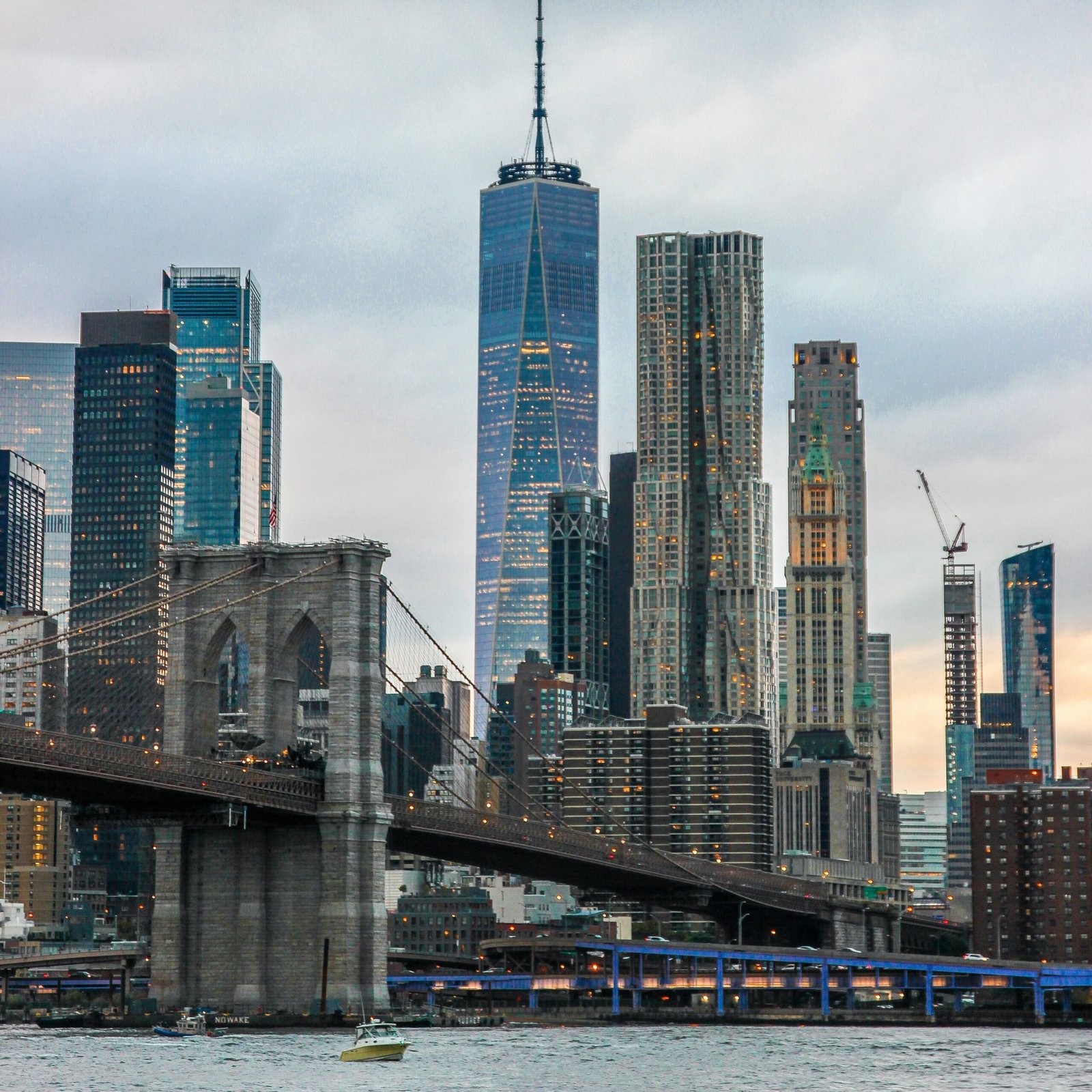
The most iconic free experience in New York — and one of the few things that fully delivers on every expectation. The 1-mile crossing takes 20–30 minutes, with the Manhattan skyline behind you and Brooklyn ahead. The main Gothic stone towers you walk through are beautiful up close, the wooden pedestrian walkway has a particular satisfying feel underfoot, and the views from the midpoint are the ones on every New York postcard.
Walk east (Manhattan to Brooklyn) — not the reverse. You face the sunrise and arrive in DUMBO with the best skyline view ahead of you. At dawn on a clear morning, this is as good as New York gets.
Price: Free | Best time: Sunrise — crowds are thin and the light on the towers is extraordinary | Time needed: 45–60 minutes including the DUMBO walk below | Tip: The pedestrian path runs above the traffic lanes. Stay on the right side — cyclists have their own lane and will use it.
2. Spend a Morning in Central Park
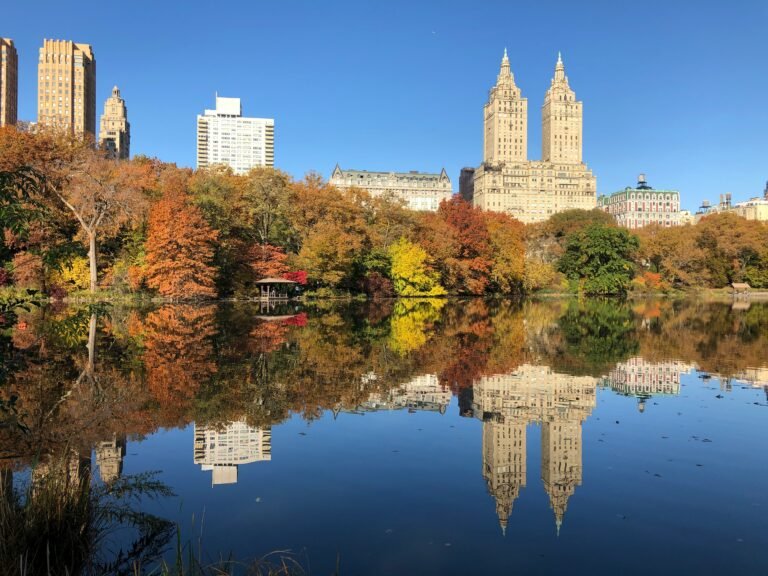
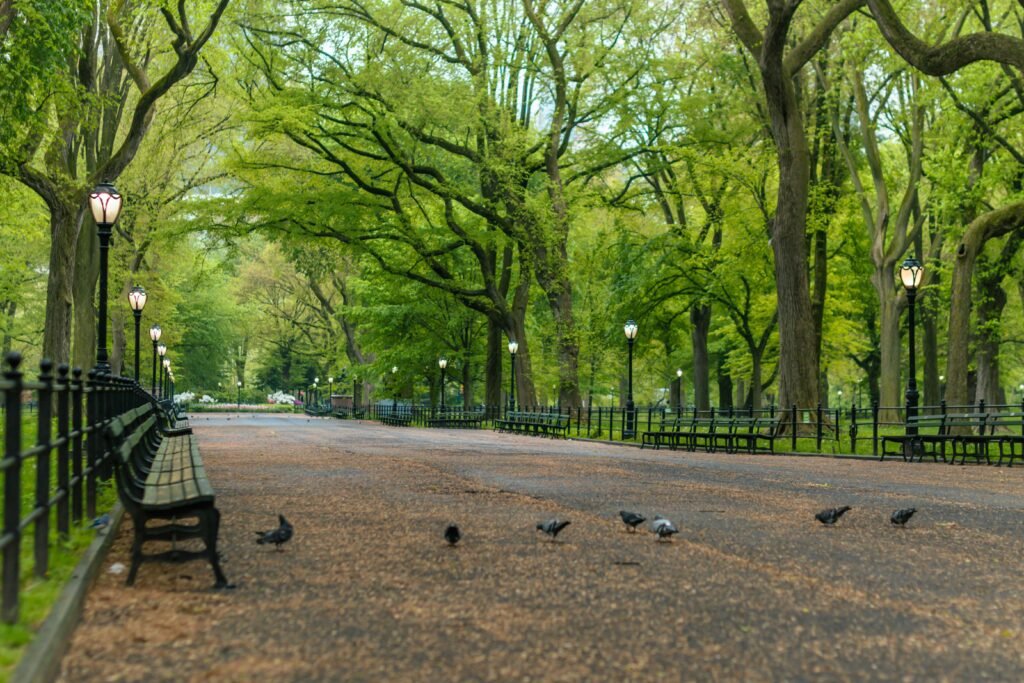
843 acres in the center of Manhattan — and genuinely beautiful in a way that feels improbable given what surrounds it. The park is large enough to get lost in, but the essential route runs from the southern entrance at 59th Street north to the Bethesda Fountain, then west to Bow Bridge, and up through the Ramble. The Sheep Meadow on a warm afternoon is one of the great free experiences in any city: locals sunbathing, frisbees, people reading, skyscrapers visible above the treeline in every direction.
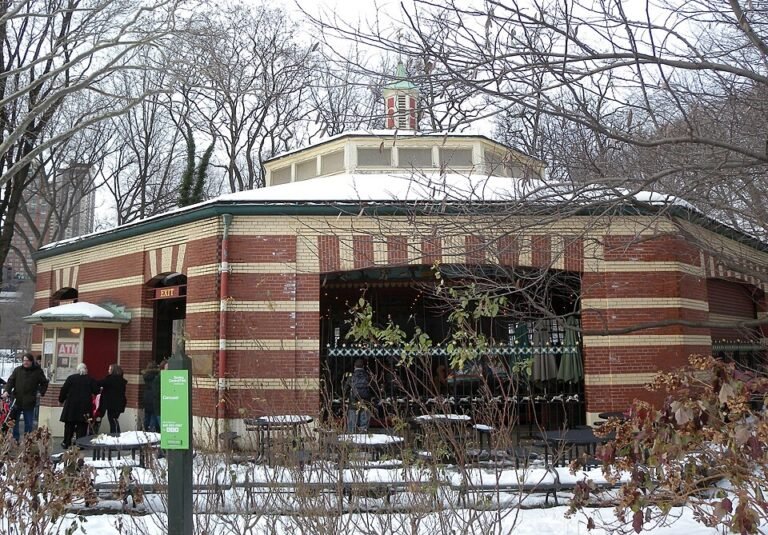
Price: Free | Best time: Weekend mornings in spring or fall — the light on Bow Bridge in October is worth a trip on its own | Time needed: 2–3 hours | Tip: Rent a Citi Bike at the south entrance and ride the loop road — the park makes much more sense from a bike than on foot, and you can cover significantly more ground. With kids: The carousel, the playgrounds near 72nd Street, and the Central Park Zoo at the south end are all genuinely good.
3. Top of the Rock — The Best Skyline View in NYC
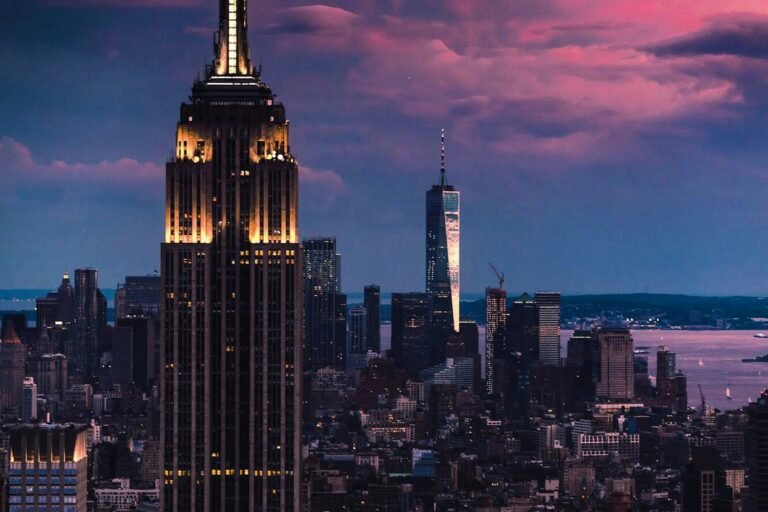
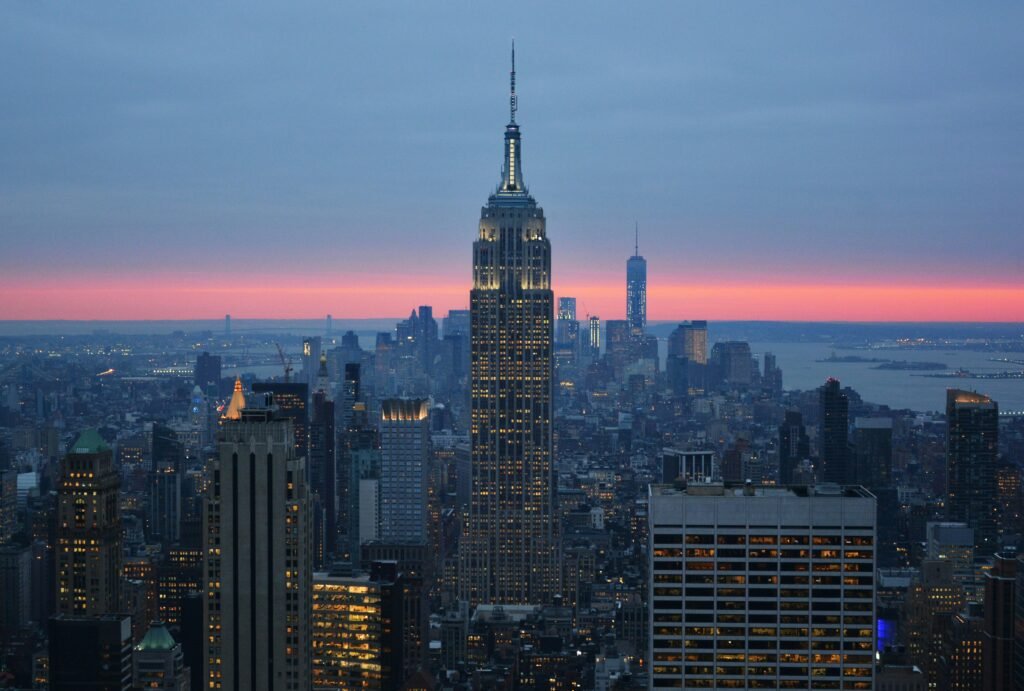
Four observation decks compete for your money in New York. Top of the Rock, on the 70th floor of 30 Rockefeller Plaza, is the right choice for a first visit — because from here you can see the Empire State Building in the frame. From the Empire State Building itself, you can’t. The 360° views take in Central Park to the north, Lower Manhattan to the south, and the Hudson and East Rivers on both sides. The building itself — part of the original Rockefeller Center complex — is beautiful architecture even before you go up.
Price: Check current pricing and timed-entry availability | Best time: 30–45 minutes before sunset — the light on the skyline during golden hour is extraordinary | Time needed: 60–90 minutes | Tip: Sunset slots can book up ahead in summer. If you want clear skies and fewer people, early morning is the move. For current slot options, compare timed-entry Top of the Rock tickets on Viator.
4. The Metropolitan Museum of Art
One of the world’s three or four greatest art museums — and consistently underestimated even by people who know it’s good. The collection spans 5,000 years across 250,000 objects on permanent display: Egyptian Temple of Dendur, European Old Masters, Impressionists, an entire American wing, and the Arms and Armor gallery that stops everyone regardless of how much they care about art. The problem is that it’s so large most people don’t know where to start. Pick two or three wings you’re genuinely interested in and go deep rather than trying to see everything.
Price: $30 adults; pay-what-you-wish for New York State residents and students from New York, New Jersey, and Connecticut | Best time: Weekday mornings | Hours: Check the current calendar and gallery closures before you go | Time needed: 2–3 hours minimum | Tip: Do not plan around a single gallery or the rooftop without checking the latest closure list; renovation closures change. With kids: The Arms and Armor gallery never fails.
5. 9/11 Memorial & Museum
Not a tourist attraction in the usual sense — an act of remembrance that is exactly as serious and affecting as you expect it to be. The twin reflecting pools where the towers stood are genuinely arresting at street level: the scale of what’s missing registers differently than any photograph prepares you for. The names of the 2,977 victims line the bronze parapets. The museum below is thorough, comprehensive, and emotionally demanding. It requires real time and mental space — not a quick pass-through between lunch and your next stop.
Price: Memorial plaza: free. Museum: check current ticket pricing | Best time: Weekday mornings when it is quieter | Time needed: 2–3 hours for both | Tip: The museum is currently open Wednesday–Monday plus select Tuesdays and uses advance ticketing. The memorial plaza is free and worth visiting even if you skip the museum — standing at the edge of the pools is a different experience from any photograph. Compare 9/11 Museum timed-entry tickets on Viator if you want this fixed before arrival.
6. Walk the High Line
An abandoned elevated railway running 1.45 miles through the Meatpacking District, Chelsea, and Hudson Yards — converted into a public park planted with wildflowers and grasses, dotted with art installations, and offering views into the neighborhood streets below that no ground-level walk provides. On a clear afternoon it’s one of the most pleasant walks in Manhattan. The Hudson River is visible to the west; the Chelsea art gallery district is directly below.
Price: Free | Best time: Late afternoon in spring or fall — the planting is at its best in June and October | Time needed: 60–90 minutes end to end | Tip: Enter at the southern end on Gansevoort Street (near the Whitney Museum of American Art) and walk north. The Meatpacking District and Chelsea sections are the most interesting architecturally and artistically. The northern Hudson Yards section is worth skipping unless you’re specifically going to the Vessel.
7. Grand Central Terminal
The most underrated free experience in Midtown. The main concourse is one of the great interior spaces in American architecture — the turquoise ceiling with gold-painted constellations, the warm light filtering through the arched south windows in the afternoon, the constant motion of 750,000 people passing through daily. Most visitors walk through without stopping. Stop. Look up. The Whispering Gallery under the arched hallway outside the Oyster Bar is a genuine acoustic phenomenon — two people standing at opposite diagonal corners can hear each other whisper across the room.
Price: Free | Best time: Late afternoon when the south windows catch the low light | Time needed: 30–45 minutes | Tip: The Grand Central Market on the lower concourse level has some of the best prepared food in Midtown — it’s where local office workers actually eat. Murray’s Cheese in the market is one of the finest cheese shops in the city.
Planning your NYC days? Our 5-day NYC itinerary sequences these experiences into a logical day-by-day order — including which morning to do the Brooklyn Bridge, when to hit the Met, and how to combine Lower Manhattan and Brooklyn without backtracking.
8. Watch a Broadway Show
An evening at a proper Broadway theater is a distinctly New York experience that doesn’t exist anywhere else in the world at this concentration or quality. The shows run the full range — classic musicals, new plays, limited-run productions with major talent — and the production values are reliably extraordinary. Book in advance for the productions people are actually talking about, or look at what’s running during your specific dates and choose something you genuinely want to see rather than defaulting to the most famous title.
Price: ~$75–300+ depending on show and seat | Best time: Tuesday–Thursday performances typically have better availability at lower prices | Time needed: 2.5–3 hours | Tip: For same-day discounted tickets, check TKTS in Times Square (lines can be long but discounts are real) or the TodayTix app for last-minute rush. For advance booking with show options, see Broadway options on Viator.
9. Staten Island Ferry — The Free Statue of Liberty View
The single best free thing you can do in New York. The Staten Island Ferry runs 24 hours a day, 365 days a year, takes 25 minutes each way, and passes close enough to the Statue of Liberty that you get a clear, unobstructed view at no cost. The full guided Statue of Liberty and Ellis Island ferry tour is worth doing if you have the time and want to go on the island — but for the view and the harbor crossing, the Staten Island Ferry does everything you need for free.
Price: Free | Best time: Clear morning or late afternoon | Time needed: 1 hour round trip | Tip: Stand on the right (starboard) side going out from Manhattan for the Statue of Liberty view. On the return leg, stand on the left (port) side — the Lower Manhattan skyline coming toward you at full steam is one of the best views in the harbor. Go to the upper outdoor deck immediately; the best spots fill quickly. No need to leave the terminal at Staten Island — take the next ferry straight back.
10. DUMBO & Brooklyn Bridge Park
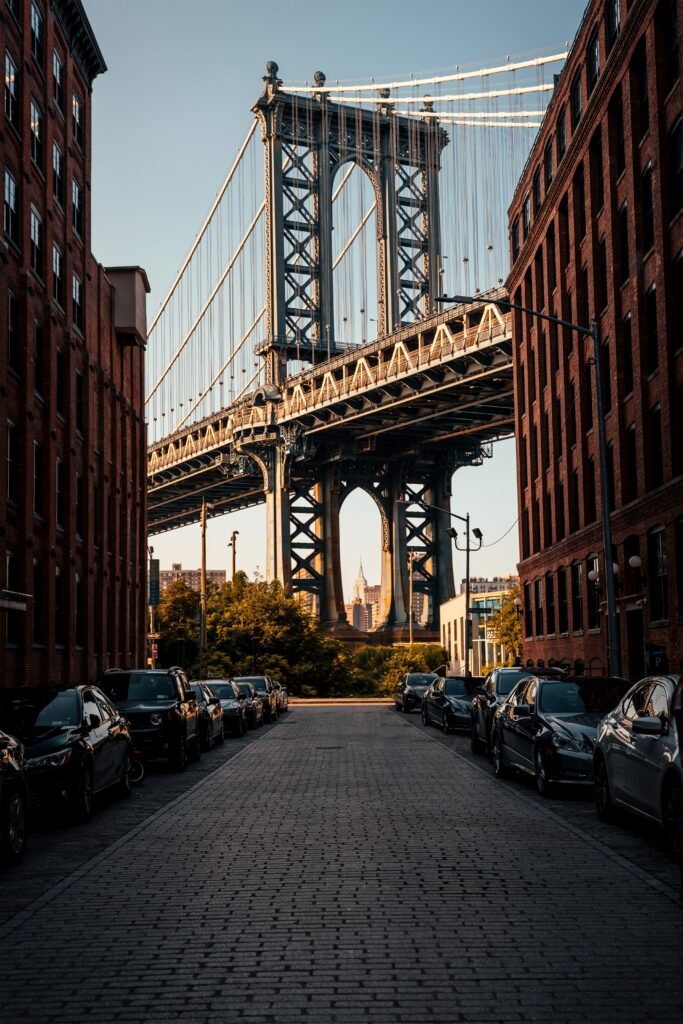
DUMBO (Down Under the Manhattan Bridge Overpass) is where the best Manhattan skyline photographs come from — the view of the Brooklyn Bridge with the Manhattan Bridge behind it, framed between the old brick warehouse buildings of Washington Street, appears on every New York list and still genuinely delivers in person. Brooklyn Bridge Park runs along the waterfront below with the skyline directly across the East River — Pier 1 at sunset is one of the best free viewpoints in the city.
Price: Free | Best time: Late afternoon into sunset — the light on the Manhattan skyline from Brooklyn is best when you’re facing west | Time needed: 2–3 hours for DUMBO and the park | Tip: For the classic framing photograph (Brooklyn Bridge in the foreground, Manhattan Bridge behind), walk down Washington Street between Front and York Streets and look west. It works at any time of day but morning light from the east is particularly clean. Combine with the Brooklyn Bridge walk — cross the bridge into Brooklyn and spend the afternoon in DUMBO before taking the subway back.
I’d book the Brooklyn Bridge & DUMBO Neighborhood Tour if it’s your first time — the bridge, the skyline, DUMBO as a story instead of a photo stop. Lock it in now, no figuring out the route on the day. No upfront payment on eligible bookings, free cancellation up to 24 hours before — no money at risk either way. That’s why Viator is my first stop for every trip. Check the current meeting point, route and duration before booking.
11. MoMA
Van Gogh’s Starry Night. Monet’s Water Lilies across an entire wall. Warhol’s Campbell’s Soup Cans. Pollock’s drip paintings at the scale they were intended to be seen. Picasso’s Les Demoiselles d’Avignon. All of them in one building on West 53rd Street, alongside a permanent collection of modern and contemporary art that consistently surprises even visitors who think they know it. Unlike the Met, MoMA is focused rather than encyclopedic — more manageable in a single visit and easier to leave with a sense of actually having seen it.
Price: $30 adults | Best time: Weekday mornings, or Friday evening if you qualify for New York State resident free tickets | Hours: Open daily, with late Friday hours; check the current calendar before you go | Time needed: 2–3 hours | Tip: Do not skip the sculpture garden — it is a quiet, unexpected patch of green in the middle of Midtown. On Friday evenings, New York State residents can reserve free tickets in advance, subject to availability. If you’d rather have entry sorted before you arrive, compare MoMA skip-the-line tickets on Viator.
12. Chelsea Market
A former Nabisco factory — the original Oreo cookie was produced here — converted into a full-block food hall running between Ninth and Tenth Avenues on 15th Street. The architecture alone is worth the visit: exposed brick, industrial pipes, a stream running through the floor. The food is genuinely good, and the variety is better than most dedicated food halls. The Lobster Place for raw bar and seafood. Amy’s Bread for pastries. Dickson’s Farmstand Meats for a burger. Fat Witch Bakery for brownies worth the line.
Price: Free to enter / food ~$15–40 per person | Best time: Late morning — the lunch rush (12–2pm) is genuinely crowded | Time needed: 60–90 minutes | Tip: Chelsea Market connects directly to the High Line at the south end on 14th Street. Combining them into a half-day — market first, then the High Line north — is the most efficient route through Chelsea.
13. One World Observatory
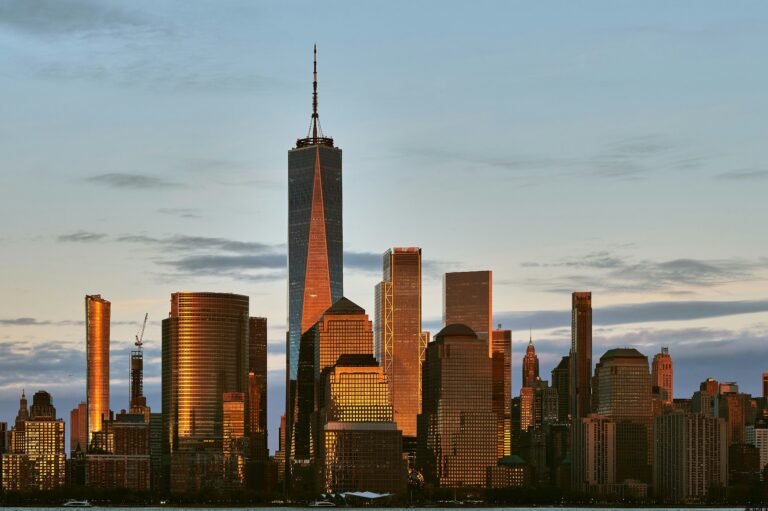
At 1,776 feet — a number that is not accidental — the tallest observation point in the Western Hemisphere. The views are different from Top of the Rock rather than better or worse: from here you’re in Lower Manhattan looking north at the full length of the island, with New York Harbor behind you and (on a clear day) 50 miles in every direction. It’s the right choice if you want the full 360° experience from a completely different angle, or if you’re already spending the day in Lower Manhattan and want to go up without the Midtown detour.
Price: Check current pricing | Best time: Morning for Hudson River light | Time needed: 60–90 minutes | Tip: One World gives you a different view of Manhattan than Top of the Rock — you see the full island stretched north in front of you, which is better for understanding the city’s scale. If you’re doing only one observation deck, Top of the Rock. If you’re doing two, pair them on different days and different times; compare One World Observatory tickets on Viator before locking your Lower Manhattan day.
14. New York Public Library — Rose Reading Room
The most underrated free experience in Midtown, and one of the most beautiful interior spaces in New York. The main branch on Fifth Avenue and 42nd Street is a Beaux-Arts landmark that most visitors walk straight past on the way to Grand Central or Times Square. The Rose Main Reading Room on the third floor — 297 feet long with 52-foot-high painted ceilings and rows of original brass lamps — is extraordinary. People come here to actually work. The contrast with the street outside is complete.
Price: Free | Best time: Weekday mornings when it’s quietest | Time needed: 30–45 minutes | Tip: The marble entrance hall with the two stone lion statues (named Patience and Fortitude by New Yorkers during the Depression) is worth seeing even if you’re short on time. Bryant Park directly behind the library has the best outdoor seating in Midtown in good weather — combine them into a 90-minute stop.
15. Times Square (on Your Terms)
Yes, it’s overwhelming. Yes, it’s aggressively commercial. And yes, at 11pm on a Saturday it is also genuinely unlike anywhere else on earth — the density of light and noise and motion compressed into a few city blocks creates something that is simultaneously ridiculous and extraordinary. Go once. Make it deliberate rather than incidental. Spend 20–30 minutes, take in the full sensory overload, and then move on to the parts of New York that reward time more generously.
Price: Free | Best time: Late evening, any day — the full effect only works in the dark | Time needed: 20–30 minutes | Tip: Do not eat within three blocks of Times Square. The food quality drops and the prices rise in direct proportion to proximity to the TKTS booth. In December, the first two weeks of the month have the Christmas lights and windows without the full New Year’s Eve chaos.
16. A Proper NYC Pizza Slice
A New York pizza slice is a genuinely different product from what exists under the same name everywhere else — wider, thinner, foldable down the middle, with a particular char on the bottom crust that only comes from a proper deck oven. It must be eaten on the street. The essential stop is Joe’s Pizza on Carmine Street in the West Village, which has been producing the same slice since 1975. Order one plain slice. Do not add toppings. Do not sit down. This is not complicated, and it is one of the better things you will eat in New York regardless of where else you go.
Price: ~$4–6 per slice | Best time: Any time except the tourist lunch rush (1–3pm) | Time needed: 10 minutes and a napkin | Tip: Di Fara in Midwood, Brooklyn is the other essential stop — a longer subway journey but a different and arguably better experience. L&B Spumoni Gardens in Bensonhurst for the Sicilian square slice, which is its own category and worth the trip.
17. A Proper NYC Bagel
The New York bagel debate is ideological, and the correct answer is Ess-a-Bagel (East 21st Street) or Russ & Daughters (Houston Street, Lower East Side) for a bagel with lox and cream cheese. The bagel itself — denser, chewier, slightly glossy from being boiled before baking — is the vehicle. It should be eaten warm, within minutes of being made, and it should have lox (cured salmon), cream cheese, red onion, capers, and tomato on it. Murray’s Bagels in the West Village is good for anyone who wants to stay in Manhattan without the East Side detour.
Price: ~$10–18 for a bagel with lox | Best time: Early morning when they’re fresh | Time needed: 20 minutes | Tip: Russ & Daughters has been on Houston Street since 1914. The combination of flavors in a properly assembled bagel with lox has been calibrated over a century — don’t modify it.
18. American Museum of Natural History
Over 34 million specimens and artifacts across 45 permanent exhibition halls — and the building that inspired Night at the Museum, which gives it an odd double existence as both a serious research institution and a place where children expect things to come to life. The blue whale suspended in the Hall of Ocean Life is the first thing you’ll walk into and is exactly as impressive as it sounds at 94 feet long. The dinosaur halls are among the best in the world. The Hall of Meteorites has a 34-ton iron meteorite that you can actually touch.
Price: Check current adult admission; New York State residents can pay what they wish for general admission only | Best time: Weekday mornings | Time needed: 3–4 hours | Tip: The Hayden Planetarium space shows require a separate timed ticket — reserve in advance if you want one. With kids: This is one of the best family museums anywhere, especially if your child is in a dinosaur or space phase. Compare AMNH admission tickets on Viator if you want entry booked before you land.
19. Chinatown
The most underrated neighborhood in Manhattan for food — dense, alive, cheap, and genuinely not performing for tourists. Mott Street and Canal Street are the main axis, but the best version of Chinatown is walking east from Mott toward Elizabeth Street and stopping wherever looks busy. Sunday morning dim sum at Golden Unicorn, Nom Wah Tea Parlor for a more visitor-friendly classic, or whichever busy bakery has a line. Scallion pancakes from a street cart. Soup dumplings at Joe’s Shanghai. The Mahayana Buddhist Temple on Canal Street is the largest Buddhist temple in New York and always open to visitors.
Price: Free to explore / food ~$10–25 per person | Best time: Weekend mornings for dim sum; any weekday afternoon for street food | Time needed: 2–3 hours | Tip: Walk from Chinatown to DUMBO via the Manhattan Bridge underpass path — a 30-minute walk that is genuinely atmospheric and takes you through a part of the city most visitors never see. Or continue east into the Lower East Side, where the transition from 19th-century immigrant New York to 21st-century bar and restaurant culture is immediate.
I’d book the Chinatown & Little Italy Food Tour — six proper stops with someone who knows where to go. You eat well without second-guessing every restaurant, no scrambling on the day. No upfront payment on eligible bookings, free cancellation up to 24 hours before — no money at risk. That’s exactly why Viator is my first stop for every trip. Check the current stops, dietary notes and group size before booking.
20. West Village
The most beautiful neighborhood in Manhattan — a grid of pre-Civil War rowhouses and cobblestone streets that somehow survived the 20th century’s appetite for demolition. The streets don’t align with the standard Manhattan grid, which gives the West Village a labyrinthine quality that rewards wandering without a map. The best approach: arrive at the Christopher Street–Sheridan Square subway station, put your phone away, and walk without a plan. The food throughout the neighborhood is excellent — this is where chefs live and eat when they’re not working.
Price: Free to walk | Best time: Weekend afternoons into evening | Time needed: 2–3 hours | Tip: Bedford Street between Morton and Barrow has the most photographed blocks in the neighborhood — they look exactly like a movie set because a century of film has been shot there. For food, keep it simple: grab a classic slice at Joe’s Pizza, go for pastries at Patisserie Claude, or book ahead for a tougher table like Via Carota.
I’d book the Greenwich Village Food Tour for this neighborhood — six proper stops with a local who knows the route. West Village rewards that knowledge. Lock it in now, no planning stress, no upfront payment on eligible bookings, free cancellation up to 24 hours before — no money at risk if something changes. That’s why I recommend booking through Viator. Check the latest route, inclusions and reviews before booking.
21. Williamsburg, Brooklyn
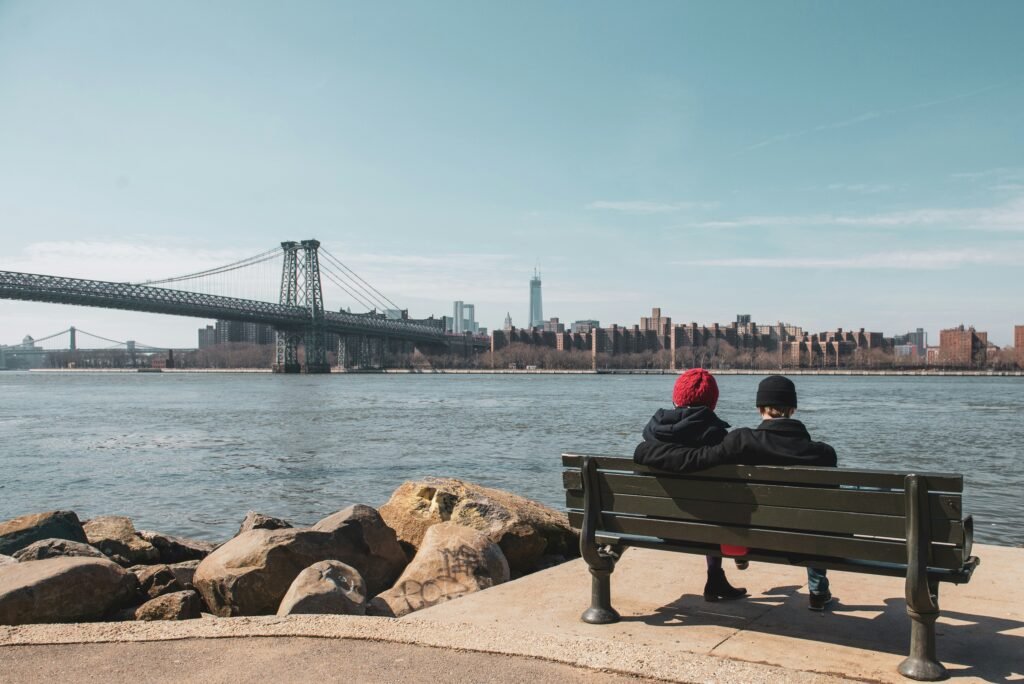
The most interesting neighborhood in Brooklyn for a first visit — creative, food-forward, internationally diverse in its dining options, and with a waterfront park that has the best sustained Manhattan skyline view in the borough. Bedford Avenue is the main artery, but the better restaurants are on the side streets: Roebling, Berry, North 6th. The Saturday Smorgasburg food market is an additional reason to time a warm-weather visit to a weekend morning.
Price: Free to explore / dining ~$20–50 per person | Best time: Saturday afternoon into evening | Time needed: 3–4 hours | Tip: Take the L train to Bedford Avenue and walk west toward the water — the skyline view opens up as you approach the waterfront park at North 5th Pier. At sunset, the Manhattan skyline framed between the Williamsburg and Manhattan Bridges from this angle is the best in the borough. The East River Ferry from Williamsburg to the East Village or Midtown is a better way back than the L train if you time it right.
22. The Oculus at the World Trade Center
The most dramatic piece of architecture in Lower Manhattan — a Santiago Calatrava-designed transit hub at the base of One World Trade Center that looks like an enormous white dove mid-flight, and cost significantly more than anyone intended. The interior is a single soaring white rib-vaulted space with a skylight that runs the full length of the roof. It is controversial, expensive, and genuinely extraordinary to stand inside. Free to enter — there are shops below, but you don’t have to buy anything.
Price: Free | Best time: Morning on a clear day when the skylight is working | Time needed: 20–30 minutes | Tip: The skylight runs the full length of the spine and allows a narrow beam of light to illuminate the floor directly below on September 11th each year. On any clear morning, the interior light through the white ribs is worth seeing even outside that date — it changes significantly with the position of the sun. The Oculus is also the transit hub for the PATH train to New Jersey if you’re leaving the city that direction.
23. Smorgasburg
New York’s most famous outdoor food market — 70+ vendors across Brooklyn and Manhattan locations in the 2026 season, including Williamsburg on Saturdays and Prospect Park on Sundays. The standard is genuinely high: Smorgasburg has launched multiple well-known New York food businesses, and the range on any given market day — from ramen to arepas to experimental desserts — is extraordinary. Come hungry. Come early, and check the current location schedule before building a day around it.
Price: Free entry / food usually about $10-20 per item | Season: Check the current season and location schedule; main Brooklyn markets usually run on weekends | Best time: Arrive at opening before the crowd peaks around lunch | Time needed: 2 hours | Tip: Three to four things across the market is the right approach. Portions are real, and you will run out of appetite before options. One of them should be whatever the current breakout vendor is; ask whoever is already eating what they would recommend.
24. Rooftop Bar at Sunset
New York’s rooftop bar scene is large and the quality varies enormously. Three worth targeting specifically: The Skylark in Hell’s Kitchen — more refined than most, genuinely good cocktails, and the Empire State Building at close range from the terrace. 230 Fifth in the Flatiron District — the most expansive open terrace in Midtown, reliably packed, worth it anyway for the 360° skyline. Harriet’s Rooftop Bar at 1 Hotel Brooklyn Bridge — the best Manhattan skyline view from across the river, worth the 20-minute subway trip to Brooklyn for the angle alone.
Price: ~$20–30 per cocktail | Best time: 45 minutes before local sunset — most rooftop bars are crowded by 7pm on weekends | Time needed: 60–90 minutes | Tip: Arriving at 5pm on a weekday is the move for a genuinely good experience. Order one drink and stay for the transition from afternoon light to evening — that’s the 45 minutes that justifies the cocktail price.
25. Governors Island
New York’s best-kept warm-weather secret — a 172-acre island in New York Harbor, about 10 minutes by ferry from Lower Manhattan, completely car-free, and with the best unobstructed view of the lower Manhattan skyline from the south. Governors Island is open daily year-round, but the island is at its best from late spring through early fall, when the hammock grove, Hills section, art installations, food vendors, bike rentals, and waterfront lawns turn it into a proper escape from the mainland. Almost no first-time visitors make it here. That is exactly why it works.
Price: Check current ferry fare and schedule | Best season: Late spring through early fall | Best time: Weekday morning in late summer or early fall | Time needed: 3-4 hours | Tip: Rent bikes on the island. The southern loop takes you past the best skyline viewpoints in the least amount of time. The Hills section at the southern tip has the most dramatic view of Lower Manhattan available from any point in the harbor. Bring food if you want full flexibility; the island vendors are good but seasonal.
Is NYC Worth It?
Yes — and more complex than the question implies. New York is not a destination you “see.” It’s a city you experience, and the experience requires deciding which version of it you’re actually after. The iconic version — the skyline, the Brooklyn Bridge, Broadway — delivers exactly as advertised. The neighborhood version — West Village, Williamsburg, Chinatown — takes more time and pays off more quietly. Both are worth it, and five or six days is enough to sample both properly.
Worth it if: you have enough time to slow down in at least one neighborhood, you’ve made one or two specific plans in advance (a Broadway show, a museum you actually want to see), and you’ve accepted that the city costs money and leans into it.
Less ideal if: you’re doing New York in 48 hours with every tourist checkbox on the list. You’ll see the surface and leave feeling like you missed something. You did — and 48 hours is genuinely not enough.
What Most Visitors Get Wrong
- Walk 10 minutes from Times Square before sitting down to eat. The food quality drops and the price rises in exact proportion to proximity to the TKTS booth. One block east or west and you’re in a completely different city.
- One observation deck per trip, at the right time of day. Trying to see the whole skyline from multiple decks dilutes every one of them. Top of the Rock at sunset — pick it, commit, done.
- Stay in Midtown West, not Midtown East. Hell’s Kitchen and the 50s west of Fifth Avenue give you walking access to Central Park, the High Line, and Chelsea Market. The Midtown East side near Grand Central does not.
- Go straight to the upper outdoor deck on the Staten Island Ferry. Half the trip is on the water — the best spots fill in the first two minutes. Head outside immediately and stand on the right side going out.
- Put Governors Island on the itinerary. Almost no first-time visitor makes it here, which is exactly why it works — a car-free island 10 minutes from Lower Manhattan with the best unobstructed skyline view in the harbor.
Best Time for the NYC Bucket List
April–June is the best spring window — mild temperatures, parks at their best, and hotel rates significantly lower than summer peak. Late May and June are the sweet spot: warm enough for rooftops and outdoor markets, cool enough for walking all day.
September–November is the other excellent window. September light is extraordinary for photography, the humidity of summer is gone, and fall color in Central Park peaks in late October. October is arguably the single best month to visit.
December has the Christmas window displays, the Bryant Park and Rockefeller Center ice rinks, and the tree. The first two weeks of December hit the sweet spot before the full Christmas rush. Avoid the final week before New Year’s Eve.
July–August is hot, humid, and expensive. If summer is your only option, start every day early, plan museums for midday, and know that much of the city has relocated to the Hamptons.
Shoulder season tip: October hotel rates in New York run 20–30% lower than August at the same quality properties. Same city, better weather, lower cost.
Where to Eat in New York
The pizza and bagel are covered above. For everything beyond those:
Lilia (Williamsburg): The best pasta in Brooklyn — mafaldini with pink peppercorn and parmigiano, sheep’s milk ricotta agnolotti. Book three to four weeks ahead. ~$60–80 per person.
Russ & Daughters Café (Lower East Side): The sit-down version of the institution that has been at Houston Street since 1914. Jewish deli food at its absolute peak. The bagel with lox, the beet-cured salmon, the blintzes. ~$30–50 per person.
Xi’an Famous Foods (multiple locations): The best value meal in Manhattan — hand-pulled noodles with cumin lamb. Under $15, no reservations, no frills, and genuinely extraordinary. The 8th Avenue location in Hell’s Kitchen is convenient for Midtown.
Joe’s Shanghai (Chinatown): The original New York destination for soup dumplings. Order the crab and pork xiao long bao — bite the corner, drink the broth first, then eat the rest. ~$20–30 per person.
Corner Bistro (West Village): A cash-only bar with one of the most legendary burgers in New York — thick, juicy, served in a cardboard box with a plastic cup of beer. Under $20. No reservations and always a short wait. Worth it every time.
Final Thoughts: Your NYC Bucket List
New York rewards the traveler who makes choices rather than trying to cover everything. The city is too large and too layered for a comprehensive visit — and that is entirely the point. Pick the Brooklyn Bridge at dawn, one neighborhood you want to get genuinely lost in, one museum you actually care about, and one evening that is purely New York. That version of this city is the one that stays with you.
The rest you can return for. And you will.
Before You Go: Practical Notes
Last checked: June 2026. Admission prices, seasonal hours, ferry schedules, and market dates change — verify official pages before planning around specific experiences.
Getting around. Use OMNY: tap your credit card or phone directly on any subway or bus reader. No MetroCard needed. As of 2026, a subway or local bus tap-and-ride fare is $3, and OMNY has a weekly fare cap when you use the same card or device. The subway covers everything on this list; walking covers the rest. You do not need a car in New York.
Tipping. 20% minimum at sit-down restaurants — this is not optional in New York. 18% is considered low. Coffee shops and counter service: $1–2 per drink is standard.
Walking. Manhattan’s numbered grid makes navigation simple. Streets run east-west; avenues run north-south. Odd-numbered streets are westbound; even-numbered are eastbound. Fifth Avenue divides east and west addresses.
Connectivity. Subway platforms have limited signal in some sections — download maps offline before you go underground. The eSIM guide explains when a dedicated US data plan is worth it over international roaming; if your home plan does not include the US, compare a Holafly US eSIM before you fly — code MILESANDFLAVORS for a discount.
Card payments. New York is very card-friendly, but foreign transaction fees can quietly add up if you are paying in USD from a non-US bank account. A Wise card is worth comparing before the trip if your bank charges conversion fees.
Travel insurance. Recommended for non-refundable bookings — Broadway shows, observation deck timed tickets, and guided tours. EKTA is one option to compare: straightforward to get a quote online, covers trip interruption and medical, and takes a few minutes to check.
Frequently Asked Questions
What is the best thing to do in New York City?
Walk the Brooklyn Bridge at dawn — it’s free, it’s iconic, and at 7am on a clear morning you’ll have it nearly to yourself. Follow it into DUMBO and spend the morning there with the skyline in front of you. For a paid experience, Top of the Rock at sunset is the one to prioritize — the view of the Empire State Building from here is the quintessential New York skyline photograph and the real thing is better than every photo of it.
How many days do you need for NYC?
Five to six days covers this bucket list without rushing — one day each for Upper Manhattan (Central Park, the Met), Midtown (Top of the Rock, Grand Central, MoMA, Broadway), Lower Manhattan (Brooklyn Bridge, 9/11 Memorial, the Oculus), and Brooklyn (DUMBO, Williamsburg, Smorgasburg if it’s the season). Three days is the minimum for a meaningful visit; anything less and you’re seeing the surface. A week lets you actually slow down.
What is free in New York City?
More than you would expect. The Brooklyn Bridge walk, Central Park, the High Line, the Staten Island Ferry, Grand Central Terminal, the New York Public Library Rose Reading Room, the 9/11 Memorial plaza, DUMBO and Brooklyn Bridge Park, the Oculus, Chinatown, the West Village, Williamsburg waterfront, Smorgasburg entry, and Governors Island outdoor areas once you arrive are all free. The American Museum of Natural History has pay-what-you-wish general admission for New York State residents only, so visitors from outside New York should check current ticket prices.
Is New York City good for families with children?
Yes — exceptionally so for families who plan ahead. The American Museum of Natural History is one of the best children’s museums in the world. Central Park has multiple playgrounds, a carousel, and a zoo. The Staten Island Ferry is free and fascinating at any age. The Brooklyn Bridge walk is manageable for older children. AMNH is still one of the strongest family experiences in the city, but visitors from outside New York State should check current ticket pricing before planning around it.
What is the best month to visit New York City?
October is the best single month — comfortable temperatures, extraordinary fall light for photography, Central Park color peaking in late October, and hotel rates running 20–30% below the August peak. September is close behind. May and early June are the best spring window. Avoid July and August if possible — hot, humid, and the most expensive months of the year. December is worth it for the first two weeks if you want the Christmas version of the city.
More NYC Guides
- Ready to plan your days? Our 5-day NYC itinerary covers the best day-by-day sequence with honest time and cost estimates for every stop.
- Trying to find the cheapest flights? Our cheap flights guide covers the approach that works for US city trips.
- Planning your full budget? Our trip planning guide covers flights, accommodation, travel cards, and every logistical step from start to finish.