3 Days in Amsterdam: The Honest First-Timer’s Itinerary
This post contains affiliate links. If you book or buy something through them, I may earn a small commission — at no extra cost to you. I only recommend things we actually use and genuinely believe in.
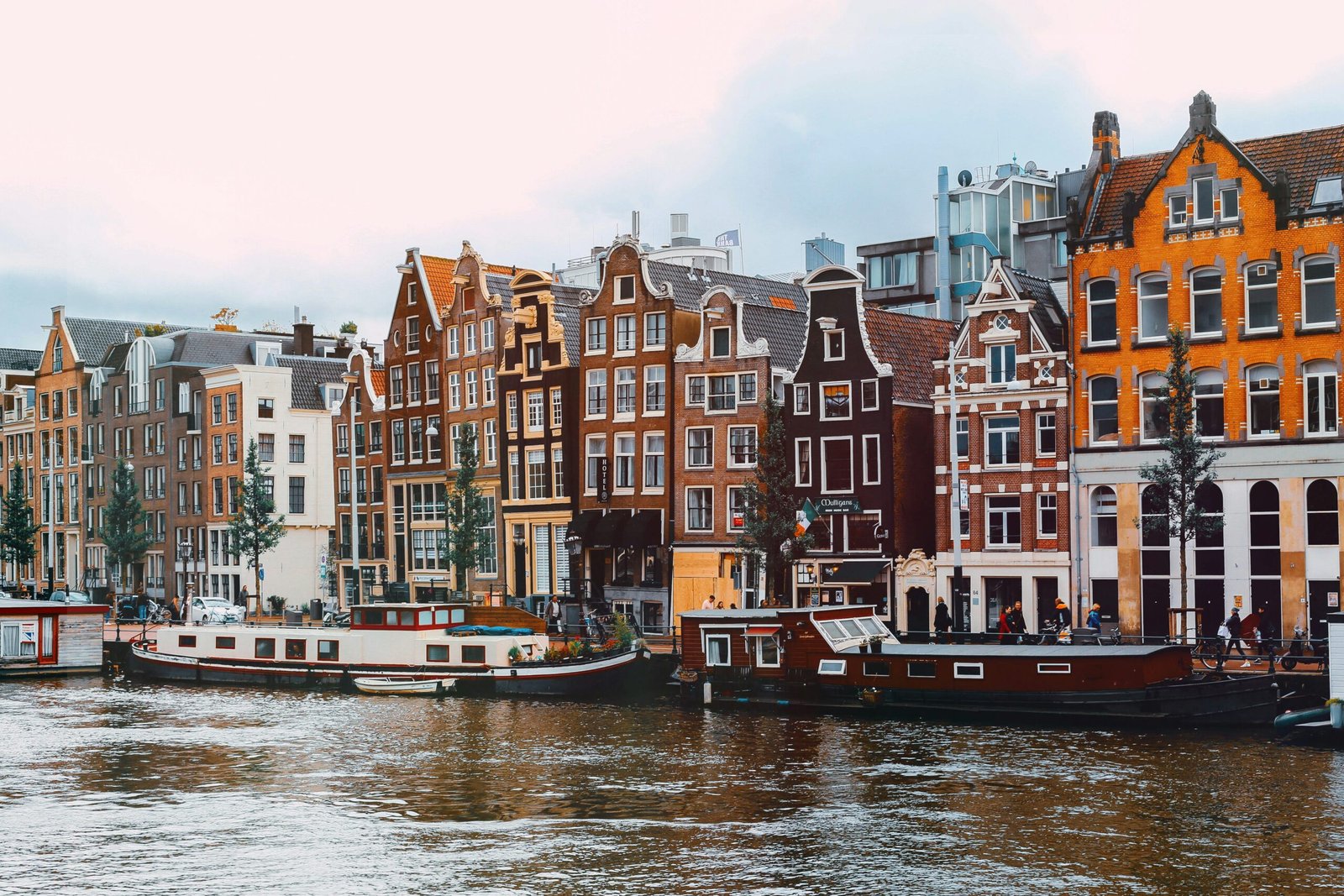
Three days in Amsterdam, one toddler, no car. This is the itinerary that actually happened — not the one I planned at 11 PM with ambitious spreadsheets and zero realistic expectations.
Amsterdam is small enough that three days gets you the essential version of the city. Book the key pieces in advance — canal cruise, Anne Frank House — or you’ll spend your limited time in queues.
Table of Contents
Before you go — quick links
- Canal cruise — Book on Viator → — Book before you finalize your itinerary; the good morning departures fill up first.
- Where to stay — Expedia → or Booking.com →
- Travel card — Wise → — No fees on euros; essential when you’re paying for market snacks, trams, and museum tickets all day.
- eSIM — Holafly Netherlands eSIM → (code MILESANDFLAVORS for a discount) — Maps and translation from the moment you land at Schiphol.
- Travel insurance — EKTA → — Three days of canals, bikes, and a toddler on cobblestones — cover yourself.
Day 1: Jordaan, canal walk, Vondelpark
Arrive, drop bags, resist the urge to immediately do everything. Amsterdam has a particular quality in the first hour where the canals look fake — too pretty, too perfectly Dutch — and you should spend some time just letting that land before you start optimizing.
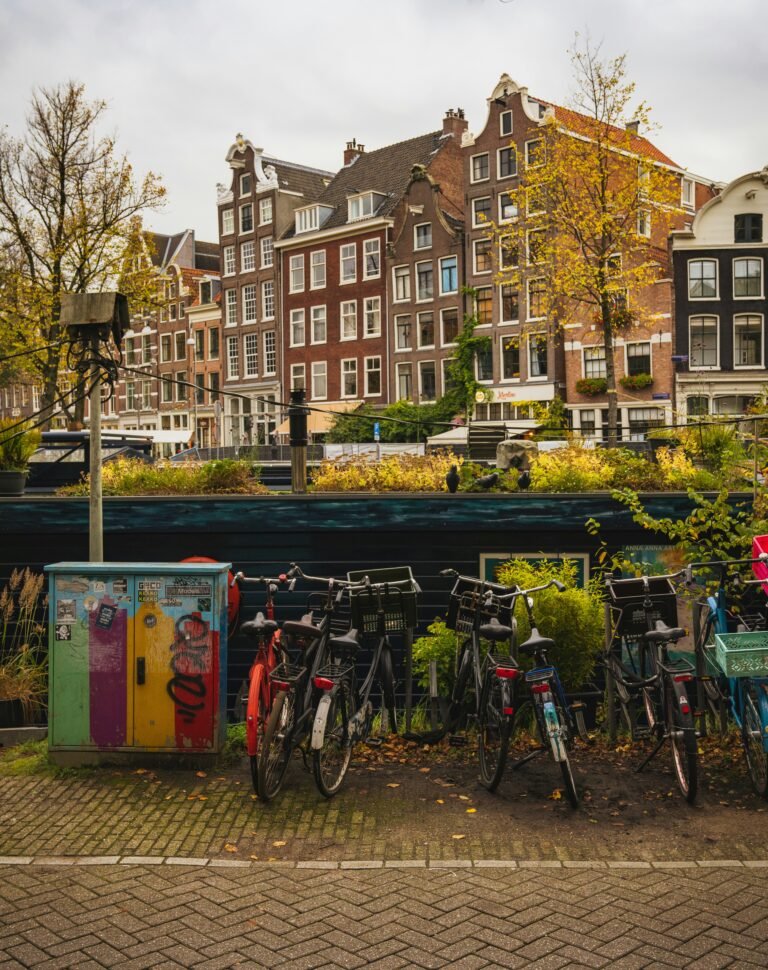
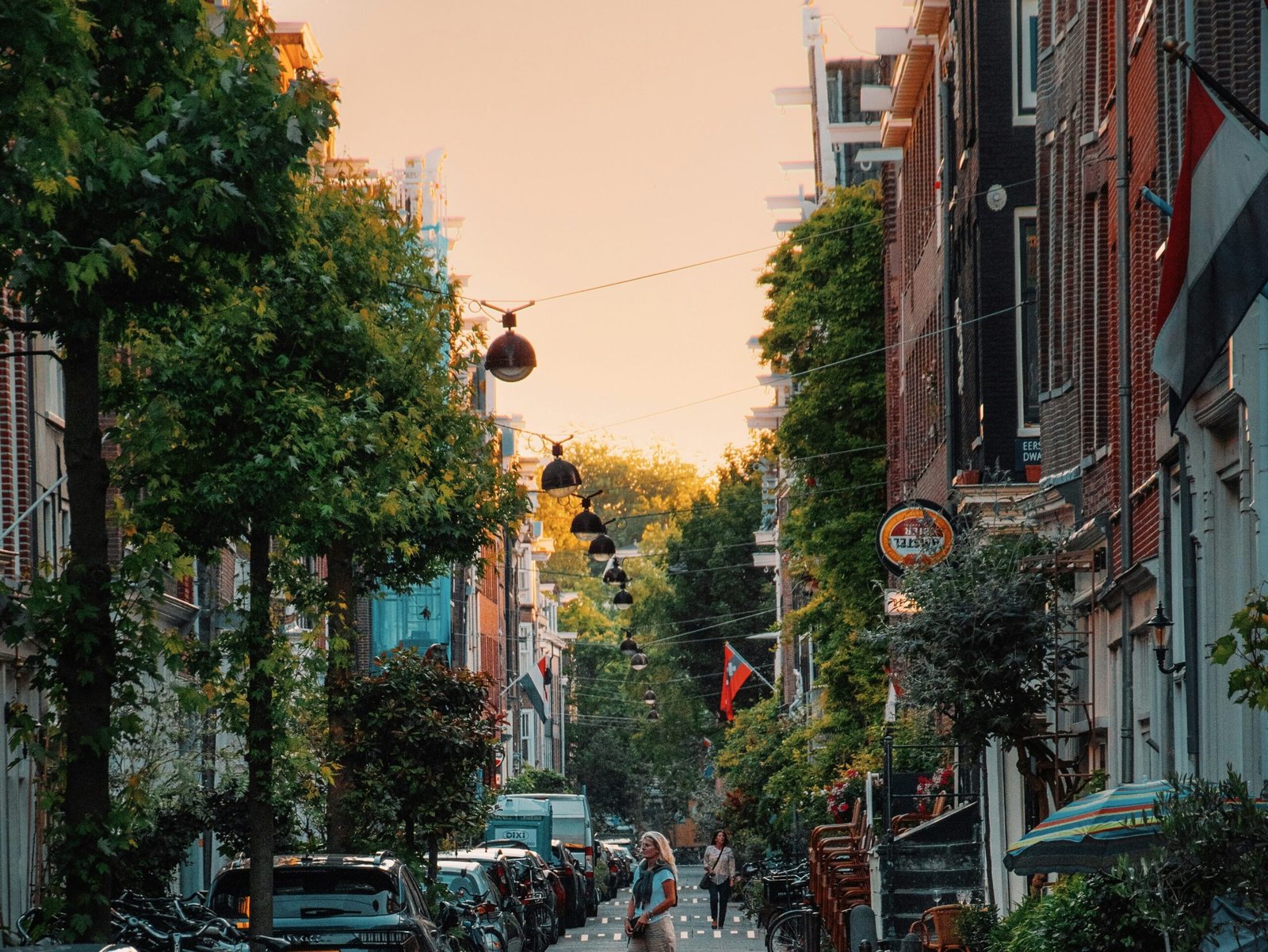
Start in the Jordaan. If you’re staying here (which I recommend for first-timers — see our neighborhood guide), you’re already there. The Jordaan is the 17th-century residential quarter west of the main canal ring: narrow streets, tiny bridges, brown cafes with geraniums in the window, no big tourist crowds before 11 AM.
Walk south along the Prinsengracht and let yourself get pleasantly lost.
Get coffee from a neighborhood cafe, not a chain. The difference in Amsterdam is especially noticeable — the independent places tend to be better, cheaper, and not playing music that makes your toddler suddenly want to perform.
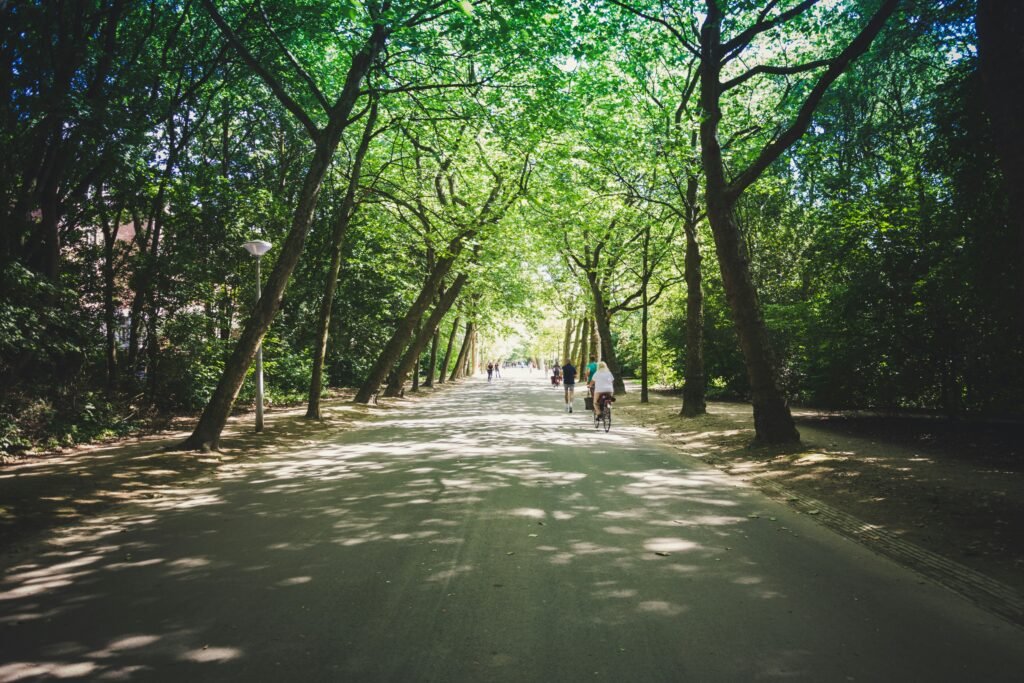
Late morning: Vondelpark. Amsterdam’s main park is about a 20-minute walk south of the Jordaan or a quick tram ride. It’s big enough to feel like you’ve left the city, has proper playground equipment that a 2-year-old will want to live in, and gets busy in a cheerful rather than oppressive way when the sun is out. We spent 90 minutes here on day one and it was the right call — our son ran himself out, we had lunch on a bench, everyone was happy.
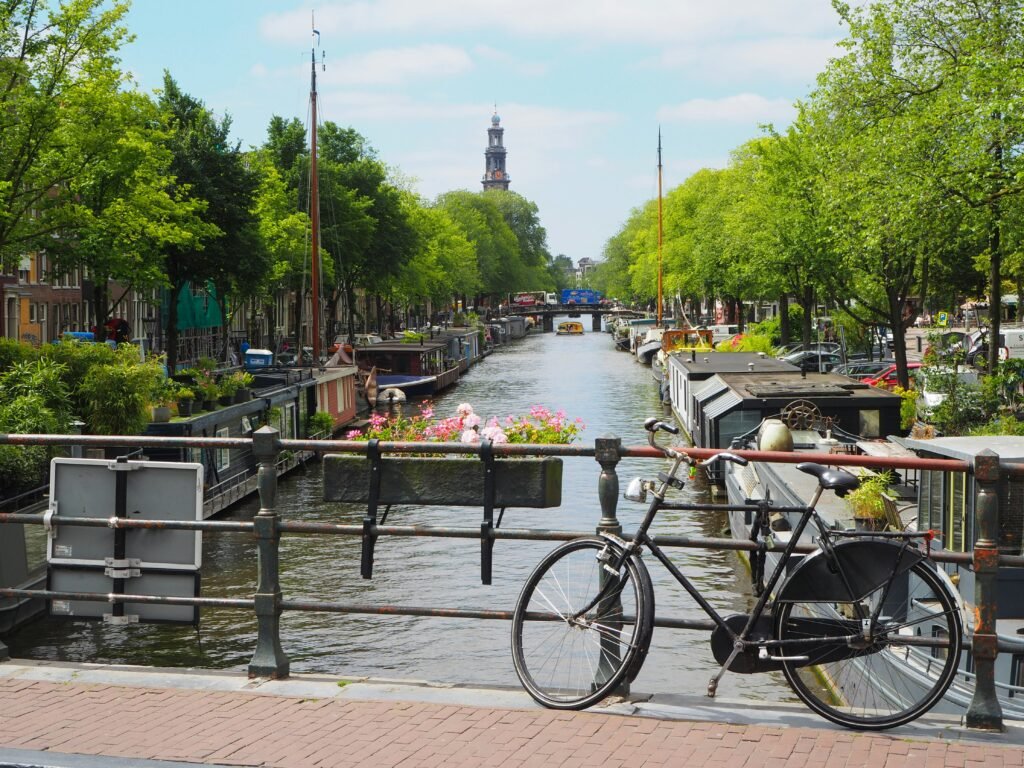
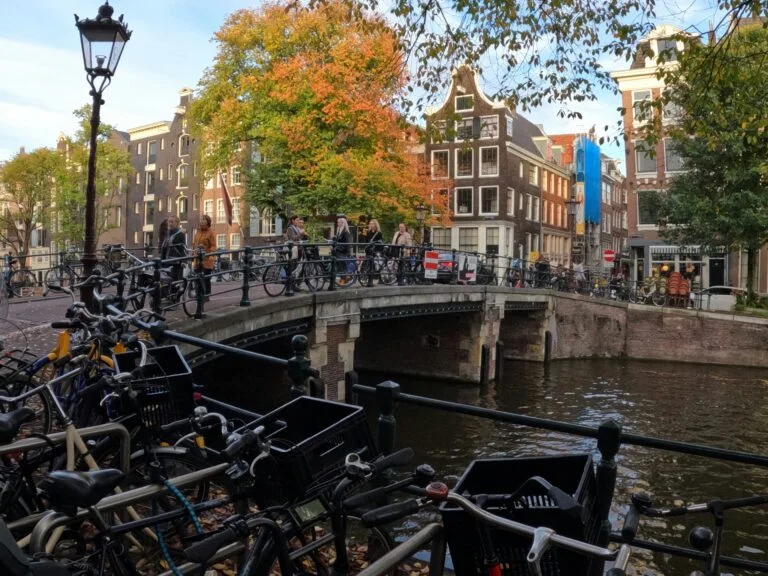
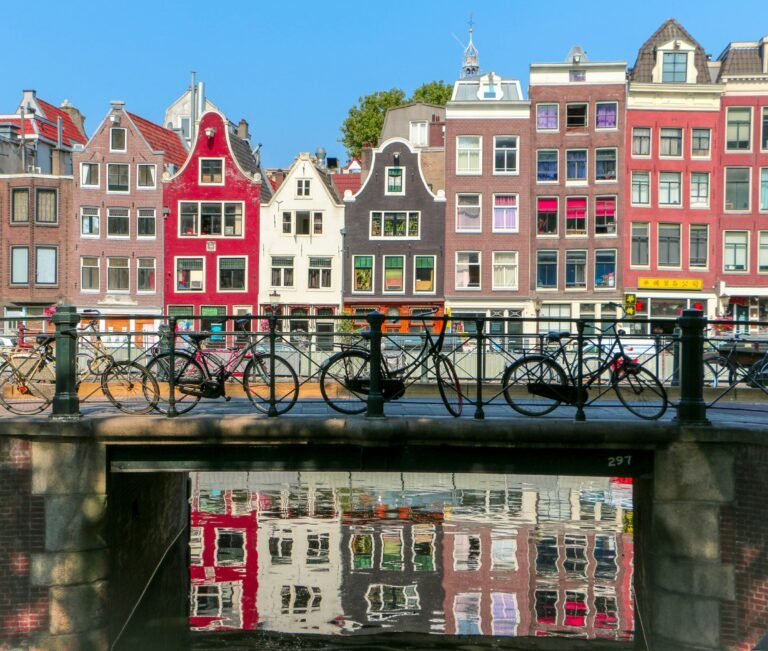
Afternoon: Canal walk. The best way to understand Amsterdam’s geography is to walk a single canal from north to south. Pick the Prinsengracht (longest, most beautiful) or the Keizersgracht (fewer bikes on the towpath). Walk from somewhere around the Jordaan down toward Leidseplein, stopping at any bridge that catches your eye. This takes 45 minutes to 2 hours depending on how often you stop.
The canal walk is free, gorgeous, and genuinely the best orientation to the city. Do it before the canal cruise, not instead of it — they show you different things.
Evening: Dinner in the Jordaan. The restaurants on the main tourist drag (Leidseplein, Rembrandtplein) are overpriced and mediocre. The Jordaan side streets have places where locals actually eat. We found a Dutch-Indonesian restaurant on a small cross-street that was excellent and cost roughly what a mediocre pizza costs on the tourist strip.
Day 2: Rijksmuseum area, canal cruise, Albert Cuyp markt
This is the big day. Heavy hitters, the canal cruise, the best market in the city — pace it well and it doesn’t feel rushed.
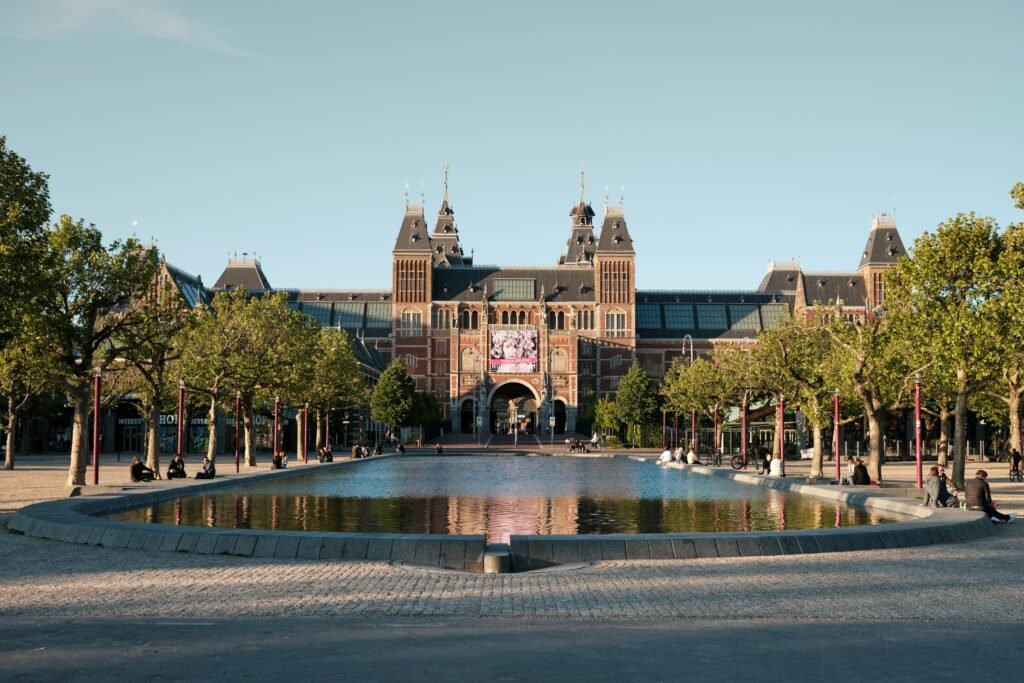
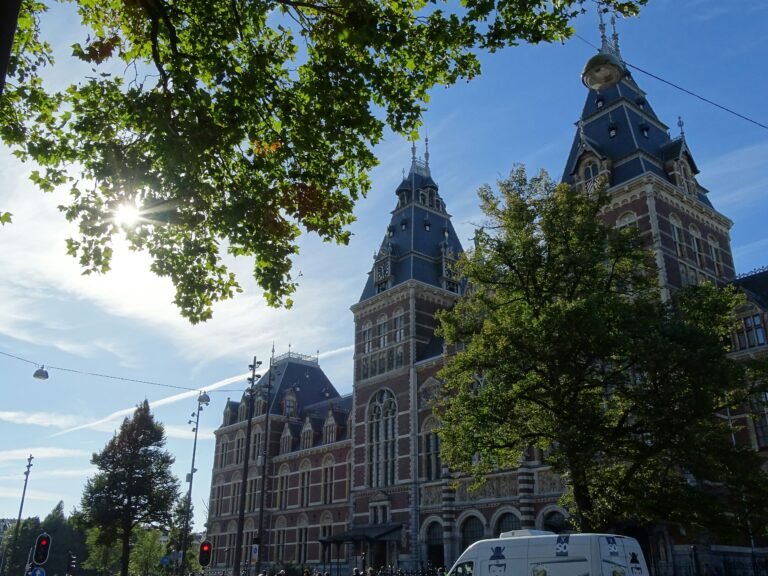
Morning: Rijksmuseum. Book tickets online in advance — the difference between pre-booked and walk-up can be 45 minutes to an hour of queuing in peak season. The museum itself is vast (80 galleries, 8,000 objects on display out of a collection of a million), so have a plan or you’ll spend three hours looking at silverware.
If you have a toddler, the honest assessment is: pick two or three rooms that matter to you, see those, and leave. The Night Watch is the centerpiece and worth seeing even if you’re not a painting person — it’s enormous, darker than it looks in photos, and genuinely impressive in a way that reproductions don’t capture. The Dutch Golden Age rooms are also worth 20 minutes. Everything else is optional based on your interests.
The Rijksmuseum garden and courtyard are free and beautiful — good for a snack break while the toddler recharges.
Midday: Canal cruise. If you haven’t already booked, this is your reminder: book on Viator →. A morning or early afternoon departure from a Jordaan-area dock gives you the canal ring experience in about an hour. The covered boats are the right choice — Amsterdam weather in May does whatever it wants.
Coming off the canal cruise feeling like you’ve seen the city is a good thing. That’s the point. The cruise does a lot of narrative heavy-lifting that would otherwise require walking 6 miles and doing a lot of context-setting on your own.
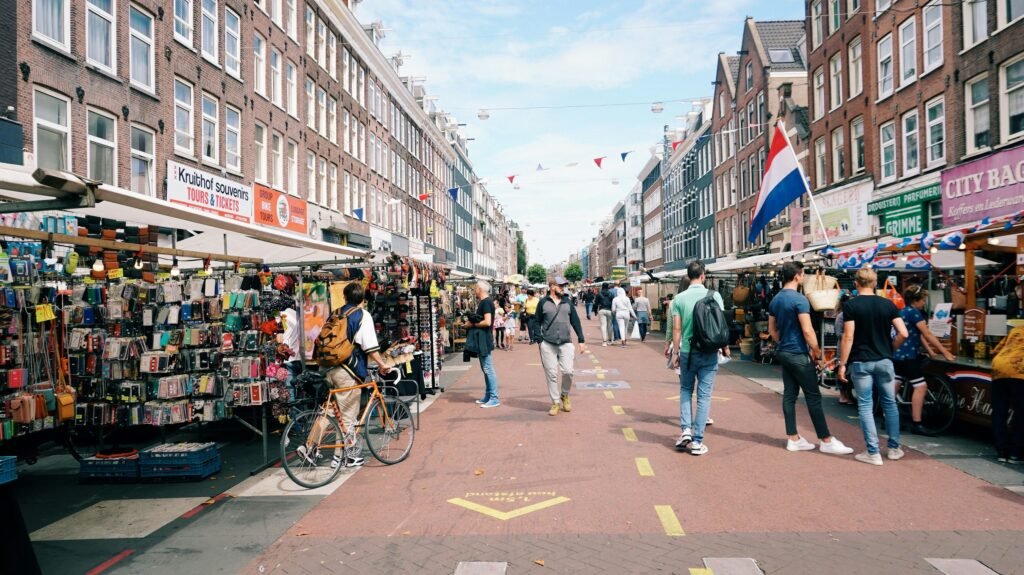
Afternoon: Albert Cuyp Markt. A 15-minute tram or 30-minute walk from the museum area, Albert Cuyp is Amsterdam’s main outdoor market — 300 stalls, fresh herring, aged Gouda, stroopwafels made in front of you, flowers, fabric, and the atmosphere of a real neighborhood rather than a tourist performance.
This is the food stop to plan around. Get a fresh stroopwafel while it’s warm. Get one for the toddler too. Get another one for yourself.
The De Pijp neighborhood surrounding the market is one of the best in Amsterdam for a late afternoon walk — good coffee shops, local bars, the kind of energy that hasn’t been completely bleached out by tourism.
Evening: De Pijp for dinner, or take the tram back to your neighborhood. By day two, you’ll have a sense of which streets you want to revisit and which local places looked good when you passed them.
Day 3: Anne Frank House, NDSM Wharf, optional Haarlem
Morning: Anne Frank House. The most important booking of your Amsterdam trip. Timed-entry tickets sell out weeks in advance for peak season — the website releases tickets 2 months ahead and they go quickly. You cannot walk up and get in.
The house itself is small and the queues even with pre-booked tickets can run 20–30 minutes. With a toddler, the experience is emotionally heavy (as it should be) and the rooms are genuinely small — strollers have to be left at the entrance.
Our visit was one of the most affecting hours of any trip we’ve taken, and I think it’s worth prioritizing even though it’s difficult.
Be honest with yourself about the toddler logistics. A 2.5-year-old who needs to run will not get this museum in any meaningful way, and the narrow staircases are genuinely difficult. If that’s your situation, see our toddler-specific guide for the honest assessment of whether to book it or skip it.

Afternoon: NDSM Wharf. A 15-minute free ferry ride from behind Centraal Station, NDSM is Amsterdam’s post-industrial creative district. Old shipyard warehouses covered in street art, an underground arts venue, food trucks, a flea market on weekends, and almost no one from the tourist circuit. It looks like nothing else in the city.
The ferry itself is part of the experience — crossing the IJ waterway on the free GVB boat gives you a different angle on Amsterdam that most visitors miss entirely. NDSM is best in good weather (most of the interesting stuff is outdoors), and on weekends there’s usually something happening.
Optional: Haarlem day trip. If your flight is in the evening on day 3, Haarlem is 20 minutes from Amsterdam Centraal by direct train, runs every 15 minutes, and costs under $10 round trip. It looks like a smaller, quieter version of Amsterdam without the crowds. The Grote Markt, the canal streets, and a good Dutch lunch are achievable in 3 hours before heading to the airport. See our day trips guide for the full picture.
Practical tips
Getting around: Walking and trams cover most of what you need. Trams 2, 11, 12, and 17 connect the main tourist areas and the GVB app sells digital OV-chipkaart tickets.
Bikes are glorious in theory, but navigating Amsterdam traffic with a toddler on a cargo bike is an advanced move — rent them for day trips outside the center, not for the busy lanes of the city core on day one.
What to book in advance: Anne Frank House (weeks ahead), canal cruise (days to a week ahead), Rijksmuseum (day before or same morning is usually fine). Everything else is walk-in or easily booked same-day.
Strollers and cobblestones: Amsterdam’s streets are beautiful and brutal for wheels. The canal towpaths are fine; the narrow Jordaan side streets have gaps between cobblestones that will catch a wheel and flip a stroller forward. Use the main paved paths where possible, carry the toddler over the worst sections, and consider whether a carrier is easier for short sections.
Costs: Budget roughly $350–420 per day for two adults and a toddler including accommodation, meals, tickets, and transport. Full breakdown in our Amsterdam cost guide.
Where to stay for 3 days in Amsterdam
For a three-day first visit, the Jordaan is the best base. You’re walking distance from day one and day two activities, the neighborhood itself is worth experiencing, and the accommodation tends toward smaller boutique hotels with actual character rather than the anonymous chain hotels near the airport train line.
De Pijp is the second-best option — slightly more affordable, great food scene, easy tram connections. Museum Quarter is the top pick for families with toddlers — Vondelpark is steps away, streets are wider and better for strollers, and the Museumplein is an open plaza where toddlers can run freely.
Full neighborhood guide: Where to Stay in Amsterdam
Search availability: Expedia → or Booking.com →
Travel tools
Wise: Amsterdam is a city of many small payments — tram tickets, market snacks, museum cafes, ferry coffee. Wise eliminates foreign transaction fees on all of them. Get Wise →
Holafly Netherlands eSIM: Activate before you land so you have maps working in Schiphol arrivals. Get the Netherlands eSIM →
EKTA: Three days of Dutch weather, canal edges, and toddler-on-cobblestone incidents. Good to have. Get a quote →
Frequently asked questions
Is 3 days in Amsterdam enough?
Three days in Amsterdam is enough to see the essential city — canal cruise, Rijksmuseum, Anne Frank House, the Jordaan neighborhood, and one market. You won’t see everything, but three days gives you a complete experience without feeling rushed. A fourth day would let you add a day trip to Haarlem, Zaanse Schans, or Keukenhof (April–May).
What should I book in advance for Amsterdam?
Book the Anne Frank House weeks in advance — it genuinely sells out. Canal cruises should be booked 3–7 days ahead for peak season, especially evening departures. Rijksmuseum tickets can usually be booked a day or two before. Everything else in Amsterdam can be done without advance booking.
Is Amsterdam good for first-timers?
Amsterdam is an excellent city for first-time visitors. It’s compact, walkable, extremely English-friendly, and the main sights are clustered in a manageable area. The canal ring is UNESCO-listed and genuinely beautiful.
The main challenge is navigating the tourist density at peak times — arrive early at major sights, book in advance, and stay in the Jordaan rather than near Centraal Station to get a more authentic experience.
How do I get around Amsterdam in 3 days?
Walking and trams cover most of a 3-day Amsterdam itinerary. Buy a 72-hour GVB transit card for unlimited tram and bus access, or use the GVB app to pay per ride. The free IJ ferry (behind Centraal Station) is worth taking at least once to reach NDSM Wharf. Bikes are great for day trips outside the center but add stress to city-center navigation as a first-timer.
Is Amsterdam worth visiting in May?
May is one of the best months to visit Amsterdam. The tulip season runs through mid-May, the weather is mild (averaging 15–18C), the city is green and lively, and the outdoor cafe culture is in full swing. The trade-off is tourist density — May is peak season, so book accommodation and key attractions in advance. The canal cruise, in particular, is best in May when the trees are fully leafed out and the light is long.
More Amsterdam guides
- Want the canal cruise details? → Best Canal Cruises in Amsterdam: Which One Is Actually Worth It
- Traveling with a toddler? → Amsterdam with a Toddler: What Actually Works
- Not sure where to stay? → Where to Stay in Amsterdam: Best Neighborhoods Honestly Ranked
- Figuring out the budget? → Amsterdam Travel Costs: What We Actually Spent
- Want a day outside the city? → Best Day Trips from Amsterdam (Worth It vs. Skip)
- Looking for more things to do? → Amsterdam Bucket List: 25 Best Things to Do