
Amsterdam with a Toddler: What Actually Works (And What to Skip)
This post contains affiliate links. If you book or buy something through them, I may earn a small commission — at no extra cost to you. I only recommend things we actually use and genuinely believe in.
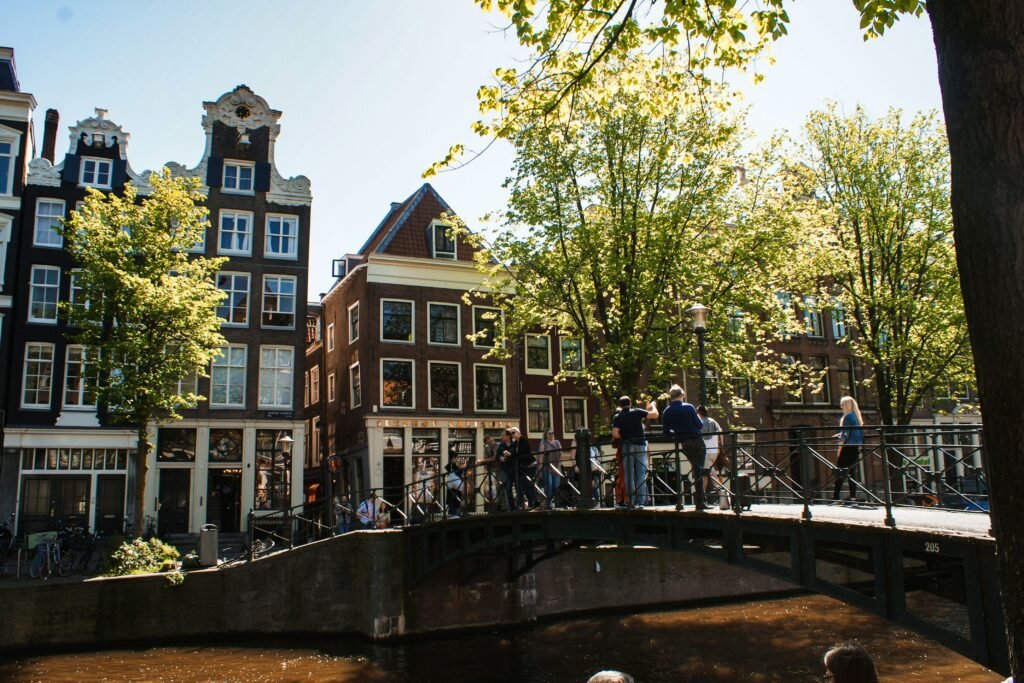
When I told people we were taking our 2.5-year-old to Amsterdam, most looked at me like I’d said something ambitious. Canal edges, cobblestones, steep staircases — they had a point.
But three days later: Amsterdam with a toddler works. The city is more manageable than the geography suggests, kids are genuinely welcomed everywhere, and a 2-year-old seeing a houseboat for the first time will make the whole trip feel worth it.
Here’s the honest breakdown of what to prioritize, what to prepare for, and what to skip.
Table of Contents
Before you go — quick links
- Family canal cruise — Book on Viator → — Filter for covered boats specifically; toddlers under 4 typically free. Morning slots best for nap timing.
- Where to stay — Expedia → or Booking.com →
- Travel card — Wise → — Zoo tickets, cruise, market snacks — you’ll make dozens of euro payments. No transaction fees matters.
- eSIM — Airalo Netherlands eSIM → — Real-time maps are non-negotiable when navigating a foreign city with a toddler who wants to run.
- Travel insurance — World Nomads → — Pediatric medical coverage abroad. Don’t skip this one.
Is Amsterdam toddler-friendly? The honest verdict
Yes — more than the canal edges and narrow staircases suggest. Amsterdam’s culture is genuinely family-friendly: restaurants welcome children, public transport has space for strollers, and the Dutch approach to children in public spaces is relaxed rather than restrictive. There’s no sense that a toddler is an inconvenience in a cafe or a museum.
The physical challenges are real but manageable. Cobblestones on side streets are the main stroller issue, and canal edges need attention — but most towpaths have barriers or obvious gradients.
Steep canal-house staircases are the other thing to plan around. Book a hotel with an elevator and ask specifically about low-floor rooms — this matters more than you’d expect when you’re arriving with a stroller and luggage.
Our son — 2.5 years old, energetic, and in the phase of being fascinated by anything that moves — found Amsterdam excellent. Boats, bikes, trams, ducks, houseboats, pigeons, the market cheese lady who gave him a sample. He spent the entire canal cruise with his face against the window pointing at dogs on houseboat decks. Amsterdam delivered for him on multiple levels he didn’t expect.
Best areas for families with toddlers
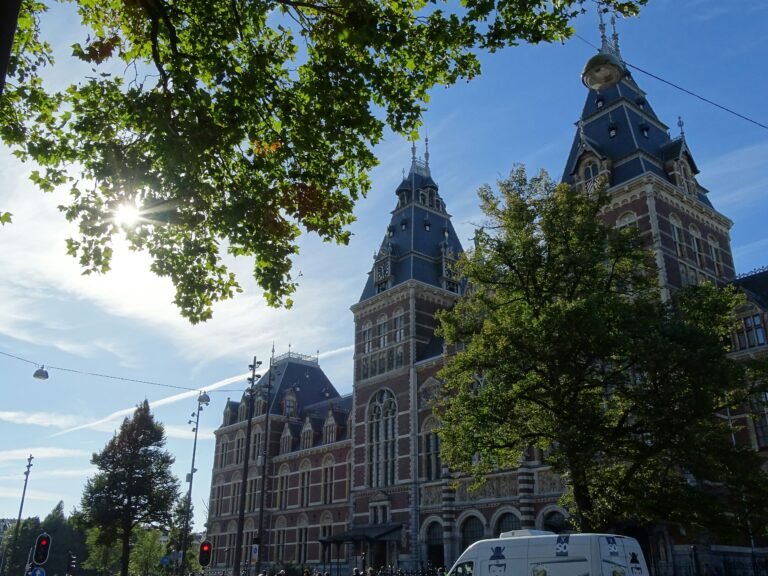
Museum Quarter: The best base for families. Vondelpark is a 5-minute walk from most hotels in the area — the park has excellent playgrounds, wide open lawn space for running, and a lake with ducks and swans. The Museumplein itself is a large open plaza where toddlers can charge around while adults admire the Rijksmuseum exterior. Streets are wider and better-paved than the Jordaan.
Jordaan: Beautiful and manageable, but the cobblestone side streets are the worst in the city for strollers. The canal towpaths are fine — smooth paving, gradual edges, easy going. The Jordaan also has small pocket parks and courtyards. We stayed here and it worked, but we chose our routes carefully and carried the stroller up a few particularly bad sections.
De Pijp: Good option — Sarphatipark is a pleasant neighborhood park, the streets are wider than the Jordaan, and the Albert Cuyp Markt is excellent for toddler snacks and cheese samples. Slightly further from the main sights but well-connected by tram.
Full neighborhood comparison: Where to Stay in Amsterdam.
Canal cruise with a toddler
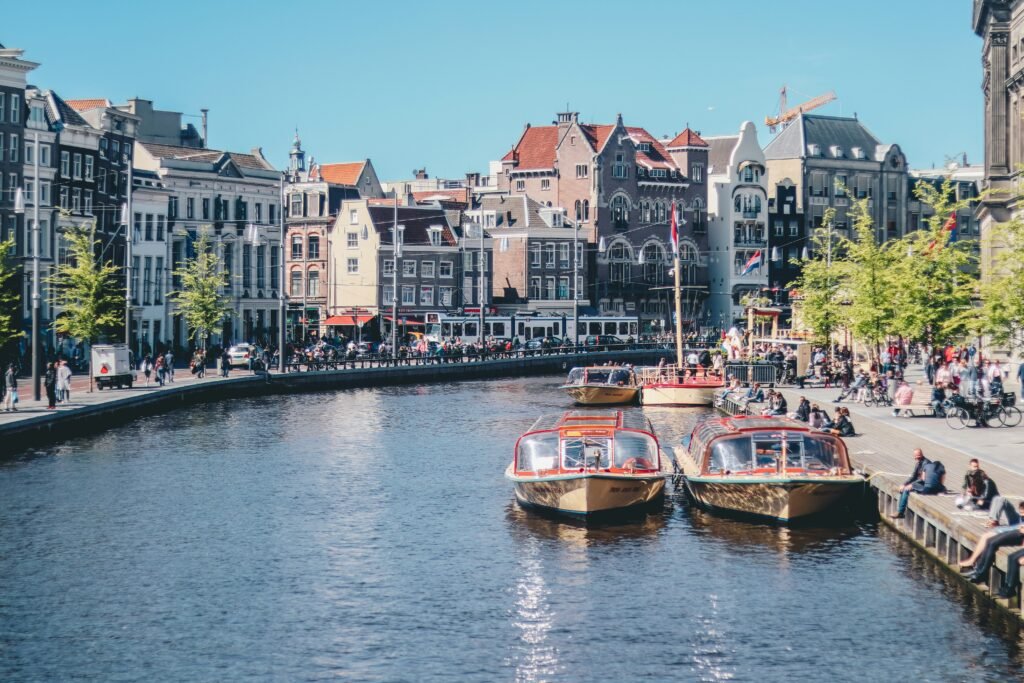
This is the activity that works best with a toddler in Amsterdam, which surprised me going in. I expected it to be nerve-wracking. It was the opposite.
The key is booking a covered boat. Covered canal cruise boats have enclosed windows, low bench seating that toddlers can see out of without standing, and no open railings or canal-adjacent edges to worry about. You sit, you look out the window, the boat moves quietly through the canal ring, and your 2-year-old has unobstructed views of houseboats, bridges, and dogs for 60 minutes.
Our son was captivated the entire time. He pointed at every houseboat. He waved at people on bikes crossing the bridges overhead. He asked “what’s that?” about every single canal feature, which is exhausting and also the best thing.
A few practical notes: most operators offer toddlers under 4 free. The one-hour length is exactly right — long enough to cover the canal ring, short enough not to push nap timing. Morning departures tend to have smaller crowds and better light. Book in advance — covered boats in May fill up quickly. Browse covered boat options on Viator →
Vondelpark

Vondelpark is mandatory with a toddler. It’s 47 hectares of green, flat, safe park space in the middle of one of Europe’s most beautifully dense cities — exactly what everyone needs after two days of canal edges and cobblestones.
The playgrounds are excellent and varied — multiple play structures at different ages and ability levels, a sandpit area, space to run. The Blauwe Theehuis (Blue Teahouse, a 1930s round pavilion) serves coffee and snacks with outdoor seating where you can watch the playground without leaving your chair. The park is flat, so strollers work perfectly here.
Go on a sunny morning and allow at least 90 minutes. Our son ran until he couldn’t, then ate his body weight in the snacks we’d bought at Albert Cuyp, then slept for the entire tram ride back. Perfect.
ARTIS Zoo

ARTIS is one of the oldest zoos in Europe — founded in 1838 — and one of the best for toddlers in the city. It covers 14 hectares in the Plantage neighborhood, about 20 minutes by tram from the Jordaan. The collection includes elephants, giraffes, gorillas, penguins, a butterfly house, an aquarium, and a planetarium.
Ticket prices are steep (€26 for adults, €18 for children 3-12, under-3 free), but ARTIS is genuinely good — not a small-cage tourist zoo, but a serious zoo with thoughtful exhibits and a real animal welfare approach. For a family with a toddler who is in the “animal-obsessed” phase, it’s the best paid activity in Amsterdam for that specific traveler.
Best visited in the morning when the animals are most active. Allow 3-4 hours. Buy tickets online to skip the entrance queue.
The stroopwafel moment
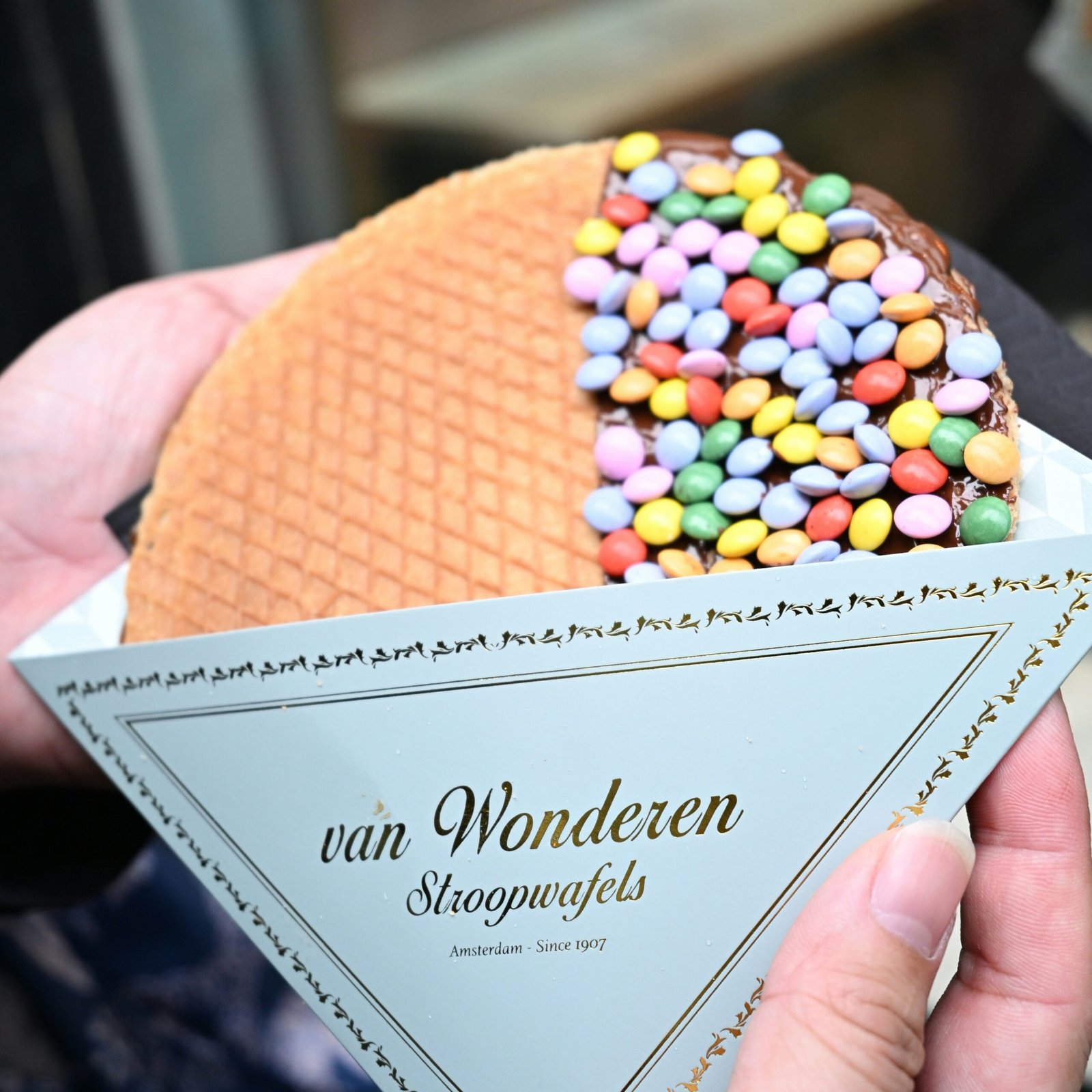
I’m including this as its own section because it deserves to be. At the Albert Cuyp Markt, there are several vendors who make fresh stroopwafels to order — the hot waffle iron, the caramel filling being spooned in, the whole thing assembled in 90 seconds and handed to you warm. We gave our son a piece while it was still warm enough that the caramel was liquid, he bit into it, and the look on his face was the look of a person encountering something genuinely, unexpectedly perfect.
Get one for yourself. Get one for the toddler. Get a second for yourself. This is not optional.
What to skip with a toddler
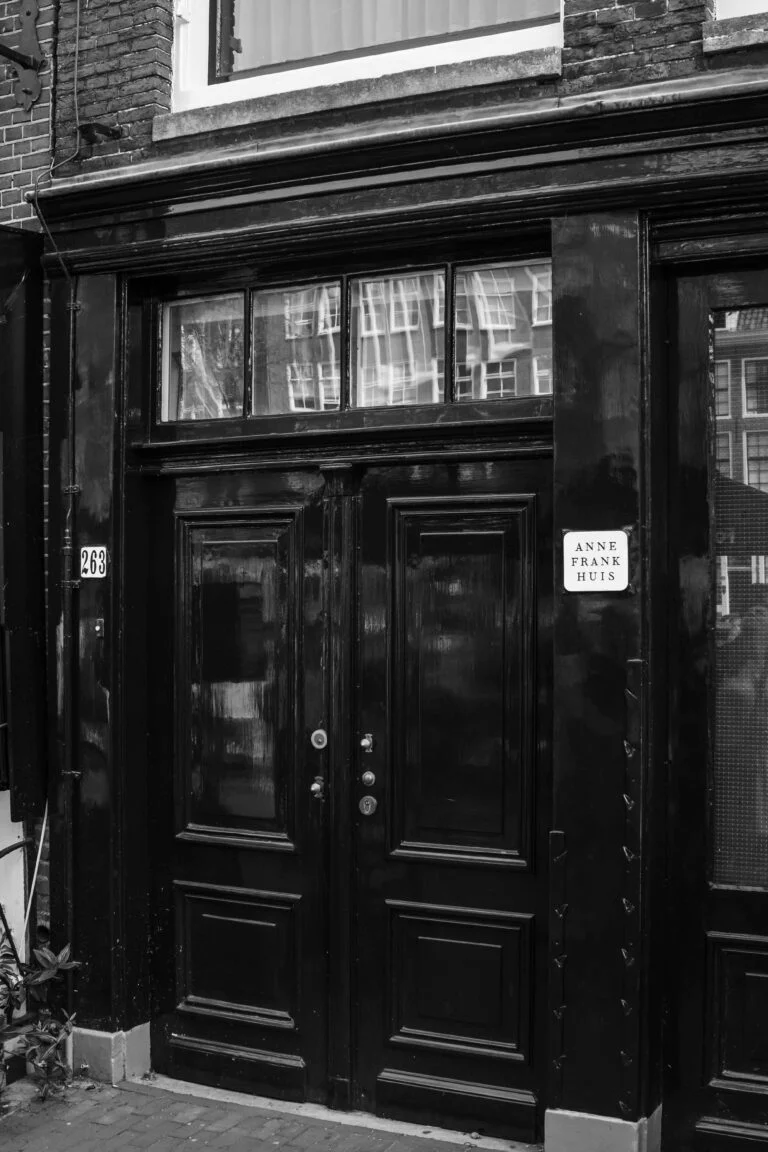
Anne Frank House: This is the hardest call. The Anne Frank House is the most important visit in Amsterdam, and I mean that genuinely — it’s historical, it’s moving, it matters. But with a 2-3 year old: the rooms are tiny, the staircases are steep, strollers must be left at the entrance, the queues even with pre-booked tickets run 20-30 minutes, and the experience requires emotional attention that’s difficult to give when you’re simultaneously managing a toddler in a small dark space. Our recommendation: if one parent can go while the other takes the toddler to Vondelpark, do it that way. If that’s not possible, skip it and come back without the toddler someday — because it deserves full attention.
Rijksmuseum interior (more than an hour): Go for the Night Watch — see it, admire it, let the toddler point at the large scary man in the painting — and leave. The museum is 80 galleries and the combination of “stay quiet,” “don’t touch,” and “look at this painting” for extended periods exceeds most toddler operating parameters. The garden and courtyard outside are free and toddler-compatible for a snack break.
Evening canal cruise: Beautiful in theory; logistical mismatch with a toddler who needs to be in bed. Take the morning cruise instead.
Heineken Experience: Adults-only-focused content, steep stairs, not appropriate for under 18.
Red Light District walking tours: Self-explanatory.
Practical logistics: stroller, cobblestones, and canal bridges
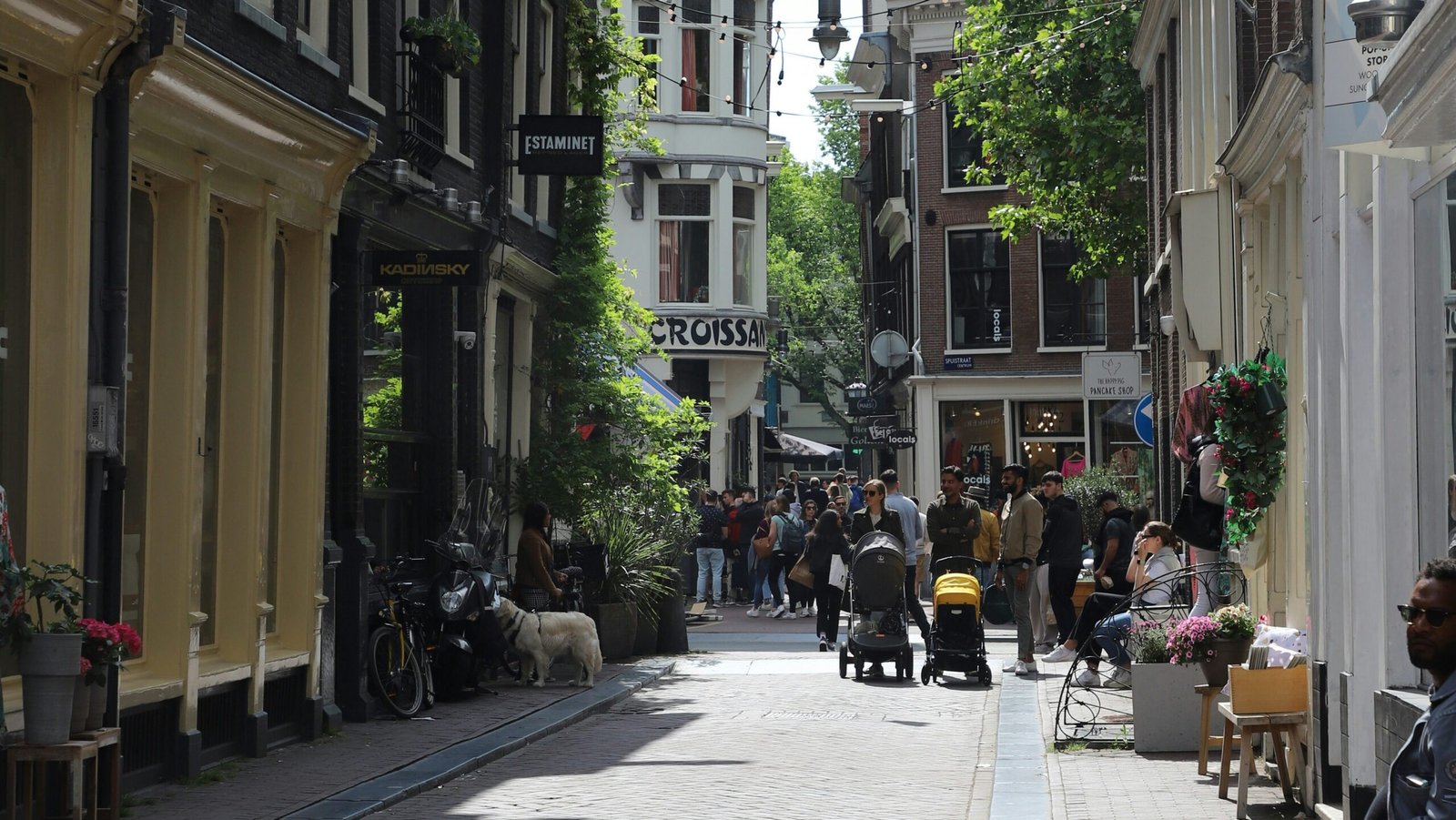
Stroller vs. carrier: Bring both. The stroller is essential for Vondelpark, the market, and any extended walk. The carrier saves you on cobblestone side streets, tight hotel entrances, and bridge maneuvers. We used the stroller 80% of the time — and the carrier saved us at least six times.
Cobblestones: The main canal towpaths (Prinsengracht, Keizersgracht, Herengracht) are stroller-manageable with minor bumping. The Jordaan’s narrow east-west side streets are the worst — wider cobblestone gaps, rough ride, occasional wheel-catch. Stick to the main canal paths rather than the most direct route through side streets.
Canal bridges: Most canal bridges are stroller-accessible with no steps — just a slight arch. A small number of the older, more decorative bridges have a step at each end. These are manageable with one parent lifting the front while the other pushes. You’ll learn to spot them in about 10 minutes.
Canal edges: The canal towpaths do not have barriers on the water side in most places. This is a real consideration with a toddler. We walked with our son between us on canal towpaths, never on the water-side. He was not a runner by nature but we treated the canal edge like we’d treat the edge of any unfenced drop. After the first afternoon it becomes automatic.
Nap timing: Build the itinerary around the nap, not the other way around. We found that morning museum or canal cruise + midday Vondelpark (where a nap in the stroller happened naturally) + afternoon market or neighborhood walk was the pattern that worked without a meltdown. Don’t try to do two major paid activities in the same half-day.
Food: Dutch restaurants are genuinely child-friendly. Most places we went had high chairs without being asked, toddler menu options, and zero attitude about a child being at the table. The Albert Cuyp Markt is the best toddler-feeding location in the city — endless finger food at market stalls, fresh cheese samples, stroopwafels, and enough visual stimulation to keep a 2-year-old occupied.
Where to stay with a toddler
Three things matter above everything else when booking Amsterdam accommodation with a toddler:
- Elevator: Canal-house hotels are beautiful and often have five floors of steep stairs. If you’re checking in with a stroller and luggage, no elevator is a significant problem. Ask explicitly when booking.
- Room size: Amsterdam hotel rooms are smaller than US equivalents. A “double room” in a canal-house hotel may not have room for a travel cot. Request this specifically and confirm it fits before arrival.
- Neighborhood quiet: Hotels near Leidseplein, Rembrandtplein, and the Damrak area have nightlife noise until 2-3 AM. A toddler who wakes up at 6 AM regardless of what time you put them to bed + thin Dutch walls + Friday night canal celebrations = a challenging morning. The Jordaan side streets and Museum Quarter are significantly quieter.
The Museum Quarter is the best neighborhood for families for the combination of Vondelpark access, wide streets, and quieter hotel options. The Jordaan is more atmospheric and works well if you specifically request a quiet room away from street-facing windows. Full details: Where to Stay in Amsterdam.
Search family-friendly hotels: Expedia → or Booking.com →
Travel tools
World Nomads: The most important one for this particular trip. Pediatric medical care in the Netherlands is good but expensive without insurance. World Nomads covers kids on family plans. Don’t leave home without it. Get a quote →
Wise: Zoo tickets, market food, tram passes, hotel incidentals — you’ll pay in euros constantly. Wise removes the foreign transaction fee on every single one. Get Wise →
Airalo Netherlands eSIM: Real-time maps for navigating with a toddler are non-negotiable. Activate before you land. Get the Netherlands eSIM →
Frequently asked questions
Is Amsterdam suitable for toddlers?
Yes, Amsterdam is suitable for toddlers with some preparation. The city is culturally family-friendly, with welcoming restaurants, good parks (Vondelpark is excellent), and a canal cruise experience that genuinely captivates young children. The challenges are physical: cobblestones require stroller navigation, canal edges need adult attention, and many canal-house hotels have steep stairs. Plan routes along canal towpaths rather than side streets, book a hotel with an elevator, and choose covered canal boat tours over open-air ones.
What is the best activity in Amsterdam with a toddler?
A covered canal cruise is the best single activity in Amsterdam with a toddler. Covered boats mean there are no open edges to worry about, toddlers can see out the windows from seated positions, and the 60-minute duration is perfectly calibrated for young children’s attention spans. Children under 4 are typically free. Vondelpark is the best free activity — the playgrounds are excellent and the open space provides essential running room after days of city walking.
Is Anne Frank House suitable for toddlers?
The Anne Frank House is not well-suited for toddlers. The rooms are very small, strollers must be left at the entrance, the staircases are steep, and the experience requires sustained emotional attention that’s difficult with a young child. If possible, have one parent visit while the other takes the toddler to Vondelpark. If both parents want to experience the museum, consider the Anne Frank House on a different trip without children — it deserves full attention.
Should I bring a stroller or carrier to Amsterdam?
Bring both a stroller and a carrier to Amsterdam if possible. The stroller works well on canal towpaths, in Vondelpark, and at the Albert Cuyp Markt. The carrier is essential for cobblestone side streets, steep canal-house hotel entrances, and situations where stroller navigation becomes a two-person obstacle course. We used the stroller about 80% of the time and were grateful for the carrier in the remaining 20%.
What neighborhood is best for families with toddlers in Amsterdam?
The Museum Quarter is the best Amsterdam neighborhood for families with toddlers — Vondelpark is steps away, streets are wide and well-paved, and hotel rooms tend to be larger than canal-house alternatives in the Jordaan. The Jordaan is the most atmospheric choice and works well for families if you request a hotel with an elevator and book a quiet room away from street noise. Avoid hotels directly on Leidseplein or Rembrandtplein, which have nightlife noise until very late.
Is ARTIS Zoo worth visiting with a toddler in Amsterdam?
ARTIS Zoo is worth visiting with a toddler, especially if your child is in an animal-obsessed phase (which most 2-3 year olds are). The zoo is well-designed, large enough to fill a full morning, and has excellent elephant, giraffe, and aquarium sections that captivate young children. At €26 per adult and €18 per child 3-12 (under 3 free), it’s the most expensive family activity in Amsterdam but delivers good value for a half-day of genuine engagement.
More Amsterdam guides
- Planning the full itinerary? → 3 Days in Amsterdam: The Honest First-Timer’s Itinerary
- Want the canal cruise details? → Best Canal Cruises in Amsterdam: Which One Is Actually Worth It
- Not sure where to stay? → Where to Stay in Amsterdam: Best Neighborhoods Honestly Ranked
- Figuring out the budget? → Amsterdam Travel Costs: What We Actually Spent
- Looking for more things to do? → Amsterdam Bucket List: 25 Best Things to Do
- Want a day outside the city? → Best Day Trips from Amsterdam (Worth It vs. Skip)