Things to Do in São Miguel: The Best of the Azores (+ How Many Days You Need)
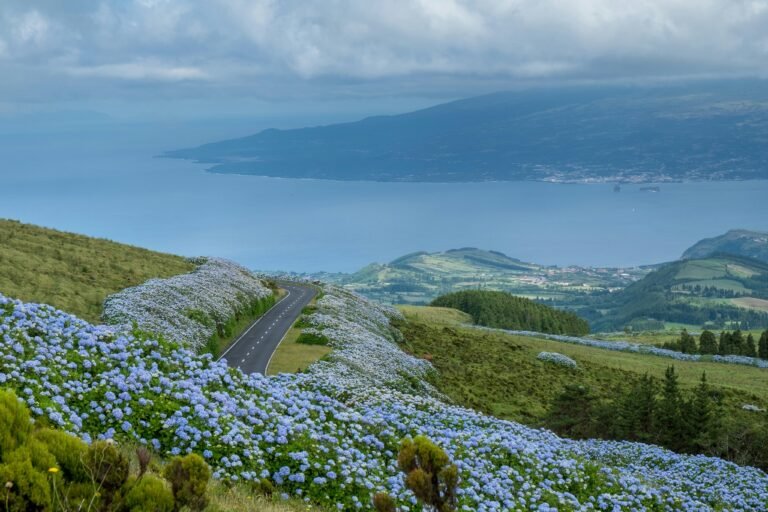
São Miguel doesn’t look like the rest of Europe — and that’s exactly the point. The largest island in the Azores sits alone in the middle of the Atlantic, a thousand miles from Lisbon, and it’s built almost entirely of volcanoes: green craters filled with twin lakes, valleys that steam and bubble, waterfalls in subtropical gorges, and thermal pools tucked into volcanic landscapes. It’s one of the last places in Europe that still feels genuinely wild, and it’s only about four hours from the US East Coast — closer than most of Europe.
This guide covers the best things to do in São Miguel — the stops worth building your days around, how long you actually need, where to stay, what it costs, and the one decision (renting a car) that makes or breaks the trip. Most of the island’s best experiences are out in the craters and along the coast, not in a single town, so the plan below is organized by area to keep your driving sane.
Affiliate disclosure: This post contains affiliate links. If you book or buy something through these links, I may earn a small commission at no extra cost to you. I only recommend things I genuinely use or believe in. Learn more.
Quick Summary
| Best time to visit | June-September for warmth and calmer seas; April-June is best for big migratory whales |
| How many days | 5–7 days for São Miguel without rushing |
| Best base | Ponta Delgada (most hotels, central for day trips) |
| Getting around | Rent a car for most days; check summer Lagoa do Fogo shuttle/access rules |
| Don’t miss | Sete Cidades, the Furnas thermal pools, and a whale-watching boat |
| Book in advance | Rental car, whale-watching tour, summer flights, and paid thermal pool slots |
| Best for | Nature lovers, hikers, road-trippers, and anyone craving somewhere uncrowded |
Table of Contents
Before you go — quick links
- Flights — São Miguel (PDL) often has direct service from Boston and seasonal New York routes, plus Lisbon and Porto. Azores Airlines also has a stopover program for the Azores on eligible North America-Europe itineraries – a genuinely clever way to see two trips for one flight, but check the current schedule before booking.
- Rental car — the single most important booking for most of the island. Compare rental cars for São Miguel (PDL) → and book early for summer; Lagoa do Fogo may require shuttle access during the restricted season.
- Where to stay — base yourself in Ponta Delgada: Booking.com → or Expedia →
- Whale watching — one of the Atlantic’s best-known whale and dolphin bases. Compare whale-watching tours on Viator →
- eSIM — set up Portuguese data before you fly; our eSIM guide covers how to do it in minutes.
The map below groups the island by area — the western craters around Sete Cidades, the central lakes and hot springs, Furnas in the east, and the wild northeast coast — so you can see how to cluster each day and avoid criss-crossing the island.
Before You Book São Miguel
São Miguel rewards a little planning. The island is bigger than it looks, the weather changes fast, and the best things to do are spread across it — so get these decisions right first and the rest falls into place.
| Book first | A rental car. The craters, coast roads, and viewpoints are too spread out for public transport to work well on a short trip. Compare cars for PDL airport and reserve early in summer, but check current Lagoa do Fogo shuttle/access rules before locking that day. |
| Best base | Ponta Delgada, on the south coast, is the most central and has the widest choice of hotels and restaurants. Most of the island is within a 60–90 minute drive, so you rarely need to switch hotels. |
| Best splurge | A whale-watching boat tour. The waters off São Miguel are one of the Atlantic’s best-known whale and dolphin habitats, and seeing them in the open Atlantic is the kind of thing you don’t forget. Choose a smaller boat if you want a more agile, wildlife-focused trip, or a larger catamaran if you want a steadier ride. |
| Weather move | Don’t lock your days to a fixed plan. São Miguel’s microclimates mean Sete Cidades can be fogged in while the east coast is sunny. Keep your itinerary flexible and chase the clear skies — check the forecast each morning and reorder your days. |
| Money & data | The Azores use the euro. Use a travel money card instead of airport exchange desks, and the eSIM guide covers getting data the moment you land for maps and weather. |
| Planning order | Book flights and a refundable hotel first, then the rental car, then a whale tour for a day with a good forecast. The full trip planning guide walks through the order so nothing clashes. |
Sete Cidades — the Blue and Green Crater Lakes
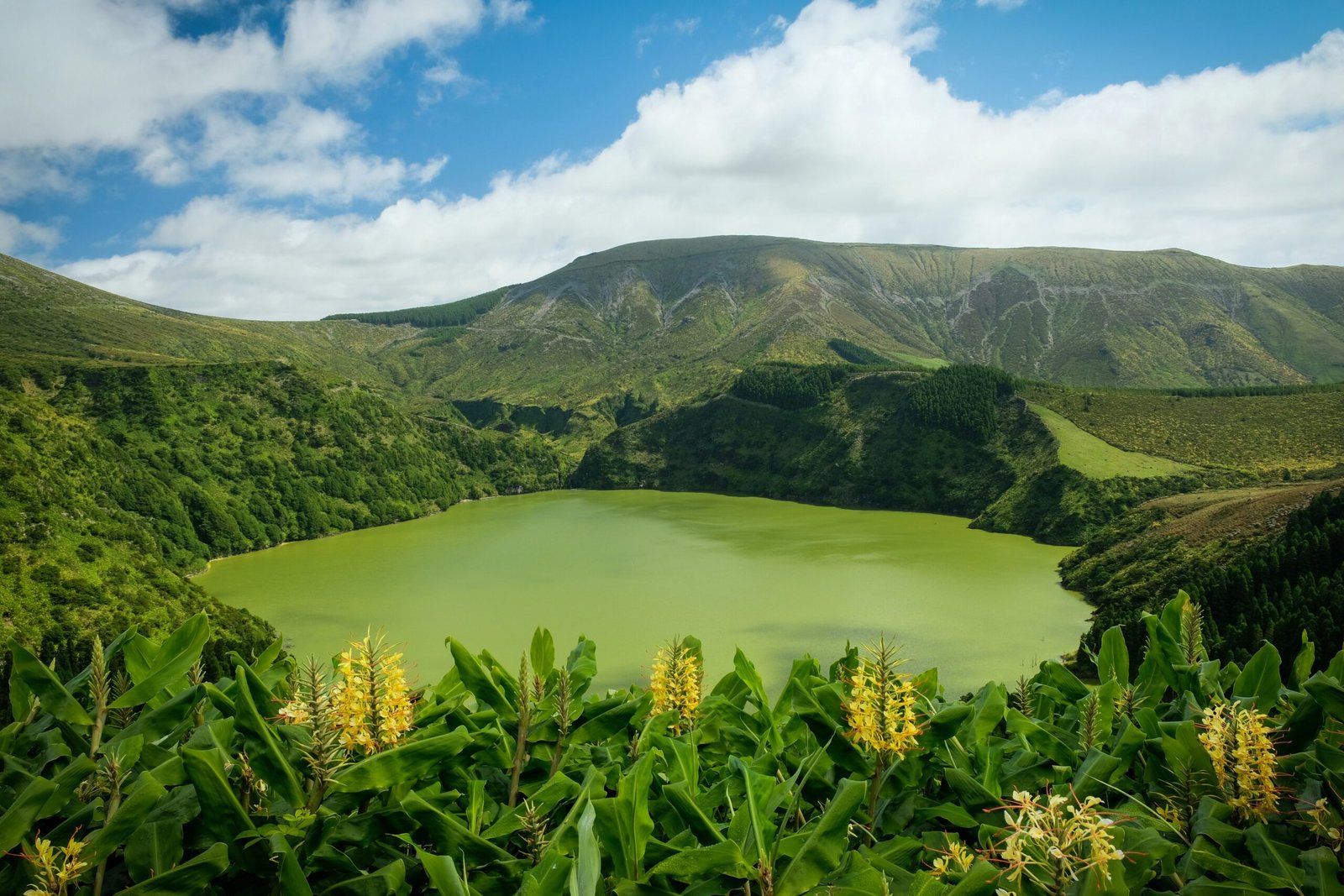
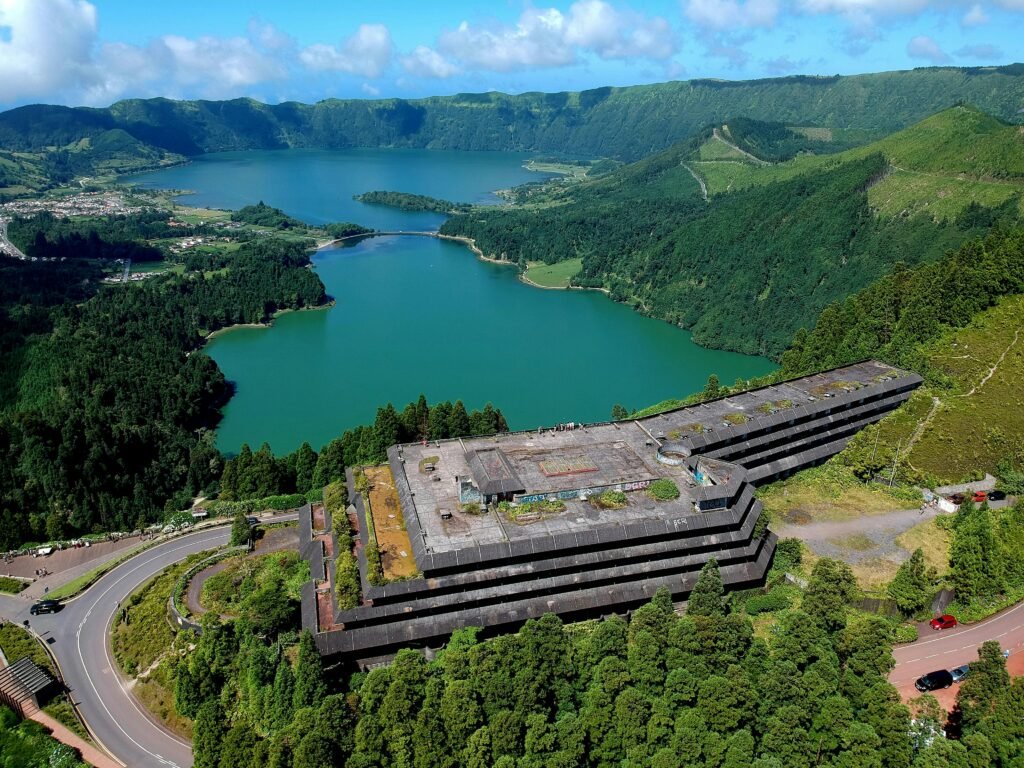
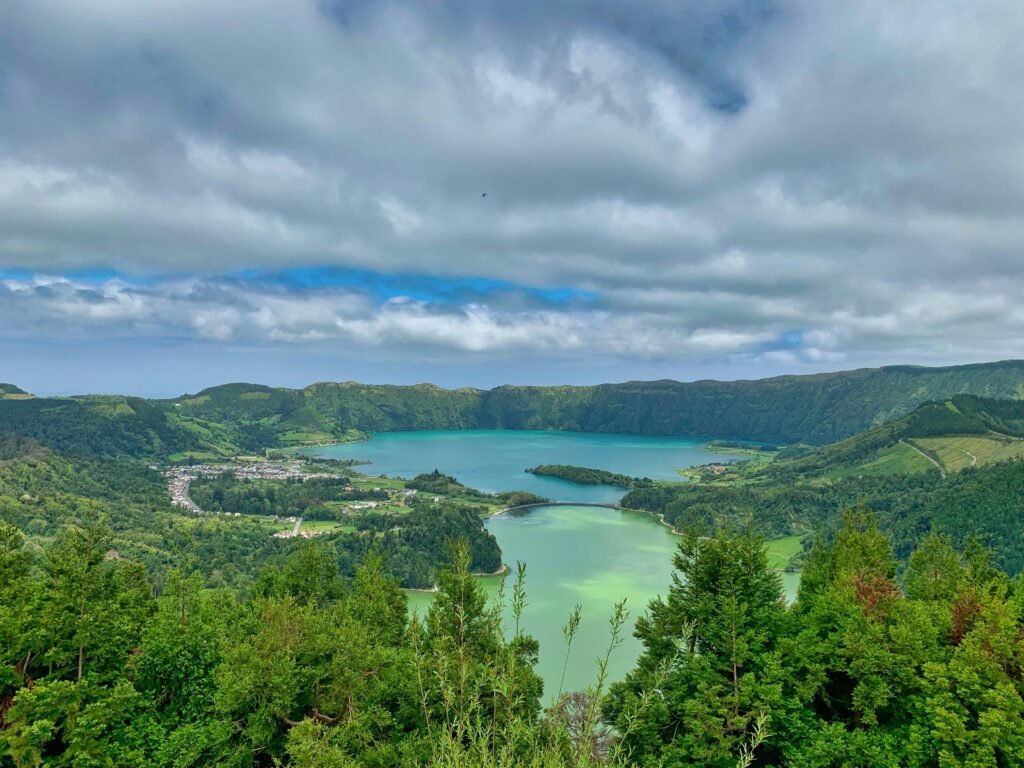
If you see one thing in São Miguel, make it Sete Cidades. A massive volcanic crater on the western end of the island holds two lakes side by side — Lagoa Azul (the Blue Lake) and Lagoa Verde (the Green Lake) — separated by nothing more than a narrow bridge, and according to local legend formed by the tears of a blue-eyed prince and a green-eyed princess forbidden to marry. The classic view is from the crater rim: the Vista do Rei viewpoint and the eerie, abandoned Monte Palace hotel beside it look straight down onto both lakes at once, with the Atlantic glinting beyond.
Walk at least part of the crater rim if the weather is clear — the trail gives you the lakes from constantly changing angles — then drive down the steep road into the village of Sete Cidades itself, sitting right on the water’s edge. This is the most weather-sensitive spot on the island: on a foggy morning you’ll see nothing, on a clear one it’s unforgettable. Check the forecast and go on your best-weather day.
Lagoa do Fogo & Caldeira Velha Hot Springs
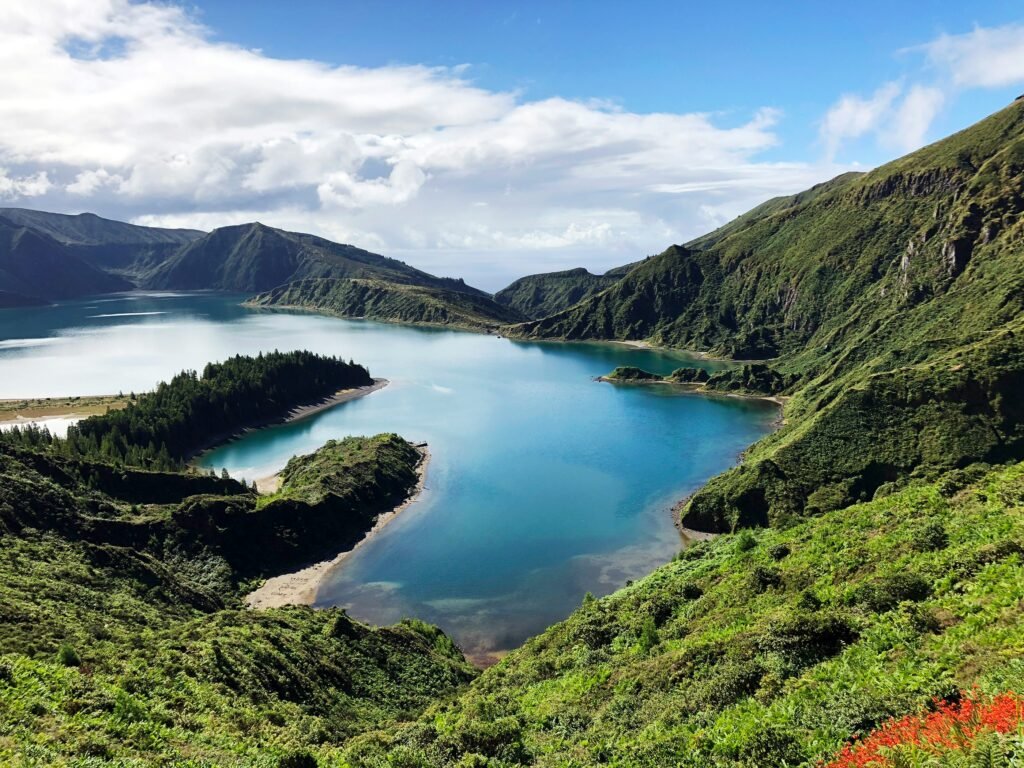
In the center of the island, the road climbs to Lagoa do Fogo — the “Lake of Fire” — a crater lake set high in protected wilderness with no buildings around it at all, just grey-green water, reeds, and clouds that drift across the ridges. It’s the most pristine lake on São Miguel, and on a clear day the view from the rim is the equal of Sete Cidades. A steep trail leads down to the lakeshore if you want to see it from below; check current access and bathing rules before planning it as a swim stop.
On the way back down, stop at Caldeira Velha, a series of natural thermal pools tucked into dense, ferny forest on the volcano’s flank. Geothermally heated water is cooled and fed into stone pools where you soak surrounded by giant ferns, with a warm waterfall to stand under. It’s one of the most atmospheric hot springs on the island — bring a swimsuit and a towel, and note entry is paid and timed slots may be required in busy periods.
Furnas — Fumaroles, Hot Springs & Cooking in the Earth
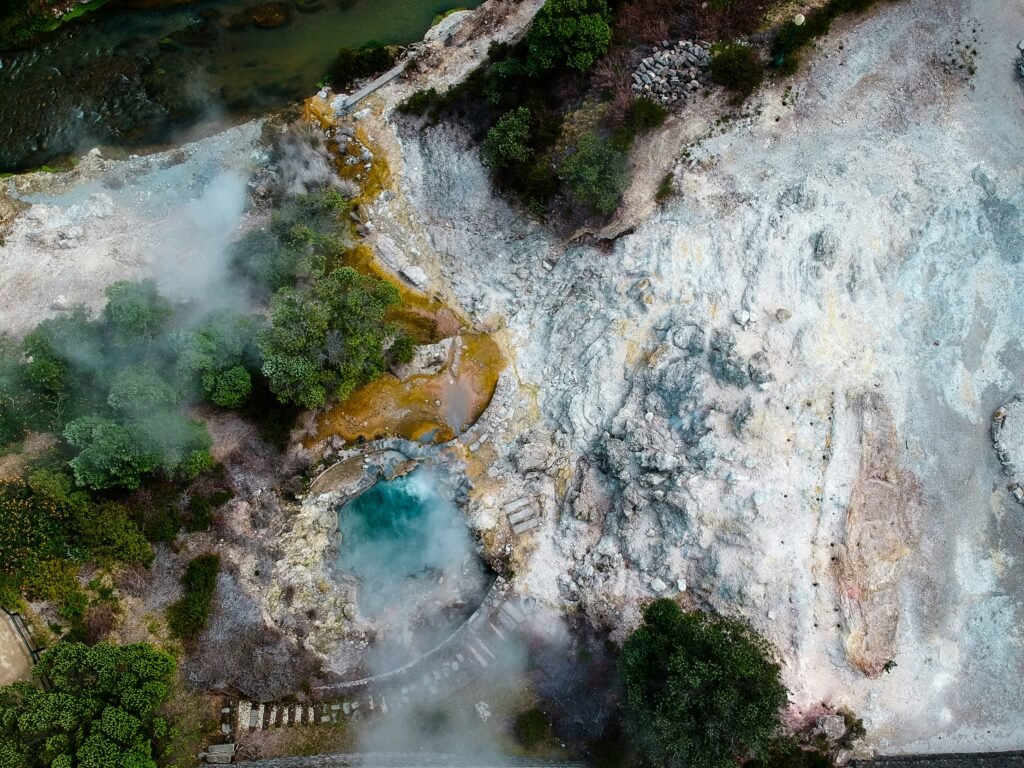
The town of Furnas, in a green valley in the east, is where São Miguel’s volcano is most alive. Steam rises straight out of the ground at the Furnas fumaroles (caldeiras), where boiling mud pools bubble and the air smells of sulphur — and where, remarkably, lunch is cooked. Cozido das Furnas is a stew of meat and vegetables lowered into the volcanic ground in a pot and slow-cooked by the earth’s heat for hours; many Furnas restaurants serve it, and watching the pots come out of the steaming holes around midday is a sight in itself.
Furnas is also hot-spring heaven. The Terra Nostra Garden is a beautiful 18th-century botanical garden built around a huge ochre-coloured thermal pool — the iron-rich water is a deep orange and a warm 95-104°F (35-40°C), and floating in it under the trees is the quintessential Azorean experience. For something smaller and more local, Poça da Dona Beija is a set of warm stone pools open late into the evening. Do one or both; they’re the perfect end to a day.
Whale and Dolphin Watching
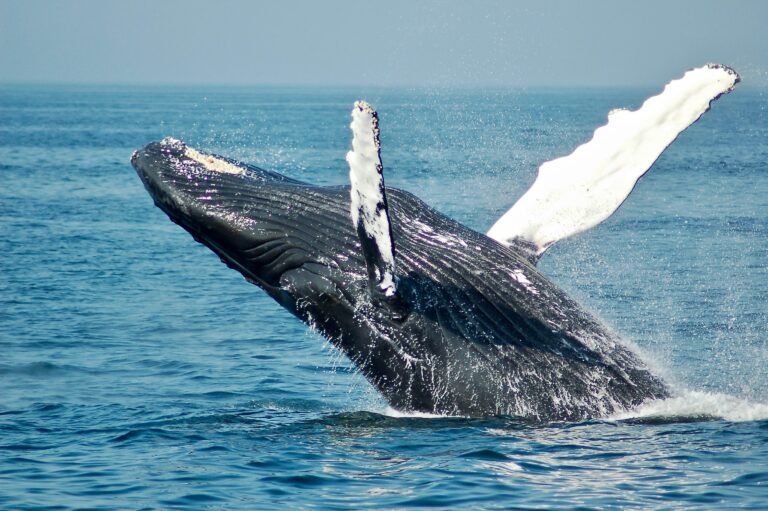
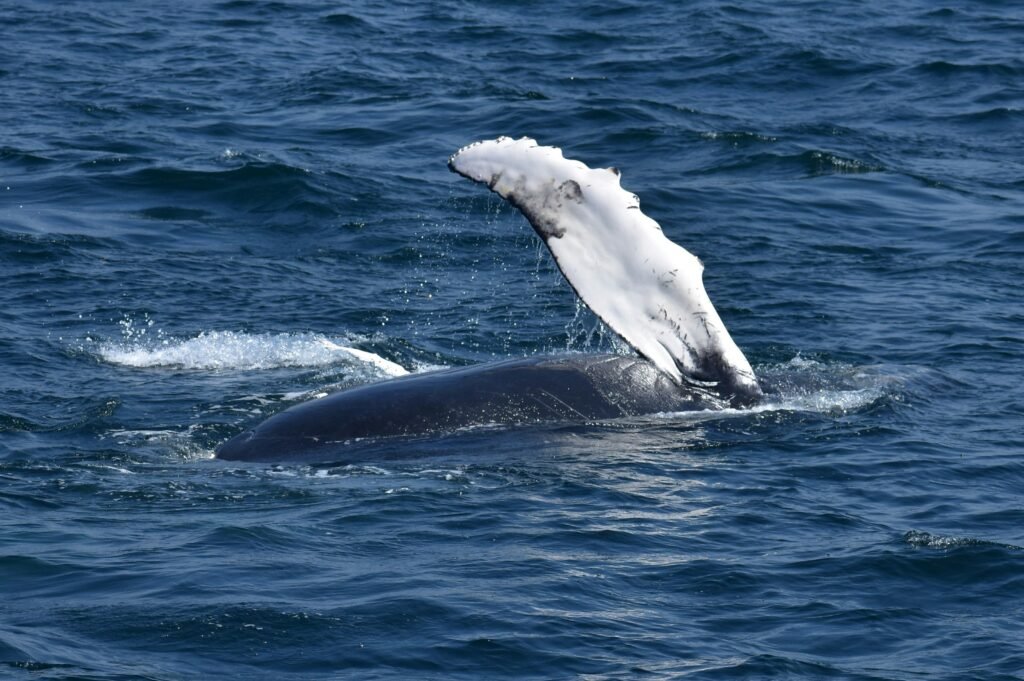
The deep Atlantic around the Azores is one of the world’s best-known places to see whales and dolphins — dozens of cetacean species have been recorded in these waters. Dolphins and sperm whales may be seen across much of the year, while the big migratory whales (including blue whales, the largest animals that have ever lived) pass through mainly in spring. Boats leave from Ponta Delgada and from Vila Franca do Campo, and the operators work with spotters on shore to find the animals.
It’s the one paid activity worth prioritizing. Pick a smaller boat for a more agile, wildlife-focused trip, or a larger catamaran if you want a steadier ride; either way, choose a day with light wind, and don’t plan anything demanding for the hours afterward if you’re prone to seasickness. Compare São Miguel whale-watching tours on Viator → and book a day or two ahead so you can pick the best forecast.
Ponta Delgada — the Island Capital
Most travelers base themselves in Ponta Delgada, and it’s worth half a day of its own. The capital is a handsome little city of black-and-white volcanic-stone buildings, a palm-lined marina, and the iconic Portas da Cidade — the triple-arched city gates that frame the old town. Wander the cobbled streets and churches, browse the market for local cheese and pineapple, and have dinner here on most nights since the restaurant choice is the best on the island. Below the city, the Gruta do Carvão lava tube — a long volcanic cave running under the town — is an easy, atmospheric add-on for a rainy hour.
The Wild East: Nordeste & Waterfalls
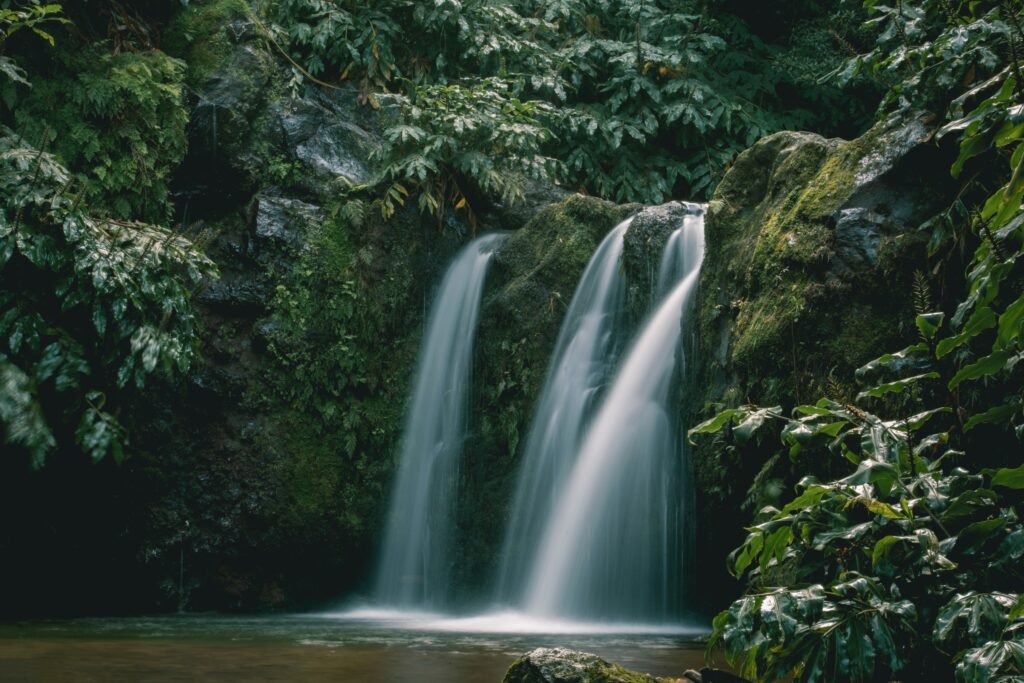
The northeastern corner of São Miguel, around the town of Nordeste, is the island’s quietest and most dramatic — and the part most day-trippers skip. The coastal road threads past a string of spectacular clifftop viewpoints (miradouros), with the Miradouro da Ponta do Sossego and Ponta da Madrugada standing out: manicured gardens perched over sheer green cliffs dropping to the sea. Inland, the Parque Natural da Ribeira dos Caldeirões is a lush park of waterfalls and old water mills, and the nearby Salto do Prego trail is a beautiful short hike to a swimmable waterfall through subtropical forest.
For hikers: São Miguel’s highest peak, Pico da Vara (1,103 m), rises above this corner of the island. The trail is muscle-burning and often muddy, but on a clear day the summit gives you the whole eastern half of the island and the Atlantic on both sides — a proper reward for the effort.
Gorreana — Europe’s Oldest Tea Plantation
Here’s a fact that surprises everyone: some of Europe’s only commercial tea fields are on São Miguel. Chá Gorreana, on the north coast, has been growing and processing tea since 1883 and is widely described as Europe’s oldest tea plantation still in operation. You can walk the terraced green fields for free, watch the antique machinery at work in the factory, and taste the island’s black and green teas overlooking the Atlantic. It’s a lovely, low-key stop on a day exploring the north or east, and a genuinely unique thing to do in the Azores.
How Many Days in São Miguel?
Five to seven days is the sweet spot for São Miguel. The island is bigger and slower to drive than its size suggests — winding mountain roads, weather delays, and viewpoints you’ll want to linger at all add up. Here’s how the time breaks down:
- 3 days is the absolute minimum: Sete Cidades, Furnas with its hot springs, and one more day for Lagoa do Fogo or whale watching. You’ll see the headlines but feel rushed.
- 5 days lets you give each region a proper day — west (Sete Cidades), center (Lagoa do Fogo + Caldeira Velha), east (Furnas), the northeast coast, and a whale-watching boat — with flexibility to chase good weather.
- 7+ days adds the hikes (Pico da Vara, Salto do Prego), the islet of Vila Franca do Campo, slow mornings in the hot springs, and the option of a day trip by plane to another island like Pico or Terceira.
Where to Stay in São Miguel
For a first trip, stay in or near Ponta Delgada. It’s the most central point on the island, has by far the widest choice of hotels, guesthouses and restaurants, and keeps almost every attraction within a 60–90 minute drive — so you can unpack once and day-trip out in every direction. Compare options on Booking.com or Expedia, and book a refundable rate early for summer.
If you’d rather wake up beside the hot springs, a night or two in Furnas is a lovely change of pace — you can soak in Terra Nostra in the early evening once the day-trippers leave. And for total quiet and dark skies, the rural guesthouses around Nordeste put you in the island’s wildest corner. But for most people, basing in Ponta Delgada the whole trip is the simplest and best choice.
What the Azores Actually Cost
The Azores are one of the better-value destinations in Europe — noticeably cheaper than mainland Portugal’s tourist hotspots, let alone the Mediterranean islands. Many of the best things to do (the craters, the viewpoints, the hikes, the Gorreana tea fields) are free, and the main costs are your flight, the rental car, and accommodation. Here’s a realistic per-person guide for two people sharing a room:
| Expense | Budget-conscious | Comfortable | Splurge |
|---|---|---|---|
| Accommodation (per night) | €50–80 | €90–150 | €200+ |
| Rental car (per day) | €25–40 | €40–60 | €70+ (4×4/automatic) |
| Food (per day) | €20–30 | €35–55 | €80+ |
| Activities (per day) | €5–15 (springs, parking) | €30–60 (whale tour day) | €90+ |
Where the money goes: the flight and the car are your biggest line items; food and hot-spring entry are cheap by European standards. The best value move is simple — many of the island’s highlights cost nothing, so you can spend on the things that matter (a whale tour, a cozido lunch, a night in Furnas) without the trip running away from you.
Getting Around São Miguel
Rent a car for most of the island – but check summer access rules. São Miguel’s best experiences are spread across craters, coastline, and forest that public buses simply don’t serve well on a visitor’s schedule. A rental car turns the whole island into a series of easy day trips from Ponta Delgada and lets you chase the clear weather, which matters enormously here. Roads are good and well-signposted, distances are short (the island is about 40 miles / 65 km long), but the mountain roads are winding, so allow more driving time than the map suggests. The big exception is Lagoa do Fogo in the restricted summer period, when independent visitors may need to use the official shuttle instead of driving the viewpoint road.
Book the car in advance, especially for summer and especially if you want an automatic — airport-desk walk-up rates are higher and cars sell out. Compare rental car rates for São Miguel (PDL) here. Pick up at the airport, which is just a few minutes from Ponta Delgada. If you’d rather not drive at all, you can do the island as a series of guided day tours instead, but you’ll pay more and lose the flexibility that makes São Miguel special.
Best Time to Visit the Azores
June to September is the main season: the warmest, driest, and sunniest weather (typically 70–78°F / 21–26°C), generally calmer seas for boat trips, and the best odds for clear views over the craters. July and August are the busiest and priciest, but the Azores never feel crowded the way mainland hotspots do.
May and October are excellent shoulder months — green, quiet, and cheaper, with a higher chance of passing showers but far fewer people. Spring (April–June) is also the prime window for the big migratory whales, including blue whales.
November to March is mild but wet and windy — daytime temperatures stay around 60°F (15–16°C), but rain and cloud are frequent and some boat tours pause. The hot springs are wonderful in cool weather, and prices are at their lowest, but you’ll need to be flexible and lucky with the skies. Whatever the month, pack layers and a rain jacket: São Miguel’s weather changes by the hour, which is exactly why the island is so green.
Is São Miguel Worth It?
Absolutely — and it’s one of the most rewarding short-haul trips a US traveler can take. São Miguel delivers the kind of dramatic, uncrowded nature you’d normally fly to New Zealand or Iceland for, but it’s only about four hours from the East Coast and runs on the euro at gentle prices. Crater lakes, volcanic thermal pools, whales in the open Atlantic, waterfalls, and a tea plantation — all on one green island you can drive across in an afternoon.
Worth it if: you love nature, hiking, and hot springs, you’re happy to drive, and you’d rather have wild scenery and elbow room than nightlife and big resorts.
Less ideal if: you want guaranteed beach weather and a lively party scene, or you want to avoid both rental cars and guided day tours — São Miguel is about the outdoors, the water is cool, and the magic is out in the craters, not in town.
What Most Visitors Get Wrong
- Not renting a car. It’s the single biggest mistake — without one, you can’t reach the craters, hot springs, or viewpoints on your own schedule.
- Locking the itinerary to fixed days. São Miguel’s weather is intensely local — save Sete Cidades and Lagoa do Fogo for your clearest days and stay flexible.
- Giving it too little time. Two or three days only scratches the surface; five lets the island breathe.
- Skipping the northeast. Most visitors stay west and central and miss Nordeste’s cliffs and waterfalls — some of the best scenery on the island.
- Underpacking for rain. It can be sunny and showery in the same hour. Bring layers and a waterproof, whatever the season.
Frequently Asked Questions
How many days do you need in São Miguel?
Five to seven days is ideal. Three days is the minimum to see the headline sights — Sete Cidades, Furnas, and one more day for Lagoa do Fogo or whale watching — but the island’s winding roads and changeable weather mean you’ll feel rushed. Five days lets you give each region its own day and stay flexible with the forecast, and a week adds hikes, a second island day trip, and slow mornings in the hot springs.
Do you need a car in the Azores?
On São Miguel, yes — a rental car is essential. The crater lakes, hot springs, waterfalls, and viewpoints are spread across the island and aren’t reachable on public transport on a visitor’s schedule. Book the car in advance, especially in summer and especially for an automatic. The only alternative is taking guided day tours, which cost more and remove the flexibility to chase good weather.
What is the best time to visit the Azores?
June to September is the best overall window — the warmest, driest, sunniest weather and generally calmer seas for boat trips. May and October are quieter, greener, and cheaper, with a slightly higher chance of rain. Spring is prime time for the big migratory whales. Winter is mild but wet and windy, best only if you’re flexible and mainly after the hot springs and low prices. Pack layers and a rain jacket year-round — the weather changes by the hour.
How do you get to the Azores from the US?
São Miguel’s airport (PDL) often has direct service from Boston and seasonal New York routes, plus frequent links via Lisbon and Porto — it’s roughly a four-and-a-half-hour flight from the US East Coast. Azores Airlines also offers a stopover program for eligible North America-Europe itineraries, which is a smart way to add the islands to a bigger trip. See our free stopover guide for how to check the current rules.
Are the Azores worth visiting?
Yes — the Azores offer dramatic, uncrowded volcanic scenery, volcanic thermal pools, and excellent whale watching, all within about four hours of the US East Coast and at gentler prices than most of Europe. São Miguel, the main island, packs crater lakes, waterfalls, a tea plantation, and steaming valleys into a space you can drive across in an afternoon. If you love the outdoors over nightlife, it’s absolutely worth it.
More Travel Guides
- Adding the Azores to a bigger trip? Our free stopover flights guide shows how to stop in the islands on the way to Europe.
- Still booking? Our cheap flights guide and trip planning guide cover getting there and putting the trip together.
- Before you go: the best travel money card for euro spending and the best eSIM for travel for data the moment you land.