
Azores Whale Watching: Best Time & How to Pick a Tour
The Azores sit alone in the middle of the North Atlantic, surrounded by deep, plankton-rich water that draws an extraordinary number of whales and dolphins — more than two dozen cetacean species have been recorded around the islands. That makes this little Portuguese archipelago one of the Atlantic’s best-known whale-watching destinations, and one of the few where you have a realistic chance of seeing wild dolphins and sperm whales during the same short trip. This guide covers what you’ll see, when to go, where to depart from, and how to pick a tour that’s good for you and good for the animals.
Quick Summary
| Best time overall | April–June for the big migratory whales; dolphins and sperm whales are possible year-round, with no sighting guaranteed |
| What you’ll see | Common & bottlenose dolphins, sperm whales; seasonally blue, fin and sei whales |
| Where to depart | São Miguel (Ponta Delgada, Vila Franca do Campo); also Pico & Faial |
| Trip length | About 3 hours; morning departures tend to have calmer seas |
| Boat types | Fast RIB/Zodiac (low to the water, bumpier) or larger catamaran (steadier, more comfortable) |
| Book ahead | Yes in summer — and pick a day with a good forecast |
| Good to know | Choose a licensed, responsible operator; bring layers, water and seasickness tablets |
Contents
- Lili’s Picks
- Quick Summary
- Why the Azores Are Such a Strong Whale-Watching Spot
- What Whales and Dolphins You’ll See
- Best Time of Year for Whale Watching in the Azores
- Where to Go Whale Watching
- How to Choose a Whale-Watching Tour
- What a Trip Is Actually Like
- Responsible Whale Watching
- Practical Tips Before You Go
- Is Whale Watching in the Azores Worth It?
- Frequently Asked Questions
- More Azores & Travel Guides
Affiliate disclosure: This post contains affiliate links. If you book or buy something through these links, I may earn a small commission at no extra cost to you. I only recommend things I genuinely use or believe in. Learn more.
Lili’s Picks
The tour I’d book
For a first Azores whale-watching trip, I’d book the Half-Day Whale and Dolphin Watching Tour on Viator. Best if you want: a straightforward first trip out of Ponta Delgada with a real shot at dolphins and sperm whales, plus the seasonal chance at something bigger. Why I like using Viator here: Reserve Now & Pay Later or free cancellation, where available, means no money at risk if the forecast turns. Not ideal if: you want the swimming-and-lunch version at Vila Franca islet instead — worth comparing if a slower half-day appeals more than a pure whale search. Before booking: check the boat type (RIB vs catamaran), morning vs afternoon departure, and recent traveler comments for your exact dates.
Where to stay: base yourself near the marina in Ponta Delgada, an easy walk to most departure points — Booking.com or Expedia.
Travel smarter: sort payments with a Wise card, set up a Airalo eSIM before you fly so you can check the marine forecast (see our eSIM guide for setup help), compare EKTA for travel medical cover, and pair the trip with our things to do in São Miguel guide for the crater lakes and hot springs.
Why the Azores Are Such a Strong Whale-Watching Spot
The water just offshore in the Azores drops away to enormous depths very quickly — there’s no shallow continental shelf, so the deep ocean, and the animals that live in it, come unusually close to land. That deep, nutrient-rich water supports a remarkable variety of cetaceans: more than two dozen whale and dolphin species have been recorded around the islands. Unlike many destinations where whale watching is a short seasonal window, the Azores offer whale-watching trips in every season, with regular species possible throughout the year and migratory giants passing through in spring.
There’s history here too. The Azores had a whaling industry until the 1980s, and today’s whale-watching culture still uses a version of that shore-based knowledge. Many operators use clifftop lookout towers — the vigias — where a spotter scans the ocean with powerful binoculars and radios the boats the moment a whale blows. It’s a big reason sighting chances can be strong: you’re not just hoping to get lucky, you’re often being guided toward animals that have already been found from shore.
What Whales and Dolphins You’ll See
No two trips are the same, but here’s what the Azores are known for:
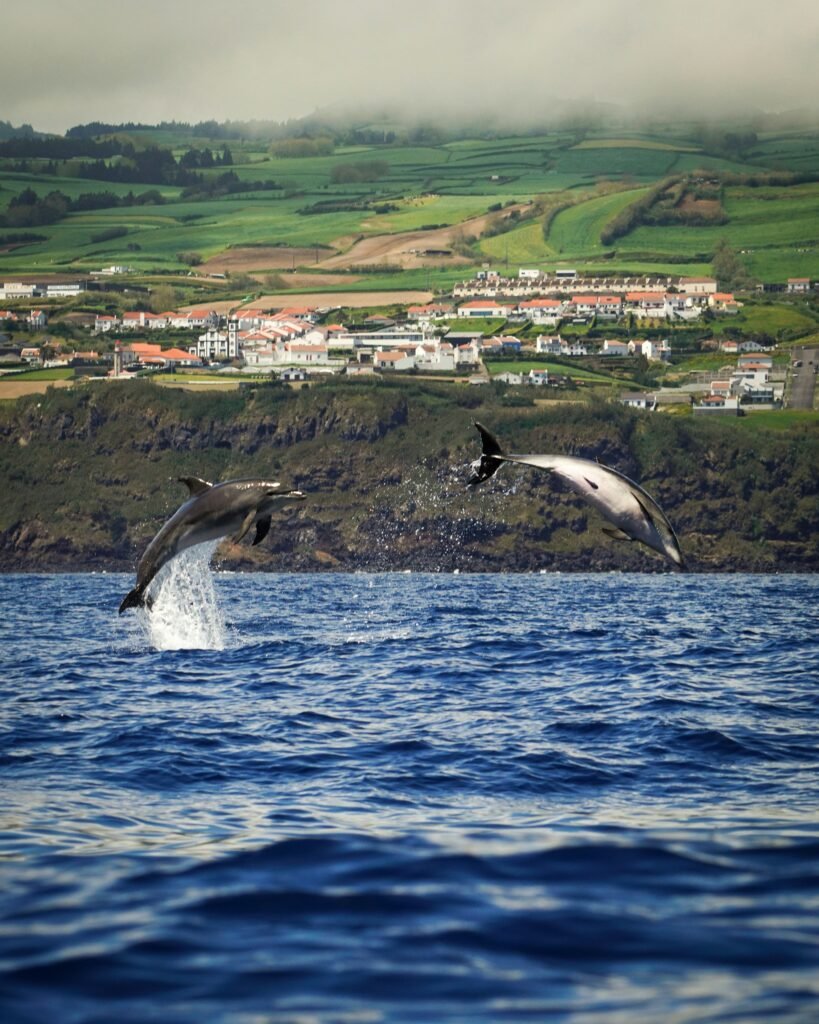
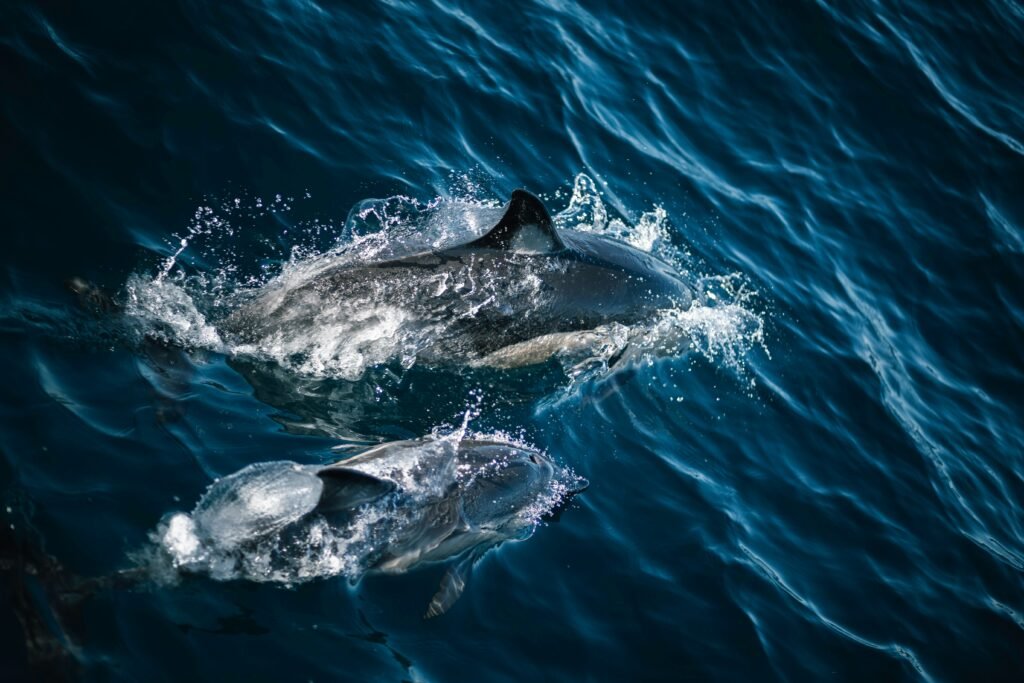
- Dolphins (year-round). Common and bottlenose dolphins are among the most frequently reported sightings, often in big, playful pods that bow-ride alongside the boat. Risso’s and Atlantic spotted dolphins also appear, especially in the warmer months.
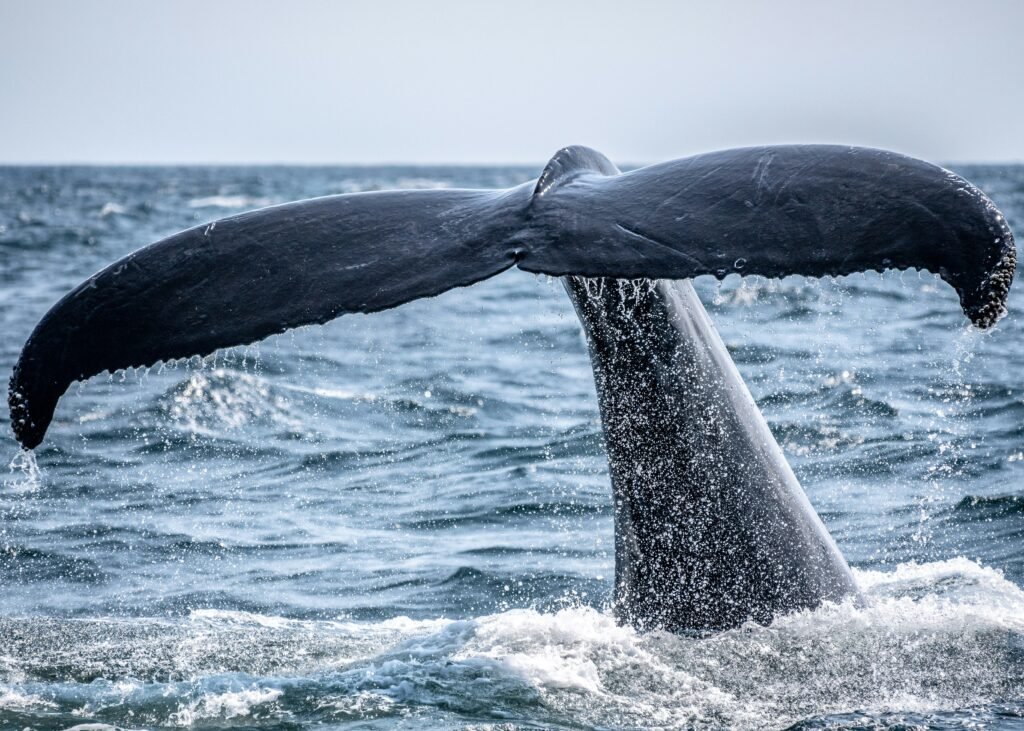
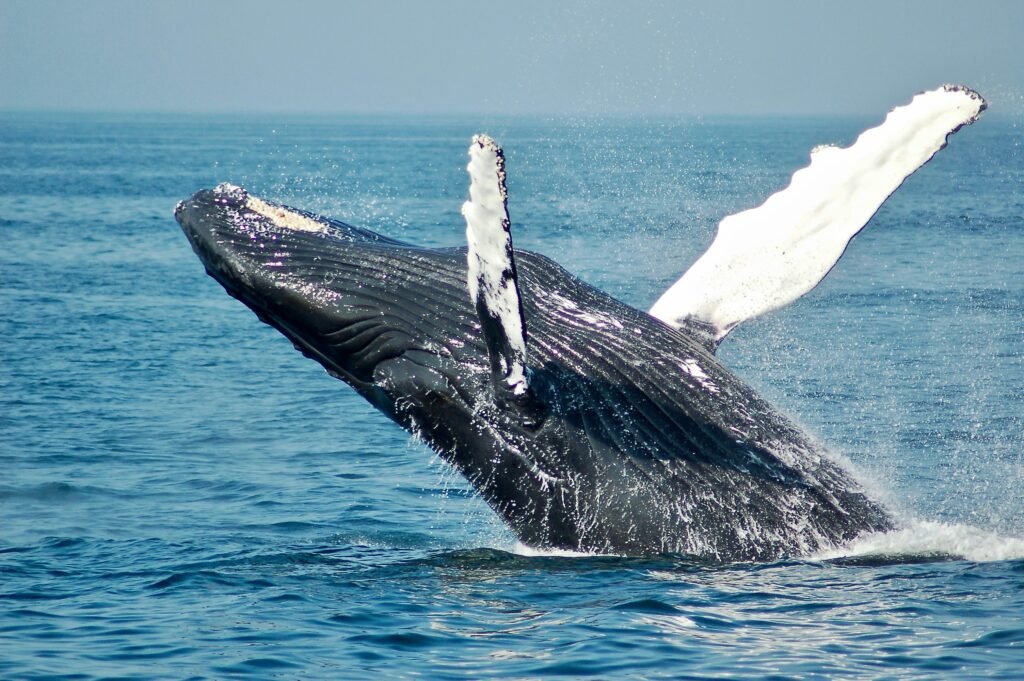
- Sperm whales (year-round). The Azores are one of the most reliable Atlantic destinations for sperm whale sightings, and sperm whales are present around the islands throughout the year. You’ll usually see them resting at the surface before they raise that unmistakable tail fluke and dive.
- Blue, fin and sei whales (spring). The headline act. The world’s biggest animals — blue whales and fin whales — migrate past the Azores mainly between April and June, along with sei whales. Seeing a blue whale, the largest animal that has ever lived, is the kind of thing people plan a whole trip around.
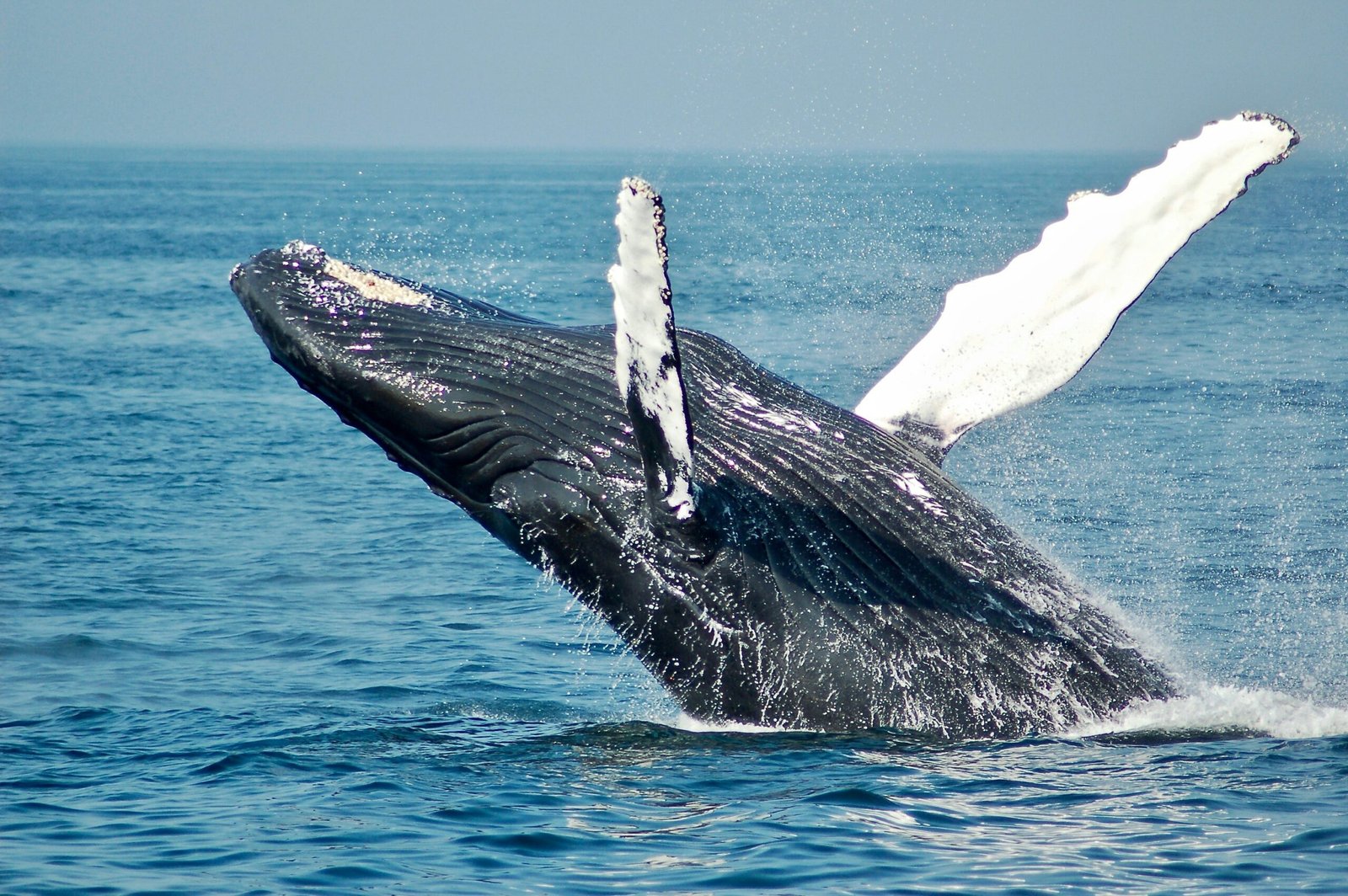
- Others. Depending on the season and luck, trips also encounter pilot whales, beaked whales, and occasionally orcas or humpbacks. Sea turtles are a possible bonus sighting.
Best Time of Year for Whale Watching in the Azores
For the big migratory whales — April, May and June. This is peak season for blue, fin and sei whales as they move through Azorean waters on migration. If seeing a blue or fin whale is your dream, build your trip around late spring.
For dolphins and sperm whales — any month. Both are possible year-round, so even outside the spring migration you can still have a memorable trip. Summer (June to September) usually brings calmer, warmer, sunnier conditions and more reliable departures, which makes it the easiest time to actually get out on the water.
Winter (November to March) still has resident species, but rougher seas and more frequent cancellations make trips less dependable. Whatever month you choose, the single most important factor is the weather on the day — calm seas mean better spotting and a far more comfortable ride, so keep a flexible day or two in your plans and book when the forecast looks good.
Where to Go Whale Watching
Most visitors go whale watching from São Miguel, the main island, where tours leave from Ponta Delgada (the capital, easiest to reach and stay near) and from Vila Franca do Campo, a smaller harbor a short drive east. Both access the same rich waters; Vila Franca can sometimes mean a slightly shorter run out, depending on where animals are being spotted that day.
The islands of Pico and Faial, in the central group, are the other famous whale-watching bases — Pico in particular has deep history as a whaling island and superb sightings — but for most first-time visitors flying into São Miguel, a tour from Ponta Delgada is the simplest choice. Compare São Miguel whale-watching departures on Viator →
How to Choose a Whale-Watching Tour
The biggest decision is the type of boat, and it comes down to what you want from the day:
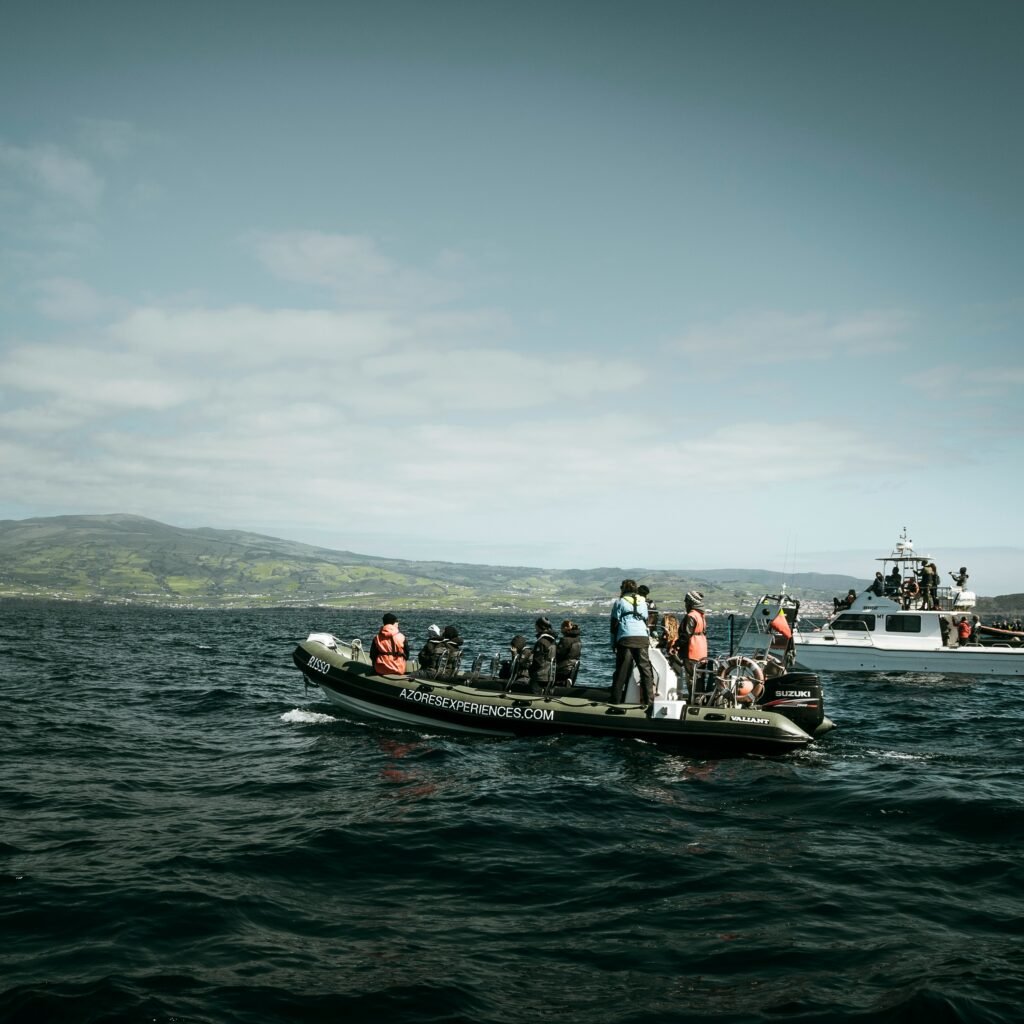
- RIB / Zodiac (fast inflatable). Small, quick and low to the water, with a more exposed, close-to-the-sea feel and the ability to cover ground quickly. The trade-off: it’s bumpier and wetter, with no shade or toilet — better for the adventurous and those who don’t get seasick easily.
- Catamaran / larger boat. Steadier, more comfortable, usually with a toilet, shade and a higher viewing deck. A better choice for families, anyone prone to seasickness, or a more relaxed pace, though you may feel slightly further from the water.
Beyond the boat, look for a few things: a licensed, responsible operator that follows the Azores’ approach rules, a marine biologist or guide on board (it transforms the experience), small-ish group sizes, and a clear policy if no cetaceans are seen — some may offer a second outing, while others explain refund or rescheduling rules upfront. Read recent reviews for sightings and sea conditions, and book a day or two ahead in summer. Browse and compare whale-watching tours on Viator →
What a Trip Is Actually Like
A typical tour lasts around three hours. After a short safety briefing and life vests, you head out from the harbor while the vigia on shore scans for blows. Once a whale or pod is spotted, the boat moves toward the area and approaches slowly and respectfully, keeping the regulated distance. On a good trip, you may have several encounters — a pod of dolphins riding the bow wave, a sperm whale logging at the surface and then fluking up to dive, maybe a distant blow that turns into something bigger.
Sightings are never guaranteed — these are wild animals — but the Azores’ shore-spotting system improves your chances, especially for dolphins and sperm whales. Mornings usually mean calmer water and better light, so an early departure is often the best call.
Responsible Whale Watching
The Azores regulate whale watching to protect the animals, and good operators take it seriously: limits on how many boats approach at once, minimum distances, slow and predictable movements, and no chasing or surrounding the animals. Choosing a licensed, well-reviewed operator isn’t just better for the whales — it usually means a calmer, more knowledgeable trip for you, too. If a crew ever pressures the animals or crowds them, that’s a red flag worth avoiding.
Practical Tips Before You Go
- Seasickness: if you’re prone to it, take tablets 30–60 minutes before departure, choose a larger boat, and look at the horizon. The open Atlantic can be lively even on a “calm” day.
- Dress in layers: it’s cooler and windier on the water than on land, and you may get splashed on a RIB. A waterproof jacket and a warm layer help; bring sunscreen and a hat too.
- Protect your gear: a strap for your phone or camera and a dry bag are worth it. Don’t spend the whole trip behind a lens — watch with your own eyes as well.
- Book early and flexible: reserve a tour for early in your stay so you have backup days if the weather forces a reschedule.
Is Whale Watching in the Azores Worth It?
Yes — it’s one of the best wildlife experiences in Europe and, for many people, the highlight of an Azores trip. Few places offer this mix: regular dolphin sightings, sperm whales present around the islands, the spring chance at blue and fin whales, and a short boat ride from a walkable island capital. If you have any interest in the ocean, it’s worth building a flexible day into your itinerary and going out the moment the forecast cooperates.
Frequently Asked Questions
When is the best time for whale watching in the Azores?
April to June is best for the big migratory whales — blue, fin and sei whales pass through Azorean waters in spring. Dolphins and sperm whales are possible year-round, so any month can be worthwhile, with summer (June to September) usually offering calmer seas and more reliable departures. The weather on the day matters most, so keep a flexible day in your plans and book when the forecast is good.
What whales will I see in the Azores?
Common and bottlenose dolphins and sperm whales are possible year-round, though no sighting is guaranteed. Dolphins are among the most frequently seen, while sperm whales are the year-round highlight. In spring, the Azores are one of the Atlantic’s best-known places to look for blue, fin and sei whales on migration. Depending on the season you may also encounter pilot whales, beaked whales, the occasional orca or humpback, and sea turtles. Sightings are never guaranteed, but the islands’ shore-based spotters help improve the odds.
Will I get seasick?
You might — the open Atlantic can be bumpy even on calm days. If you’re prone to motion sickness, take tablets 30–60 minutes before departure, choose a larger catamaran rather than a fast RIB, sit in the middle of the boat, and keep your eyes on the horizon. Booking a morning trip, when seas are usually calmer, also helps.
Where do whale-watching tours leave from?
On São Miguel, the main island, tours depart from Ponta Delgada and from Vila Franca do Campo. The islands of Pico and Faial in the central group are the other well-known whale-watching bases. For most first-time visitors flying into São Miguel, a tour from Ponta Delgada is the easiest option.
More Azores & Travel Guides
- Planning the rest of the island? Our things to do in São Miguel guide covers the crater lakes, hot springs and viewpoints.
- Timing the trip? See the best time to visit the Azores for weather, crowds and whale season month by month.
- Getting there: our free stopover flights guide shows how to add the Azores on the way to Europe, and the trip planning guide covers the rest.