
Chicago Bucket List: 25 Best Things to Do
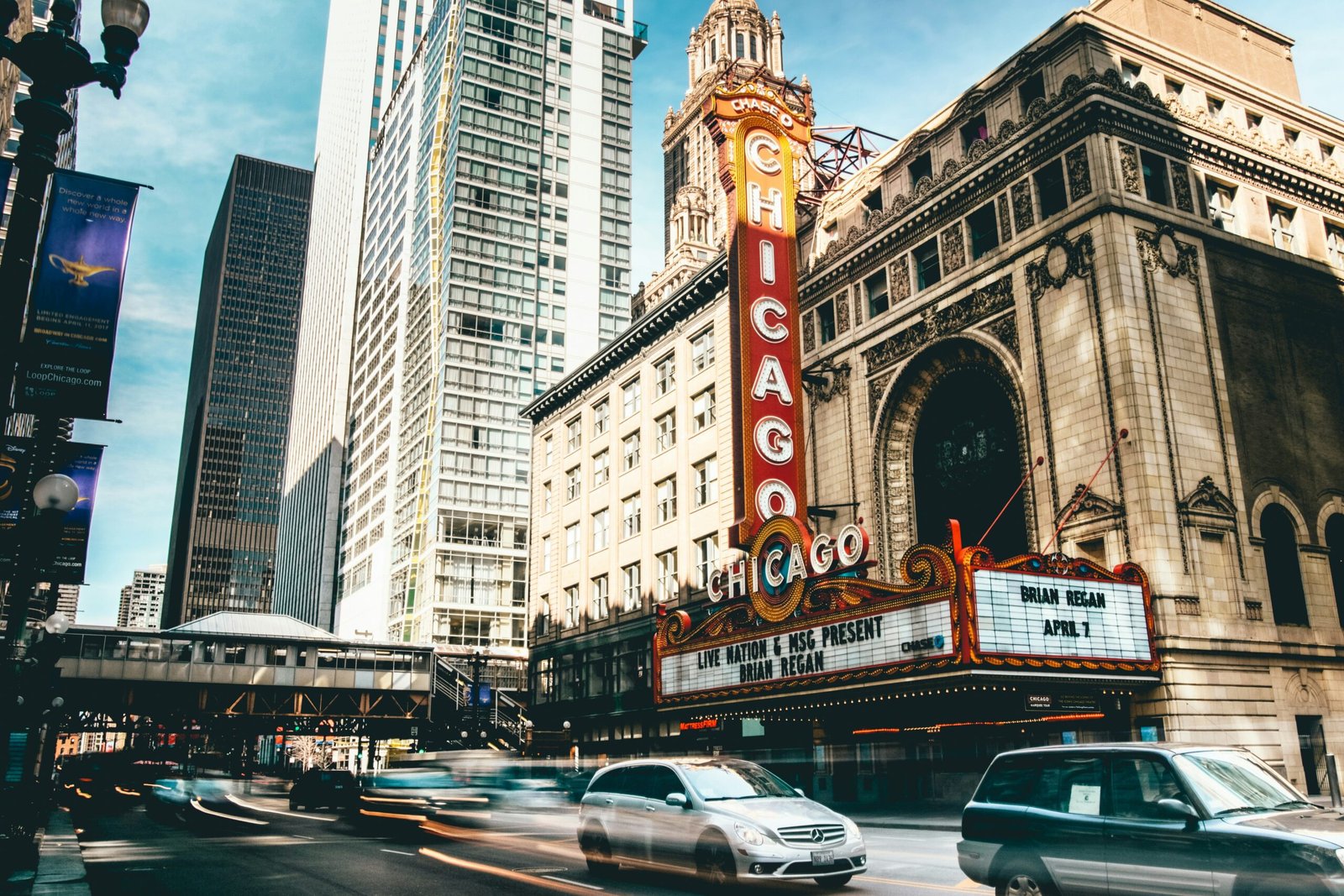
Chicago doesn’t do anything small. The architecture reaches higher, the food goes deeper, the lakefront stretches farther, and the neighborhoods feel more distinct than almost any other city in the United States. Most people underestimate it before they go. Almost nobody does after. This list covers all 25 experiences worth having, from the iconic landmarks every first-timer needs to see to the local spots most visitors never find.
Contents
- Lili’s Picks
- Quick Summary
- Chicago Bucket List Map
- Quick Tips for Chicago
- Chicago Bucket List: 25 Best Things to Do
- 1. Cloud Gate (The Bean) at Millennium Park
- 2. Take an Architecture Boat Tour
- 3. Visit the Art Institute of Chicago
- 4. Watch the Sunset from Milton Lee Olive Park
- 5. Eat Deep-Dish Pizza
- 6. Explore the Chicago Riverwalk
- 7. Go Up the Skydeck at Willis Tower
- 8. Visit Navy Pier
- 9. Spend a Morning at the Field Museum
- 10. Walk the Magnificent Mile
- 11. Visit the Shedd Aquarium
- 12. Catch a Game at Wrigley Field
- 13. Explore Lincoln Park & Lincoln Park Zoo
- 14. Take a Food Tour
- 15. Visit Buckingham Fountain at Night
- 16. Discover the West Loop Food Scene
- 17. Explore Pilsen’s Street Art
- 18. Try a Chicago-Style Hot Dog
- 19. Visit the 360 Chicago Observation Deck
- 20. Walk the 606 Trail
- 21. Explore Wicker Park
- 22. Visit the Chicago Cultural Center
- 23. Spend a Night at a Chicago Blues Club
- 24. Kayak on the Chicago River
- 25. Watch the Chicago River Turn Green on St. Patrick’s Day
- Is Chicago Worth It?
- What Most Visitors Get Wrong
- Best Time for the Chicago Bucket List
- Day Trips from Chicago
- Where to Eat in Chicago
- Final Thoughts: Your Chicago Bucket List
- Before You Go: Practical Notes
- Frequently Asked Questions
- More Chicago Guides
Affiliate disclosure: This post contains affiliate links. If you book or buy something through these links, I may earn a small commission at no extra cost to you. I only recommend things I genuinely believe are useful for this trip. Learn more.
Lili’s Picks
Start with the map further down to group sights by area — it saves you from crossing the city all day.
The tour I’d book
The paid experience I would shortlist from this whole list is the Chicago Architecture River Cruise on Viator. Best if you want: the one paid activity worth planning first if you want a specific day or morning slot. Why I like using Viator here: it gives you the convenience and security of sorting the ticket before you arrive, while still letting you check the exact terms — Reserve Now & Pay Later or free cancellation, where available, means no money at risk if your plans shift. Not ideal if: you’re already covering it with a Chicago CityPASS — worth checking only if you plan to visit several paid attractions. Before booking: confirm the departure point, duration, route, weather policy, and recent traveler comments for your exact date.
This is where I’d stay
The hotel I would shortlist is citizenM Chicago Downtown in the Loop. Best if you want: first-timers are usually happiest in the Loop or River North, and this one keeps things simple and well-located. Why it works: compact, well-designed, and close to most of what’s on this list without the price tag of a full-service hotel. Not ideal if: you want a different neighborhood feel — see our full where-to-stay guide for the other 6 areas. Before booking: compare total price, room type, cancellation policy, and recent guest comments for your exact dates.
Travel smarter: compare flights on Google Flights or Skyscanner, sort payments with a Wise card, set up an Holafly US eSIM (code MILESANDFLAVORS for a discount) before you fly, and compare EKTA if you want travel medical cover from outside the US.
Quick Summary
| Best time to visit | May–June or September–October |
| How many days | 3–5 days ideal |
| Best area to stay | The Loop or River North |
| Getting around | L train + walking |
| Don’t miss | Architecture boat tour + Millennium Park |
| Best for | First-timers, couples, food lovers |
Chicago Bucket List Map
Use this map to group the sights by area: Millennium Park and the Loop, the Riverwalk, Museum Campus, Lincoln Park, Wicker Park, Pilsen, and the lakefront. It keeps the Chicago bucket list from turning into a cross-city zigzag.
Quick Tips for Chicago
Still in the planning stages? Our complete trip planning guide covers exactly how to find cheap flights to Chicago, book the right accommodation, and budget a US city trip from start to finish.
Where to Stay
For a first trip, the Loop or River North are the best bases — walking distance from Millennium Park, the Riverwalk, and the architecture boat tour. For the full neighborhood breakdown, our Chicago accommodation guide covers every area honestly.
Best overall: The Langham Chicago — right on the river, walking distance to Millennium Park and the architecture boat tour departure. The location is as good as it gets in this city. Book with free cancellation and recheck closer to your dates — rates move. Check rates on Expedia →
Best value: citizenM Chicago Downtown — smart, compact rooms in a prime Loop location at significantly lower prices than comparable hotels. Everything you need, nothing you don’t. Check rates on Expedia →
Experiences Worth Booking in Advance
Architecture boat tour – plan this early if it matters to you. This is the best paid experience in Chicago and the one time slot worth choosing before you arrive, especially for peak summer weekends. Check architecture cruise times on Viator → If that schedule does not fit, compare other departures before changing the rest of your day.
- Skydeck Willis Tower – choose an early timed ticket if you want the smoothest visit. Later morning and sunset slots are usually busier. Book tickets here →
- Chicago food tour — go hungry, go early in your trip to orient yourself fast. Viator food tours → — if Viator’s options don’t fit your schedule, GetYourGuide has more tour options →
- CityPASS – can save money if you’re doing Skydeck + Shedd Aquarium + Field Museum. Run the math for your specific itinerary before buying. Check CityPASS pricing →
Chicago Bucket List: 25 Best Things to Do
Use the map above before you plan your days. Chicago’s highlights spread across several neighborhoods — grouping items by area saves a lot of cross-city commuting. The map organizes all 25 by location so you can build a logical route.
1. Cloud Gate (The Bean) at Millennium Park
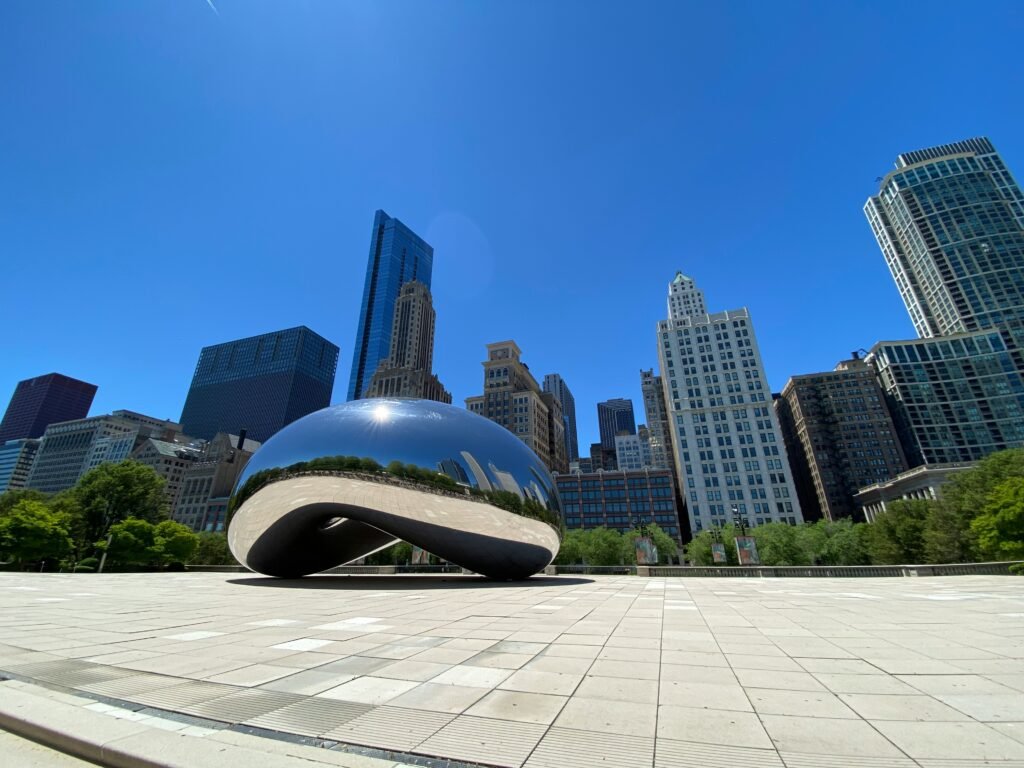
If there’s one thing on this Chicago bucket list that cannot be skipped, it’s Cloud Gate. This giant stainless steel sculpture — affectionately known as The Bean — sits in the heart of Millennium Park and has become the most recognizable symbol of the city. It reflects the entire Chicago skyline in its curved surface, creating a visual experience unlike anything else in the world. Walk around it, crouch underneath it, take your time — the reflection from directly below, with the skyline wrapping around you overhead, is one of those travel moments that stays with you. Full visitor guide — best photo times, Crown Fountain, Lurie Garden — in our Millennium Park guide.
Price: Free | Best time: Before 9am for photos without crowds | Time needed: 45–60 minutes
Tip: Arrive at sunrise for the best light and zero crowds — the Bean at 7am on a clear morning is one of the most beautiful sights in Chicago.
With kids: Crown Fountain’s water jets, also in Millennium Park, are a huge hit with small children in summer — bring a change of clothes.
2. Take an Architecture Boat Tour
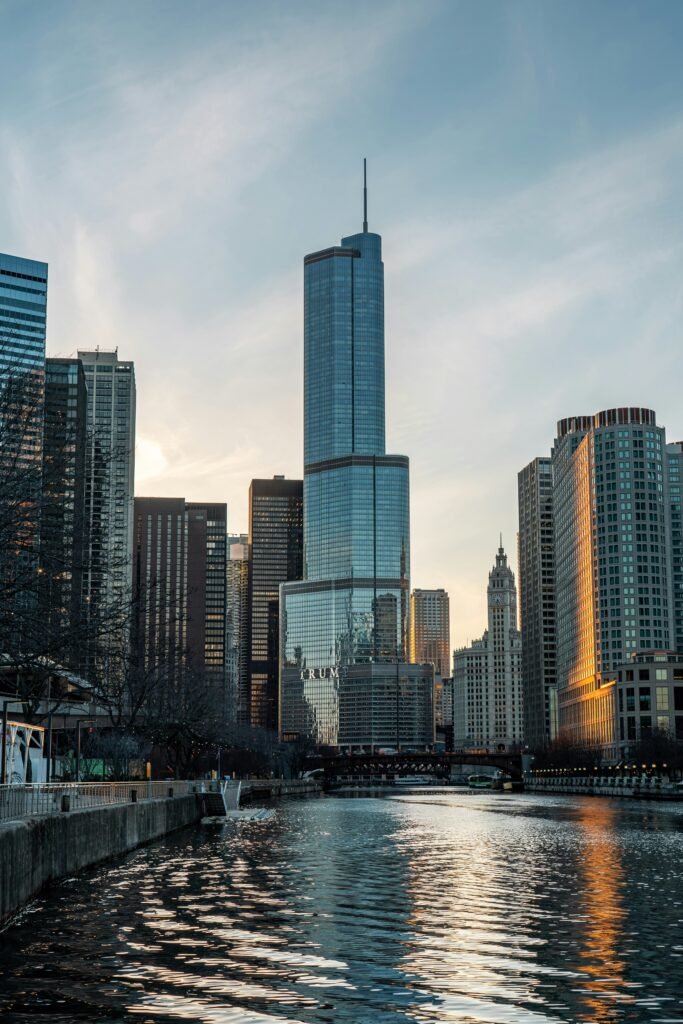
Chicago is considered the birthplace of modern architecture, and the best way to understand why is from the water. The architecture boat tour takes you along the Chicago River for 90 minutes while expert guides tell the stories behind the city’s most iconic buildings.
From river level, the skyline looks completely different than it does from the street — you see angles and details that make the whole city suddenly make sense.
If you book one paid experience in advance, make it this one. Weekend summer departures can fill up, and the tour gives the rest of the city more context.
Price: Tour pricing varies by operator, date, and demand | Duration: Most river architecture cruises run about 75-90 minutes | Best time: Morning | Season: Classic river cruises are strongest from spring through autumn; winter options vary by operator
Tip: Sit on the upper deck if the weather allows because the views are significantly better. If you care about timing, choose a morning slot in advance. Book your architecture river cruise on Viator →
3. Visit the Art Institute of Chicago
The Art Institute is one of the great art museums of the world — and it’s consistently underestimated by first-time visitors. Over 300,000 works spanning thousands of years and dozens of cultures, including Seurat’s A Sunday on La Grande Jatte (which fills an entire wall), Grant Wood’s American Gothic, and one of the finest Impressionist collections outside of Europe. It is easy to spend three hours here even if you only planned a shorter visit.
Price: Check the Art Institute current admission page; adult pricing and resident discounts can change | Best time: Weekday mornings | Closed: Tuesdays | Time needed: 2-3 hours
Tip: Book tickets online if you want a specific weekend time slot. A guided tour can help you get more out of the collection in less time. See Art Institute guided tour options here →
4. Watch the Sunset from Milton Lee Olive Park
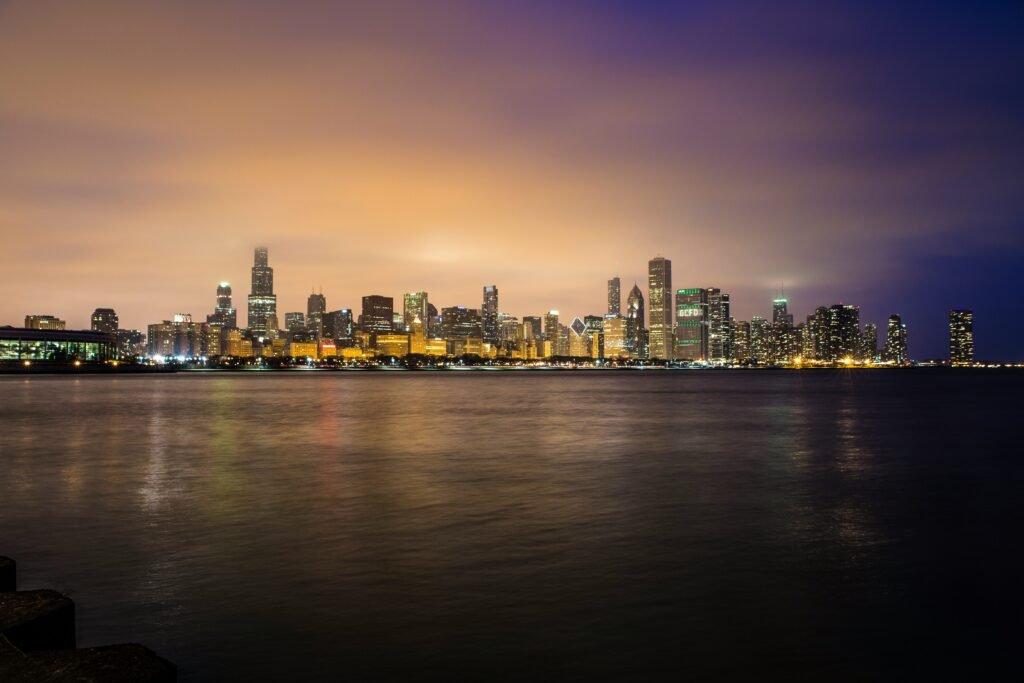
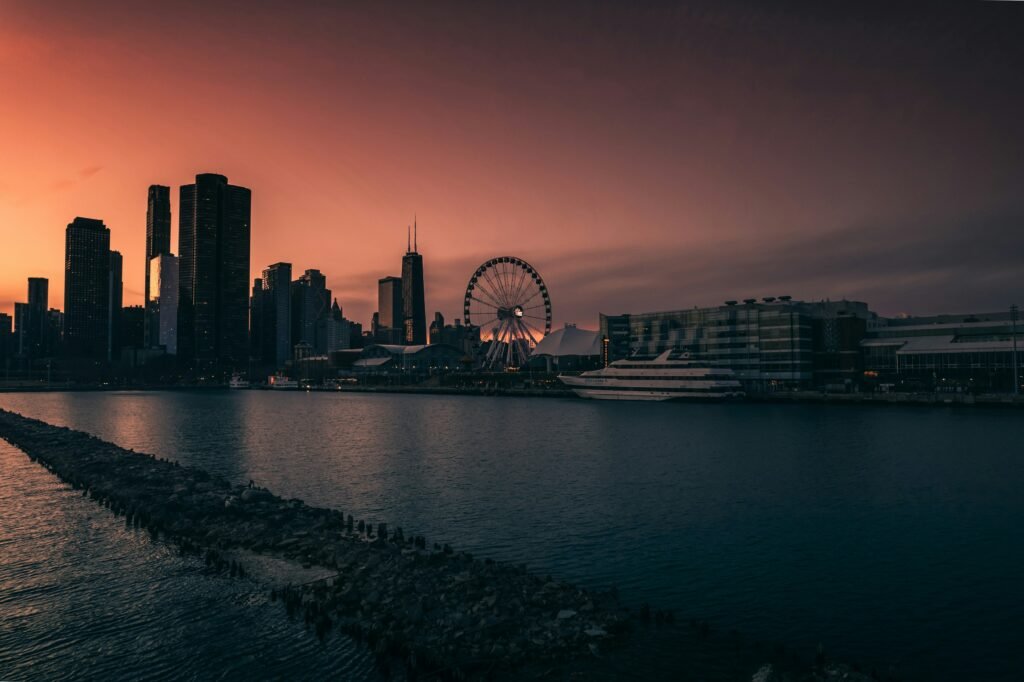
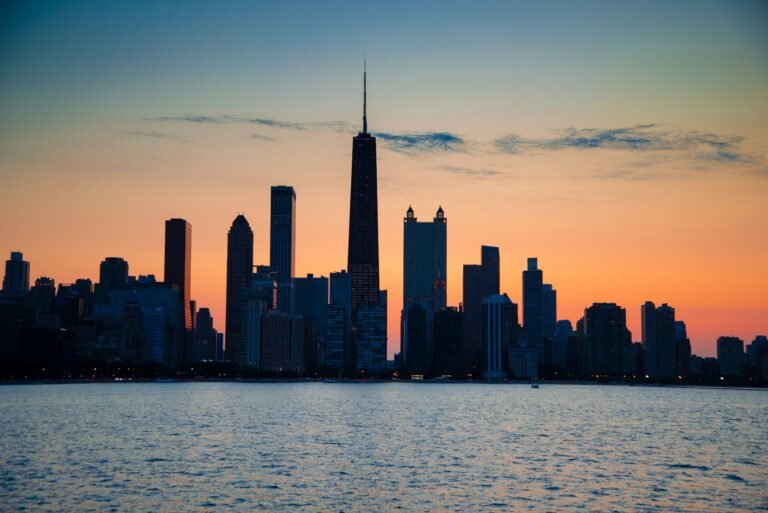
Most visitors to Chicago never find Milton Lee Olive Park — and that’s exactly what makes it special. This small peninsula between Navy Pier and Ohio Street Beach offers one of the most unobstructed views of the Chicago skyline anywhere in the city, and at sunset it’s one of the most striking viewpoints in the entire city. Arrive 30 minutes before sunset, find a bench facing the skyline, and stay long enough to watch the buildings light up one by one. Completely free, almost always empty.
Price: Free | Best time: 30–45 minutes before sunset | Time needed: 1 hour
Tip: Bring a jacket — the wind off the lake picks up significantly after dark, even in summer.
5. Eat Deep-Dish Pizza
Chicago deep-dish pizza is non-negotiable on any Chicago bucket list. Rather than a thin crust with toppings, deep-dish is built in a deep pan with a thick buttery crust, layers of mozzarella, and chunky tomato sauce on top. It’s heavy, rich, and one slice is more than enough for most people.
The three essential stops: Giordano’s (famous for its stuffed version), Lou Malnati’s (the buttery crust is unmatched), and Pequod’s (known for caramelized cheese edges). Try at least two during a trip — they’re different enough that the comparison is worth it.
Price: ~$20–30 per person | Best time: Lunch on a weekday to avoid the dinner wait
Tip: Deep-dish takes 35–45 minutes to bake — order drinks and settle in when you arrive. Book weekend evenings in advance at Lou Malnati’s.
6. Explore the Chicago Riverwalk
The Chicago Riverwalk is one of the best free things to do in Chicago — and often overlooked by first-time visitors. This 1.25-mile path runs along the south bank of the Chicago River through the heart of downtown, lined with restaurants, bars, kayak rentals, public art, and some of the most photogenic views in the city. Walk the full length at a relaxed pace and stop wherever catches your eye. In summer the Riverwalk comes fully alive — outdoor dining, live music, and boat traffic make it one of the most vibrant stretches of urban waterfront in the country.
Price: Free | Best time: Late afternoon or evening | Time needed: 45–60 minutes
Tip: Water taxis run along the river in summer — hop on one for a different perspective on the skyline.
7. Go Up the Skydeck at Willis Tower
The 103rd floor of Willis Tower — still called the Sears Tower by most Chicagoans — remains one of the most impressive observation experiences in the United States. On a clear day you can see four states. The Ledge — four glass boxes extending out from the building with an unobstructed view straight down to the street 1,353 feet below — is genuinely thrilling. Standing on transparent glass with nothing but air between you and the Chicago streets below is one of those moments you don’t forget. Full comparison against 360 Chicago — pricing, views, which one wins — in our Willis Tower vs 360 Chicago guide.
Price: Timed-entry pricing varies by date and demand | Hours: Check the current calendar before choosing your slot | Best time: First thing in the morning on a clear day | Time needed: 60-90 minutes
Tip: The Ledge uses timed entry, and popular periods can fill up. Choose an early slot, check the weather the night before, and avoid making this your only skyline plan if visibility looks poor. Get your Skydeck tickets here →
Planning your days in Chicago? Our 3-day Chicago itinerary sequences these experiences into the best possible order — including which morning to do the architecture tour, when to hit the Bean for photos, and how to combine the free and paid highlights without wasting a single hour.
8. Visit Navy Pier
Navy Pier stretches more than half a mile into Lake Michigan — touristy, yes, but worth a few hours. The Centennial Wheel offers beautiful aerial views of the skyline and lake. The pier hosts free outdoor concerts, movie screenings, and seasonal festivals throughout summer. Walking the pier costs nothing — and the lake views from the end of the pier are some of the best in the city. Full breakdown of what’s worth doing (and what to skip) in our complete Navy Pier guide.
Price: Free to walk / Centennial Wheel pricing varies by date | Best time: Late afternoon into evening | Time needed: 45-60 minutes
Tip: Summer fireworks at Navy Pier happen every Wednesday and Saturday evening — one of the best free shows in the city.
9. Spend a Morning at the Field Museum
One of the greatest natural history museums in the world, home to over 40 million specimens. The undisputed star is Sue — the largest, most complete T. rex skeleton ever discovered. Seeing it in person takes your breath away regardless of your age. Beyond Sue: the Egyptian mummies collection, the underground coal mine replica, and the Pacific Spirits gallery are all extraordinary. Plan at least half a day.
Price: Ticket pricing varies by date, residency, and package | Best time: Weekday mornings | Time needed: 3-4 hours
Tip: CityPASS can be worth checking if you’re visiting multiple paid attractions. Check CityPASS pricing here →
10. Walk the Magnificent Mile
This section of Michigan Avenue running north from the Chicago River is lined with flagship stores, luxury hotels, and some of the most impressive architecture in the city. Even if shopping isn’t your thing, the Magnificent Mile is worth walking for the buildings alone — the historic Water Tower (one of the few structures that survived the Great Chicago Fire of 1871) stands in quiet contrast to the modern towers surrounding it.
Price: Free to walk | Best time: Weekday mornings for fewer crowds | Time needed: 30–45 minutes
Tip: Look for the stones embedded in the base of Tribune Tower — they include pieces from the Great Wall of China, the Taj Mahal, the Parthenon, and many others.
11. Visit the Shedd Aquarium
One of the largest and most impressive indoor aquariums in the world, home to over 32,000 animals. The Caribbean Reef exhibit — a 90,000-gallon habitat — is the heart of the aquarium. Sea otters, beluga whales, penguins, sharks, and Pacific white-sided dolphins all call the Shedd home. The CityPASS may be worth checking if you’re planning to visit this alongside the Field Museum and Skydeck.
Price: Ticket pricing varies by date, residency, and package | Best time: Weekday mornings | Time needed: 2-3 hours
Tip: Book in advance for summer weekends, when the busiest time slots can go first. Check CityPASS options here →
12. Catch a Game at Wrigley Field
Even if you’re not a baseball fan, catching a game at Wrigley Field is one of the most iconic Chicago experiences available. Built in 1914, it’s the second-oldest ballpark in Major League Baseball with a history, atmosphere, and physical beauty that no modern stadium can replicate.
The ivy-covered outfield walls are legendary. The hand-operated scoreboard is one of the last of its kind. The energy in Wrigleyville on game day — the bars, the crowds, the noise — has to be experienced rather than described.
Price: Game tickets ~$25–150+ | Best time: Evening games in summer
Tip: Arrive early to explore Wrigleyville before the game — the neighborhood has some of Chicago’s best sports bars and the atmosphere builds for hours before first pitch.
13. Explore Lincoln Park & Lincoln Park Zoo
Lincoln Park Zoo is one of the very few major city zoos that’s completely free to visit. Home to hundreds of animals including lions, gorillas, snow leopards, polar bears, and giraffes in thoughtfully designed habitats. The Honeycomb Pavilion at the South Pond offers one of the best skyline views in the city — a wooden structure that frames the downtown skyline in a way that makes for unforgettable photos.
Price: Free | Best time: Weekday mornings | Time needed: 2–3 hours
With kids: One of the best family-friendly free experiences in Chicago — the habitats are well-designed and the Nature Boardwalk is one of the nicest free walks in the city for all ages.
14. Take a Food Tour
Chicago’s food scene is extraordinary — and a food tour is the most efficient and enjoyable way to experience it. Rather than spending hours researching the best spots and waiting for tables, a guided food tour takes you to local favorites while telling you the stories behind them. Most Chicago food tours cover deep-dish pizza, Chicago-style hot dogs, Italian beef sandwiches, and a rotating selection of other local specialties while walking you through neighborhoods like River North or the West Loop.
Price: ~$60–90 per person | Duration: 2.5–3.5 hours | Best time: Lunchtime
Tip: Go hungry — the portions add up and skipping breakfast beforehand makes the experience significantly better. Great way to orient yourself early in a trip. See Chicago food tour options on Viator → — if Viator’s schedule doesn’t work for your days, GetYourGuide has more tour options.
15. Visit Buckingham Fountain at Night
Buckingham Fountain in Grant Park is beautiful during the day — but at night, with its light and music show running, it becomes one of the most impressive fountain spectacles in the country. Built in 1927, it’s one of the largest decorative fountains in the world, with a central jet that shoots water 150 feet into the air. The evening light show runs on the hour from dusk, combining colored lights, music, and the illuminated skyline as a backdrop.
Price: Free | Best time: After dark for the light show | Season: Usually spring through mid-October, but confirm the current Chicago Park District schedule before planning around it
16. Discover the West Loop Food Scene
The West Loop has transformed over the past decade into one of the most celebrated food neighborhoods in the entire United States. Randolph Street — Restaurant Row — is the heart of it all. Some of the most celebrated names in American dining have restaurants here, and the variety is extraordinary.
Time Out Market Chicago on Fulton Market Street requires no reservation and lets you sample dishes from multiple top restaurants in one visit — the best entry point for first-timers.
Price: Free to explore / dining ~$30–80+ per person | Best time: Friday or Saturday evening
Tip: Book sit-down restaurants at least a week in advance for weekend evenings — the most popular spots on Randolph Street fill completely.
17. Explore Pilsen’s Street Art
Pilsen is one of Chicago’s most visually striking neighborhoods — a historically Mexican-American community on the Lower West Side covered in extraordinary murals. Large-scale, technically accomplished, and full of cultural and political meaning. Walking through Pilsen feels like moving through an open-air gallery. The murals cover entire building facades, alleyway walls, and underpasses, depicting everything from Mexican history and folklore to contemporary social issues.
Price: Free | Best time: Weekend afternoons | Time needed: 2–3 hours
Tip: Combine with lunch at one of the neighborhood’s authentic Mexican restaurants — the tacos in Pilsen are among the best in Chicago and among the most affordable.
18. Try a Chicago-Style Hot Dog
A Chicago-style hot dog is one of the great regional food experiences in America. The rules are specific: an all-beef frank in a poppy-seed bun, topped with yellow mustard, chopped white onions, bright green relish, tomato wedges, a dill pickle spear, sport peppers, and a sprinkle of celery salt.
One rule above all others: no ketchup. Ever. Ordering a Chicago dog with ketchup is considered a genuine cultural offense, and most stands will refuse. Portillo’s is the essential destination — loud, chaotic, and completely worth it.
Price: ~$5–10 | Best time: Lunch
Tip: Order the Italian beef sandwich while you’re at Portillo’s — equally iconic, equally worth eating.
19. Visit the 360 Chicago Observation Deck
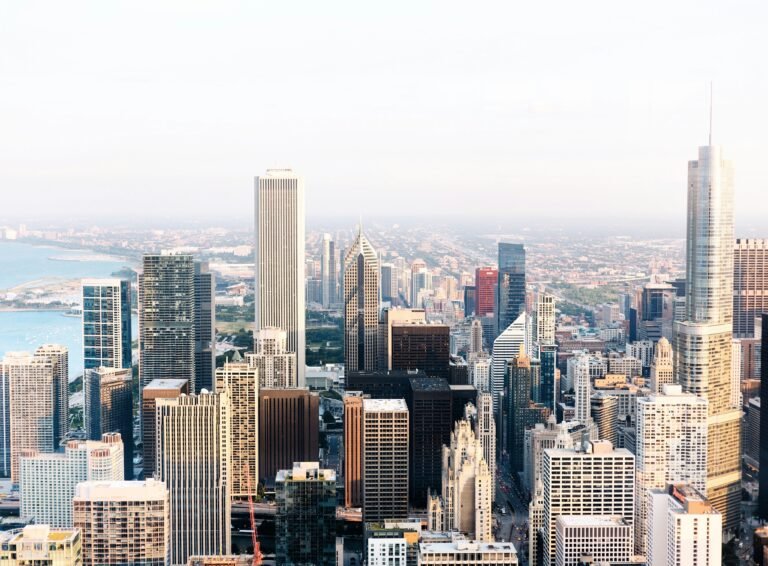
While the Skydeck gets most of the attention, 360 Chicago at the John Hancock Building offers a different — and in some ways better — experience. Located 1,000 feet above Michigan Avenue, it offers sweeping views of the skyline, Lake Michigan, and the city stretching to the horizon. The TILT experience — a glass platform that tilts outward from the building at a 30-degree angle — gives you a thrilling downward view of Michigan Avenue below. There’s also a bar at the top.
Price: ~$26–36 per person | Best time: Sunset — the view over the lake at golden hour is extraordinary
Tip: Book sunset slots in advance — they fill quickly, especially on weekends.
20. Walk the 606 Trail
The 606 is an elevated trail built on a former railway line — 2.7 miles running through four Northwest Side neighborhoods: Wicker Park, Bucktown, Logan Square, and Humboldt Park. Walking or cycling it gives you a completely different perspective on the city. You’re above street level, moving through neighborhoods rather than just past them, with rooftop views and glimpses of the skyline that you can’t get from the ground. One of the best free things to do in Chicago that most first-timers never find.
Price: Free | Best time: Weekend mornings | Time needed: 1.5–2 hours
Tip: Rent a Divvy bike at the trailhead for the most enjoyable way to cover the full length.
21. Explore Wicker Park
Wicker Park is the neighborhood for travelers who want to see Chicago beyond the tourist trail. Northwest of downtown, this creative, independent-minded neighborhood is where Chicago’s art, music, and food scene intersect most interestingly. Walk along Milwaukee Avenue on a Saturday afternoon, browse the vintage shops, stop for coffee at an independent café, and stay for dinner at restaurants that locals actually go to. It’s a completely different city from the Loop — and worth the 20-minute L ride to get there.
Price: Free to explore / dining ~$15–40 per person | Best time: Saturday afternoon into evening
Tip: The weekend farmers market in Smith Park runs June through October — worth timing your visit around.
22. Visit the Chicago Cultural Center
One of the most underrated free experiences in the entire city. Originally built as Chicago’s main public library in 1897, this stunning Beaux-Arts building now hosts free exhibitions, performances, and cultural events year-round. Two massive Tiffany glass domes — among the finest examples of stained glass art in the United States — make the interior genuinely extraordinary. Standing beneath either of them and looking up is one of those moments that stops you completely.
Price: Free | Best time: Weekday mornings | Time needed: 30–45 minutes
Tip: Free guided tours run on select days — check the schedule in advance and arrive early as spots are first-come, first-served.
23. Spend a Night at a Chicago Blues Club
Chicago shaped the sound of modern music more than any other city. The electric blues that developed here in the 1940s and 50s became the foundation of rock and roll, and the blues clubs that survived carry that history in every note.
Kingston Mines in Lincoln Park — two stages running simultaneously seven nights a week — is the most famous. Buddy Guy’s Legends in the South Loop is the other essential stop, owned by the legendary guitarist himself.
Price: ~$10–20 cover charge | Best time: Friday or Saturday night after 10pm
Tip: Eat before you go — the focus at blues clubs is the music, not the food. Arrive earlier than you think you need to for a good seat.
24. Kayak on the Chicago River
Kayaking the Chicago River through downtown is one of the most unique perspectives on the city available. From water level, the skyscrapers rise straight up on both sides, the bridges pass overhead, and the city takes on a completely different scale and drama. Several companies offer guided kayak tours and rentals along the Riverwalk — no previous experience required. The downtown stretch is calm, well-sheltered, and easy to navigate.
Price: ~$25–50 per person | Best time: Morning, May–October | Time needed: 1.5–2 hours
Tip: Book a guided tour for the architectural commentary — it transforms a paddle into an education. Wear layers even in summer.
25. Watch the Chicago River Turn Green on St. Patrick’s Day
If you happen to be in Chicago on St. Patrick’s Day — or can plan around it — watching the Chicago River turn green is one of the most extraordinary urban spectacles in America. Since 1962, the Chicago Journeymen Plumbers union has dyed the river a vivid, almost electric shade of green every year. The best viewing spots are from DuSable Bridge on Michigan Avenue and from the Riverwalk below. Arrive at least an hour before the scheduled start time — the crowds are enormous.
Price: Free | Best time: The Saturday before St. Patrick’s Day, morning
Tip: Even outside St. Patrick’s Day, the city is worth visiting in March — hotels are significantly cheaper and the city has a genuine local energy before tourist season kicks in.
Is Chicago Worth It?
Yes — and more so than most people expect. Chicago is consistently underestimated by first-time US visitors who focus on New York or LA. The combination of the architecture, the food, the lakefront, and the neighborhoods adds up to something that’s hard to match anywhere in the country. And the fact that many of the best experiences on this bucket list are completely free makes Chicago better value than cities like New York or San Francisco at equivalent quality.
The architecture boat tour is the strongest paid experience on this list: usually around 75-90 minutes that transform how you see the entire city. Everything else is a matter of priorities, budget, and time.
What Most Visitors Get Wrong
- Leaving the architecture boat tour until they arrive – Saturday morning departures can be limited in peak season. Choose a time before you arrive if this is your top Chicago experience.
- Showing up at the Bean at 9am instead of 7am. The difference in crowd levels is the difference between a great photo and an unusable one.
- Eating near the Magnificent Mile — the food is better and cheaper two neighborhoods over in the West Loop. That’s where Chicagoans actually eat.
- Missing Milton Lee Olive Park entirely. It’s the best sunset spot in the city and almost nobody who doesn’t know Chicago finds it on their own.
Best Time for the Chicago Bucket List
May–June is excellent — mild weather, smaller crowds than peak summer, and hotel prices 20–30% lower than July–August. The city comes alive after winter and every outdoor experience is better.
September–October is equally good — comfortable temperatures, the lake is still swimmable, and hotel rates drop noticeably after Labor Day. September is the safest first recommendation for a first visit — see our full Chicago in September guide for the Jazz Festival and exact weather timing.
July–August is peak season — warm, vibrant, beach life on the lakefront, but higher prices and larger crowds. Book everything in advance.
Shoulder season tip: September hotel rates in Chicago drop 20–30% compared to July. Same city, better experience, lower cost.
Day Trips from Chicago
Milwaukee, Wisconsin (~1.5 hours north): The Milwaukee Art Museum is architecturally extraordinary, the Harley-Davidson Museum is one of the best automotive museums in the US, and the craft beer scene is exceptional. Drive or take the Amtrak Hiawatha which runs multiple times daily.
Indiana Dunes National Park (~1 hour southeast): Massive sand dunes along the southern shore of Lake Michigan with hiking, swimming, and views back toward Chicago. Take the South Shore Line commuter rail from Millennium Station.
Where to Eat in Chicago
Deep-dish and hot dogs are covered in detail at #5 and #18 above — including which spot to choose and what to order. For everything beyond those two Chicago staples:
Girl & the Goat — Stephanie Izard’s West Loop flagship. Small plates, bold flavors, extraordinary wine list. ~$60–80 per person. Book well in advance.
Au Cheval — the best burger in Chicago and arguably one of the best in America. ~$25 per person. Expect a queue.
Big Star — Wicker Park’s legendary taco spot. Corn tortillas, exceptional fillings, cold beer. ~$15–20 per person. No reservations, arrive early.
Time Out Market Chicago — Fulton Market’s food hall with no reservation needed. Best entry point if you want to sample several West Loop spots in one visit without committing to a full sit-down dinner. ~$15–30 per person.
Final Thoughts: Your Chicago Bucket List
Chicago rewards the traveler who goes beyond the obvious. The Bean and the Skydeck are worth every minute — but so is a morning in Pilsen, an evening at a blues club, and a quiet sunset at Milton Lee Olive Park when most visitors are still at Navy Pier.
This city has more depth, more variety, and more character than its reputation suggests. Work through this list at your own pace and leave space for the unplanned — the lunch that turns into two hours, the neighborhood you discover by accident, the viewpoint nobody told you about. That’s when Chicago really shows itself.
Before You Go: Practical Notes
Last checked: May 2026. Chicago attraction prices, opening hours, beach season, and fountain schedules change, so verify the official pages for the Art Institute, Chicago Park District beaches, Buckingham Fountain, and Lincoln Park Zoo before locking your day.
Getting around. The L train covers most of what’s on this list – buy a Ventra card at any station and load it with a 1-day or 3-day pass depending on your trip length. Taxis and Uber/Lyft are straightforward for late nights or when you’re carrying luggage. You do not need a car in Chicago. If you’d rather get oriented from an open-top bus on day one, see our Chicago hop-on hop-off guide for who it’s actually worth it for.
Car rental. Skip a car for the city itself, but compare rental prices if you are adding Milwaukee, Indiana Dunes, or another day trip that is awkward by train. Discover Cars is a useful comparison point before you decide.
Connectivity. If you’re visiting from outside the US, an eSIM is significantly cheaper than international roaming — typically $8–15 for a week of data versus $50+ on most carrier plans. Holafly has eSIM plans you can install before you fly and activate on landing.
Travel insurance. If you’re flying to Chicago from abroad — or booking non-refundable hotels and tours — trip cancellation coverage is worth having. EKTA is one option to compare: it is straightforward to get a quote online, covers trip interruption and emergency medical, and takes about 3 minutes to check.
Frequently Asked Questions
What is the best thing to do in Chicago?
The architecture boat tour is the single best paid experience in Chicago — 90 minutes on the river that completely change how you see the city. For free experiences, prioritize Cloud Gate at Millennium Park and the sunset from Milton Lee Olive Park above everything else. Together they cost nothing and deliver the Chicago skyline from three completely different angles.
How many days do you need for the Chicago bucket list?
Three days covers the essential bucket list — Millennium Park, architecture boat tour, Art Institute, Skydeck, deep-dish pizza, the Riverwalk, and a sunset at Milton Lee Olive Park. Five days allows you to explore neighborhoods like Pilsen, Wicker Park, and the West Loop properly. A week gives you time to do everything on this list comfortably, including day trips.
What is free in Chicago?
More than you’d expect. Millennium Park and Cloud Gate, the Chicago Riverwalk, Lincoln Park Zoo, the Chicago Cultural Center (Tiffany glass domes), Buckingham Fountain, all lakefront beaches, the 606 trail, Pilsen street art, and the sunset at Milton Lee Olive Park are all completely free. For the full list of free experiences, our guide to free things to do in Chicago covers every no-cost option by neighborhood.
Is Chicago good for families with young children?
Yes — exceptionally so. Lincoln Park Zoo is free and one of the best urban zoos in the country. Crown Fountain’s water jets at Millennium Park are a hit with small children in summer. The Shedd Aquarium is one of the best in the world for young children. The lakefront beaches are easy to access, but swimming should only happen during official lifeguarded hours. Chicago is one of the most family-friendly major cities in the US, and the combination of free and affordable experiences means it doesn’t have to break the budget either.
What is the best month to visit Chicago?
September is the best month for a first visit — comfortable temperatures, thinner crowds after Labor Day, and usually better hotel value than July and August. The lakefront is still beautiful, but swimming is limited to official lifeguarded beach season. May and early June are close behind. Avoid January through March if possible — the wind off the lake is genuinely brutal.
More Chicago Guides
- Ready to plan your days? Our 3-day Chicago itinerary covers the best day-by-day plan with honest time and cost estimates for every stop.
- Still deciding where to stay? Our Chicago accommodation guide covers every neighborhood with honest pros, cons, and price ranges.
- Want to see more without spending money? Our guide to free things to do in Chicago covers the best no-cost experiences by neighborhood.
- Planning your budget? Our Chicago budget guide breaks down exactly what everything costs with real numbers.
- Still in the planning stages? Our complete trip planning guide covers flights, accommodation, travel cards, and every logistical step of planning a US city trip.




Absolutely amazing, detailed post! Thank you so much for including estimated time and prices, and tips! I’m excited for my trip in July! Keep traveling and writting❤️
I’m so happy to hear the article was helpful! 😊 Thanks so much for your kind words. Have an amazing trip in July — you’re going to love Chicago! ❤️