Hakone Day Trip from Tokyo: How to Do It Right (Without Wasting Half the Day)
Hakone is the easiest full-day escape from Tokyo — roughly 90 minutes by train, and a completely different landscape on the other end. Volcanic valleys, a caldera lake with Mt. Fuji views, a mountain railway that switchbacks up through cedar forest, and hot springs everywhere. The challenge with a day trip isn’t finding things to do — it’s choosing the right route so you don’t spend the day on transport connections between attractions that don’t quite work together. This guide lays out what to do, how to get there, and what to skip if you only have one day.
Table of Contents
This post contains affiliate links. If you book or buy something through them, I may earn a small commission — at no extra cost to you. I only link to tools and booking options that fit the planning decision in this guide.
Before you go — quick links
- Guided Hakone tours from Tokyo — Browse Hakone day tours on Viator → — guided options can simplify the transport logistics on a one-day route
- Where to stay in Tokyo — Expedia → or Booking.com →
- Stay overnight in Hakone — Expedia → or Booking.com → — a ryokan night here is worth considering; see our ryokan guide
- Travel card — Wise → — useful for withdrawing yen and avoiding poor exchange-rate markups; check current fee limits before relying on it
- eSIM — Airalo Japan eSIM → — useful for checking Mt. Fuji visibility, ropeway status, and bus connections while you are moving
- Travel insurance — World Nomads → — compare medical, delay, cancellation, and activity wording before choosing a policy
The map below shows the full Hakone day trip loop from Shinjuku — the exact sequence of transport connections, priority stops, and the spots worth cutting if time is short. Use it before you go to understand how the route fits together, and to see which stops are naturally on the path and which require a detour.
How to Get from Tokyo to Hakone
The standard route is from Shinjuku Station by the Odakyu Line’s Romancecar — a reserved-seat limited express train that takes about 80–85 minutes to Hakone-Yumoto, the main entry point to the area. The Romancecar is comfortable, has large windows, and does not require a transfer. Book seats in advance, especially on weekends and during peak season, because the best departure times can sell out.
Regular Odakyu trains are cheaper but slower, and the full ride from Shinjuku to Hakone-Yumoto takes closer to two hours. From Odawara, you continue into Hakone on the Hakone Tozan Railway. Both options work; the Romancecar is the more pleasant experience and worth the seat-reservation surcharge on a day trip where time matters.
From central Tokyo, the journey is about 90 minutes door-to-Hakone-Yumoto, or about 2 hours to the main attractions. Plan accordingly — an early departure (7:30–8am from Shinjuku) gets you to the ropeway before the midday crowds and gives you a full day.
The Hakone Free Pass: Is It Worth It?
The Hakone Freepass is sold as a 2-day or 3-day pass, not a true 1-day pass. From Shinjuku, the 2-day adult pass is currently listed at about ¥7,100, with the 3-day pass slightly higher; from Odawara, the Hakone-area-only version is cheaper. The pass covers the round trip between Shinjuku and Odawara on the Odakyu Line, plus unlimited use of major Hakone transport: the Hakone Tozan Railway, cable car, ropeway, Lake Ashi sightseeing cruise, and designated buses. The Romancecar reserved-seat surcharge is separate. Check the official Hakone Freepass page before buying because prices can change.
For the recommended loop below, the Freepass is usually the right call even on a day trip because you use several transport modes in one day and avoid buying tickets at every stop. If you only plan to visit one or two places and skip the ropeway or Lake Ashi cruise, compare individual fares first. You can buy the pass online, at Odakyu ticket machines, or at Odakyu Sightseeing Service Centers.
The Best One-Day Hakone Route
The standard Hakone loop works well for a day trip and hits the highlights without doubling back. Here’s how to structure it:
Step 1: Hakone Tozan Railway to Gora (45 minutes)
From Hakone-Yumoto, board the Hakone Tozan Railway — Japan’s only mountain railway with switchbacks, where the train reverses direction three times to climb the steep gradient. It’s a genuinely scenic 40-minute ride through forest and past waterfalls, not just a means of transit. Get a window seat on the left side going up for the best views. The train ends at Gora.
Step 2: Optional — Hakone Open Air Museum
One stop before Gora is Chokoku-no-Mori, home to the Hakone Open-Air Museum — a large sculpture park with works by Picasso, Henry Moore, and others set against mountain scenery. It is a legitimate highlight and not a tourist trap: the combination of serious art and the landscape backdrop works. Adult same-day admission is currently listed at ¥2,000, with a lower online-ticket price; check the official museum visitor information before you go. Allow 90 minutes. If time is tight on a day trip, skip it and come back if you are staying overnight.
Step 3: Hakone Ropeway over Owakudani
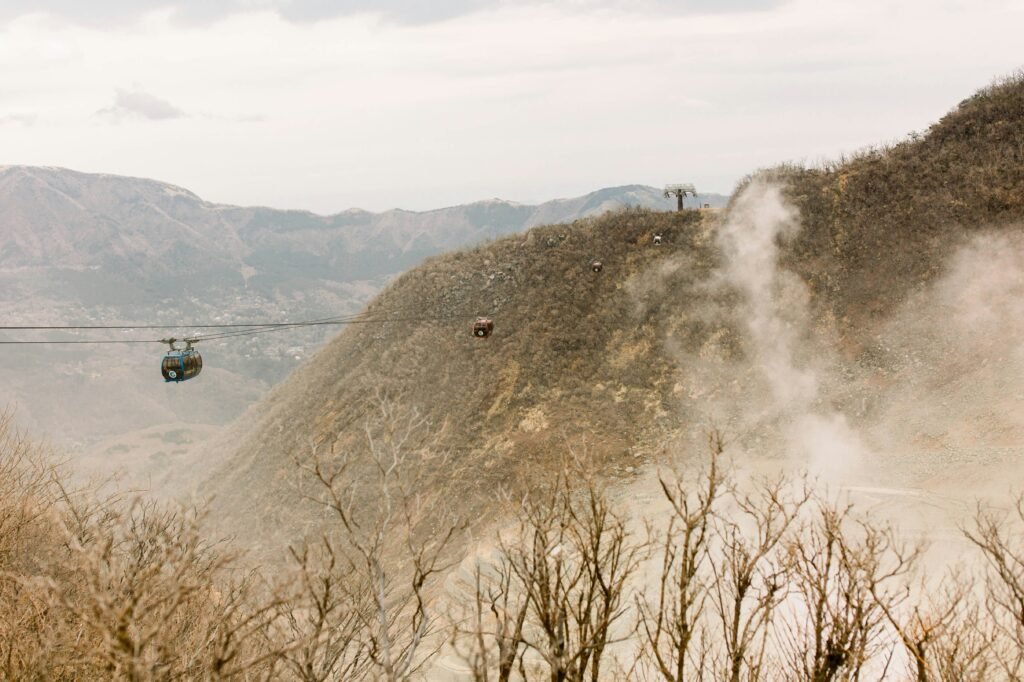
From Gora, a funicular connects to Sounzan, where the Hakone Ropeway begins. The ropeway runs for 4km across the mountain, passing directly over Owakudani — an active volcanic area with sulfur vents and steaming vents visible below the gondola. The smell is noticeable. On a clear day, Mt. Fuji appears to the northwest during this section of the ride — the ropeway moment is one of the most common locations for that iconic Fuji shot.
The ropeway occasionally closes due to wind, weather, or volcanic conditions. Check the official Hakone Ropeway status before you go. Having working data helps here: an Airalo Japan eSIM → sorted before you land means you are not scrambling for station wifi when plans change.
Step 4: Stop at Owakudani
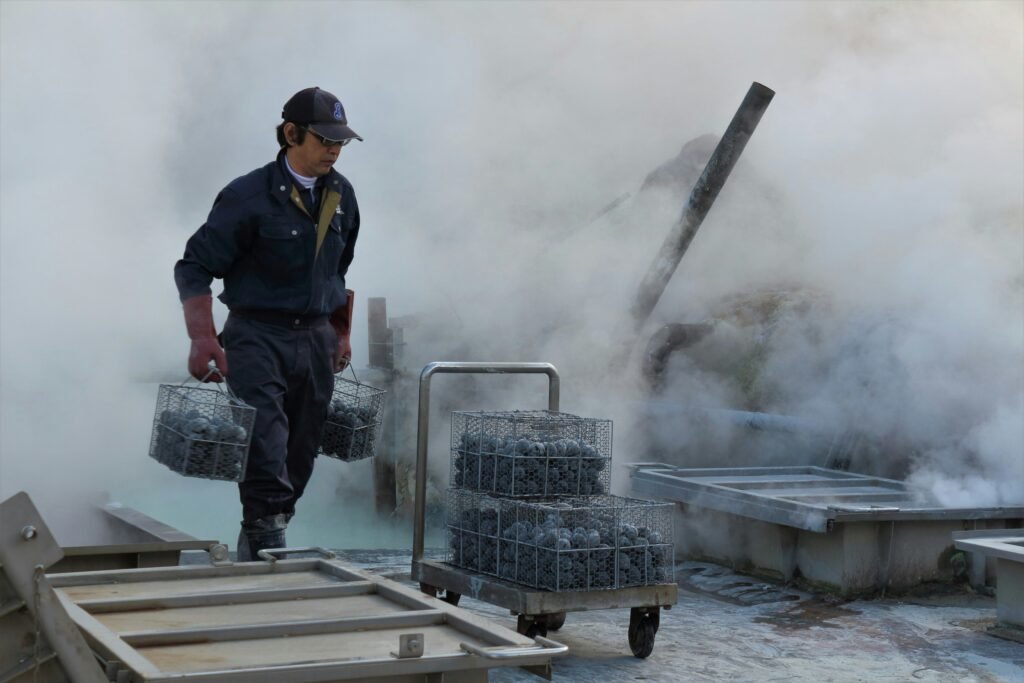
Get off the ropeway mid-route at Owakudani to walk around the volcanic valley. The sulfur vents are dramatic up close, the viewing area over the crater is genuinely impressive, and this is where you buy the kuro-tamago — black eggs boiled in the sulfur springs, which turn the shells dark. They taste like regular hard-boiled eggs. The view of Mt. Fuji from the Owakudani viewing platform (on clear days) is one of the best in the Hakone area. Allow 45–60 minutes here.
Step 5: Lake Ashi and Hakone Shrine
The ropeway ends at Togendai on the northern shore of Lake Ashi. From here, take the sightseeing boat across the lake to Hakone-machi or Moto-Hakone on the southern shore — the boat ride offers the best lake-level view of Mt. Fuji on clear days, and the pirate-ship-style vessels are covered by the Free Pass.
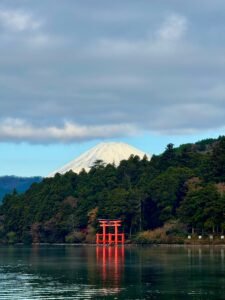
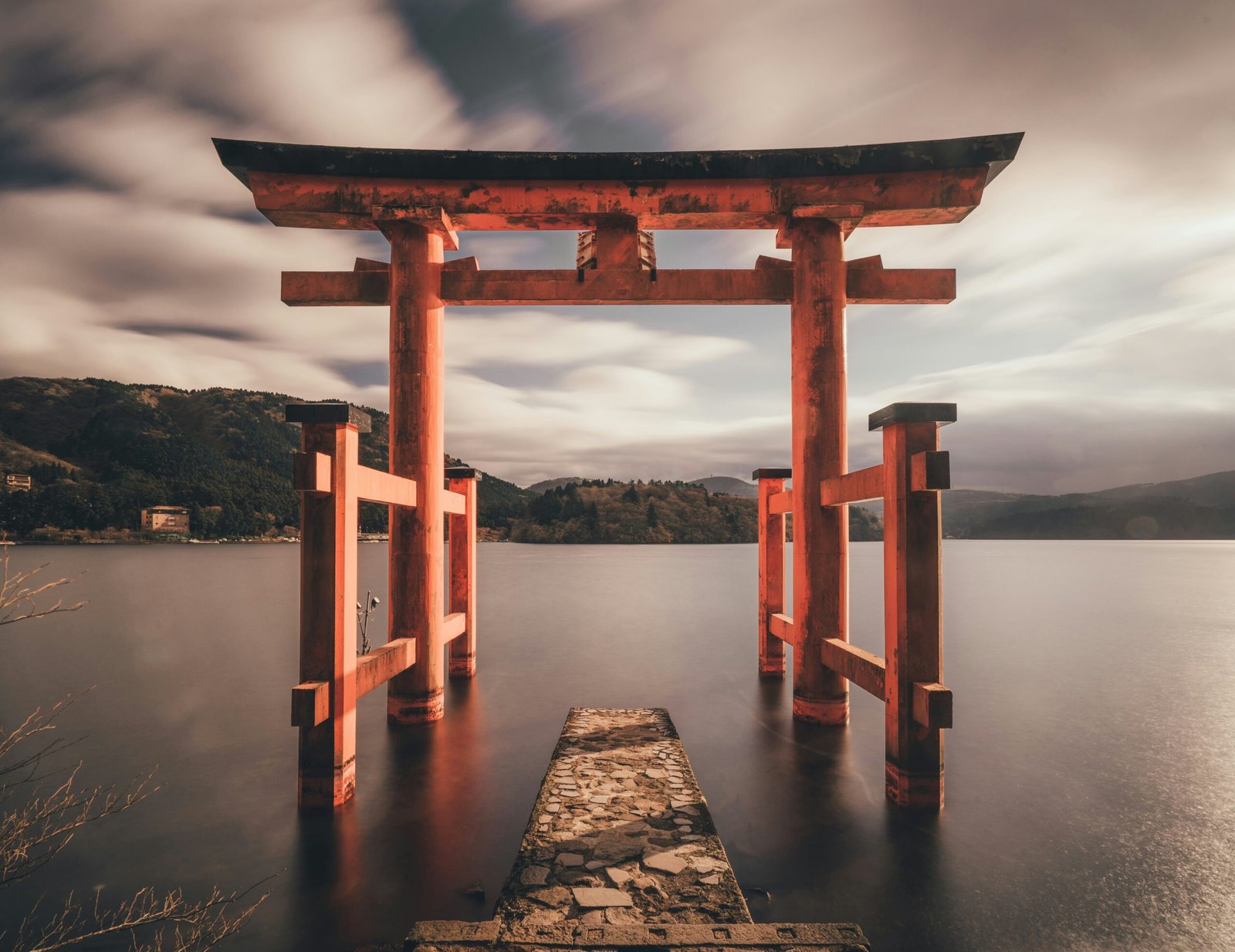
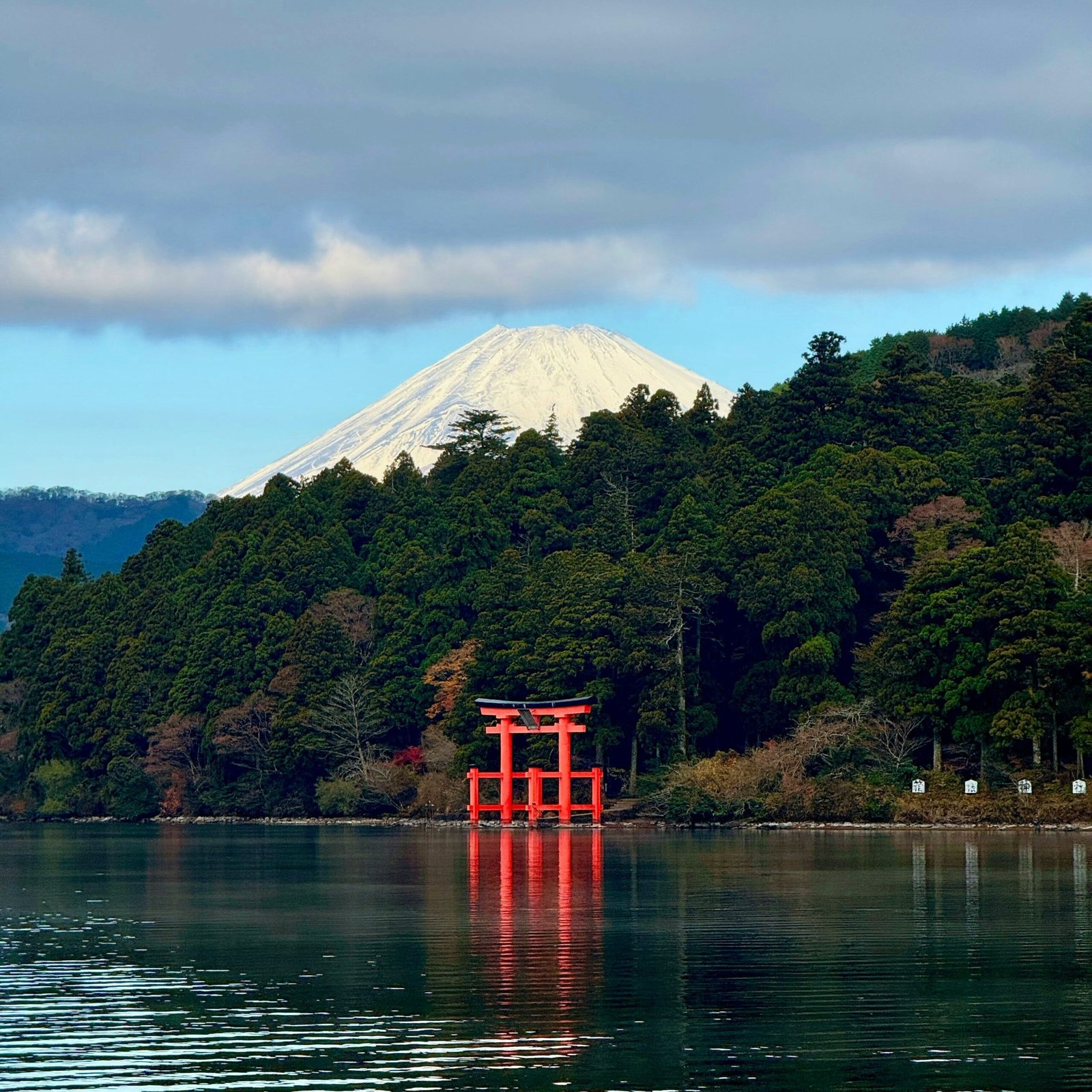
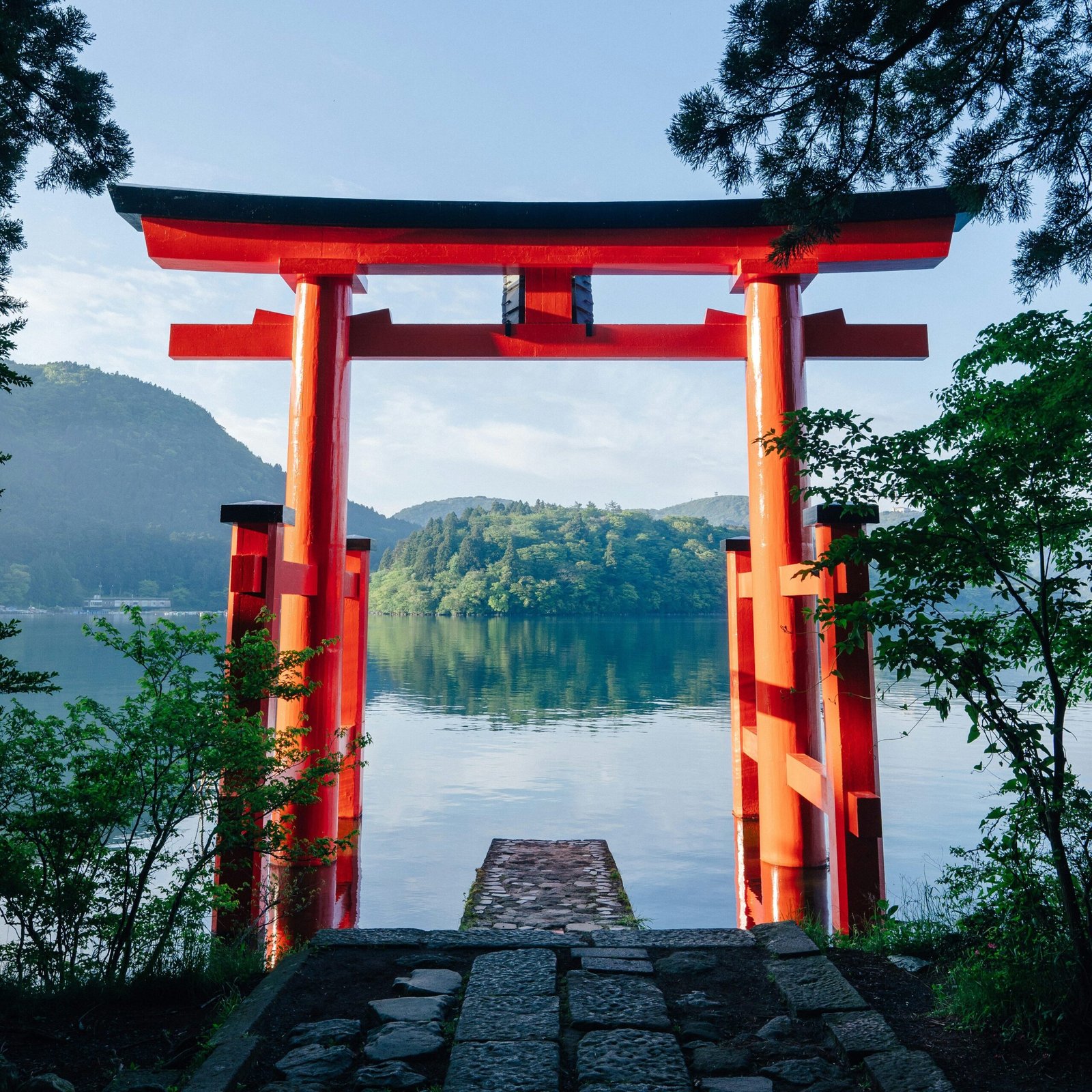
At the southern shore, Hakone Shrine is a short walk from the pier. The iconic orange torii gate standing in the lake water is here — it’s heavily photographed and worth seeing in person. The shrine itself sits in cedar forest and has a quiet dignity despite the visitor numbers. Allow 30–45 minutes.
Step 6: Bus back to Hakone-Yumoto and train to Tokyo
From Moto-Hakone, the Hakone Tozan Bus runs back to Hakone-Yumoto (covered by the Free Pass). From Hakone-Yumoto, the return to Shinjuku takes about 85 minutes by Romancecar. Book your return train seat in advance for the same reason as the outbound — they fill on busy days.
Mt. Fuji Views from Hakone: Managing Expectations
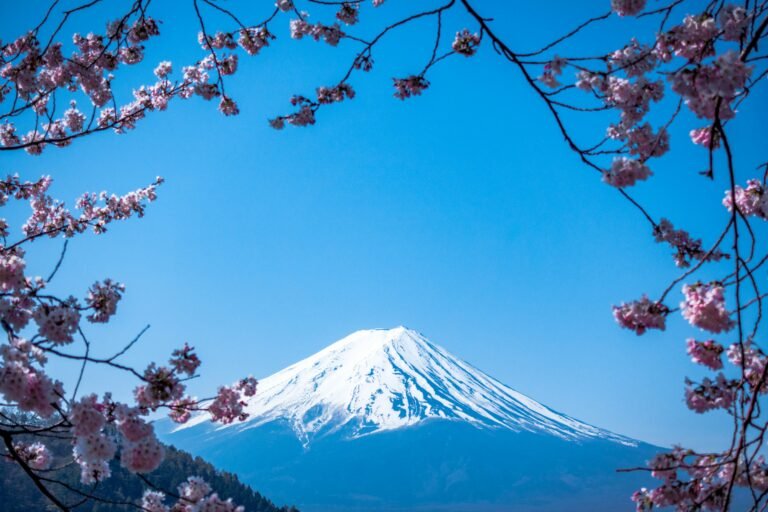
Mt. Fuji is visible from Hakone on clear days — and not visible on cloudy or hazy days, which in practice means roughly half the year it’s obscured. Summer (June–August) has the lowest visibility rate due to haze and humidity. Winter (December–March) is the most reliable season for clear views. Autumn is generally good; spring is variable.
The mountain tends to be clearest in the early morning and clouds over by late morning or early afternoon. An early departure from Tokyo — arriving at the ropeway or Lake Ashi before 10am — gives you the best chance. Check the Mt. Fuji visibility forecast the morning of your trip; weather apps and the Hakone tourist office website post real-time conditions.
If the mountain is hidden: Hakone is still entirely worth the trip. The ropeway over Owakudani, the Lake Ashi crossing, and the Hakone Shrine are excellent regardless of whether Fuji is visible. It helps to arrive without the view being the only thing you came for.
Day Trip or Overnight: Which Is Better?
A day trip from Tokyo covers the main highlights if you start early and follow a logical route. But Hakone significantly rewards an overnight stay — specifically a ryokan night with onsen access. The hot springs here are genuine volcanic water, the outdoor baths are best used morning and evening, and the experience of being in the area after the day-trip crowds leave is notably different from the midday rush.
If your Japan itinerary has room for one ryokan night, Hakone is the natural choice on the Tokyo end of the trip — you can do it on the way back from Kyoto, staying one night before the final Tokyo leg. Our ryokan guide covers what to expect and the best properties across price points.
For how to fit Hakone into a longer Japan itinerary, see our 10-day Japan itinerary.
Practical Tips for Your Hakone Day Trip
- Leave Tokyo early. A 7:30–8am departure from Shinjuku gets you to the Tozan Railway by 9:30am. Starting at 10am means arriving at Owakudani at lunch when it’s most crowded.
- Book the Romancecar in advance. Seats sell out on weekends and during cherry blossom and autumn foliage season. Book through the Odakyu website or at Shinjuku Station.
- Check ropeway status. The Hakone Ropeway closes for wind and volcanic activity without much warning. The Hakone Ropeway website posts real-time status; check the morning of your trip.
- The Free Pass is worth it for the full loop. If you’re doing the full mountain railway → ropeway → Lake Ashi route, the Hakone Free Pass saves money and eliminates buying individual tickets at each stop.
- Wear layers. Owakudani is at elevation and noticeably cooler than Tokyo or Hakone-Yumoto, even in summer. The ropeway gondolas are unheated.
- Have working data. Checking ropeway closures, navigating bus connections, and finding the Hakone Shrine pier is much easier with mobile data. Sort the eSIM before you leave. Airalo Japan eSIM →
Frequently Asked Questions
How long does a Hakone day trip from Tokyo take?
The train journey from Shinjuku to Hakone-Yumoto is about 80–85 minutes by Romancecar. A full day trip — covering the Tozan Railway, Hakone Ropeway, Owakudani, and Lake Ashi — takes around 8–9 hours door to door from central Tokyo. An early start (7:30–8am) is essential to see everything comfortably before the return journey.
Is the Hakone Free Pass worth buying?
For a full-day trip covering the standard loop (Hakone Tozan Railway, cable car, ropeway, Lake Ashi boat, and buses), usually yes — the Freepass simplifies the route and often beats buying separate tickets. If you are only visiting one or two attractions, calculate the individual costs first. Remember that the Romancecar reserved-seat surcharge is separate.
Can you see Mt. Fuji from Hakone?
Yes, on clear days — the best views are from the Hakone Ropeway over Owakudani and from Lake Ashi. Winter (December–March) offers the most reliable visibility; summer is least reliable due to haze. The mountain is typically clearest in the early morning and often clouds over by late morning. Check the forecast the morning of your trip.
Is one day enough for Hakone?
One full day is enough to cover the main highlights — the mountain railway, ropeway, Owakudani, Lake Ashi, and Hakone Shrine. Two days (with an overnight ryokan stay) lets you add the Open Air Museum, explore more of the lake area, and actually use the onsen in the morning and evening. One day is worth doing; two days is significantly more relaxed.
What is the best time of year to visit Hakone?
Autumn (October–November) and winter (December–February) offer the best Mt. Fuji visibility and comfortable temperatures for the outdoor sections of the trip. Spring cherry blossoms add a visual element to the mountain railway and lake views. Summer is the least ideal — higher humidity reduces Fuji visibility and the area gets more domestic visitors during school holidays. Avoid Golden Week (late April–early May) and Obon (mid-August) for the same reason as everywhere in Japan: maximum crowds, minimum availability.
More Japan Travel Guides
- Planning your Tokyo days? → Best Things to Do in Tokyo
- Where to stay in Tokyo? → Where to Stay in Tokyo: Best Areas and Hotels
- Considering a ryokan night in Hakone? → Ryokan in Japan: Kyoto and Hakone Guide
- Building the full itinerary? → 10 Days in Japan Itinerary
- Figuring out the budget? → Japan Travel Costs: What a Real Trip Actually Costs