Ryokan in Japan: What to Expect and the Best Places to Stay in Kyoto and Hakone
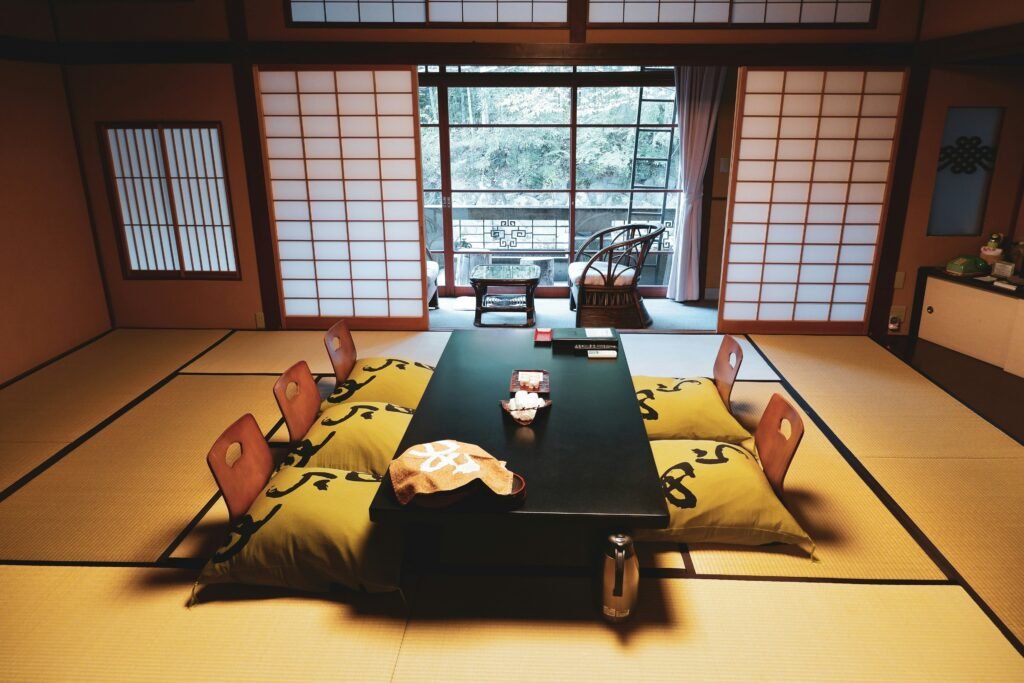
A ryokan is not just a hotel with a Japanese aesthetic. It’s a genuinely different way to stay — tatami rooms, futon beds laid out by staff each evening, a yukata robe to wear around the property, a multi-course kaiseki dinner served in your room or a private dining area, and access to an onsen bath that you’ll use more than once. For many visitors, a night or two at a good ryokan becomes the most memorable part of a Japan trip. This guide covers what to expect so the experience isn’t confusing, and where to find the best options in Kyoto and Hakone — the two destinations where ryokan culture runs deepest.
Table of Contents
This post contains affiliate links. If you book or buy something through them, I may earn a small commission — at no extra cost to you. I only link to tools and booking options that fit the planning decision in this guide.
Quick answer: choose Kyoto if you want a cultural ryokan stay near temples, kaiseki dining, and classic neighborhoods. Choose Hakone if the onsen is the main reason you are booking. For a first 10-day Japan trip, one ryokan night is enough; two nights is better if you want the stay itself to feel like a pause, not just a hotel change.
Ryokan details vary widely by property. Before booking, confirm whether dinner is included, whether the bath is natural onsen water, whether tattoos are allowed in shared baths, and whether private bath options are in-room or reserved by time slot. For background, see JNTO’s Japanese ryokan guide and onsen bathing manners guide.
The map below shows the main ryokan areas in Kyoto and Hakone so you can decide which kind of stay fits your trip better. Use it to compare Kyoto’s cultural ryokan neighborhoods with Hakone’s onsen-focused mountain areas before choosing where to book.
Before you go — quick links
- Ryokans in Kyoto — Expedia → or Booking.com → — compare Kyoto ryokan options early for cherry blossom and autumn foliage season
- Ryokans in Hakone — Expedia → or Booking.com → — smaller properties can fill months in advance; free cancellation gives you more flexibility
- Best ryokan experiences — Browse Japan cultural experiences on Viator → — useful for comparing tea ceremonies, food tours, and cultural experiences around a ryokan stay
- Travel card — Wise → — some smaller ryokans may prefer cash; check current ATM and fee limits before relying on any travel card
- eSIM — Airalo Japan eSIM → — set it up before departure and activate it according to the provider instructions when you arrive
- Travel insurance — World Nomads → — compare medical, delay, cancellation, and activity wording before choosing a policy
What Is a Ryokan?
A ryokan is a traditional Japanese inn — a format that has existed in some form for over a thousand years. The concept is built around omotenashi, a Japanese approach to hospitality that aims to anticipate every need before the guest expresses it. In practice, this means staff who carry your bags, lay out your futon while you’re at dinner, and are available but not intrusive throughout the stay.
Ryokans range enormously. At one end: small family-run inns with six rooms, creaking wooden floors, a family-cooked breakfast, and shared bathing facilities. At the other: large resort-style properties with many rooms, multiple restaurants, private baths in some suites, and kaiseki meals that border on fine dining. The experience at both extremes is recognizably a ryokan — the tatami floors, the futon, the yukata, the structured schedule around dinner and bath time — but the price and intimacy are very different.
A common mid-range ryokan budget is around ¥15,000–30,000 per person per night (roughly $100–200), often including dinner and breakfast. Budget options exist below this range; luxury properties go significantly higher. For what you often get — a tatami room, two meals, bath access, and very attentive service — it can be good value at the mid-range level.
How a Ryokan Stay Works: What to Expect Step by Step
The structure of a ryokan stay is consistent enough across properties that understanding it once applies almost everywhere.
Arrival
Check-in is typically between 3–5pm. Remove your shoes at the entrance (genkan) and put on the slippers provided — this is non-negotiable and applies to all indoor areas. A staff member will escort you to your room, explain the facilities, and show you how the yukata works. The yukata — a lightweight cotton robe — is what you’ll wear around the property for the rest of your stay: to the onsen, to dinner if it’s served communally, and in the room.
The Room
Traditional ryokan rooms have tatami mat floors, which means no street shoes or slippers inside. The room will have a low table, floor cushions, and — during the day — no bed visible. The futon is stored in a closet and laid out by staff while you’re at dinner. If this feels unfamiliar, it normalizes quickly; by the second evening it feels natural.
Many modern ryokan rooms have a private toilet or small bathroom, but older traditional properties may rely more heavily on shared bathing facilities. Some higher-end ryokans offer rooms with a private open-air bath, often described as a room with a private rotenburo. A kashikiri bath is different: it is a private bath you reserve for a time slot, not necessarily one attached to your room. Both are worth looking for if privacy matters.
The Onsen
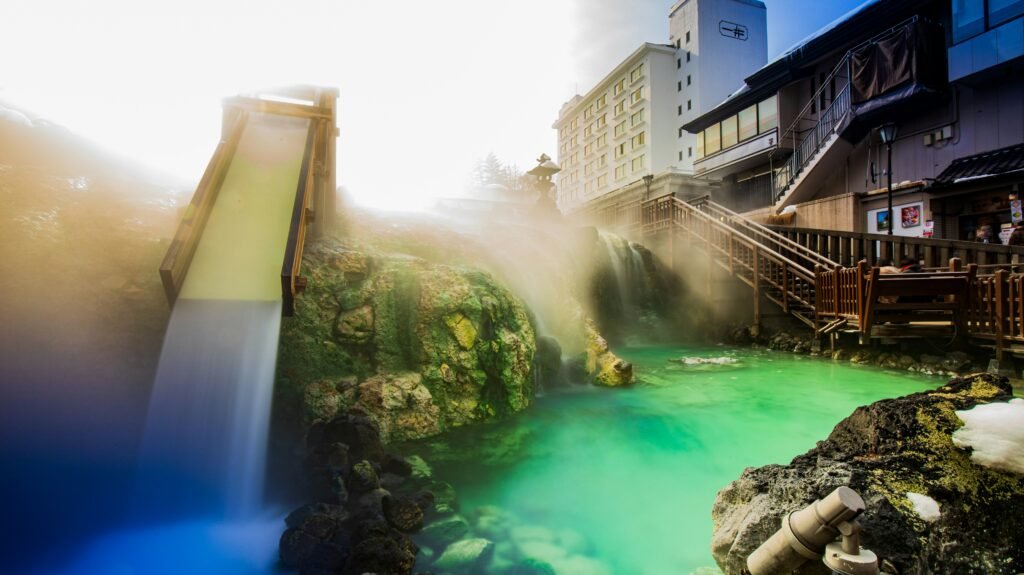
The communal onsen (hot spring bath) is the heart of the ryokan experience. Most ryokans have separate baths for men and women, which may rotate between morning and evening. The rules are simple and consistent: shower and wash thoroughly before entering the bath, no swimwear in the water, no towels in the water, and no photography. The etiquette can feel unfamiliar if you’ve never done it, but other guests are generally patient and staff will explain if asked.
Many ryokans have both an indoor bath (uchiyoku) and an outdoor bath (rotenburo). The rotenburo — sitting in hot spring water with a view of a garden, mountain, or in Hakone’s case, potentially Mt. Fuji — is the experience most people remember. Go in the early morning before other guests are up for the most peaceful version of it.
Tattooed guests should check with the ryokan before booking — some communal baths prohibit tattoos, a policy rooted in historical associations. Many mid-range and upscale ryokans are increasingly flexible on this, particularly those that cater to international visitors.
Dinner
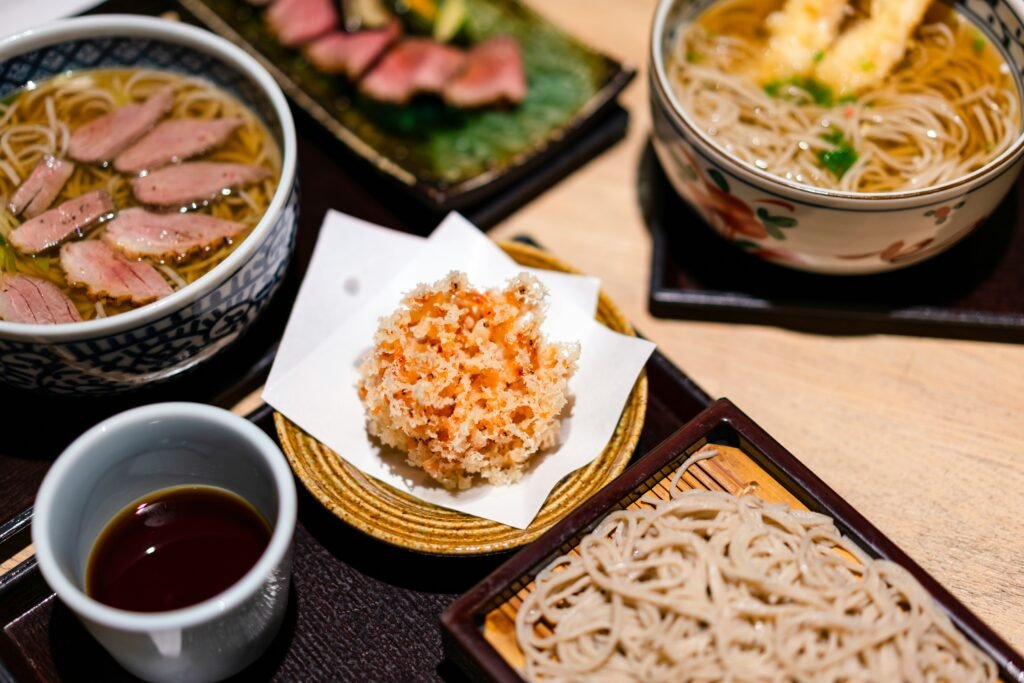
Dinner at a ryokan is kaiseki — Japan’s most refined cuisine format, structured around multiple small courses that change with the season. A typical meal might include sashimi, a clear soup, a seasonal vegetable dish, a grilled or simmered protein, pickles, rice, and a small dessert. It’s served either in your room by a staff member or in a communal dining area, depending on the property.
Dinner time is usually fixed — often 6 or 7pm — and you’ll confirm your preference at check-in. The pace is slow and intended to be; this isn’t a meal to rush. Vegetarian, vegan, and allergy requests should be communicated when booking, not on arrival.
Breakfast and Checkout
Breakfast is also included and also kaiseki-style — grilled fish, miso soup, rice, pickles, a small egg dish, and several side dishes. It’s a surprisingly substantial meal and a genuinely pleasant way to start the day. Checkout is usually by 10 or 11am.
Best Ryokans in Kyoto: What to Look For
Kyoto’s ryokans feel different from the large onsen resorts of Hakone. Many are smaller — converted machiya townhouses with just a handful of rooms — and the setting is urban rather than mountain hot-spring. The onsen in Kyoto ryokans tend to be smaller or fed by non-volcanic water (Kyoto doesn’t sit on a hot spring source the way Hakone does), and the kaiseki cooking here is considered by many to be Japan’s finest — the city has a centuries-old tradition of refined cuisine.
The most desirable neighborhoods for a Kyoto ryokan are Higashiyama (close to Gion and the eastern temples) and the area around Nishiki Market in central Kyoto. Proximity to the Philosopher’s Path is also worth prioritizing if you’re visiting during cherry blossom or autumn foliage season.
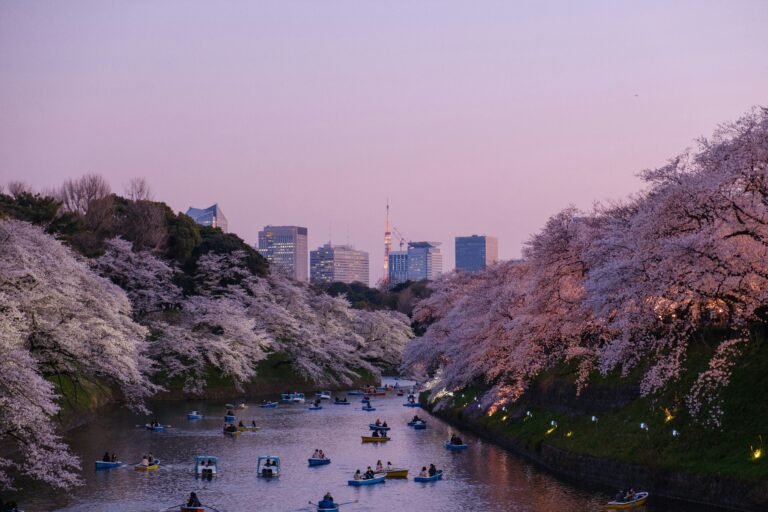
Kyoto ryokans during cherry blossom season (late March–early April) and peak autumn foliage (late November) can fill months in advance. Mid-range properties — roughly ¥20,000–35,000 per person — often have the strongest demand. Compare early and choose a refundable rate if your dates may change: Expedia → or Booking.com →
For a full breakdown of what to do around your Kyoto stay, see the Kyoto guide.
Best Ryokans in Hakone: The Onsen Experience
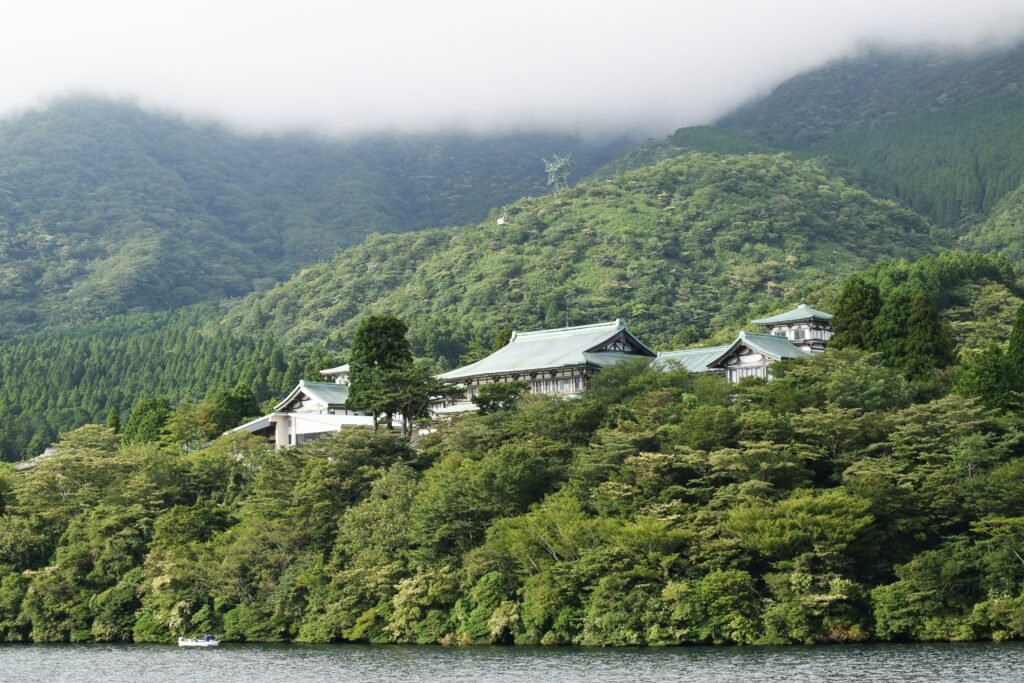
Hakone is Japan’s most accessible major onsen destination from Tokyo — about 90 minutes by train — and the ryokan culture here is centered entirely on the hot spring experience. Where Kyoto ryokans are about cuisine and cultural setting, Hakone ryokans are about the onsen itself: the water, the outdoor baths, the mountain and lake views, and the particular luxury of having nowhere to be.
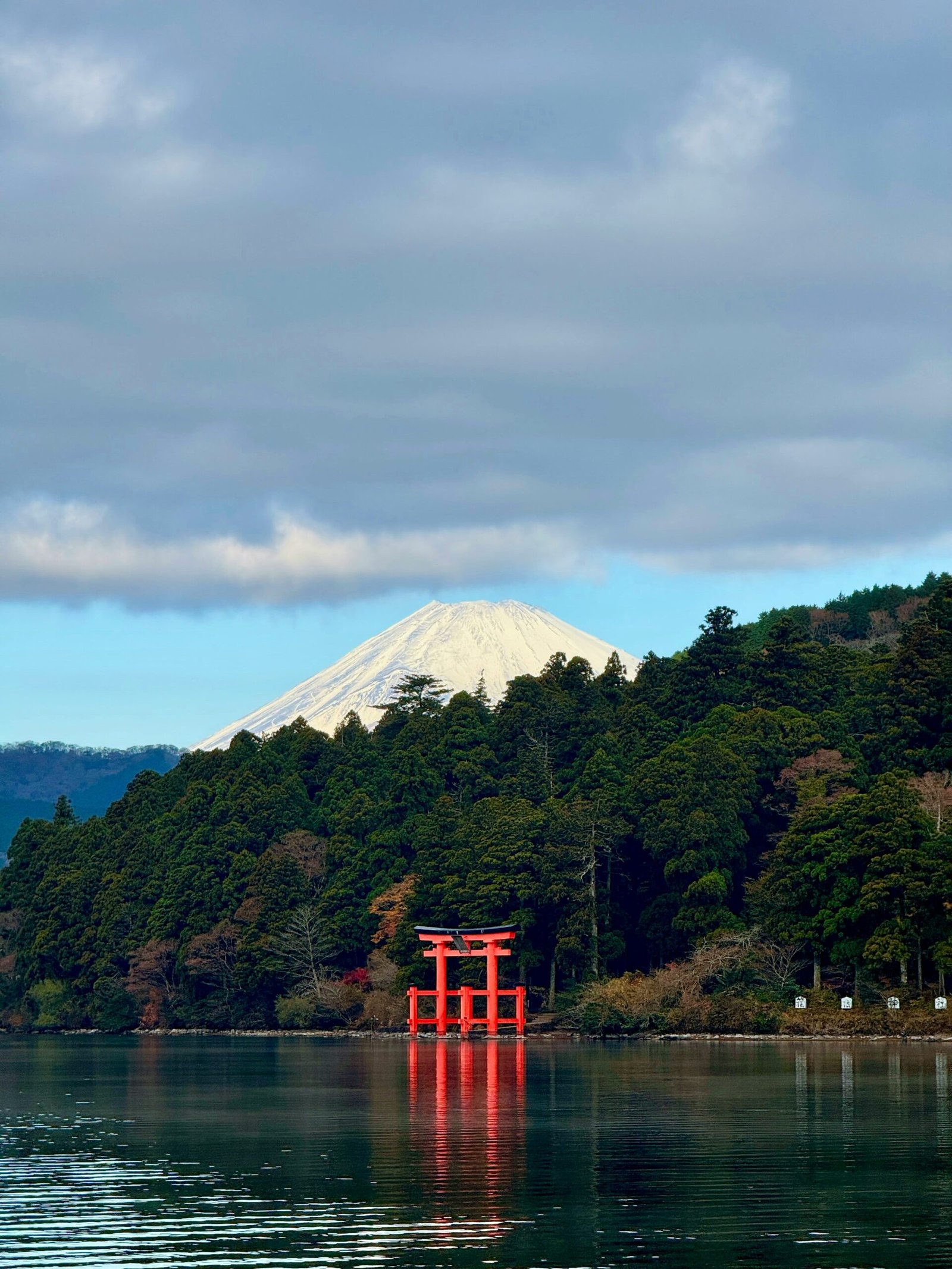
Many of the most memorable Hakone ryokans offer private outdoor baths attached to some rooms — a rotenburo where you can soak with a view of forested valleys or, on very clear mornings from certain properties, Mt. Fuji across Lake Ashi. These private-bath rooms command a premium, but they can be worth it if the onsen is the point of the stay: you’re not sharing with other guests, the timing is entirely yours, and the experience is substantially more private.
Hakone ryokan styles to compare across price points:
- Luxury: look for properties with private open-air baths, garden views, multi-course dinners, and clear access to Lake Ashi or the Hakone loop depending on your route.
- Mid-range: prioritize traditional rooms, included dinner and breakfast, and either kashikiri bath access or quieter communal baths.
- Budget-friendly: compare older family-run inns and smaller onsen properties, but read room-bathroom details carefully before booking.
Browse current availability and prices: Expedia → or Booking.com →
Kyoto Ryokan vs. Hakone Ryokan: Which Should You Choose?
If you only have one night at a ryokan, the choice comes down to what you’re prioritizing:
- Choose Kyoto if: the cultural setting matters most, you want to be close to temples and walking neighborhoods, or you’re visiting during cherry blossom or autumn foliage season when the city itself is the draw.
- Choose Hakone if: the onsen experience is the priority, you want a genuine hot spring resort feel, you’re coming from Tokyo and want a two-day escape without flying, or Mt. Fuji views are on your list.
- Do both if: you have 10+ days in Japan. A common structure is Kyoto ryokan mid-trip, followed by a Hakone night on the way back to Tokyo. The 10-day Japan itinerary covers how to fit this in.
Practical Tips for Your Ryokan Stay
- Book directly or via a major platform with free cancellation. Last-minute ryokan bookings in peak season are essentially impossible — the good properties fill months out. Book early, book with free cancellation, and you retain flexibility.
- Communicate dietary needs at booking. Not at check-in, not at dinner — at the time of booking. Kaiseki menus are prepared in advance. Most ryokans will accommodate vegetarian, vegan, shellfish allergies, and similar needs if notified ahead.
- Bring cash. Some ryokans, particularly smaller family-run ones, prefer or require cash payment. A travel card such as Wise can make yen withdrawals easier and help you avoid poor exchange-rate markups, but check current fees and ATM limits before relying on it for the whole trip. Get a Wise card →
- Use the onsen more than once. The rhythm of a ryokan stay involves bathing in the evening before dinner and again in the early morning before breakfast. The morning rotenburo, before other guests are up, is the version most people remember.
- The yukata is for the whole stay. Wear it to dinner, to the bath, while sitting in the room. You don’t need to change back into travel clothes until checkout.
- Tipping is not expected. Japan’s service culture doesn’t operate on tips — in a ryokan, the service level is simply how things are done.
Frequently Asked Questions
How much does a ryokan cost in Japan?
The average ryokan costs ¥15,000–30,000 per person per night (roughly $100–200), including dinner and breakfast. Budget options exist from around ¥8,000–12,000 per person. Luxury properties — particularly those with private in-room onsen — start at ¥40,000–60,000 per person and go significantly higher. For a mid-range ryokan, the price is competitive with a good hotel once you factor in two meals included.
Do I have to use the communal onsen?
No — you do not have to use a communal onsen, but you should check the room details carefully before booking. Many modern ryokans have private toilets or bathrooms, while some traditional properties still rely more heavily on shared bathing facilities. If privacy is a strong preference, look for rooms with a private open-air bath or properties that offer kashikiri, a private reserved bath time.
Can I stay at a ryokan with kids?
Many ryokans welcome families, though some adult-only properties exist — always check before booking. The tatami rooms work well with small children, and many ryokans will provide child-size yukata. The main consideration is dinner: kaiseki meals are multi-course and slow-paced, which can be challenging with toddlers. Some ryokans offer simpler children’s meals on request — ask when booking.
Is one night enough at a ryokan?
One night is enough to experience everything — arrival, onsen, kaiseki dinner, futon, morning bath, Japanese breakfast, checkout. Two nights is more relaxed and lets you use the onsen properly (morning and evening) without rushing. Two nights is more relaxed if the ryokan itself is the point of the trip, but one night is enough for most first-time Japan itineraries.
When is the best time to stay at a ryokan in Japan?
Ryokans are worth visiting in any season, but autumn and winter have a particular atmosphere. A Hakone ryokan with snow on the ground and a steaming outdoor onsen is a specific kind of experience. Cherry blossom season adds a visual layer to a Kyoto ryokan stay that’s hard to match. The Japan seasonal guide covers the full timing picture.
More Japan Travel Guides
- Planning the full trip? → 10 Days in Japan Itinerary
- Deciding when to go? → Best Time to Visit Japan
- What to do around your Kyoto ryokan? → Best Things to Do in Kyoto
- Visiting in spring? → Japan Cherry Blossom Season Guide
- Visiting in autumn? → Japan Fall Foliage Guide
- Figuring out the budget? → Japan Travel Costs: What a Real Trip Actually Costs