Travelling with a Toddler: What Actually Works (From Someone Who’s Done It)
Affiliate disclosure: This post contains affiliate links. If you book or buy something through these links, I may earn a small commission at no extra cost to you. I only recommend things I genuinely use or believe in. Learn more.
Before our first trip with our son, I was told — more than once — that travelling with a baby or toddler was not worth it. That we should wait. That it would be too hard. I heard the same thing again when we started planning longer trips. We went anyway, and here is what I have learned: travelling with a toddler is not always smooth, it is not always easy, and it is absolutely worth it. This is everything I know about making it work.
For the logistics side of planning any trip — flights, accommodation, what to book and when — our complete trip planning guide covers all of it. And for staying connected on the road with a toddler (which matters more than you think), our eSIM for travel guide explains the easiest way to have working data from the moment you land.
| Travelling with a Toddler: Quick Reference | |
|---|---|
| Best seat on the plane | Bulkhead row — most legroom, bassinet option on long-hauls |
| Best flight timing | Nap time or bedtime — increases chance of sleep on board |
| Lap infant age | Under 2 — flies free on most international routes |
| Most important booking | Free cancellation accommodation — always |
| Best connectivity setup | eSIM activated before boarding + offline maps downloaded |
| Honest reality check | Not always easy — always worth it |
Table of Contents
The Advice I Was Given (And Why Most of It Was Wrong)
“Wait until they are older.” “It is too hard.” “You will not enjoy it.” I heard versions of this from well-meaning people before almost every trip we took with our son. And I understand where it comes from — travelling with a young child is genuinely more demanding than travelling without one. But the advice to simply not do it misses something important.
Our experience has been that when something goes wrong — and sometimes it does — the setting makes a real difference. A toddler having a difficult moment at a beach in Turkey is a very different experience to a toddler having a difficult moment at home. The world is more interesting, there is more to look at and explore, and you are in a different headspace yourself. We found that the hard moments were often shorter and more manageable on holiday than at home. And the good moments were something else entirely.
The other thing nobody told me: strangers are almost universally kind. In every country we have visited, people have been warm and patient — on planes, in restaurants, at airports. I have never once felt judged for travelling with a child. The world is far more accommodating than the warnings suggested.
Flying with a Toddler: What Actually Helps
Seat Selection
The bulkhead row — the seats directly behind a dividing wall — is the right choice for flying with a young child on almost every flight. The extra legroom gives you space to stand a child up, put a bag at your feet, or simply not feel completely trapped. On longer international flights, bulkhead seats also have bassinet attachment points for babies who still sleep in one. Book this as early as possible — it goes fast.
Window seat for the child is our default. They can look out, which is endlessly fascinating at the right age, and you are not constantly blocking the aisle when they need to move.
Timing the Flight
Aligning the flight with nap time or bedtime is the single biggest variable in how a flight goes. It does not always work — children do not always sleep on planes, just as they do not always sleep on command at home — but the probability is much higher. An overtired toddler on a midday flight is a harder proposition than a sleepy child on an evening departure.
Red-eye flights are worth considering for longer routes. Our son has fallen asleep quickly on evening flights and stayed asleep for much of the journey. Not guaranteed, but it has worked for us more than once.
The Reality of Babies on Planes
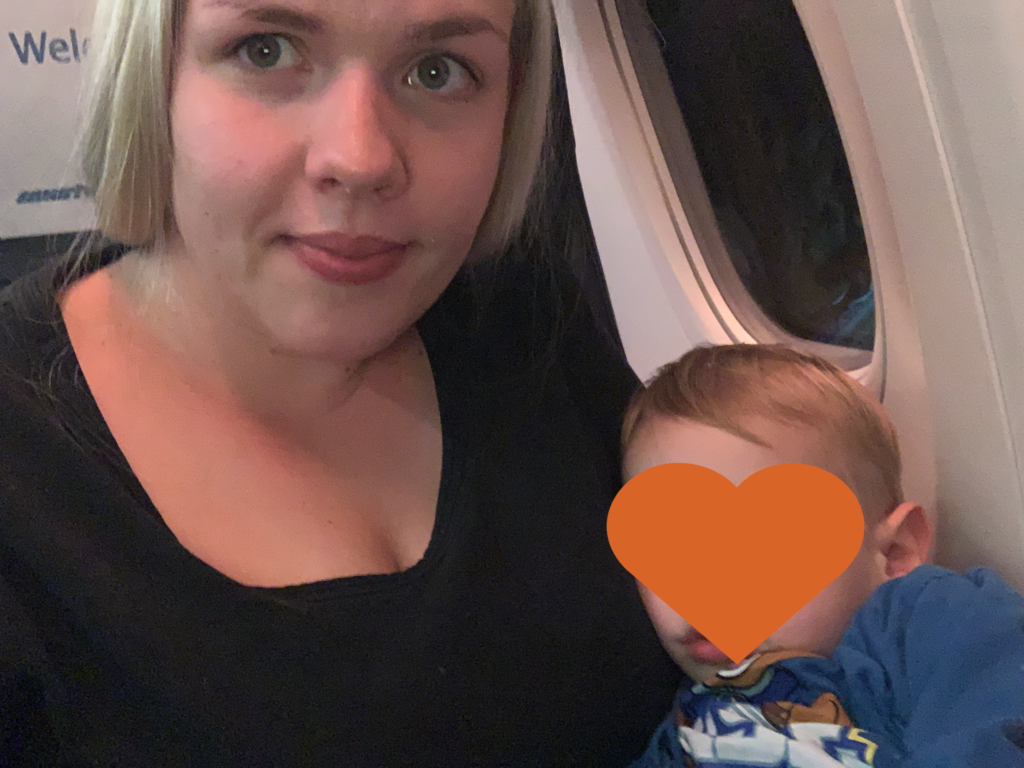
One thing I want to say plainly: a plane is not a quiet environment regardless of whether there is a baby on board. Engines, announcements, turbulence, other passengers — it is already loud. A baby crying for a short period is entirely consistent with the normal noise level of a flight, and most passengers understand this. In our experience, our son has been far better on planes than the warnings suggested. The movement, the engine hum, and the novelty of the environment have usually kept him calm and curious.
The worst-case scenario people imagine — a child screaming for an entire flight — is genuinely rare. It is not something we have experienced. Most flights with young children are perfectly manageable, and the few that are difficult are survivable.
What the Cabin Crew Does (That Most People Don’t Know)
On longer flights, airlines — particularly full-service carriers — often have small gifts or activity packs for young children. We have received sticker sets and small soft toys on different flights. This is not guaranteed and varies by airline and route, but it is worth knowing exists. The crew on longer flights are generally attentive and helpful with families in ways that go beyond the basics.
A practical note: introduce yourself to the crew when you board. A brief, friendly acknowledgment — “we have a toddler, apologies in advance if things get noisy” — sets a good tone and often results in noticeably more attentive service for the rest of the flight.
What to Pack in Your Hand Luggage
- New small toys or books — novelty is the key word. Things they have not seen before hold attention for far longer than familiar ones. Wrap them if needed.
- Snacks they love — familiar snacks are a reliable reset when things get difficult. Pack more than you think you need.
- Offline content downloaded before boarding — download episodes, audiobooks, or apps that work offline before you get on the plane. Inflight wifi is unreliable and the onboard entertainment is rarely toddler-appropriate.
- Change of clothes for everyone — including yourself. Spills, nappy situations, and general chaos mean this is not optional.
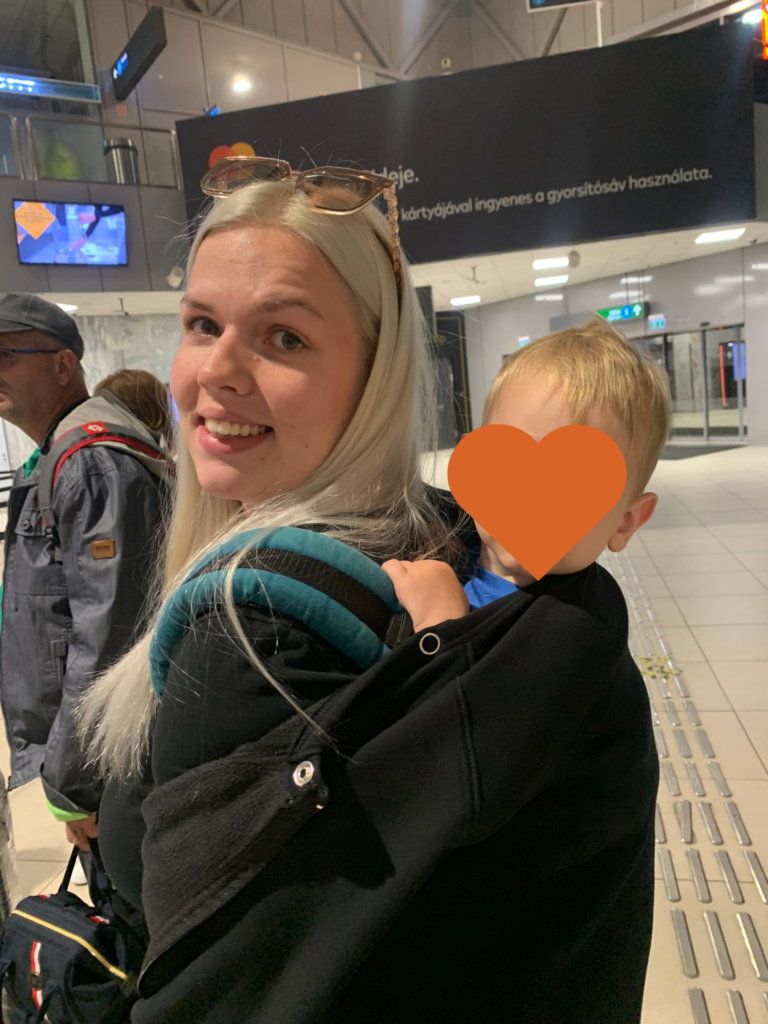
- A carrier or sling — for airports especially, having your hands free while keeping the child secure is invaluable. Our son has been carried through more airports than I can count, and it makes the whole process significantly calmer.
Lap Infant vs Buying a Seat: What to Know
Children under 2 fly as lap infants on most international routes — meaning no separate seat is purchased and they sit on your lap. This is the standard arrangement for the first two years and it is generally fine for short and medium-haul flights.
For longer flights, buying a separate seat has advantages beyond the obvious — it unlocks the option of bringing a car seat on board (which some children sleep better in than on a lap), and it means the child has their own tray table to use. Check the airline’s specific policy on car seats before booking.
One practical note on bulkhead seats and lap infants: some airlines will only assign bulkhead seats with a lap infant at check-in rather than during booking. Call the airline directly or check in as early as possible online to secure this.
Accommodation: What Matters Most
Two things change significantly when you book accommodation with a toddler: the importance of kitchen access and the importance of free cancellation.
Kitchen access is more valuable than most childless travel advice acknowledges. A toddler’s eating schedule does not align with restaurant hours in most of Europe — dinner at 9pm is not compatible with a child who needs to eat at 6pm and be in bed by 8pm. An apartment or a hotel room with even a basic kitchenette means you can prepare simple meals at the right time without the stress of finding a restaurant that opens early, has a high chair, and serves something appropriate.
Free cancellation matters more with children because plans change more unpredictably. A child who is unwell, a nap that runs long, an itinerary that needs adjusting — flexibility is not a luxury when you are travelling with a toddler, it is a necessity. Always book with free cancellation and always pay with a credit card that offers purchase protection for larger bookings. Booking.com’s free cancellation filter makes this easy to apply to every search.
Ground floor or lift access — with a pram or buggy, stairs are genuinely problematic. Check before you book, not after you arrive.
Staying Connected: Why eSIM Matters More With a Child
Reliable mobile data is important on any trip. With a toddler, it becomes essential. You need Google Maps working in real time — not “mostly working when there is wifi.” You need to be able to find a pharmacy, contact your accommodation, or look up the nearest place to sit down and feed a tired child, all while your hands may not be fully free.
Setting up a travel eSIM before departure — activated on the plane so you land with working data — removes an entire category of potential stress. Our eSIM for travel guide covers the best options and how to set one up in five minutes before you fly.
Managing the Schedule (Without Being a Slave to It)
The biggest practical shift when travelling with a toddler is that the day has a shape that needs respecting. Nap time, meal times, and bedtime are not suggestions — ignoring them consistently makes the trip harder for everyone. The good news is that building the day around these constraints still leaves plenty of time for the things you came to see.
What works for us: mornings are for sightseeing and activity, the nap is sacrosanct (we head back to accommodation or find a quiet place), and afternoons are slower — a cafe, a park, a beach, somewhere the child can move freely. Evenings are early, which means dinner at 6-7pm rather than 9pm — but this also means you find the neighbourhood restaurants rather than the tourist ones, which is usually an improvement.
The key mindset shift: you are not doing a condensed highlights tour anymore. You are experiencing a place at a different pace, which turns out to reveal different things. Some of the best moments of our trips have been the unplanned ones — a square where our son could chase pigeons for 20 minutes while we had coffee, a beach moment that was not in the itinerary but became the memory we talk about most.
Eating Out With a Toddler
A few things that make restaurant meals with a toddler more manageable:
- Eat early — before the restaurant fills up. You have more space, the staff have more time, and a tired hungry toddler in a quiet restaurant is easier than the same situation in a full one.
- Ask for the bill when the food arrives — not at the end. When a toddler is done, you may need to leave quickly. Having the bill ready means you can go without the wait.
- Outdoor seating when possible — more space, less acoustically sensitive, and the child has something to look at.
- Pack a small distraction — a familiar toy or snack for the gap between ordering and the food arriving is the highest-leverage item in the bag.
The Carrier: The Most Useful Thing We Packed
A good carrier or structured wrap has been on every trip we have taken. Airports are the obvious use case — hands free, child secure, much faster through queues and security than a pram. But beyond airports, it is useful everywhere: cobblestone streets where wheels do not work, stairs where a pram is awkward, moments when the child needs to be close and calm but you need to keep moving.
Our son has slept in the carrier on multiple occasions in circumstances where he would not have slept in a pram. The motion and closeness work. For long walking days, it is genuinely the most versatile piece of equipment we bring.
What Nobody Tells You (But Should)
A few things that surprised us positively:
- People are genuinely kind. On planes, in restaurants, at tourist sites — we have consistently found people warm and patient. I expected judgment and found the opposite. If you have been worried about this, set the worry aside.
- Children make you slow down in the best way. You stop at things you would have walked past. You notice more. Some of the most unexpected highlights of our trips have come from following what caught our son’s attention rather than the guidebook.
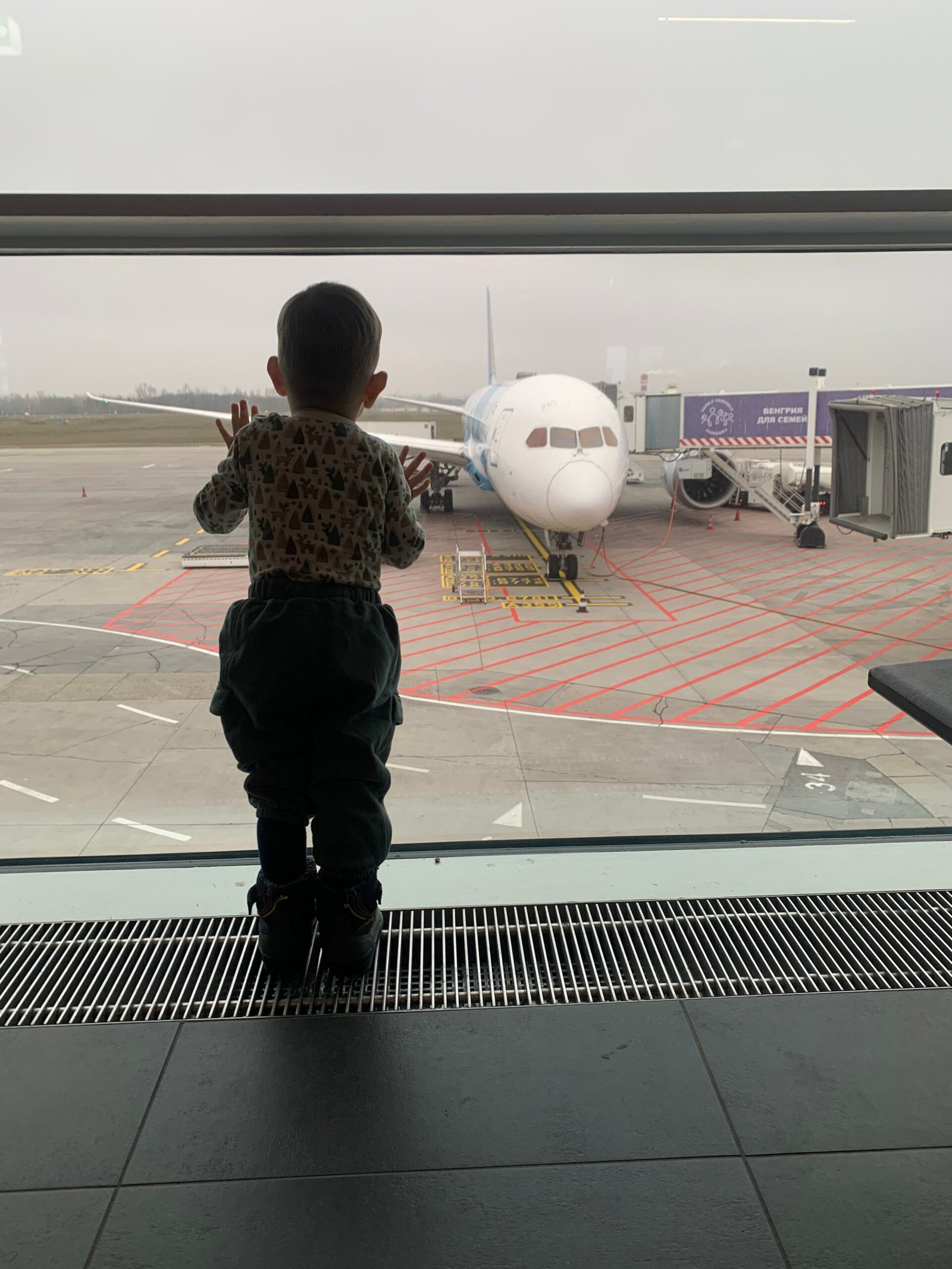
- Your child will not remember the destination — but you will remember the trip. And the photos of a small person experiencing the world for the first time are some of the most extraordinary images you will ever have.
- It gets easier, not harder. The first trip with a very young baby requires the most logistical adjustment. As they grow and develop, travel becomes progressively more interactive and more fun. The toddler years — curious, engaged, endlessly interested in everything — are actually a wonderful age to travel.
Is Travelling with a Toddler Worth It?
Yes. Unreservedly yes.
It will not always be smooth. There will be difficult moments — on the plane, in the restaurant, at the end of a long day when everyone is tired. These moments pass, they are manageable, and they are a small proportion of the overall experience. And frankly, difficult moments happen at home too. At least abroad, the surroundings are more interesting.
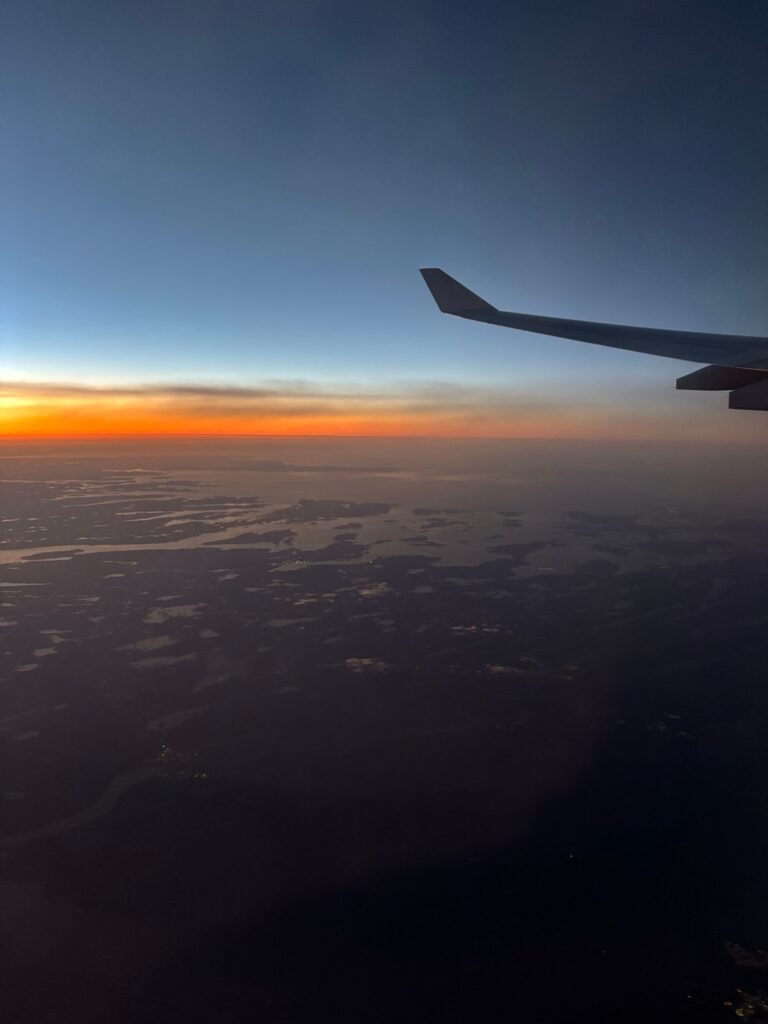
What stays is the rest of it. A child seeing the sea for the first time. A morning in a new city when everything is fresh. The particular calm of a toddler asleep on your lap at 30,000 feet while the world goes by below. These are not things you can manufacture. They require going.
So go.
| Before Your First Trip with a Toddler | |
|---|---|
| Plan the trip logistics | Complete trip planning guide |
| Find cheap flights | How to find cheap flights |
| Set up mobile data | eSIM for travel guide |
| Sort your travel money card | Wise + Revolut guide |
| Book accommodation with free cancellation | Booking.com |