Best Things to Do in Osaka: 18 Experiences Worth Your Time
Osaka has a reputation for food and a personality for fun — and both are earned. It’s the least formal of Japan’s major cities, the one where people eat standing at counters without embarrassment and strike up conversations with strangers. After Tokyo’s scale and Kyoto’s reverence, Osaka feels like exhaling. Most visitors treat it as the last stop on a Japan itinerary and don’t give it enough time. This list makes the case for why it deserves more than two days.
In This Guide
This post contains affiliate links. If you book or buy something through them, I may earn a small commission — at no extra cost to you. Recommendations are based on research, itinerary fit, reader value, and practical planning usefulness.
Before you go — quick links
- Best guided tours – Browse Osaka tours on Viator – compare food tours, cooking classes, and day trips before choosing the one that fits your route.
- Where to stay – Expedia or Booking.com – Namba and Shinsaibashi are the easiest bases for a first visit.
- Travel card – Wise – compare card fees before you go; street food and small counters can still be cash-heavy.
- eSIM – Airalo Japan eSIM – compare current Japan data plans and install before departure so maps and translation are ready when you arrive.
- Travel insurance – World Nomads – compare policy wording for medical care, cancellation, activities, and exclusions before you buy.
The map below shows the key Osaka locations from this guide grouped into five color-coded layers by area — Namba and Minami, Shinsekai and South Osaka, Central Osaka, Umeda and the north, and the Bay Area and outlying spots. Use it to plan which experiences you can combine on the same day without crossing the city unnecessarily.
The Food Experiences That Define Osaka
Osaka has a phrase — kuidaore — that translates roughly as “eat until you drop.” It’s less a warning than a civic philosophy. Start here.
1. Dotonbori at Night
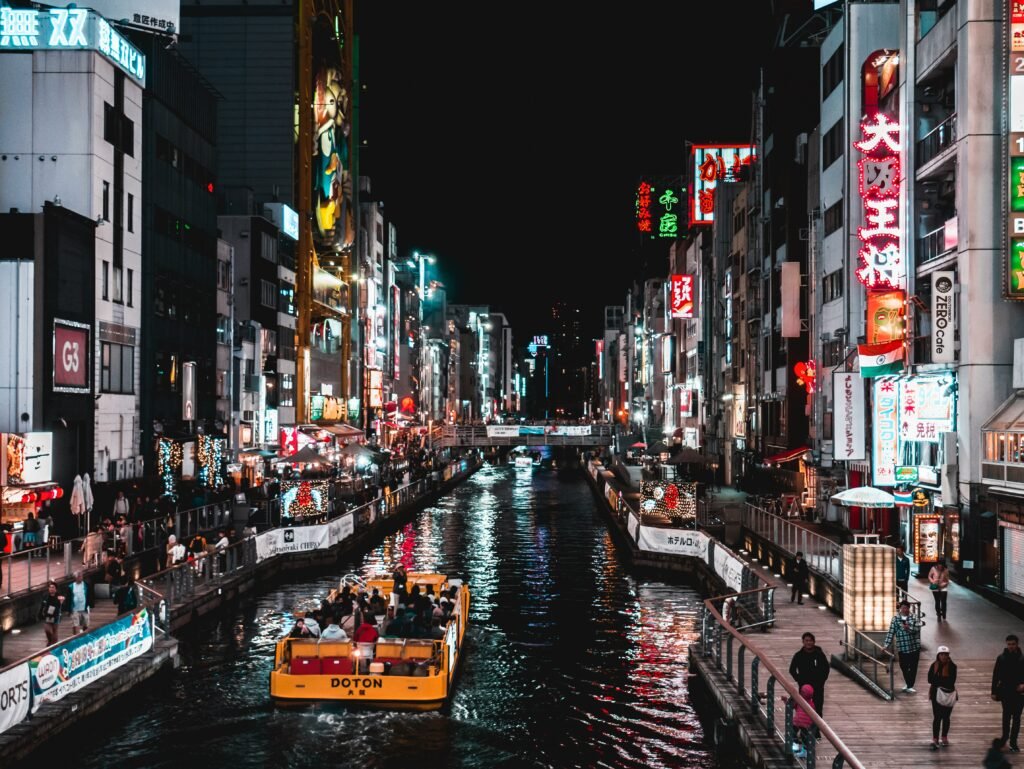
The canal street is Osaka’s most famous image — the Glico running man sign, the giant mechanical crab, the neon reflecting off the water. It’s also the city’s most concentrated strip of restaurants, from ramen counters and sushi bars to okonomiyaki parlors and takoyaki stalls. Go after 7pm when the lights are fully on and the street is at its most alive. Walk the length of it once to get the full effect, then backtrack to whatever looked good. Don’t eat at the places with the largest outdoor signs — the best food is on the side streets one block back from the canal.
2. Takoyaki from a Street Stall
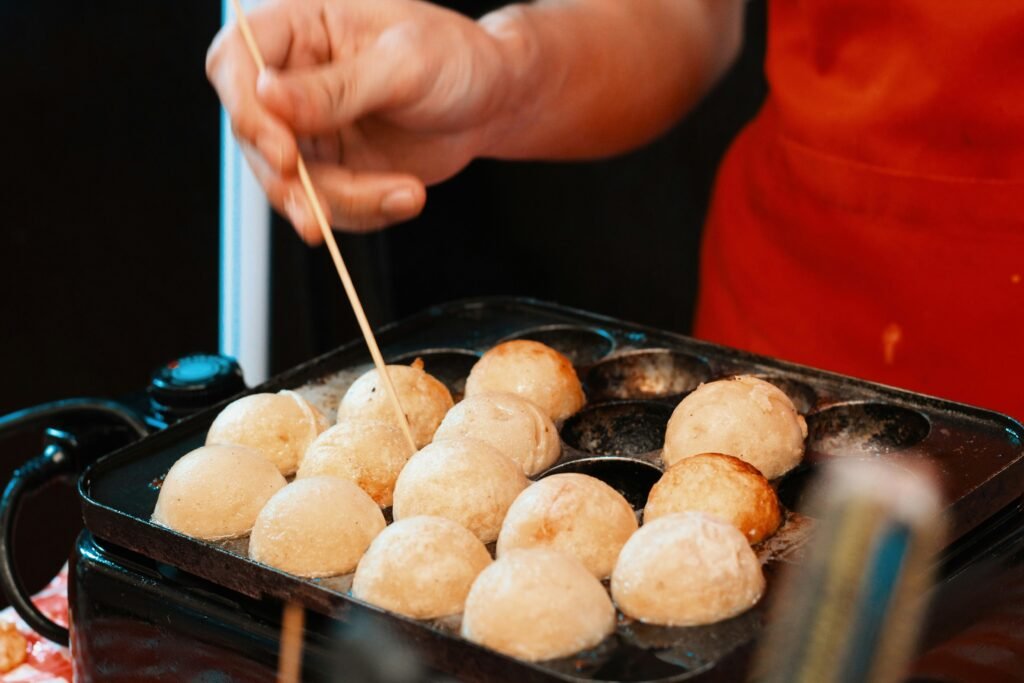
Takoyaki was invented in Osaka in 1935, and the city takes this seriously. The dish — octopus pieces in a round wheat-flour batter ball, topped with bonito flakes, mayo, and sweet sauce — exists everywhere in Japan but is meaningfully better here, where it’s a point of pride. Eat them fresh from the griddle, too hot to handle, standing at the counter. The ones near Dotonbori are fine; the ones in Shinsekai are better. A small serving is inexpensive by Japan standards, but bring cash and let it cool for a minute before the first bite.
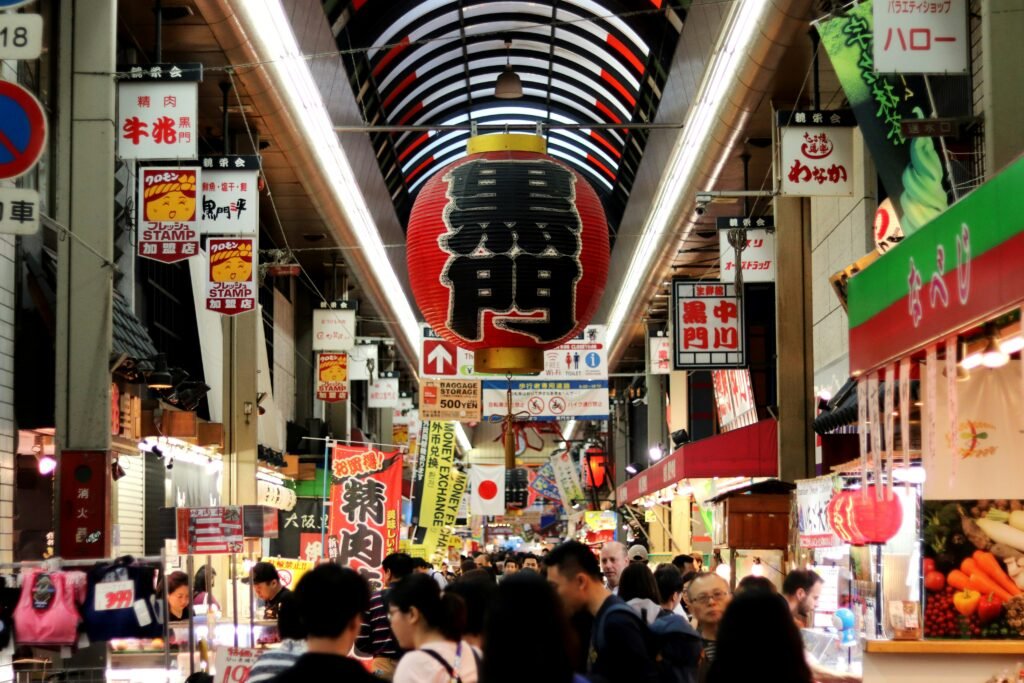
3. Kuromon Ichiba Market for Breakfast
A 170-vendor covered market that’s been operating since 1902 — this is where Osaka’s restaurants come to buy their ingredients, and where you come to eat the same things they’re buying. Vendors sell fresh tuna sashimi, grilled scallops on the shell, skewered wagyu, and sea urchin by the spoonful. The market opens at 9am and is at its best by 10. Bring cash. Budget depends on how much seafood and wagyu you sample, so treat Kuromon as a grazing stop rather than a fixed-price meal. It’s 10 minutes from Dotonbori on foot.
4. Kushikatsu in Shinsekai
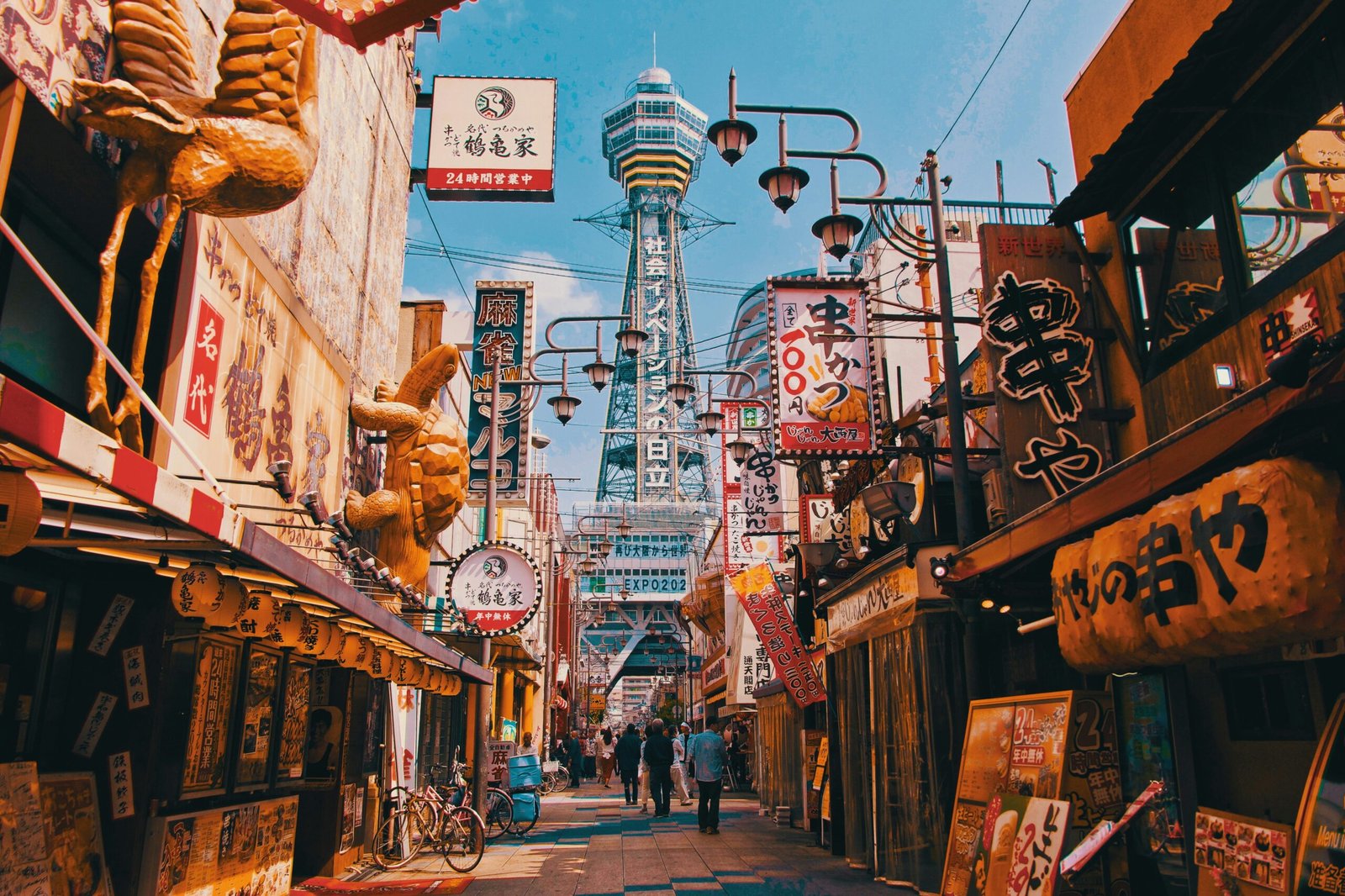
Kushikatsu — breaded and deep-fried skewers of meat, vegetables, and seafood, served with a communal dipping sauce — is Osaka’s other signature dish, and Shinsekai is where to eat it properly. The neighborhood is retro, slightly gritty, and completely genuine in a way that tourist-facing food streets aren’t. The rule of kushikatsu dining: no double-dipping in the shared sauce. The counter restaurants in Shinsekai enforce this with visible signs. Order the chef’s selection and let them send out whatever’s good that day. Prices vary by restaurant and how many skewers you order, but it can be a good-value dinner if you keep ordering slowly.
5. Okonomiyaki — Osaka Style
Osaka-style okonomiyaki is a savory pancake — cabbage, egg, and your choice of additions (shrimp, pork belly, cheese) cooked on a griddle, topped with sweet Worcestershire sauce, mayo, bonito flakes, and dried seaweed. In most restaurants you cook it yourself on a table griddle, which sounds complicated and is actually straightforward. It is one of the best-value meals in Japan: filling, casual, and exactly the kind of food Osaka does best. The Namba area has dozens of good options.
6. Osaka Food Tour
A guided evening food tour covers more ground than independent navigation allows — a good guide takes you to the vendors and restaurants that don’t advertise in English, explains the cultural context around what you’re eating, and moves efficiently through the Dotonbori and Namba areas. For a first night in Osaka, this is more useful than trying to navigate the options alone. Compare Osaka food tours on Viator — small group options with local guides fill fast.
Sights Worth Your Time
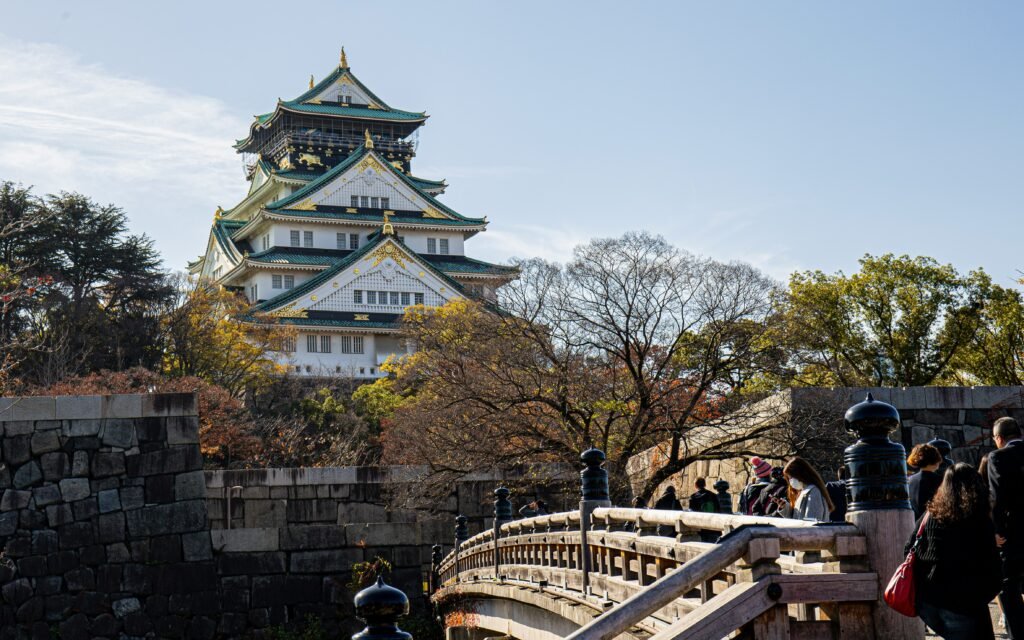
7. Osaka Castle and Grounds
The castle itself is a 1931 concrete reconstruction of the 16th-century original, and the interior museum is more interesting than the architecture suggests — good exhibits on Toyotomi Hideyoshi, the feudal lord who built the original, with English translations throughout. But the grounds are the reason to visit: 106 acres of park, the stone walls and moats of the original fortification, and one of the best cherry blossom viewing spots in Osaka in late March. Check the current castle tower fee before you go; the park grounds are free and often the strongest part of the visit.
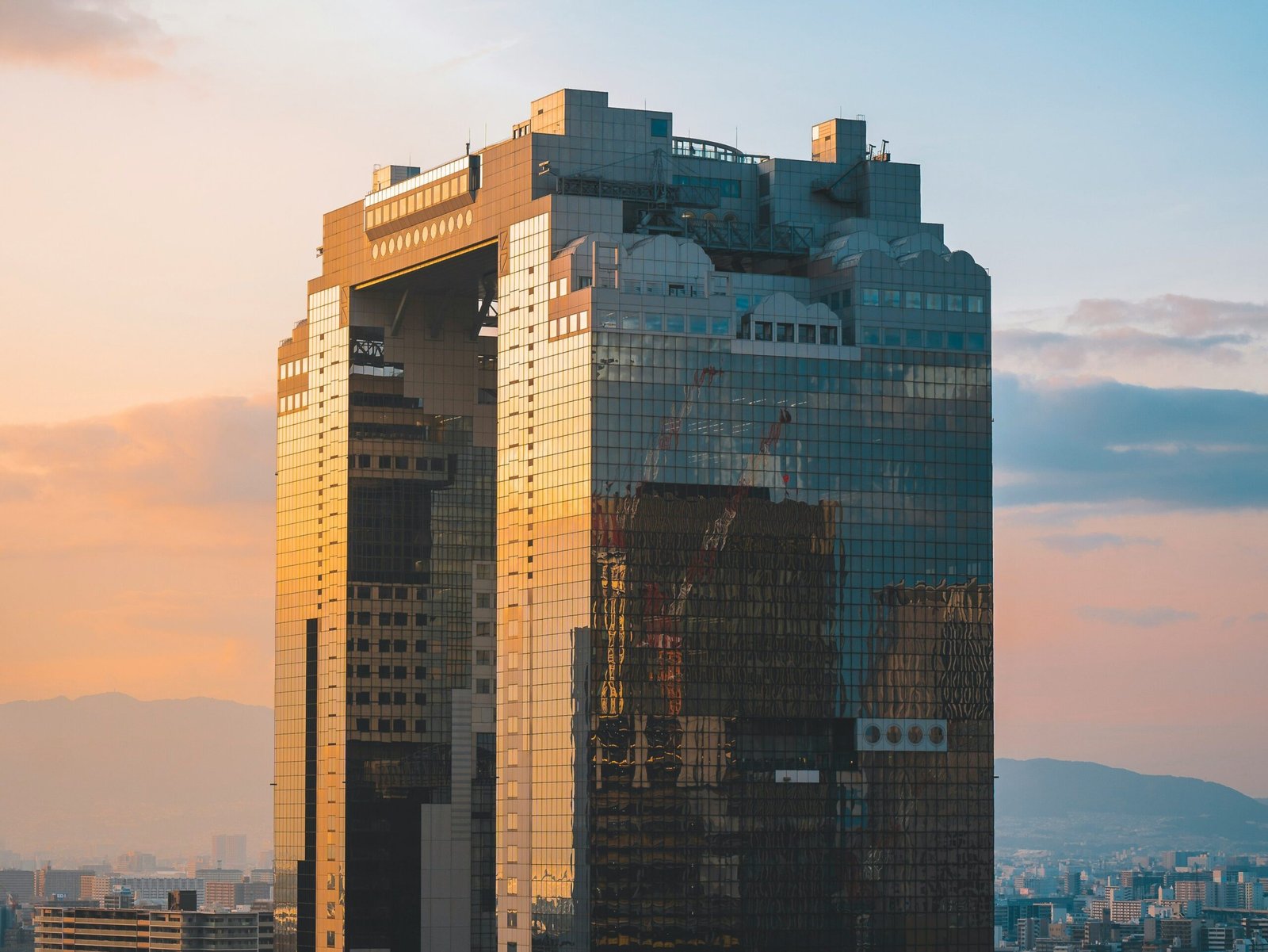
8. Umeda Sky Building Observation Deck
Two towers connected by a rooftop “floating garden” observatory at 170 meters — the view of Osaka at sunset is one of the better city panoramas in Japan. Unlike Tokyo Skytree or Shibuya Sky, this one isn’t crowded and doesn’t require advance booking. Check current admission, hours, and sunset availability before you go. The outdoor rooftop deck is the reason to time this for late afternoon or evening. The surrounding Umeda area has Osaka’s best department store dining and a distinctive underground shopping labyrinth worth navigating once.
9. Sumiyoshi Taisha Shrine
One of Japan’s oldest shrines, predating Buddhism’s arrival in Japan, with a distinctive architectural style you don’t see elsewhere. The arched stone bridge at the entrance — steep enough to require both hands — is one of the most photographed spots in Osaka outside of Dotonbori. Less crowded than anything in Kyoto. Free admission. A 15-minute subway ride from Namba puts you in a completely different, genuinely local Osaka.
10. Osaka Aquarium Kaiyukan
One of the largest aquariums in the world, built around a central Pacific Ocean tank that’s 9 meters deep and contains whale sharks. It’s the kind of aquarium that works for adults as well as children — the scale is extraordinary, the exhibits are thoughtfully designed, and whale sharks in an enclosed space produce a specific reaction regardless of age. Check the official ticket calendar before you go because pricing and entry rules can vary by date. Booking ahead can help on busy days. Allow 2–3 hours. It’s in the Osaka Bay area, 20 minutes by subway from Namba — combine with the Tempozan area if you have half a day.
Osaka Neighborhoods Worth Half a Day Each
Namba / Minami (South Osaka)
- Best for: Dotonbori, street food, shopping, Kuromon Market access
- When: mornings for Kuromon, evenings for Dotonbori at its best
- Don’t miss: the side streets one block from the canal — better food, half the crowd
- Base: the best area to stay for first-time visitors
Shinsekai
- Best for: kushikatsu, Tsutenkaku Tower, retro Osaka atmosphere
- When: evening for dinner; the neighborhood has more character after dark
- Don’t miss: the ground-floor kushikatsu counters — not the tourist-facing restaurants on the main street
- Honest note: it looks rougher than central Namba, but the main streets are usually comfortable for visitors and genuinely interesting
Umeda / Kita (North Osaka)
- Best for: Sky Building, department store dining, the underground shopping labyrinth
- When: late afternoon into evening
- Don’t miss: the basement food floors of Daimaru or Hankyu department stores — some of the best prepared food in the city
Tennoji
Often overlooked on short visits, Tennoji has Shitennoji temple — one of the oldest in Japan, founded 593 AD — and the best value ramen and udon in the city. The Abeno Harukas skyscraper next to Tennoji station has a 300-meter observation deck and a department store with a rooftop garden. The neighborhood is more local and less expensive than Namba, and rewards a slow morning.
The Experiences Worth Booking in Advance
11. Osaka Cooking Class
Learning to make takoyaki or okonomiyaki properly — with a local host, in a home kitchen or small studio — is a 2–3 hour experience that produces skills you’ll actually use afterward and a meal you eat at the end. Good classes include market shopping at the start (Kuromon is the obvious choice), which turns it into a half-day experience. Compare Osaka cooking classes on Viator — small group classes with English instruction fill quickly.
12. Bunraku Puppet Theater
Japan’s traditional puppet theater — three puppeteers per puppet, visible on stage, manipulating figures of extraordinary technical complexity. The National Bunraku Theatre in Osaka is the primary venue in Japan. Performances run on selected dates through the year, so check the official schedule before planning around it. Tickets are worth booking in advance, and English support may be available depending on the performance. It’s one of those experiences that works better than expected if you go in with minimal preconceptions about puppet theater.
13. Universal Studios Japan
Worth mentioning because it’s there and genuinely excellent — particularly for the Nintendo World and Wizarding World of Harry Potter areas. If theme parks are part of how you travel, this one is among the best in the world. If they’re not, the wait times can turn it into a full-day commitment that cuts everything else. Check official ticket and Express Pass options early if this is a priority for your trip.
Compare Universal Studios Japan ticket options on Viator after checking the official site, especially if you need a specific date or timed entry area.
Extra Osaka Experiences Worth Adding
If you have more than two nights in Osaka, these are the add-ons that make the city feel more layered than a simple food stop.
14. Hozenji Yokocho at Night
Hozenji Yokocho is the atmospheric lane to do after Dotonbori, not instead of it. It is narrow, lantern-lit, and centered on Hozenji Temple, where the moss-covered Fudo Myoo statue gives the area a calmer mood than the neon streets around it. Come after dinner for a slower walk.
15. Shinsaibashi Shopping Arcade and Amerikamura
Shinsaibashi-suji is the practical shopping spine between Namba and central Osaka, while nearby Amerikamura gives the area a younger streetwear and vintage-shopping edge. It is not a must if you dislike shopping, but it fits naturally between Kuromon Market, Dotonbori, and an evening food plan.
16. Den Den Town
Den Den Town is Osaka’s answer to Akihabara: electronics, anime shops, game stores, second-hand collectibles, and plenty of places where you can lose an hour without meaning to. It works best if you already like this side of Japan, but it is a useful Osaka-specific stop near Namba.
17. Abeno Harukas 300
Abeno Harukas gives you a different skyline angle from Umeda Sky Building and pairs well with Tennoji. It is most useful if you are already exploring Shitennoji, Tennoji Park, or the southern side of the city. Check current tickets and hours before choosing it over Umeda Sky.
18. Minoh Park for a Nature Break
Minoh Park is the easiest nature reset from Osaka: a forested walk to a waterfall, especially strong in autumn. It is not essential on a short first visit, but it is a good swap if you want a slower morning away from food streets and station crowds.
Best Day Trips from Osaka
| Destination | Travel time | Best for | Worth it? |
|---|---|---|---|
| Kyoto | 15 min by shinkansen | Temples, bamboo, Gion, Fushimi Inari | Yes — or stay overnight |
| Nara | 45 min by JR | Free-roaming deer, Great Buddha | Yes — easy half-day |
| Kobe | 30 min by JR | Beef, harbor, Kitano foreign district | Yes — for food and architecture |
| Himeji | 45 min by shinkansen | Japan’s finest feudal castle | Yes — if you haven’t done it from Kyoto |
Kobe is the strongest day trip exclusive to Osaka — close enough for a half-day, with its own very distinct character. The beef is genuinely different (wagyu raised in Hyogo Prefecture, eaten at counters where you watch it cook), the waterfront is pleasant, and the Kitano district of preserved 19th-century foreign residences is the kind of thing that would be a major attraction in most cities and is almost ignored here because Kyoto is 15 minutes in the other direction. Nara and Kyoto both work from either city.
Where to Stay in Osaka
Namba is the best base for first-time visitors — Dotonbori is walking distance, Kuromon Market is 10 minutes on foot, and subway connections cover the rest of the city efficiently. Shinsaibashi (adjacent to Namba) has better mid-range hotels and is slightly quieter at night while still being central. Umeda suits business travelers or anyone prioritizing the Sky Building and Kita area, with slightly less immediate access to the food neighborhoods.
Search for Osaka accommodations: Expedia or Booking.com – compare location carefully if you want to walk to Dotonbori and Kuromon Market.
Practical Tips for Osaka
- Getting around: Osaka has an excellent subway system. Tourist passes such as the Osaka Amazing Pass can be useful on attraction-heavy days, but inclusions and prices change, so check the current official pass page before buying.
- Cash: Street food stalls and smaller counters can still be cash-heavy. Keep enough yen for snacks, markets, and smaller restaurants. The Wise card guide explains how to compare fees before you withdraw.
- Language: Osaka is notably more English-friendly than most Japanese cities outside Tokyo. Menus with photos are common; pointing works.
- Eating hours: Dotonbori restaurants open from 11am but peak at 7–10pm. Kuromon Market is best 9am–1pm. Kushikatsu restaurants in Shinsekai often open from 11am and close when they sell out.
- Connectivity: A Japan eSIM can make subway navigation and restaurant searching easier, but install it before departure and check activation steps before you rely on it.
Frequently Asked Questions
How many days do you need in Osaka?
Two nights is the minimum to do Osaka properly — enough for Dotonbori, Kuromon Market, Osaka Castle, and a day trip to Nara or Kobe. One night works as a last stop before the airport if you’re short on time, but you’ll leave wishing you’d stayed longer. Three nights allows a slower pace with cooking classes, Universal Studios, or a full Kobe day. In the 10-day Japan itinerary, two nights in Osaka is the right allocation.
Is Osaka or Kyoto better?
They’re 15 minutes apart by shinkansen and completely different in character — Kyoto is temples, tradition, and preserved history; Osaka is food, nightlife, and a very particular kind of urban energy. Most people prefer Osaka for staying, Kyoto for visiting. The standard approach is to base yourself in Osaka for 2–3 nights and day-trip to Kyoto, though staying in Kyoto for the early-morning temple visits and Osaka for the evenings is also excellent if you don’t mind moving accommodations.
What food is Osaka famous for?
Takoyaki (octopus balls), okonomiyaki (savory pancake), kushikatsu (deep-fried skewers), and ramen. Osaka is also known for its exceptional quality of everyday food at every price point — the city’s nickname kuidaore means “eat until you drop,” which is less a warning than a statement of civic values. The Dotonbori area concentrates most of the famous options; Kuromon Market and Shinsekai are where to go for the less tourist-facing versions.
Is Osaka safe for tourists?
Osaka is generally very safe for tourists, including around the main food and nightlife areas. Shinsekai has an older reputation for being rough, but the main streets are usually comfortable for visitors. Standard urban precautions still apply in crowded places, late at night, and around busy stations.
How much does a day in Osaka cost?
A mid-range Osaka day depends on how many paid attractions and food stops you stack together. Street food can keep costs lower, while Universal Studios Japan, food tours, observation decks, or aquarium tickets can raise the daily total quickly. For a full Japan budget breakdown, the Japan travel costs guide covers the trade-offs that matter.
What is the best area to stay in Osaka?
Namba or Shinsaibashi for first-time visitors — both are central, walkable to Dotonbori and Kuromon Market, and well-connected by subway to the rest of the city. Umeda suits anyone prioritizing the northern business and shopping districts or the Sky Building. Avoid staying near Universal Studios unless that’s the primary purpose of the trip — the Bay area is isolated from the rest of Osaka.
More Japan Travel Guides
Still planning? These guides cover the rest of the trip:
- Planning the full route? → Japan 10-Day Itinerary: Tokyo, Hakone, Kyoto, Osaka
- Coming from Kyoto? → Best Things to Do in Kyoto
- Starting in Tokyo? → Best Things to Do in Tokyo
- Figuring out the budget? → Japan Travel Costs: What to Budget for 10 Days
- Still in early planning? → How to Plan a Trip