Rome Travel Costs 2026: Honest Budget Guide for First-Timers
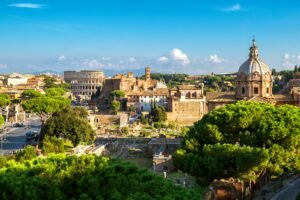
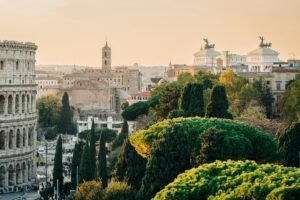
Rome will surprise you with what it costs — usually in both directions. The iconic sights that feel like they should be free aren’t, and the moments you’ll remember most (the espresso at a corner bar for €1.30, the trattoria two streets off the tourist strip, the hour you spend watching the light change over the Forum from a viewpoint nobody else has found yet) cost almost nothing.
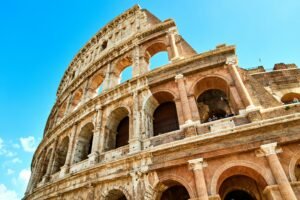
The Colosseum requires a proper ticket. The Vatican requires planning. The Borghese Gallery requires advance planning, especially in high season. And if you eat every meal on the piazzas directly below the tourist landmarks, you’ll spend twice what you should for food that’s half as good as what’s three streets away.
This guide breaks down exactly what Rome costs in 2026 — accommodation, food, transport, sightseeing, and the tours worth paying for — so you can plan an honest budget before you arrive.
Table of Contents
Affiliate disclosure: This post contains affiliate links. If you book or buy something through these links, I may earn a small commission at no extra cost to you. I only recommend things I genuinely use or believe in. Learn more.
Lili’s picks for Rome
Here’s what I’d have sorted before my flight lands. Not a list of must-dos — just the things that made an actual difference.
Book before you arrive
- Starhotels Michelangelo Rome — the hotel I would shortlist if I wanted a calm Vatican-side base instead of sleeping in the busiest part of the historic center. Best if St. Peter’s, the Vatican Museums, and easy first-night logistics matter more than nightlife outside the door. Before booking, compare the room type, total price, breakfast, and cancellation terms.
- Colosseum, Forum & Palatine Hill — Guided Tour — the tour I would shortlist if this is your first time in ancient Rome. Best if you want the Colosseum and Forum to make sense instead of just looking impressive. Before booking, check the meeting point, duration, cancellation terms, and whether arena-floor or underground access is included.
Travel smarter
- Wise card — I stopped overpaying on every coffee the day I got this. Real exchange rate, no hidden markup, works everywhere.
- Holafly eSIM — Install before you fly, connected the moment you land at FCO. Navigation works on the metro from minute one — no hunting for Wi-Fi, no roaming surprises.
- Omio — Rome to Naples, Florence, Venice — I compare everything here in one place.
Quick Summary: Rome Travel Budget
| Budget traveler | €70–100/day per person (including accommodation) |
| Mid-range traveler | €130–180/day per person (including accommodation) |
| Splurge traveler | €250–350+/day per person |
| Accommodation | €60–100/night (budget), €120–200/night (mid-range), €250+/night (boutique/luxury) |
| Colosseum + Roman Forum + Palatine | around €18 direct online / around €49 with a guided 3-hour tour |
| Vatican Museums + Sistine Chapel | around €25 direct online / around €69 with guided tour + St. Peter’s |
| Borghese Gallery | from around €13 before fees or exhibition changes — timed entry only |
| Airport train (FCO → Termini) | €14/person one way, 32 minutes |
| City transport pass | €8.50 for 24h, €15 for 48h, €22 for 72h |
| Espresso at the bar | €1–1.50 (pay at the counter — always) |
Accommodation Costs in Rome
Rome has accommodation in every price range, and where you stay matters less for convenience than it does in most cities — almost everything in central Rome is walkable, and the metro fills in the longer gaps. The real difference between neighborhoods is atmosphere, not access.
What to expect by neighborhood and tier:
- Budget (hostel, guesthouse, B&B): €30–70/night for a private room or dorm — available throughout the city; Termini area has the highest concentration of budget options but is not the most pleasant neighborhood to base yourself in
- Mid-range (3–4 star hotel): €100–200/night for two — this is where Rome’s sweet spot sits; central 4-star hotels with good ratings are very competitive by Western European standards
- Boutique and luxury: €250–500+/night — Rome has some genuinely extraordinary luxury hotels, particularly around Via Veneto and near the Spanish Steps
Neighborhood breakdown:
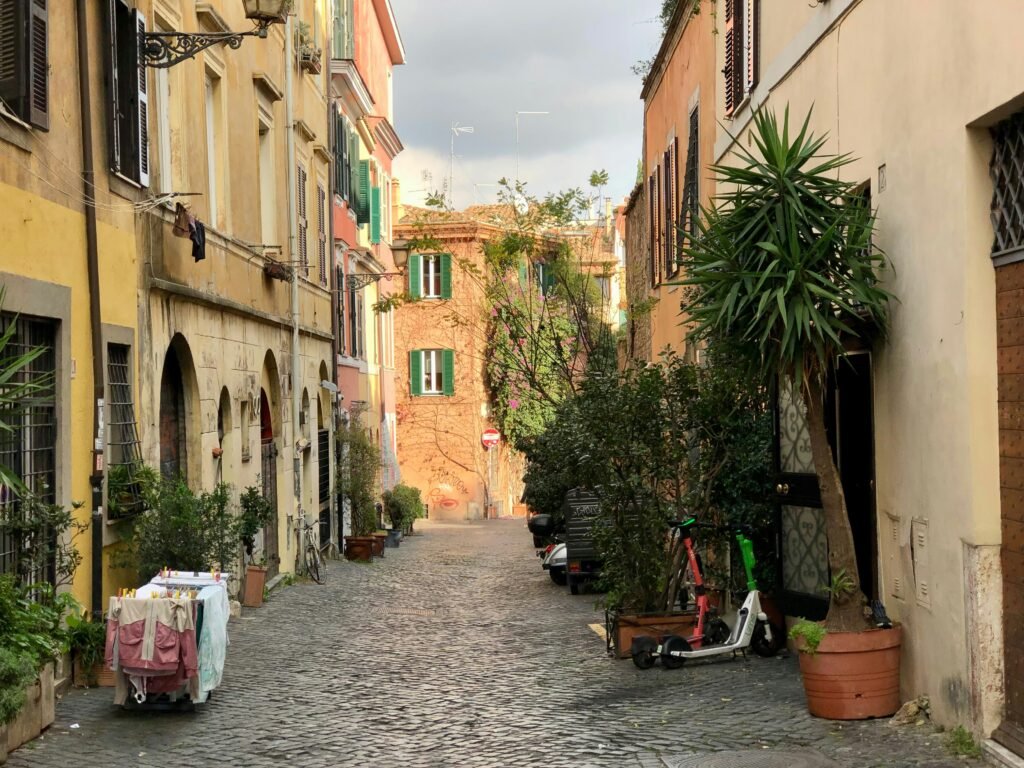
- Trastevere: €100–200/night for mid-range. The most atmospheric neighborhood in Rome — cobblestones, ivy-covered facades, excellent restaurants. Popular with visitors but not overrun. A good choice if you want Rome to feel cinematic from the moment you step outside.
- Monti: €100–180/night. The neighborhood locals actually like — vintage shops, independent bars, a slightly younger crowd. Close to the Colosseum and the Roman Forum. Walking distance from almost everything.
- Vaticano / Prati: €90–170/night. Quieter and more residential than the historic center, directly north of St. Peter’s Square. Makes the Vatican itself a 15-minute walk rather than a metro commute. Good restaurants on Via Cola di Rienzo.
- Centro Storico (Pantheon, Campo de’ Fiori): €130–250/night. The absolute center — everything is minutes away. Higher price, lower value per euro than Monti or Trastevere, but the location is extraordinary.
- Termini: €60–120/night. The most budget-friendly area, and well-connected by transit. Not the Rome you’re picturing, though — the streets around the central station aren’t what most visitors come to experience.
Where I’d stay: For a first visit to Rome, Starhotels Michelangelo Rome is the hotel I would shortlist if I wanted a calmer Vatican-side base with an easy walk to St. Peter’s instead of paying historic-center prices for a smaller room. It is best if the Vatican is a major part of your Rome plan, but less ideal if you want Trastevere nightlife right outside the door. For a more atmospheric base, Hotel La Rovere sits on the Trastevere/Vatican edge, which works well if you want evening walks, restaurants, and a softer neighborhood feel. Before booking either one, compare the room type, total price, breakfast, and cancellation policy for your exact dates.
Getting to Rome from the Airport
Rome has two airports: Fiumicino (FCO) is the main international airport, about 30km southwest of the city. Ciampino (CIA) is smaller and used mostly by low-cost carriers — closer to the city but less well-connected by train.
From Fiumicino (FCO):
- Leonardo Express (recommended): €14/person one way, runs every 30 minutes, 32-minute journey direct to Roma Termini. The fastest and most straightforward option — no stops, no changes, air-conditioned. Buy tickets at the airport kiosks or in advance online.
- Regional train FL1: €8/person, slower (45–60 min), stops at Trastevere, Ostiense, and Tiburtina stations before Termini. Worth it if your hotel is in Trastevere — you arrive directly at the right station.
- Taxi: Fixed official fare of €55 from FCO to central Rome within the Aurelian Walls. Confirm the fixed fare before you get in and use official white taxis only. Not faster than the train, but easier with a lot of luggage and no train changes.
- Bus (Terravision, SIT Bus Shuttle): €6–8/person, 1h+ depending on traffic. The slowest option — skip it unless you’re on a very tight budget.
From Ciampino (CIA): The Terravision bus to Roma Termini runs every 30–60 minutes and costs €4–6. A taxi is around €40 fixed rate to central Rome. No direct train option — the airport bus is the standard choice here.
Getting Around the City
Rome’s historic center is remarkably walkable — Colosseum to the Pantheon is about 20 minutes on foot, Pantheon to Campo de’ Fiori is 5 minutes, Piazza Navona to the Spanish Steps is 15. You’ll cover a lot of ground on foot without realizing it, which is also how Rome is supposed to be experienced.
The metro has two main lines (A and B) and a newer line (C). Line A connects the Vatican area (Ottaviano) to the Spanish Steps (Spagna) to the Colosseum via Termini. Line B reaches the Colosseum directly (Colosseo stop). For the Vatican and Spanish Steps, metro A is the practical choice. For the Colosseum and Circo Massimo, metro B.
- Single ticket: €1.50, valid for 100 minutes across metro + bus (one metro journey only per ticket)
- 24-hour pass: €8.50
- 48-hour pass: €15
- 72-hour pass: €22
- 7-day pass: €29
For a 3-day visit, the 72-hour pass at €22 makes sense if you plan to use the metro regularly. For shorter stays heavy on walking, single tickets may be enough. Taxis are not expensive for the distances involved — a cross-city ride rarely exceeds €15 — and are the practical choice late at night or in summer heat when the walk genuinely isn’t pleasant.
Food and Drink Costs in Rome
Roman food is some of the best in Europe. It also has a well-earned reputation for tourist traps — and the gap between a good meal at a fair price and an overpriced one for tourists is larger in Rome than almost anywhere else in Italy. The variable is almost always location: walk two streets away from the main piazzas and the prices drop and the quality rises.
Coffee: The Italian way — standing at the bar, paying when you order, leaving promptly. An espresso is €1–1.50 at the counter. Sitting down at a table bumps this to €3–5. You’re not paying for the coffee, you’re paying for the seat. For a cornetto (Italian croissant) + espresso: €2.50–4 at the bar, every morning.
Lunch on a budget: Pizza al taglio (pizza by the cut) is one of the best cheap meals in Rome — a generous slice runs €3–5, and the good spots will let you point at exactly what you want. Supplì (fried rice balls) are €2–3 each. Panino shops, porchetta stalls at Campo de’ Fiori, and market food all land in this range. Budget lunch for one: €6–10.
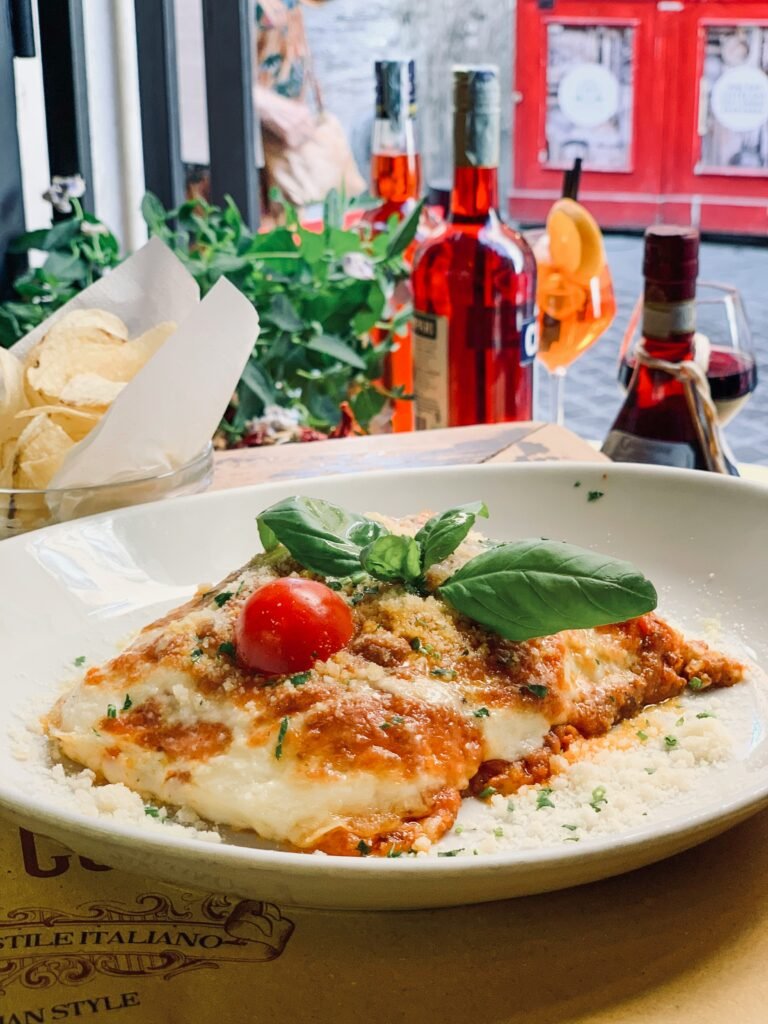
Sit-down trattoria: Two people, two pastas, a shared antipasto, water, no wine: €35–55 at a genuine neighborhood trattoria. Add wine and it climbs to €50–70. The worst-value meals in Rome happen at restaurants with photographs on the menus facing tourist landmarks — pasta carbonara at €22 in front of the Pantheon versus €14 two streets away, for a meaningfully worse version.
Gelato: €2.50–4.50 per scoop from a good gelateria. Avoid gelato that comes in huge voluminous piles — authentic gelato is stored flat in metal containers. Quality is consistent across Trastevere and Monti; around the Trevi Fountain and Spanish Steps, you pay more for the same or worse.
Dinner mid-range: A proper evening meal with wine — two people at a good local restaurant in Trastevere or Monti: €50–80 total. Fine dining or restaurants with major locations: €100–180 for two.
What Rome’s Major Attractions Cost
One of Rome’s most important rules: the free things are often the best things. The Trevi Fountain, the Spanish Steps, Campo de’ Fiori, the Pantheon exterior, Trastevere’s streets, Gianicolo Hill — none of these cost anything. Where you pay, you pay for the interiors and the history behind them, and in most cases it’s absolutely worth it.
| Attraction | 2026 Cost | Notes |
|---|---|---|
| Colosseum + Roman Forum + Palatine Hill | around €18/adult direct online | Timed entry — buy through the official Colosseum ticketing site; queues and time slots make advance planning worth it even outside peak season |
| Vatican Museums + Sistine Chapel | around €25 online direct ticket | Advance online booking saves the worst of the waiting; check the official Vatican ticket page for the current ticket type and booking fee |
| St. Peter’s Basilica | Free | Queue at the security entrance; dress code enforced (shoulders + knees covered) |
| St. Peter’s Dome | €8 stairs / €10 elevator | Worth it for the views over the piazza and the city; stairs are significant — 320+ steps above the elevator option |
| Borghese Gallery | from around €13/adult before fees or temporary exhibition changes | Maximum 2-hour timed entry; advance booking is strongly recommended because time slots are limited |
| Pantheon | €5/adult | Now ticketed with timed entry; book online at pantheonroma.com |
| Capitoline Museums | €15/adult | Oldest public museums in the world; rooftop view of the Forum is one of the best in Rome |
| Castel Sant’Angelo | €12/adult | Former papal fortress; rooftop view over the Tiber is exceptional |
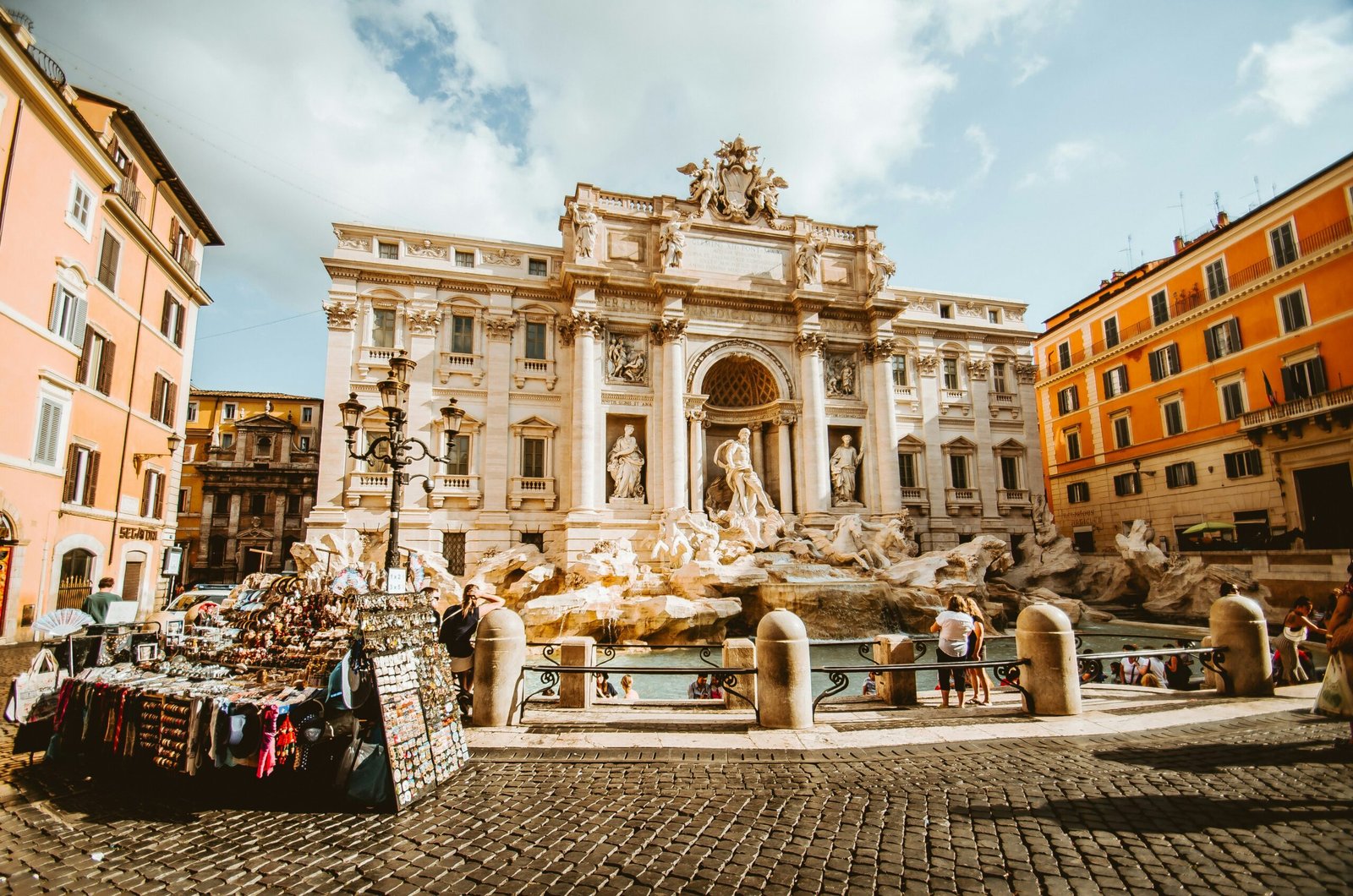
| Trevi Fountain | Free | Crowded; go early morning or late evening for manageable conditions |
| Spanish Steps | Free | Sitting on them now restricted; the street scene and the views from the top are still worth the visit |
| Campo de’ Fiori market | Free | Morning market until around noon; good for breakfast produce and porchetta |
| Trastevere neighborhood | Free | The most photogenic streets in Rome; walk Santa Maria in Trastevere square in the evening |
The Borghese Gallery note: This is the one attraction in Rome where planning failure has the most serious consequences. The gallery operates on strictly timed 2-hour entry slots with a hard cap on visitors per session — and those slots can disappear weeks in advance in high season. If the Borghese Gallery is a priority, treat it as an early-planning item rather than a last-minute add-on. It is one of the finest art collections in the world, and the timed-entry system means you need a confirmed slot.
The Tours Worth Paying For
Rome’s two major sites — the Colosseum and the Vatican — are entirely different experiences with a guide versus without one. Both are so densely layered with history that what you’re looking at without context is impressive but incomplete. These are the tours I’d book before anything else.
Colosseum, Roman Forum & Palatine Hill — Guided Tour
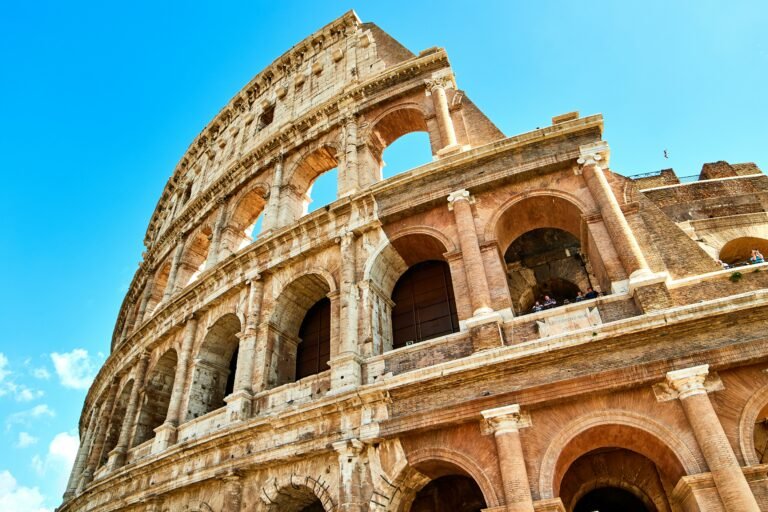
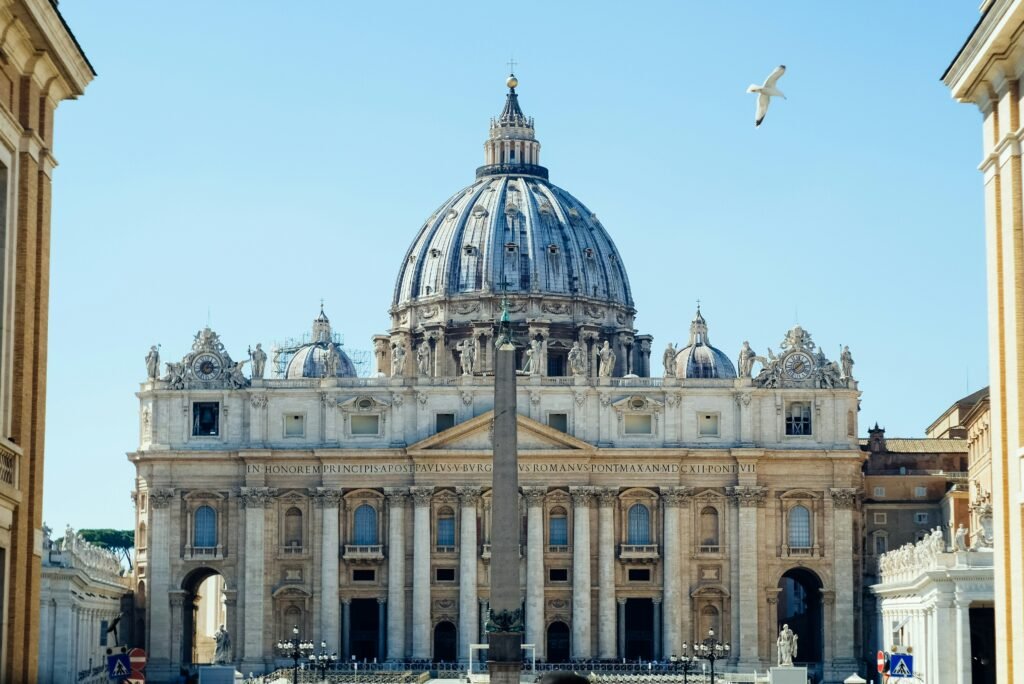
Walking into the Colosseum with a ticket is one thing. Walking in with someone who can explain what you’re actually standing inside — the scale of what was staged here, the mechanics of the arena floor, the gladiatorial system — is something else entirely. The Roman Forum directly after makes the sequence work: the ruins become comprehensible once you understand what they were, and the Palatine Hill above gives you the full picture of how the ancient city was organized around this one extraordinary space.
Tour I would shortlist: this Colosseum, Roman Forum & Palatine Hill guided tour. Best if you want context, faster routing, and one coherent ancient Rome block instead of trying to decode everything alone. Not ideal if you prefer moving slowly with an audio guide. Before booking, check the meeting point, exact inclusions, duration, cancellation terms, and whether arena-floor or underground access is included.
Vatican Museums, Sistine Chapel & St. Peter’s Basilica — Guided Tour
The Vatican queue without advance booking is one of the worst tourist experiences in Europe — hours long, exposed to the sun, and entirely avoidable. With a guided tour that includes skip-the-line access, you walk past it entirely. Inside, the Vatican Museums are enormous enough to be disorienting without direction — knowing which halls to move through and which to slow down in makes the difference between a great morning and an exhausting one. The Sistine Chapel with someone explaining what Michelangelo was actually communicating in the ceiling (and why it took him four years alone on a scaffold) is worth every cent of the upgrade cost.
Tour I would shortlist: this Vatican Museums, Sistine Chapel & St. Peter’s guided tour. Best if you want the Vatican handled in one clear morning without guessing which halls matter most. Not ideal if you prefer spending half a day wandering independently. Before booking, check whether St. Peter’s Basilica access is included on your chosen date, the dress code, meeting point, cancellation terms, and the current route.
Trastevere Street Food Tour
If you’re going to spend money on one non-monument experience in Rome, a food tour in Trastevere is the strongest candidate. Tour I would shortlist: this Trastevere and Campo de’ Fiori food tour. Best if you want Rome to feel less like a checklist and more like an evening you can actually taste: supplì, artichokes, porchetta, gelato, local wine, and neighborhood context. Not ideal if you are on a very tight food budget. Before booking, check the current tastings, dietary notes, meeting point, duration, and cancellation terms.
Extending Your Trip: Train Connections from Rome
Rome is Italy’s best-connected rail hub. High-speed Frecciarossa trains make it straightforward to combine Rome with the rest of the country — and the routes are fast enough that you can treat some of them as day trips rather than separate destinations.
| Route | Journey time | From | What it opens up |
|---|---|---|---|
| Rome → Naples | 1h 10min | €10–30 | Naples itself, Pompeii (30 min from Naples by Circumvesuviana train), Positano and the Amalfi Coast (1.5h more by ferry or bus) |
| Rome → Florence | 1h 30min | €15–50 | Florence’s museums, Uffizi, Duomo — realistic as a day trip or an added night |
| Rome → Bologna | 2h | €20–40 | Often a practical midpoint; food capital of Italy |
| Rome → Milan | 3h | €25–70 | Milan’s Duomo, fashion district, Lake Como as a further day trip |
| Rome → Venice | 3h 50min | €35–75 | Venice — the train is the right way to arrive (the view as you cross the lagoon on the causeway is remarkable) |
Booking Italian trains
Compare routes and prices on Omio — all Frecciarossa routes depart from Roma Termini. Book in advance for the best fares; last-minute Frecciarossa tickets can be 3–4× the base price.
The Amalfi route in particular: Rome → Naples is 1h10min, and from Naples you have direct ferry connections to Positano and Salerno (gateway to Ravello and the southern coast). It’s a long day trip from Rome and a more comfortable overnight — but the train connection makes the Amalfi Coast accessible from a Rome base without renting a car.
Sample Daily Budgets
Budget day (~€80–100 per person, including accommodation)
- Guesthouse or budget hotel: €40–50/person/night
- Espresso + cornetto at a bar: €3
- Colosseum + Roman Forum + Palatine Hill (direct online ticket, no guide): around €18
- Pizza al taglio lunch: €8
- Afternoon: Palatine Hill views, Roman Forum walk, Circus Maximus (included in ticket), free Trastevere evening
- Dinner at a neighborhood trattoria with one glass of wine: €20
- Gelato: €3.50
Day total: ~€90–100 per person — a full day in Rome including the Colosseum complex.
Mid-range day (~€150–180 per person, including accommodation)
- 4-star hotel near the Vatican or Trastevere: €60–100/person/night
- Café breakfast: €5
- Colosseum + Roman Forum guided tour (3h, Viator): €49
- Lunch near Monti: €15
- Afternoon: Capitoline Museums (€15), rooftop Forum view
- Dinner with wine in Trastevere: €40
- Gelato from a proper gelateria: €5
Day total: ~€175 per person — guided Colosseum, proper museum, proper dinner, no shortcuts.
Splurge day (~€280–350 per person, including accommodation)
- Boutique hotel: €130–180/person/night
- Hotel breakfast: €15–25
- Vatican Museums + Sistine Chapel + St. Peter’s guided tour (Viator): €69.90
- Lunch at a good restaurant near Prati: €35
- Castel Sant’Angelo (€12) + dome views
- Dinner at a recommended Trastevere restaurant with wine: €70–90
Day total: ~€300–350 per person — no compromises on anything.
Money-Saving Tips for Rome
Always pay at the bar for coffee. Sitting down at a café table doubles or triples the price of an espresso, and the coffee is no different. The Italian way — stand at the bar, order, pay, drink, leave — is also faster and more authentic. Once you do it once, you’ll wonder why you ever did it any other way.
Walk two streets from any landmark before choosing a restaurant. The places with menus in six languages and photographs of every dish are consistently the worst value in Rome. The trattoria with a handwritten chalkboard two minutes off the tourist path is where the price drops and the quality rises. This rule alone can save €15–25 per person per meal.
Book the Colosseum and Vatican online in advance. The online prices are lower than on-site, the time slots are better, and you avoid the queue. In summer the queues at the Vatican gate are legendary for the wrong reasons. There’s no advantage to not booking ahead.
The Pantheon at €5 is one of the best-value paid attractions in the world. A perfectly preserved 2,000-year-old building in the center of the city, ticketed since 2023 — but still extraordinary value. Do not skip it.
Take the Leonardo Express from Fiumicino. At €14 it’s significantly cheaper than a taxi (€55+), 32 minutes direct, and you arrive at Termini with the full metro network available. Only consider the taxi if you have a lot of luggage and are staying somewhere the FL1 regional train doesn’t serve.
Buy a transit pass if you’re staying three days or more. The 72-hour pass at €22 pays for itself once you use public transport regularly over three days and removes the mental overhead of managing single tickets. Rome is very walkable, but when you need the metro, you’ll use it multiple times per day.
Skip the tourist menus at lunch. Many trattorias offer a fixed-price lunch (menù del giorno) for €10–15 — a primo (pasta), secondo (meat or fish), and sometimes a dessert. These are often the best value meals in Rome, made from what’s fresh that day, and served quickly. Ask if there’s a menù del giorno if you don’t see it displayed.
Practical Money Info
Currency: Euro. Cards are widely accepted in hotels, restaurants, and shops — but Rome has enough small trattorias, market vendors, and older establishments that prefer cash. Keep €30–50 in cash on you for these situations; running out at a market or a neighborhood bar is a real inconvenience.
ATMs: Available throughout the city. Use bank ATMs rather than standalone machines in tourist areas, which carry additional fees. The airport exchange desks are expensive — withdraw cash from an in-city ATM instead. For the card side of the trip, a travel money card avoids foreign transaction fees and bad exchange rates on every purchase abroad.
Tipping: Not mandatory in Italy. It’s common to round up or leave small change at bars and casual restaurants; at a dinner where the service was genuinely good, €2–5 per person is appropriate. The coperto (cover charge, usually €1–3 per person) is a standard line item at sit-down restaurants — it’s not a tip and it’s not optional, it’s just how Italian restaurants work.
Mobile data: Having data before you land makes everything smoother — navigation works on the metro, you can look up the address of a restaurant without hunting for Wi-Fi. An eSIM installs on your phone before you travel and connects automatically when you land. Holafly’s Italy eSIM (code MILESANDFLAVORS for a discount) is the one I use — activate it before your flight and it’s working the moment you switch airplane mode off at FCO.
Exchange rates and fees: Rome is a city where small amounts add up — €3 coffee surcharges, €2 coperto, a few extra euro on a taxi. The easy way to avoid paying an extra 3–4% on every card transaction is a fee-free travel card. The Wise card converts at the real exchange rate with no hidden markup — particularly useful if you’re traveling multiple currencies or extending your trip into other countries after Rome.
Frequently Asked Questions
How much does Rome cost per day?
On a careful budget: €70–100/person/day including accommodation. For a comfortable mid-range experience with guided tours and sit-down dinners: €130–180/person/day. Accommodation alone in a central 4-star hotel adds €60–100/person/night; food and activities on a mid-range day run €70–90/person on top of that.
Is Rome expensive?
By Western European capital standards, Rome sits in the middle — more expensive than Lisbon or Athens, less expensive than Paris or London. The main cost drivers are accommodation (competitive for the quality) and the major attraction tickets (Colosseum around €18, Vatican direct tickets usually around €25 online). Food has an enormous range: you can eat brilliantly for €10–15 at lunch or pay €50+ per person at a landmark restaurant. The difference is usually whether you walk two streets off the tourist trail.
How much spending money do I need for 5 days in Rome?
For two adults for 5 days, budget €1,400–2,000 excluding flights — covering accommodation (€120–200/night × 5), Colosseum and Vatican tours (~€120 for two with guides), daily food (€80–100/day for two at mid-range), airport transport (€56 return for two by Leonardo Express, less if the FL1 works for your station), city transport (€29 for a 7-day pass per person), and some extra for the Borghese Gallery, Pantheon, and gelato. A careful budget with self-guided tickets and cheaper accommodation brings this down to €900–1,100 for two.
Is the Colosseum worth visiting?
Yes — and a guided tour is worth the upgrade over a self-guided ticket. The €16 ticket gets you inside; the €49 guided tour (3 hours, includes Roman Forum and Palatine Hill, 24,900+ Viator reviews) tells you what you’re actually looking at. The scale of the Colosseum is something photographs genuinely don’t communicate until you’re standing inside it.
What’s the cheapest way from Fiumicino airport to Rome?
The FL1 regional train at €8/person one way — stops at Trastevere, Ostiense, and Tiburtina before Termini, 45–60 minutes. The Leonardo Express at €14/person is faster (32 minutes, direct to Termini) and more convenient with luggage. Both are far cheaper than the official taxi (€55 fixed fare) and faster than the bus. The Leonardo Express is the standard recommendation for most arrivals.
More Rome Travel Guides
- Planning your days? Our 3-day Rome itinerary is organized geographically — Ancient Rome on Day 1, Centro Storico on Day 2, Vatican and Trastevere on Day 3 — so you’re never crossing the city twice for the same area.
- Deciding what to see? Our best things to do in Rome guide goes beyond the obvious landmarks — including the Aventine Keyhole, San Clemente basilica’s underground layers, and the Coppedè quarter that almost no first-time visitor finds on their own.
- Extending your trip? Rome is 1h10min from Naples by Frecciarossa — which puts the Amalfi Coast within reach of a Rome base. Our Amalfi Coast guide covers the logistics of getting there and what to prioritize once you do.