Dolomites Travel Costs: What We Actually Spent (Honest Breakdown)
We spent €140 in one day in the Dolomites. That’s the number I added up on the drive back, going over it in my head while my husband drove and our two-and-a-half-year-old finally fell asleep in his car seat.
It was a Tuesday in late June. We did not eat at a Michelin-starred restaurant. We did not stay in a luxury suite.
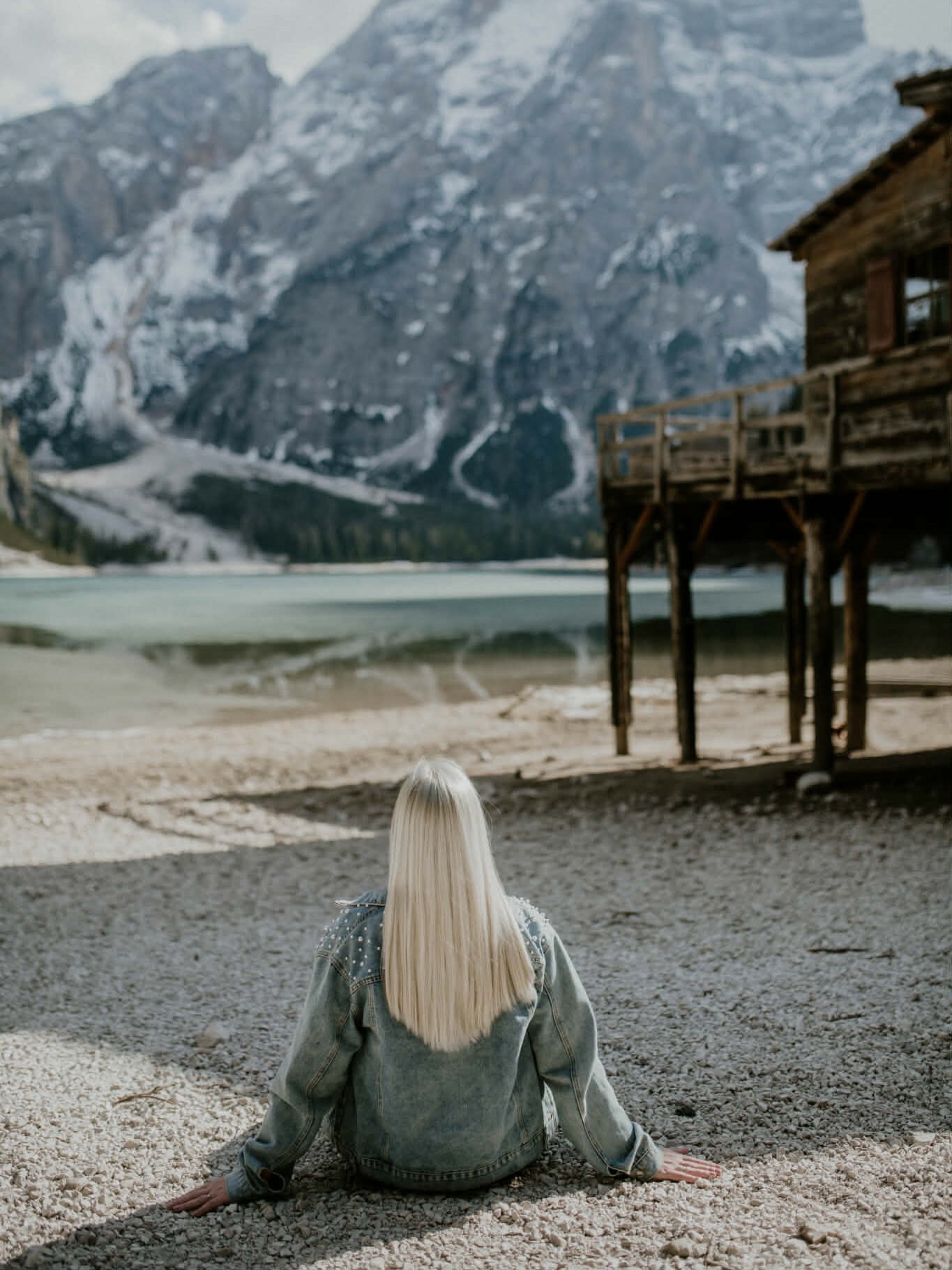
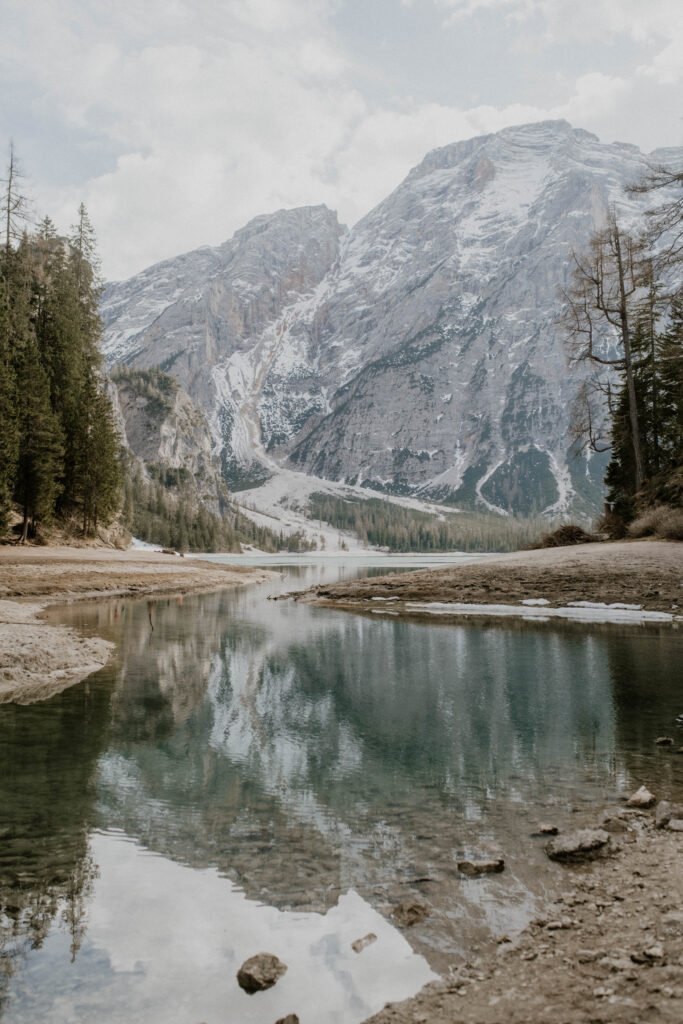
We did Lago di Braies at sunrise, had lunch in Cortina d’Ampezzo, walked up to Passo Giau in the afternoon, and drove back. €140. For one day, for three of us — two adults and a toddler who had opinions about every mountain he saw from the car window.
The Dolomites are not a cheap destination. I want to say that upfront, without softening it, because I’ve read too many travel articles that bury the real numbers in vague hedges like “costs vary” or “budget accordingly.”
So here’s my honest version: it is possible to have an extraordinary day in the Dolomites for around €80–100 per person if you make careful choices. It’s also very easy to spend €150+ per person without trying hard, and if you stay in Cortina and do every cable car on the list, you’re looking at a different number entirely.
This article is a breakdown of what we actually spent — on accommodation, food, car rental, fuel, parking, and activities — with realistic budget ranges for different travel styles. I’m not going to tell you the Dolomites are “worth every penny” and leave it at that.
I’m going to tell you exactly where our money went, which of those expenses I’d repeat without hesitation, and which ones I’d handle differently next time. If you’re planning a trip to northern Italy and trying to figure out whether the Dolomites are within reach for your budget, this is the article I wish I’d had.
Contents
- Lili’s Picks
- What We Actually Spent — One Day Breakdown
- Accommodation Costs: What to Expect
- Food: Rifugio Meals vs. Restaurant Reality
- Getting There & Getting Around
- Sample 3-Day Budgets
- How to Spend Less Without Losing Quality
- The Bottom Line
- Frequently Asked Questions
- More Guides for Your Dolomites Trip
Quick answer: Yes, the Dolomites are expensive compared with many parts of Italy, but the trip does not have to spiral. For most travelers, a realistic budget is about €80–100 per person per day on the careful end, €130–180 per person per day for a comfortable mid-range trip, and €200+ per person per day if you stay in Cortina, add several cable cars, and eat out for every meal. The biggest cost levers are where you sleep, how many paid lifts you use, and whether you rent a car early or last-minute.
Affiliate disclosure: This post contains affiliate links. If you book or buy something through these links, I may earn a small commission at no extra cost to you. I only recommend things I genuinely use or believe in. Learn more.
Lili’s Picks
How I’d budget a Dolomites trip
If you want the €140-a-day version of this trip, these are the three things I’d lock in first — car, base, and one splurge day.
Discover Cars is where I’d start — compare Milan, Verona and Venice pickup rates before you commit to a route or dates.
For a base, Hotel Continental Dolomites in Selva di Val Gardena is a solid, central pick with breakfast included.
And if I wanted one guided day without planning every cable car myself, this is the Dolomites & Cortina small-group tour on Viator I’d book — 4.6★, 1,500+ reviews.
- Best if you want: a realistic day-by-day budget before you commit to Dolomites dates — not just “it depends.”
- Why it works: booking the car and base early locks in shoulder-season pricing, and the Viator tour has no upfront payment on eligible bookings and free cancellation up to 24 hours before, so there’s no risk in reserving the splurge day now.
- Not ideal if: you’re chasing a true budget-backpacker trip — even the careful end of this range assumes a private car and a real bed, not hostels or public transport only.
- Before you go: check the Lago di Braies and Tre Cime reservation windows before booking dates — both now require online parking reservations in peak season, and that can reshape your itinerary.
This map shows what costs what — free drives vs. paid cable cars, the base towns by price tier, and the three gateway airports with rough driving times into the mountains.
What We Actually Spent — One Day Breakdown
This was a full day loop through the eastern Dolomites — Lago di Braies at sunrise, lunch in Cortina d’Ampezzo, and a late afternoon stop at Passo Giau before driving back to our base near Braies. Here’s where the €140 went:
| Expense | Amount | Notes |
|---|---|---|
| Car rental (compact, daily rate) | ~€30 | Booked through Discover Cars — split from a 5-day rental, booked 6 weeks in advance |
| Fuel | ~€28 | Lago di Braies to Cortina, Passo Giau and back; mountain roads burn more than expected |
| Parking at Lago di Braies | €10 | Our late-June parking cost; peak-season access and reservation rules can change, so check the current Lago di Braies reservation rules before you go |
| Morning coffee at the lake | ~€6 | Two espressos at the lakeside café — same price as the rest of Italy |
| Lunch at Il Vizietto, Cortina | ~€55 | Two mains (~€20 each), one kids dish, two coffees — one block off the main corso |
| Passo Giau — rifugio drinks | ~€10 | Two drinks at Rifugio Giau at the top of the pass — non-negotiable after the climb |
| Tre Cime toll road | €0 | Saved for the next morning; paid access is a separate budget line if you drive to Rifugio Auronzo |
| TOTAL | ~€140 |
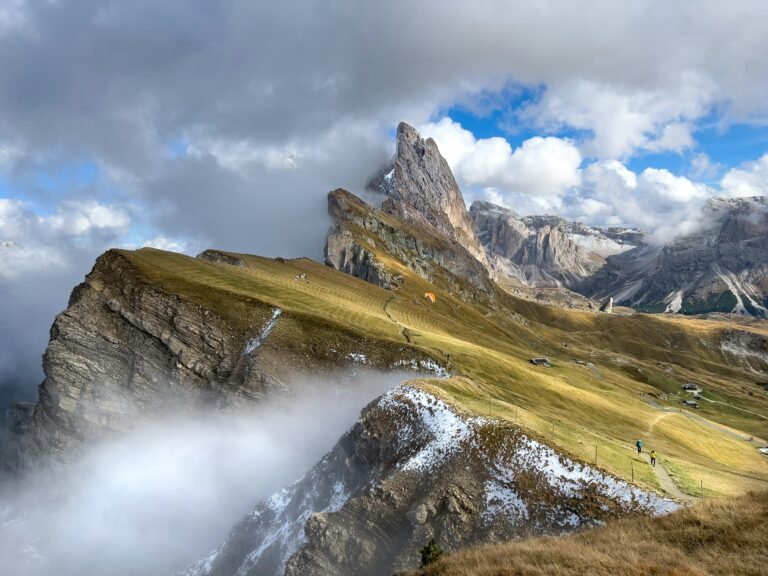
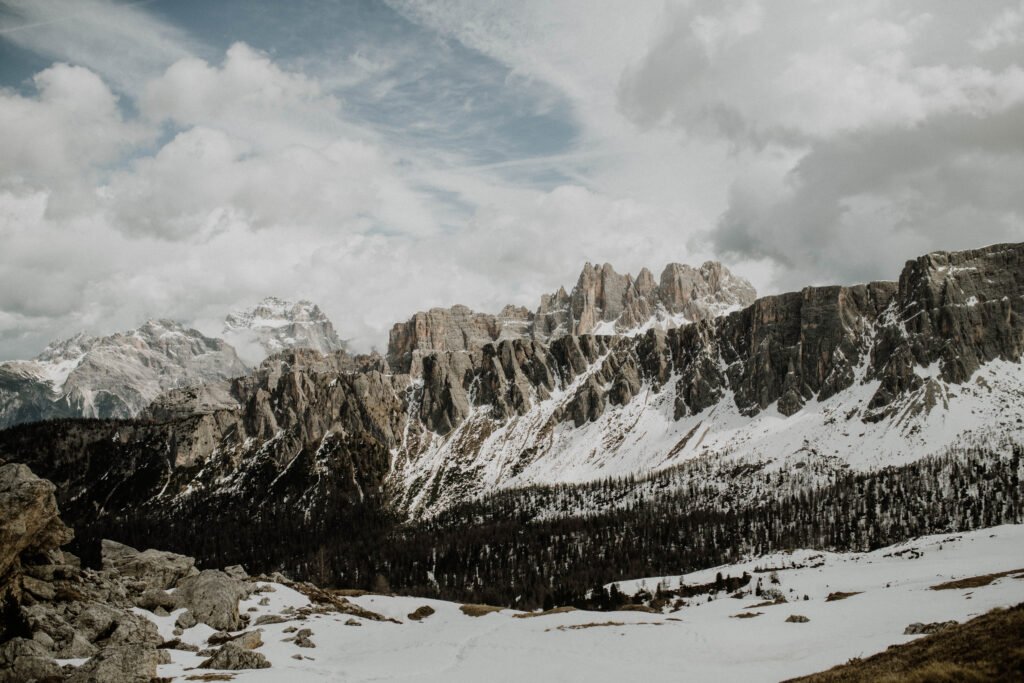
A few things worth calling out. Passo Giau was the visual highlight of the day — a high mountain pass at 2,236 meters with views across the Dolomites that stop you mid-sentence. We drove up, parked, walked the ridge for about an hour, stopped at Rifugio Giau for drinks, and drove back down.
Total additional cost for one of the most spectacular viewpoints in the Italian Alps: €10 in drinks and whatever fuel it costs to drive a beautiful mountain road. No cable car, no booking, no queue.
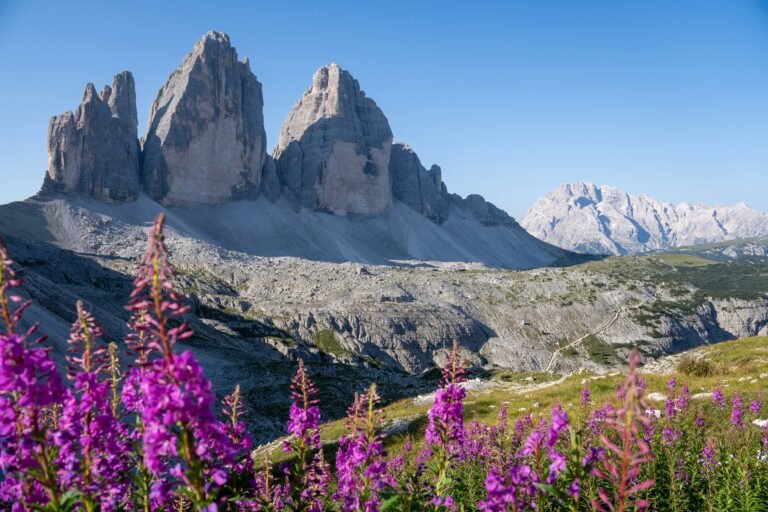
The Tre Cime access road is a paid add-on if you drive all the way to Rifugio Auronzo. For 2026, the official Auronzo parking page lists car access at €40 and says online reservation is required.
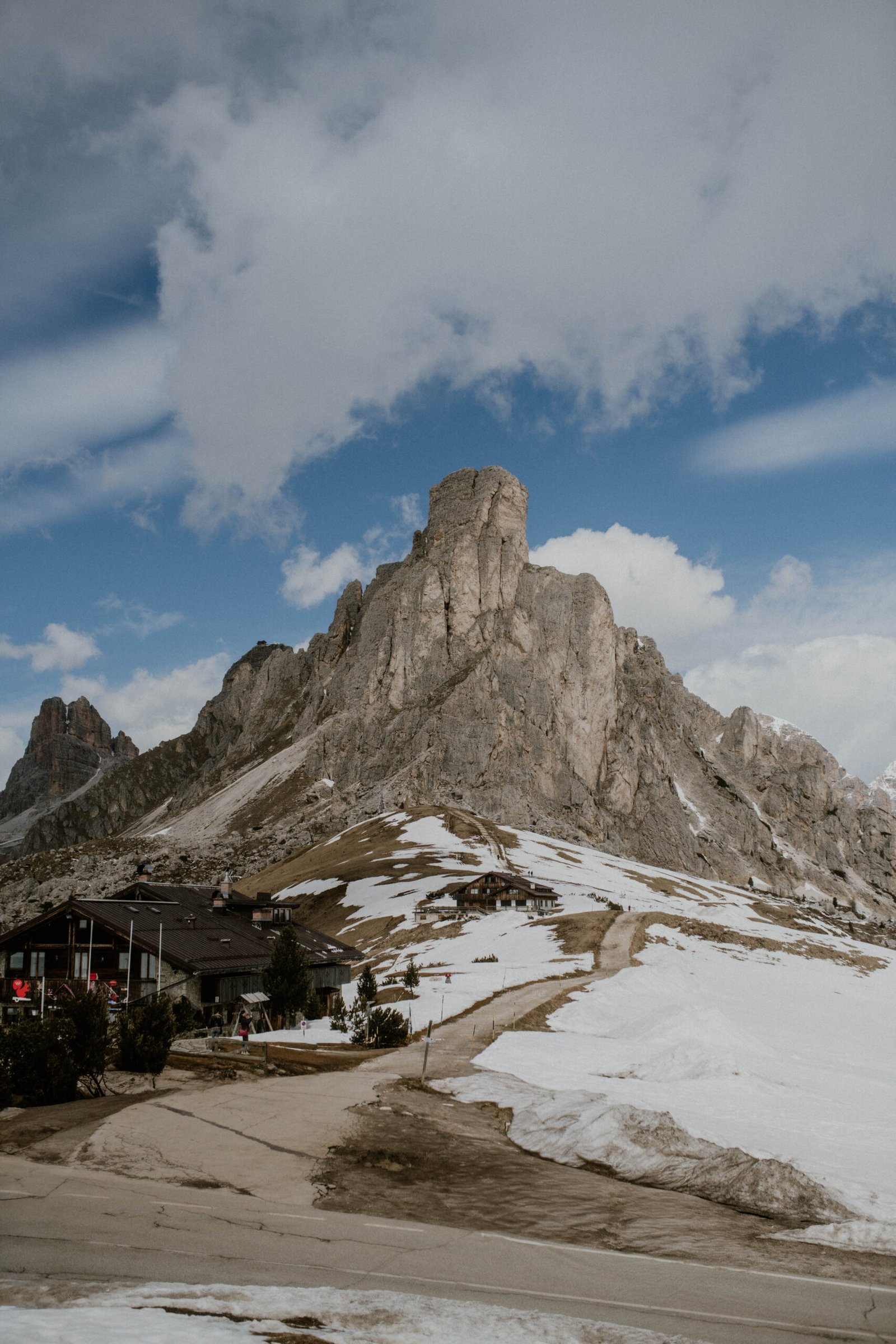
We saved it for the following morning — partly for better light, partly because the parking situation is easier when you arrive early. That’s exactly the kind of decision that keeps a Dolomites trip from feeling rushed: not everything in one day, each place on its own terms. If you’re planning the hiking side, the hiking in the Dolomites guide covers the logistics in more detail.
Accommodation Costs: What to Expect
Accommodation is where Dolomites trip costs vary the most, and where your location choice has the biggest impact. The same quality of room costs meaningfully different amounts depending on which valley you’re in. Here’s a realistic range:
| Type | Price Range | Notes |
|---|---|---|
| Budget guesthouse (Pension/Gasthof) | €60–100/night | Breakfast often included; more basic decor, family-run, excellent value if you find the right one |
| Mid-range hotel | €100–180/night | Good standard, mountain views possible, usually breakfast available as add-on or included |
| 4-star resort | €180–350+/night | Full amenities, spa, prime locations — prices spike heavily in July and August |
| Rifugio (overnight, hiking hut) | €50–90 per person half board | Dorms or basic private rooms; dinner and breakfast included; hiking-focused clientele |
Where you stay changes everything. A few honest observations by area:
Val Gardena (Ortisei, Santa Cristina, Selva): A popular base for the western Dolomites. Mid-to-high range pricing but genuinely well-connected — multiple cable cars and lifts accessible directly from the villages. If you want flexibility without a car for every excursion, this is your best bet. Hotel Angelo Engel in Ortisei is a good example of what that gets you — close to the Ortisei-Furnes gondola, with breakfast included.
Cortina d’Ampezzo: The most expensive area, full stop. It’s beautiful and it has a certain atmosphere, but you’re paying for the address as much as anything else. If budget is any consideration, Cortina is where you visit for a day, not where you stay for three nights. Hotel de la Poste, a 19th-century landmark right in the historic centre, is a good benchmark for what Cortina pricing actually looks like before you commit.
Misurina and Auronzo di Cadore: Quieter, more local, genuinely better value. You’ll have fewer direct cable car access points but it works well as a base if you’re primarily doing Tre Cime and the eastern Dolomites. Worth considering if you want to keep accommodation costs down without sacrificing location entirely.
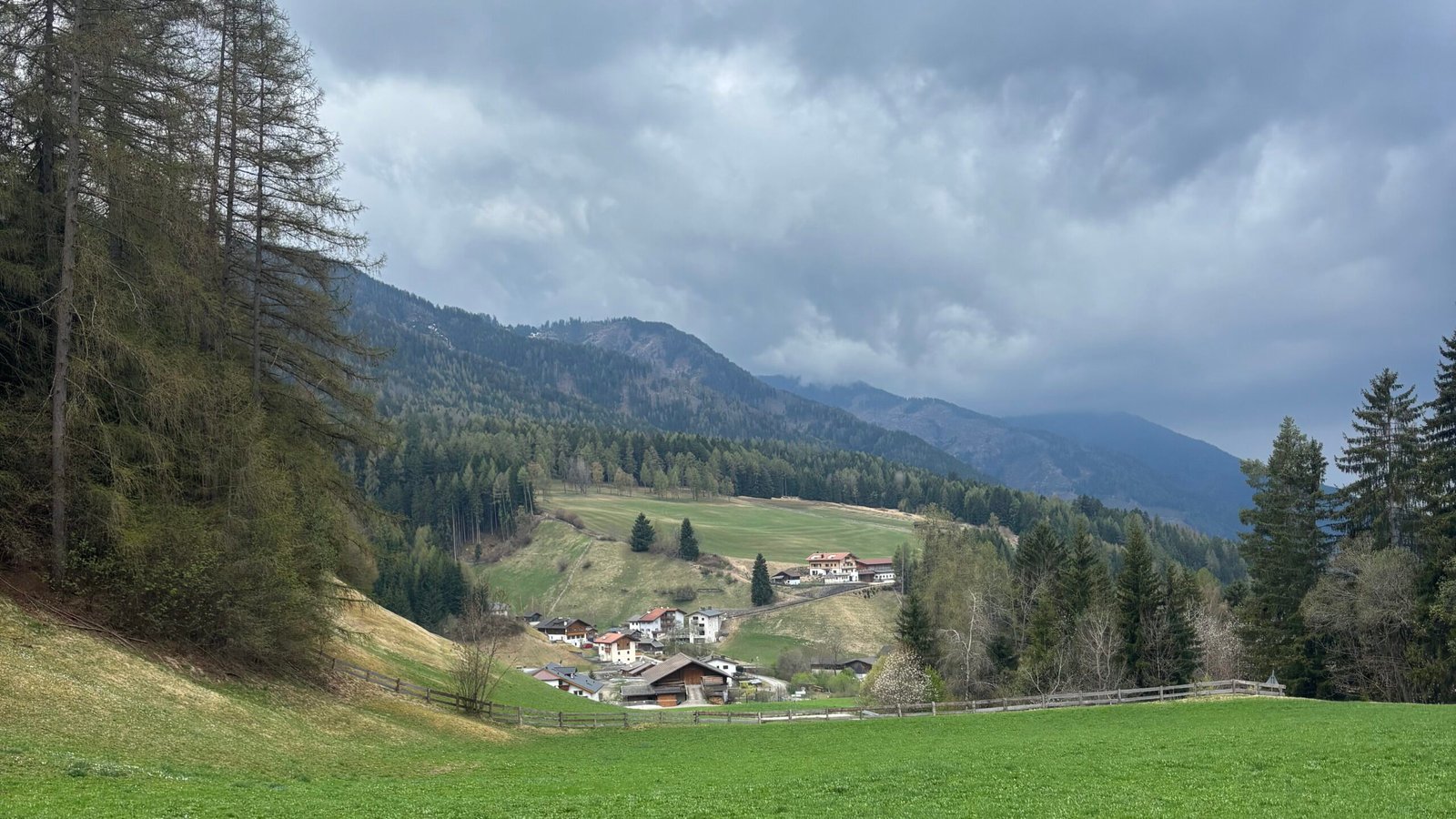
Braies Valley (near Lago di Braies): Very limited accommodation options and they book out months in advance. We stayed one night at the hotel directly at the lake — it was expensive, it was worth it for the early morning light before the day-trippers arrived, and I would not do it again as a cost-efficiency decision. Go there for the morning, then move on. If you want a more practical (and cheaper) base a few minutes from the lake, Christof Hotel in nearby Prags has a spa and pool and is rated 9.6/10, without the lakeside markup.
One practical note: breakfast-included properties are genuinely valuable in the Dolomites. A hotel breakfast isn’t just convenience — it’s one fewer meal to budget for in an area where sitting down to eat is never cheap. It’s also worth reading our full where to stay in the Dolomites guide before committing to a base, because the area is large and the difference between choosing the right and wrong valley can cost you an extra hour of driving per day.
Food: Rifugio Meals vs. Restaurant Reality
Food costs in the Dolomites are high — but they’re not uniformly high, and knowing where the value lives makes a real difference. The single best food decision you can make is eating lunch at a rifugio. Not because it’s cheap (it’s not, relative to an Italian city), but because it’s the best value relative to the experience and the alternatives.
Here’s what to expect across different eating scenarios:
| Eating Scenario | Typical Cost | Notes |
|---|---|---|
| Rifugio meal (pasta or soup + drink) | €15–25/person | Solid portions, basic menu, genuinely good. Coffee at a rifugio is €2–3 — surprisingly normal. |
| Restaurant on Cortina/Ortisei main street | €18–35/person for a main | You’re paying for location. The food is often identical to what’s one block away. |
| Restaurant one street off the main drag | €12–22/person for a main | This is where we ate dinner most nights. Same quality, lower prices, fewer tourists. |
| Supermarket / packed lunch | €10–15 for a family of 3 | SPAR and Eurospar are common in the valley towns. A packed lunch on a hiking day saves real money. |
| Coffee and pastry | €2–4 | Comparable to the rest of Italy — this is one of the few categories that doesn’t feel inflated. |
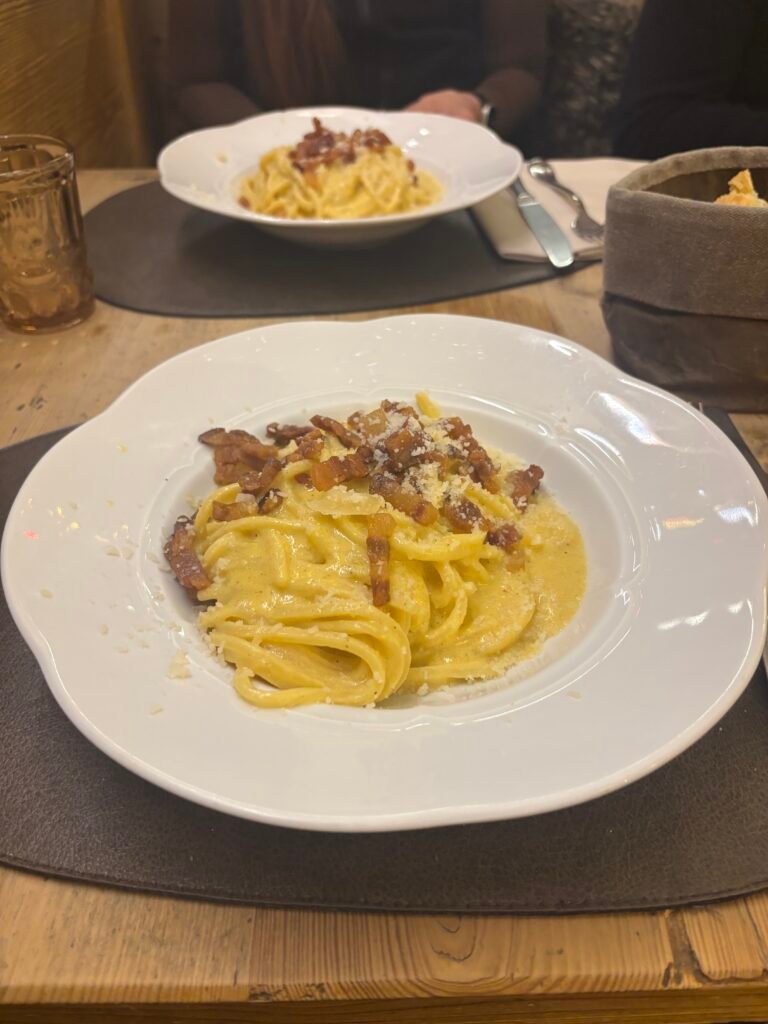
Our lunch at Il Vizietto in Cortina cost us €55 for two adults and a toddler — two mains at around €20 each, a smaller plate for our son, and two coffees at €3 each. We found it by walking one block off the main corso, which in Cortina makes an immediate difference to the price tag.
The food was genuinely good, the pace was unhurried, and nobody tried to turn our table. For a restaurant in what is arguably the most expensive village in the Dolomites, it felt like getting away with something.
At Passo Giau we stopped at Rifugio Giau for drinks before heading back down — two soft drinks, €10 total. Rifugio stops like this are technically optional but practically essential: after an hour of walking at 2,200 meters with a toddler, the wooden bench and the view across the valley is not something you skip. The cost is negligible. The reset is not.
If you’re doing a full hiking day, pack lunch from a supermarket. There’s no shame in it and it saves €30–40 for a family. Save the rifugio lunch for days when you’re already up at altitude and it makes logistical sense — carrying food up 1,000 meters of elevation when there’s a perfectly good rifugio at the top is unnecessary martyrdom.
Getting There & Getting Around
A car is not optional for the Dolomites if you want any real flexibility. There are shuttle services to the most popular spots — Lago di Braies, Tre Cime — and they work, but they come with fixed schedules, crowds, and the loss of the ability to leave when you want. With a toddler, that last point is non-negotiable for us. We always rent a car.
Car Rental
We use Discover Cars to compare rental options — it aggregates prices across multiple providers and the full-coverage insurance options are genuinely comprehensive, which matters when you’re driving mountain roads. Typical costs for Dolomites-area car rental:
- Economy/compact car: €25–40/day in shoulder season (May, June, September, October), booked 4–6 weeks in advance
- Economy/compact car: €60–100/day in peak summer (July–August)
- SUV or larger vehicle: €70–130/day — not necessary for most Dolomites itineraries
We flew into Milan and drove up — a route covered in detail in the Milan to Dolomites guide. If you prefer the scenic version of that drive, the Milan to Dolomites road trip itinerary has the full route with stops. Picking up a car in Milan and returning it in Venice (or vice versa) is a popular option and often very reasonable in price — compare one-way rentals before choosing your airport pair.
Driving Costs
- Fuel: Budget €30–50/day for typical Dolomites exploration. Mountain roads are beautiful and fuel-inefficient in roughly equal measure.
- Italian motorway tolls (Milan to Dolomites, one way): ~€15–25 depending on exact route
- Tre Cime di Lavaredo access road: for 2026, the official Auronzo parking page lists car access at €40 and requires online reservation. Worth it if you arrive early, but do not treat it as a casual last-minute stop in peak season.
- Parking at Lago di Braies: we paid €10 in late June, but peak-season access is controlled and can require advance parking or shuttle planning. Treat our number as a personal data point, not a fixed rule.
- Cable cars: single sections can sit in the €15–35+ range, but full return routes can be much higher. For example, the official Seceda summer prices list the Ortisei–Furnes–Seceda adult return at €74 for 2026, so check the exact lift you plan to use before budgeting.
Flying In
The closest major airports are Venice Marco Polo (VCE), Innsbruck (INN), and Bolzano (BZO). Venice is the most commonly used — it’s well-connected internationally and roughly 2.5 hours from most Dolomites valleys by car. Innsbruck works well if you’re coming from central Europe. Bolzano has limited flights but puts you almost directly in the South Tyrol.
Travel Insurance, eSIM & Money
For connectivity on mountain roads and high passes — where roaming bills can spike and navigation matters most — I would sort phone data before leaving home. My eSIM guide explains when an Italy eSIM is worth it, and you can compare providers such as Holafly (code MILESANDFLAVORS for a discount) if you want mobile data ready as soon as you land.
Travel insurance matters more here than it does on a simple city break because mountain driving, hiking and weather changes add real variables. Providers such as EKTA can be worth comparing, especially for medical emergencies, evacuation, trip cancellation and lost luggage. With a small child at altitude, I would not treat insurance as optional.
For spending money in Italy, a low-fee travel card such as Wise can make daily expenses easier, especially if your home bank charges foreign transaction fees. Italy is widely card-friendly now, but having some cash for parking meters, small rifugios, and market stalls is still useful. If you want more detail on travel money options, the best travel money card guide compares the main options.
Sample 3-Day Budgets
Here’s what three days in the Dolomites realistically looks like at different spending levels. These are per-person figures, assuming two adults sharing accommodation costs:
| Category | Budget | Mid-Range | Splurge |
|---|---|---|---|
| Accommodation (per night) | €60–100/night shared | €140–200/night shared | €250–400+/night shared |
| Food (per person/day) | €30–45 | €50–80 | €100+ |
| Car rental + fuel (per person/day) | €25–35 split two ways | €40–60 split two ways | €70+ split two ways |
| Activities (cable cars, tolls, entry fees) | €20–40/day | €40–70/day | €80+/day |
| Total per person (3 days) | ~€235–360 | ~€430–660 | ~€780–1,200+ |
What does each level actually look like in practice?
Budget (€235–360/person for 3 days): Staying in a pension with breakfast included, packing supermarket lunches on most days, doing one cable car instead of three, skipping Cortina entirely, parking lower and using shuttle buses for the most crowded spots. You’ll see the same mountains. You’ll miss some convenience. This is absolutely doable and many people have excellent Dolomites trips on this budget.
Mid-range (€430–660/person for 3 days): This is roughly how we travel. A good 3-star hotel with a view, one or two cable car experiences, rifugio lunches when up at altitude, dinners at real restaurants one step off the main tourist street. You’re not counting every euro but you’re not being careless either. This budget gets you the actual Dolomites experience without the top-end markup.
Splurge (€780–1,200+/person for 3 days): Staying in Cortina at a 4-star property, doing every major cable car, eating at the visible-from-the-street restaurants every night, guided hikes with local experts. The Dolomites at this budget are genuinely luxurious — if that’s your thing, it’s a spectacular place to spend money. The Dolomites & Cortina small-group tour on Viator is a good example of the full-day, multi-area experience this budget buys. The best guides can sell out weeks in advance in July and August.
How to Spend Less Without Losing Quality
These are the moves that actually made a difference for us, not the generic “bring your own snacks” advice you’ve already read:
Go in September instead of July or August. Accommodation often drops after the summer peak. The weather is often better — clearer skies, fewer afternoon thunderstorms, more reliable visibility for the views you came for. The trails are quieter. This is one of the highest-impact choices you can make on the budget. The best time to visit the Dolomites guide has the full seasonal breakdown.
Book accommodation with breakfast included. It sounds small but a hotel breakfast for two adults in the Dolomites can easily run €20–30 if you’re paying separately. Over three nights, that’s a meaningful number. Many pensions include it by default, so use that filter when comparing hotels.
Pick one cable car experience, not three. Cable cars in the Dolomites are expensive and they’re all impressive. The problem is that you start stacking them — Seceda, Sass Pordoi, Lagazuoi — and suddenly activities alone are €200+ per person for a three-day trip. Choose one that aligns with your hiking plans and do it properly, rather than doing all of them at the expense of time and money.
Stay in Ortisei instead of Cortina. The prices are lower, the village is genuinely lovely, and you have direct cable car access into Val Gardena without driving additional distances. Cortina has cachet. Ortisei has value and equivalent access to excellent terrain.
Park lower and take shuttles for the busiest spots. Lago di Braies, Tre Cime, and a few other high-demand places use seasonal access systems, shuttle routes, or controlled parking at busy times. The exact setup changes by place and year, but the principle stays the same: check access rules before you drive up, and do not assume you can always arrive late and park at the trailhead.
Pack lunch on hiking days. A SPAR run the evening before costs €10–15 for a family. A rifugio lunch on a full hiking day is €45+. The rifugio experience is worth it when the setting is spectacular and you’re already at altitude — not worth it for every single day of a three-day trip.
Book your car rental early. Use a comparison site like Discover Cars to check Milan, Venice and Verona pick-up points before choosing flights. Prices at the most popular airports can go up considerably as the date approaches, especially for July and August.
The Bottom Line
€140 for one day, for three of us, was a real number and I’d do that exact loop again without changing a thing. Lago di Braies at sunrise, lunch in Cortina, Passo Giau in the afternoon — all of it, for €140.
But I also know that if we’d added a cable car, done a guided hike, and eaten at a visible-from-the-corso restaurant instead of one block behind it, we’d have been at €280+ without trying. The Dolomites have a way of absorbing money if you’re not paying attention.
What I’d say to anyone budgeting for this trip: plan for mid-range (€150/person/day) and you’ll have a genuinely excellent time without stress. Plan for budget (€80–100/person/day) and it requires more decisions but it’s absolutely possible. Plan for the Dolomites to be free or budget-Europe cheap, and you’ll be unpleasantly surprised before the first lunch is over.
The mountains themselves cost nothing. Everything you do to access them adds up — and knowing that upfront is half the battle.
Frequently Asked Questions
How much does a trip to the Dolomites cost per day?
Budget around €80–100 per person per day if you’re being careful — guesthouse with breakfast, packed lunches, one cable car experience. A comfortable mid-range trip runs €130–180 per person per day including hotel, one rifugio lunch, one cable car, and dinners one step off the main tourist strip. Add Cortina accommodation and multiple cable cars and you can easily reach €200+ without trying. The single biggest variable is accommodation location: Cortina is usually meaningfully pricier than Canazei or parts of Val Gardena for the same comfort level.
Is the Dolomites expensive compared to the rest of Italy?
Yes — significantly. Accommodation, food, and activities all run higher than many Italian cities or coastal regions. This is a mountain resort area, and pricing reflects that. A simple lunch that might feel moderate elsewhere in Italy can become €18–25 here once you are eating at altitude or in a prime village. Factor this in from the start rather than planning on typical city prices and adjusting upward later.
Are the cable cars in the Dolomites worth the cost?
Yes — one or two are absolutely worth it. Major lifts are not casual add-ons: some shorter sections are cheaper, while full return routes can reach €70+ per adult. They earn it in experience because the views from places like Seceda or Sass Pordoi are not accessible any other way in a reasonable timeframe. The mistake is stacking three or four cable car rides in a single trip. Pick one or two that align with your hiking plans and check the current lift price before you go.
Can you visit the Dolomites on a budget?
Yes, with specific choices. Base in Canazei or a pension in Val Gardena rather than Cortina. Pack supermarket lunches on hiking days and save restaurant meals for evenings. Do one cable car instead of three. Visit in September rather than August for quieter trails and often better accommodation value. Travel with another couple to split car rental costs. Budget visitors can have a genuinely excellent trip for €80–100/person/day if those decisions are made deliberately from the start.
How much does car rental cost for the Dolomites?
Expect €25–40/day for a compact car in shoulder season (May, June, September, October), booked in advance through a comparison site like Discover Cars. Peak summer (July–August) can run much higher for the same car. Walking up to the desk at Milan or Venice airport without a booking can easily double the number you expected. Budget additionally for fuel, motorway tolls, and parking or access fees at the most popular trailheads.
Do you need 3 or 4 days in the Dolomites?
Three days is the realistic minimum for a proper first visit — enough for one base town, one or two hikes or cable car experiences, and a couple of the highlight stops like Lago di Braies or Passo Giau without rushing. Four days gives you breathing room to add a second valley or a rest morning, which matters more than it sounds once you’re actually driving mountain roads every day. Fewer than three days works as a taste — a single loop like the €140 day above — but you’ll spend more time driving in and out than actually being in the mountains. If you have the time, our 5 days in the Dolomites itinerary shows how the extra days get used.
More Guides for Your Dolomites Trip
- Not sure where to base yourself? Where to stay in the Dolomites explains which village suits your itinerary, with honest pricing by area.
- Planning the drive from Milan? Milan to Dolomites road trip gives you the full route with stops and how to pace it.
- Figuring out which hikes to do? Hiking in the Dolomites has a trail-by-trail breakdown with cable car costs and timing.
- Trying to pick the best travel window? Best time to visit the Dolomites covers seasonal pricing, crowd levels, and what changes between June and September.
- Coming from Venice? Day trip to the Dolomites from Venice shows what’s realistic in a day and how to keep costs manageable.