
Park Güell and Sagrada Família: How to Do Both Gaudí Icons in One Day
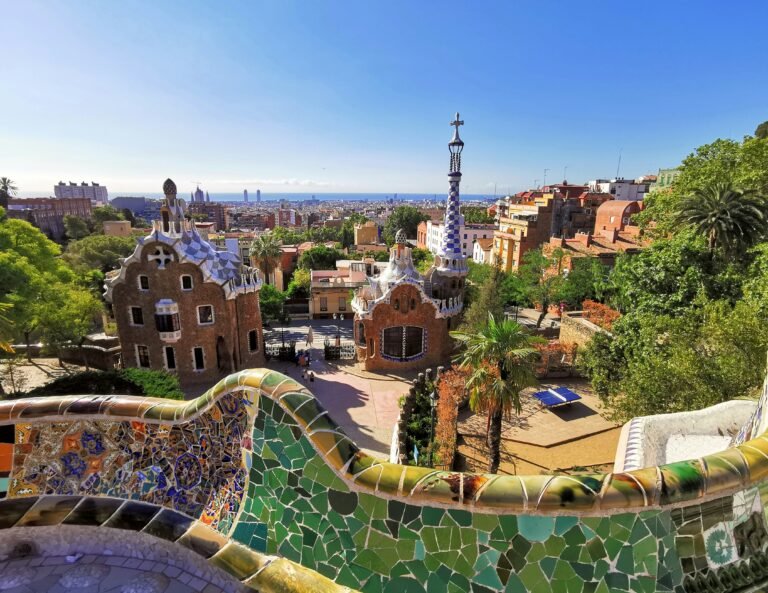
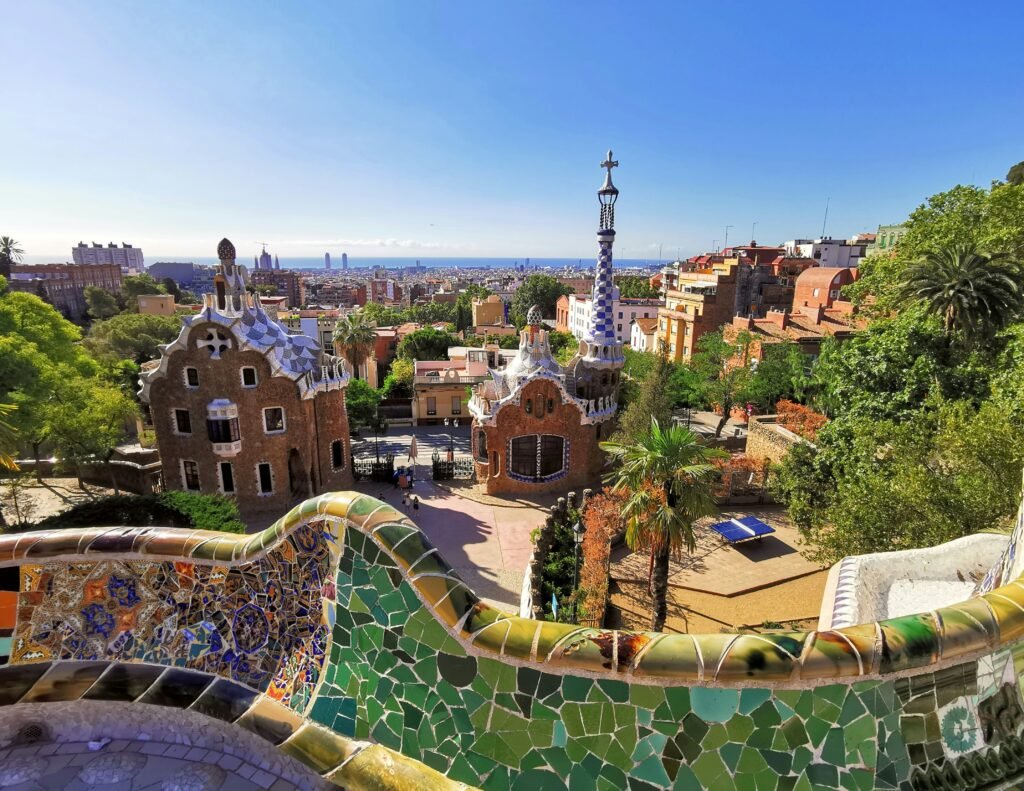
There is a specific kind of Barcelona morning I keep recommending. It starts with the earliest public Park Güell time slot you can get, before the Monumental Zone has fully turned into a photo queue. The city spreads below you all the way to the sea, the mosaic terrace still feels calm enough to actually notice the details, and the day has not yet become hot or crowded. Later that morning, you are standing inside Sagrada Família as the light comes through the east-facing stained glass — amber, gold, and every warm color between them — and you understand why this building took more than 140 years and why it still is not finished.
Quick answer: Yes, you can do both in one day, but plan around the current public ticket times. At the time of this update, Park Güell’s public tourist time bands begin at 9:30 AM, so the cleanest plan is the earliest Park Güell slot, then a taxi to Sagrada Família for a late-morning entry around 11:30 AM or noon. If the golden stained-glass effect inside Sagrada Família is your absolute priority, reverse the order and visit Sagrada Família first.
Quick Summary
| Time needed | 5–6 hours for both sites comfortably |
| Right order | Earliest public Park Güell slot, then Sagrada Família late morning |
| Must-book | Both sites use timed entry — book early and check current official time bands |
| Best stained glass | Nativity facade (east side) in the morning; Passion facade (west side) in the afternoon |
Affiliate disclosure: This post contains affiliate links. If you book or buy something through these links, I may earn a small commission at no extra cost to you. I genuinely use and recommend everything listed here. Learn more.
Lili’s Picks
The ticket I’d book
The tour I would shortlist is the combined Park Güell and Sagrada Família guided tour on Viator. Best if you want: one coordinated Gaudí morning without juggling two separate timed-ticket systems yourself. Why I like using Viator here: it gives you a little more comfort and security around the logistics. When Reserve Now & Pay Later or free cancellation is available, you can hold the plan, check the terms before committing, and avoid spending your Barcelona morning comparing tickets on your phone. Not ideal if: you want to wander Park Güell slowly, choose every time slot yourself, or add a Sagrada Família tower at your own pace. Before booking: compare the Viator price with the official sites, then check the current start time, meeting point, route between the two sites, group size, tower access, inclusions, Reserve Now & Pay Later availability, and the cancellation window for your date.
This is where I’d stay
The hotel I would shortlist is Majestic Hotel & Spa Barcelona on Passeig de Gràcia. Best if you want: a polished Eixample base between Casa Batlló and Casa Milà, with an easy metro ride to Sagrada Família and a calmer nighttime feel than the Gothic Quarter. Why it works: a Gaudí-focused Barcelona trip becomes much easier when your hotel is already on the architecture route, not tucked into a nightlife-heavy area you have to escape each morning. Not ideal if: you want the cheapest possible stay or you prefer the old-city atmosphere of the Gothic Quarter. Before booking: compare the total price, room type, breakfast terms, cancellation policy, extra fees, and recent guest comments for your exact dates.
Contents
- Quick Summary
- Can you visit both Gaudí sites in one day?
- The earliest public Park Güell slot
- Getting from Park Güell to Sagrada Família
- Sagrada Família: why the morning light matters
- Nativity tower or Passion tower?
- The full day plan
- Lili’s picks
- Frequently asked questions
Can you visit both Gaudí sites in one day?
Yes — but only if you go in the right order at the right time. A lot of people visit both sites and come away feeling like they rushed through both. What actually works is treating them as one morning, not two separate outings.
Park Güell first, Sagrada Família second is the easiest route if you can get the earliest public Park Güell ticket. The reason is practical: Park Güell feels noticeably better before the late-morning crowds build, especially around the dragon staircase and the mosaic bench. Sagrada Família, by contrast, can still work late morning if you choose your slot carefully. The difference is which direction the light is hitting the stained glass: the Nativity side is warmer earlier in the day, while the Passion side becomes more dramatic later.
The two sites are about 3 km apart. If you book the earliest public Park Güell slot and do not linger too long on the terrace, you can reach Sagrada Família for a late-morning entry without turning the morning into a sprint.
The earliest public Park Güell slot
Park Güell is not a typical park. Gaudí designed it in the early 1900s as a garden city — a private residential development that never became what he planned. Only two of the intended 60 houses were built. What remains is the infrastructure he laid out: tiled viaducts, stone columns carved to look like they’re still part of the hillside, and the Monumental Zone at the top with its dragon staircase and sweeping mosaic terrace.
Park Güell is managed with timed entry for visitors, and the famous Gaudí section is the part you need to plan around. At the time of this update, public tourist time bands begin at 9:30 AM; the earlier morning access period is reserved for local residents and eligible passes. Buy your ticket as soon as your travel dates are firm, and check the official time bands before building your whole Barcelona morning around this plan.
What you’ll see inside the ticketed Gaudí area:
- The dragon staircase (El Drac) — the mosaic salamander at the base of the main staircase, arguably the most photographed symbol of Barcelona after Sagrada Família itself. Go as early as the public ticket system allows and you have a much better chance of seeing it before the photo queue becomes the whole experience.
- The Hypostyle Hall — 86 Doric columns supporting the terrace above. Cool and cavernous even in summer heat. Gaudí’s interpretation of a Greek temple, with broken tile mosaic covering the ceiling.
- The main terrace (la plaça de la Natura) — the wavy mosaic bench designed by Gaudí’s collaborator Josep Maria Jujol, wrapping the entire upper terrace. The panoramic view of Barcelona from here, from the Sagrada Família spires in the middle distance to the Mediterranean at the edge of everything, is the reason you came.
After the Monumental Zone, spend the remaining time walking the upper park paths. They wind through forested areas and the stone viaducts that most visitors skip entirely — and the crowds disappear almost immediately once you leave the main terrace.
The entry-window rule: Park Güell tickets are tied to a scheduled entry time. The official site currently says you can enter up to 30 minutes after your assigned time, but once inside you can stay as long as you like. Do not treat that grace period as part of the plan. Arrive at the beginning of your slot, because the first minutes are when the terrace and staircase feel least chaotic.
Getting from Park Güell to Sagrada Família
The two sites are about 3 km apart. By taxi or rideshare, the journey takes 20–25 minutes. By public transport — bus 116 to Alfons X metro station, then the L2 line to Sagrada Família — you’re looking at 35–45 minutes including the walk at each end.
Take the taxi if the morning schedule matters. Not because the metro is impossible, but because you’ve just spent time walking a park on a hillside and you’re about to spend another 2–3 hours inside a basilica. The extra cost is often worth the energy and time you save. Taxis and rideshares usually pick up around Carrer d’Olot, just below the main Park Güell entrance on the south side.
Sagrada Família: why the morning light matters
Sagrada Família has two facades facing opposite directions, and they behave completely differently depending on the time of day. This is not a minor detail. It is the reason the timing of your Park Güell slot matters: if you leave Sagrada Família too late, the whole stained-glass mood changes.
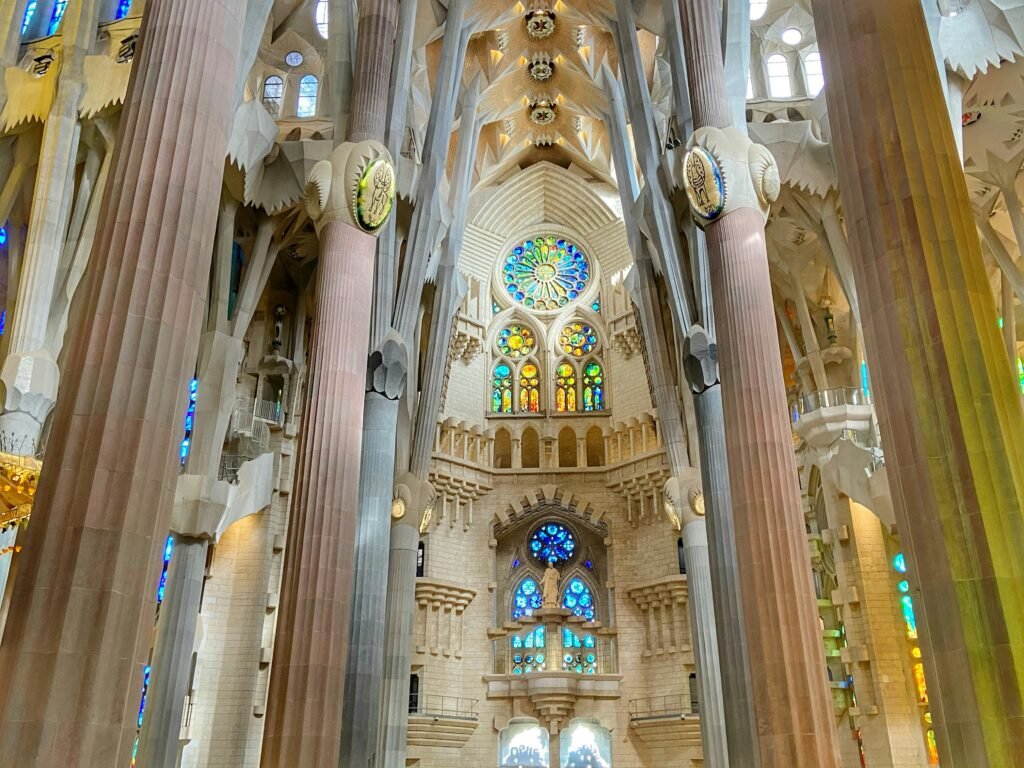
The Nativity facade faces east. Morning light comes through the stained glass windows on that side in warm amber, gold, and deep red, and the effect turns the interior into something closer to a forest at sunrise than a cathedral at prayer. This is the version of Sagrada Família you’ve seen in photographs. It is strongest earlier in the morning, but late morning can still give you the warm side of the basilica before the day shifts toward the Passion facade.
The Passion facade faces west. Afternoon light through those windows is cooler — blues, purples, the kind of light that feels like late evening even at 3pm. It is equally dramatic, but different in a way that is hard to describe unless you have seen both on the same day.
The interior itself is extraordinary regardless of the time of day. The columns rise 45 meters and branch overhead like stone trees. The vaulted ceiling sits at 60 meters in the nave. Everything Gaudí designed was calculated to do something specific: the columns are angled to distribute load without flying buttresses, the ceiling perforations allow controlled indirect light, and the window arrangement means that different parts of the building glow at different hours. You are standing inside a building that is still being built, still being figured out, and has been in continuous construction since 1882.
A few practical things to know before you go:
- Timed entry is mandatory — book your ticket in advance. Popular slots can sell out, especially in peak season. General admission without a tower is usually the simpler option; tower access is a separate choice you make when buying your ticket.
- Tower tickets can also sell out. If you are visiting in the morning, the Nativity tower is usually the better fit for this route. Afternoon visitors may get more from the Passion tower. See the section below for the difference.
- Audio guide is included with most tickets via the official app. It covers the construction history, the symbolism of each facade, and what Gaudí actually intended — worth using rather than wandering without context.
- Photography is allowed throughout the interior. The stained glass looks different in a camera than with your eyes — both are worth experiencing, but give yourself time to put the phone down and just look.
If you want to go deeper on tickets, timing, and what to actually skip, the Sagrada Família skip-the-line guide covers the booking process in detail.
Nativity tower or Passion tower?
Both towers offer elevated views over Barcelona and close-up access to Gaudí’s sculptural work — but they are not interchangeable, and the right choice depends entirely on when you are visiting.
The Nativity tower (east side) is the tower Gaudí completed himself — or the closest to what he originally intended. The sculptures on the Nativity facade depict the life of Christ from the Annunciation through the birth: dense, organic forms that look as if they grew out of the stone rather than were carved into it. Gaudí worked on these details for decades. From the top of the Nativity tower, you look west across Eixample toward the Tibidabo mountain and the city center.
The Passion tower (west side) was completed by sculptor Josep Subirachs in the 1980s and 90s in a deliberately angular, austere style. The sculptures represent the Passion and death of Christ, and Subirachs made them intentionally brutal — the contrast with the organic, almost joyful Nativity facade is the point. Some visitors find it jarring; others find it the more emotionally honest part of the building. From the top, you look east toward the sea.
For a morning visit, book the Nativity tower. The east-facing position works with the light, the views toward the Mediterranean are better from that side at that hour, and the sculpture is closer to Gaudí’s original vision. If you are visiting in the afternoon and can only climb one tower, the Passion side gives you the sea view with the afternoon sun behind you.
The full day plan
This is what the morning looks like when you do it in the right order:
- 9:30 AM — Enter Park Güell on the earliest public tourist slot currently listed by the official ticket system. Start with the dragon staircase, Hypostyle Hall and mosaic terrace, then walk the upper park paths if you want a calmer finish.
- 10:45–11:00 AM — Walk back down to the main entrance on Carrer d’Olot and take a taxi to Sagrada Família. Allow about 20–30 minutes depending on traffic.
- 11:30 AM–12:00 PM — Arrive at Sagrada Família. This is still a workable late-morning window for the Nativity side, especially if the day is clear. Allow at least 2 hours inside the building; closer to 3 hours if you are climbing a tower.
- 1:30–2:00 PM — Exit and find lunch in Eixample. Carrer de Provença and the surrounding blocks have tapas bars and cafes on every corner.
- Afternoon (optional) — Gaudí’s two major Eixample buildings are a 15-minute walk along Passeig de Gràcia: Casa Batlló and Casa Milà (La Pedrera). Both are worth the exterior view even if you do not go inside, and both have the best light in the late afternoon.
This is a genuinely full morning. Don’t try to add the Gothic Quarter or the beach to the same day. You’ll be tired by 1pm in the best possible way — the kind of tired that comes from having actually seen something.
Frequently asked questions
Do you need to book Park Güell tickets in advance?
Yes. The famous Gaudí section of Park Güell requires a timed ticket, and popular time bands can sell out, especially in peak season. Buy tickets through the official Park Güell website as early as possible once your travel dates are confirmed, and check the current public time bands before planning the rest of your Barcelona morning around it.
How much time do you need at each site?
Park Güell: plan around 60–90 minutes if you want the main Gaudí area plus a short walk through the upper paths. Your ticket is tied to an entry time, but once inside you do not need to rush through the park. Sagrada Família: minimum 2 hours for the interior without a tower, closer to 3 hours if you are climbing. Plan for 5–6 hours total for both sites.
What time is best for the Sagrada Família stained glass?
Morning is best for the warm light on the Nativity facade. The Nativity facade faces east, so earlier light comes through those windows in amber, gold, and warm red. After noon the light shifts toward the Passion facade on the west side, which gives a cooler blue and purple effect — equally dramatic, but different. If the golden stained-glass interior is the main reason you are going, consider visiting Sagrada Família first instead of forcing Park Güell first.
Should you climb a tower at Sagrada Família?
Worth doing if you have the time and you are comfortable with stairs and heights. Tower access is limited and can sell out, so choose it when buying your main ticket if it matters to you. For a morning visit, the Nativity tower is usually the better fit for this route; afternoon visitors may get more from the Passion tower. Check current access rules before booking, because tower access can change with weather, maintenance and capacity.
Is a combined Gaudí tour worth it for first-time visitors?
Yes, for many first-timers. The timing between the two sites is the hardest part of this day, and a combined tour can remove a lot of the planning friction. A good guide also gives context that turns both sites from impressive things to look at into comprehensible works of art. If you want to understand Gaudí rather than just visit his buildings, a guided combined tour can be the most efficient way to do that in a limited amount of time.
More Barcelona guides
Planning more of your Barcelona trip? These guides cover the rest: