Barcelona in One Day: Sagrada Família, Park Güell & Old Town Itinerary
One day in Barcelona is enough to see the things that stay with you — if the order is right and the ticketed Gaudí stops are handled in advance. Park Güell and Sagrada Família both use timed entry, popular morning slots can disappear early in peak season, and both reward an early start before the tour groups arrive. The Old Town — Barri Gòtic and El Born — fills the afternoon without a ticket, and Barceloneta gives the evening somewhere to land. This is the itinerary I would use for a first Barcelona day.
In this article
Quick answer: Park Güell first thing in the morning, Sagrada Família by 11:00 AM, lunch in El Born, the Old Town on foot in the afternoon, and Barceloneta for the evening. The geography flows north to south, so there is no backtracking. Sort Park Güell and Sagrada Família tickets before you arrive; everything else in this itinerary is flexible and costs nothing to enter.
Affiliate disclosure: Some links in this post are affiliate links. If you book through them, I may earn a small commission at no extra cost to you. I only recommend things I would genuinely consider for the same trip. Learn more.
Lili’s Picks
This is what I’d book
If I only had one day in Barcelona, the booking I would protect first is the Park Güell & Sagrada Família Skip-the-Line Tour on Viator. It keeps the two timed-entry Gaudí stops in one clean morning instead of turning the day into ticket juggling.
- Best if you want: the two biggest Barcelona sights handled in the least messy order.
- Why it works: Park Güell and Sagrada Família sit north of the Old Town, so pairing them first keeps the rest of the day moving naturally toward El Born and Barceloneta.
- Not ideal if: you prefer fully independent sightseeing or want to spend several slow hours inside each Gaudí site.
- Before booking: check the exact start time, what is included, whether tower access is separate, the meeting point, cancellation window, and whether your selected listing shows Reserve Now & Pay Later.
If you want more context in the afternoon, the Barcelona Old Town & Gothic Quarter Tour on Viator is the add-on I would consider. It is not essential, but it can make the medieval lanes feel less like a pretty maze and more like a city with layers.
Why I like using Viator here: if your selected listing shows free cancellation or Reserve Now & Pay Later, you can hold the plan while you compare timing, weather, and the rest of your Barcelona route.
This is where I’d stay
The hotel I would shortlist for this itinerary is Hotel Casa Sagnier on Booking.com. It sits on Rambla de Catalunya in Eixample, between Sagrada Família and the Old Town, which is exactly the kind of base that makes a one-day Barcelona route feel smoother.
- Best if you want: a polished central base without sleeping directly on Las Ramblas.
- Why it works: Eixample keeps Sagrada Família, Passeig de Gràcia, Park Güell connections, and the Old Town within a practical route.
- Not ideal if: you want the cheapest possible Barcelona stay or a beach-first location.
- Before booking: compare total price with taxes, cancellation terms, room type, breakfast, and recent guest comments for your exact dates.
The Day at a Glance
| Time | Stop | Notes |
|---|---|---|
| 9:00 AM | Park Güell | Early timed entry; allow about 90 minutes |
| 11:00 AM–1:00 PM | Sagrada Família | Guided visit or timed entry; allow about 90 minutes inside |
| 1:00 PM–2:00 PM | Lunch in El Born | About 15 minutes by metro from Sagrada Família |
| 2:00 PM–5:00 PM | Barri Gòtic & El Born | On foot; no ticket needed for the neighborhood walk |
| 5:00 PM+ | Barceloneta beach & dinner | About a 10-minute walk from the Old Town |
Morning: Park Güell
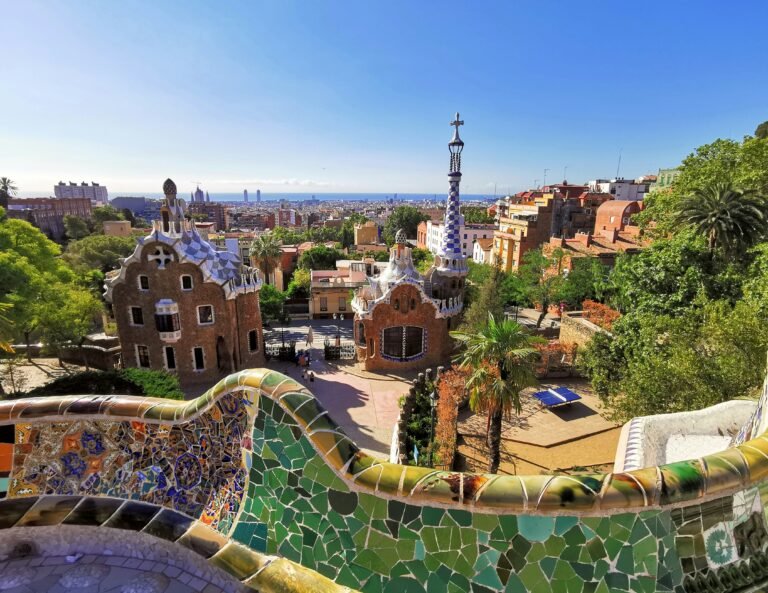
Choose an early timed entry if possible. Park Güell usually feels calmer first thing in the morning, and the difference in crowd density can be dramatic. The early slot gives you the Monumental Zone — Gaudí’s mosaic terrace, the dragon staircase, the hypostyle hall — without the bodies packed three deep in every photograph.
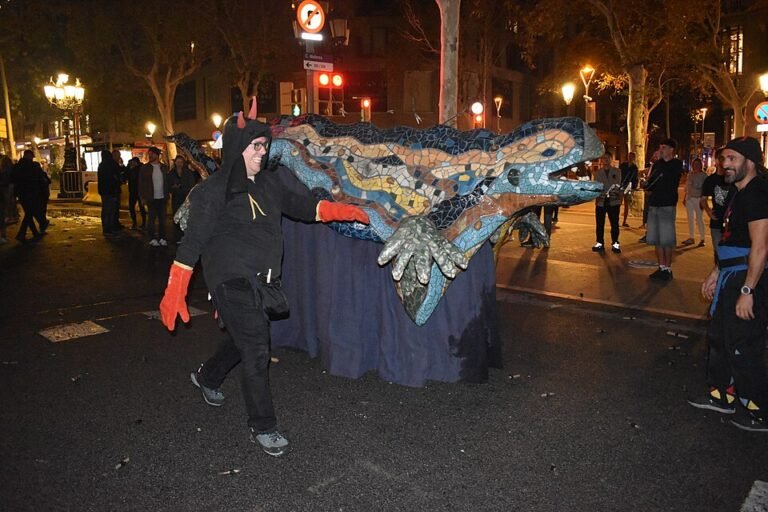
The Monumental Zone is the ticketed section, and it’s the reason most visitors come. The mosaic serpentine bench along the main terrace is the classic Barcelona skyline shot: the bench curves around the edge of the hill, the city and the sea spread out below, and on a clear morning the light is extraordinary. Below the terrace, the hypostyle hall — 86 Doric columns supporting the terrace floor above — is one of the stranger architectural spaces in the city. Gaudí designed it as a covered market, though it was never used as one.
The rest of the park — the viaducts, the wooded paths, the hillside gardens — is free to explore without a ticket. If you have time after the Monumental Zone, the Carretera del Carmel viewpoint on the upper part of the hill gives a different angle on the city and is almost always quieter than the main terrace.
Budget 90 minutes for Park Güell, then head south toward Sagrada Família. It’s about a 20-minute walk through Gràcia or a short metro ride.
Late Morning: Sagrada Família
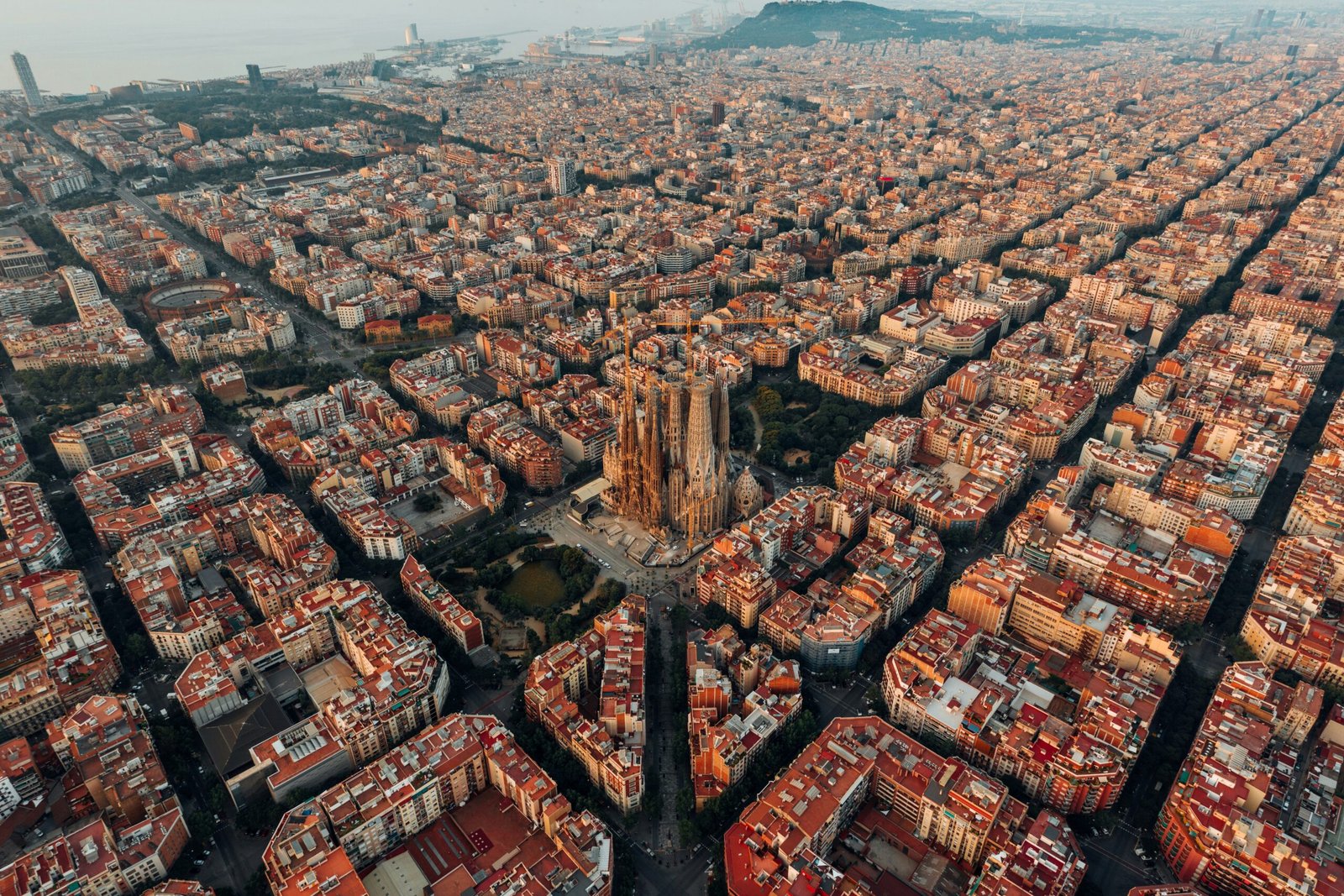
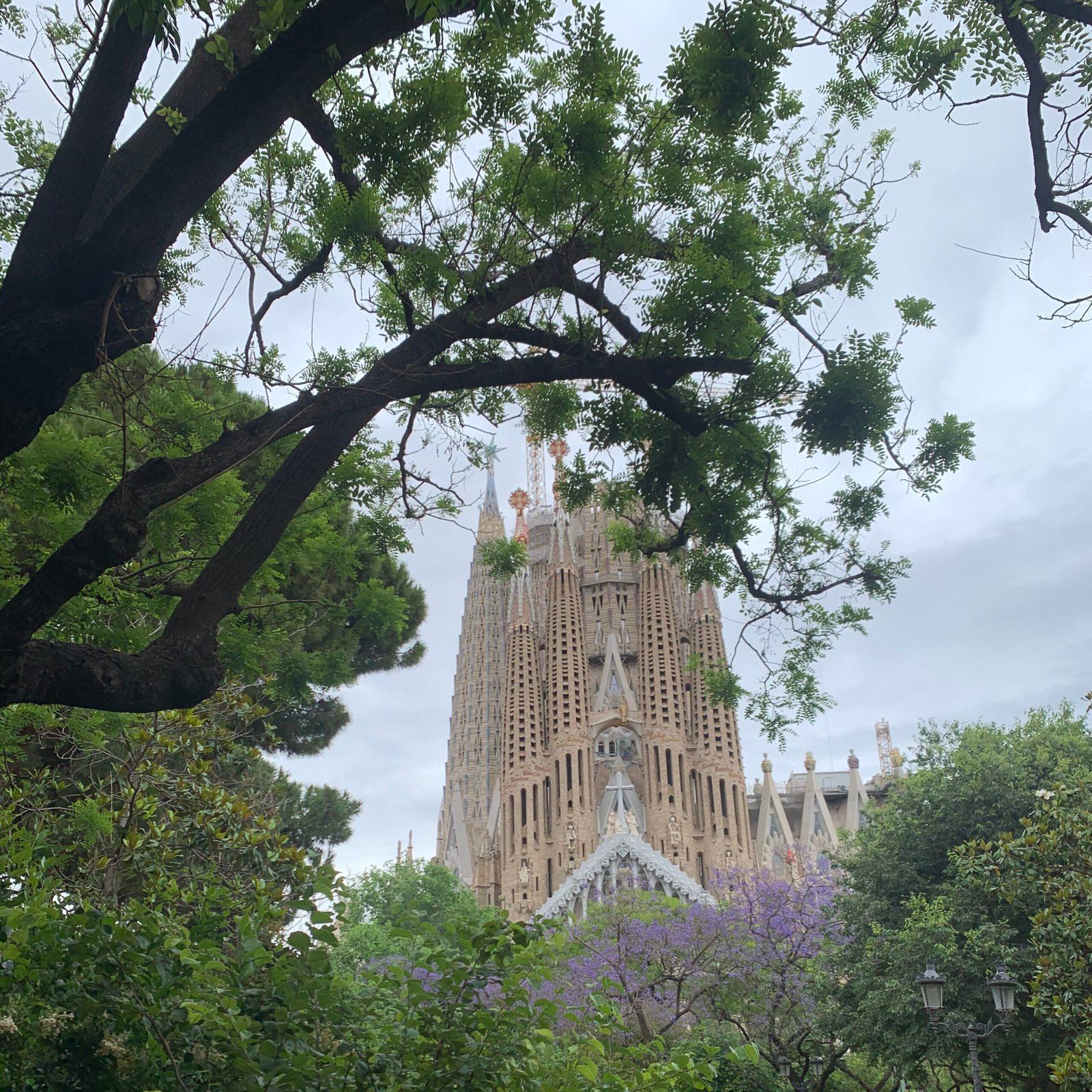
Sagrada Família has been under construction since 1882. Antoni Gaudí took over the project in 1883 and spent the last 43 years of his life on it — he’s buried in the crypt below. The basilica is still unfinished, with the central tower of Jesus Christ and several surrounding spires still under construction, but the interior is complete and has been open for worship since 2010. Major construction work is still ongoing, so check the official site before your visit if tower access or construction progress matters to you.
The two main facades tell completely different stories. The Nativity facade on the east side — the one Gaudí himself oversaw — is dense with carved stone: plants, animals, angels, and scenes from the birth of Christ layered across the surface in a way that takes time to read. The Passion facade on the west, designed by Josep Maria Subirachs after Gaudí’s death, is angular and deliberately stripped down — bone-white limestone, cubic figures, a deliberate contrast to the organic richness of the other side. Most visitors have a strong preference for one.
The interior is the revelation. Gaudí designed the columns as a stone forest — branching as they rise toward the ceiling, diffusing the load, filtering the light through a canopy of color from the stained glass. The effect at midday, when the eastern windows are catching direct sun, is one of the most genuinely beautiful interior spaces in Europe. Budget 90 minutes for the interior with a guide.
Tower access gives you the view from the Nativity or Passion tower — a separate ticket, booked at the same time as entry. Worth adding if heights and architectural views are a priority; the look down at the rooftop forest of finials and spires is unlike anything else in the city. Book the first available tower slot after your guided tour time.
Afternoon: Old Town — Barri Gòtic & El Born
From Sagrada Família, take the metro south (L2 from Sagrada Família station to Jaume I, about 15 minutes) and surface in El Born. Eat here — El Born has the best lunch density in the Old Town without the full tourist pricing of the Gothic Quarter, and the neighborhood itself is worth an hour of wandering before you cross into Barri Gòtic.
El Born. The neighborhood sits between the Gothic Quarter and the beach, and it has a different character from both: independent shops in medieval arcades, the iron-and-glass Mercat de Santa Caterina (the local alternative to La Boqueria, and far less crowded), and the Born Cultural Center built over the excavated ruins of the 1714 siege of Barcelona. The Picasso Museum is here if that’s on your list — allow 90 minutes and book online.
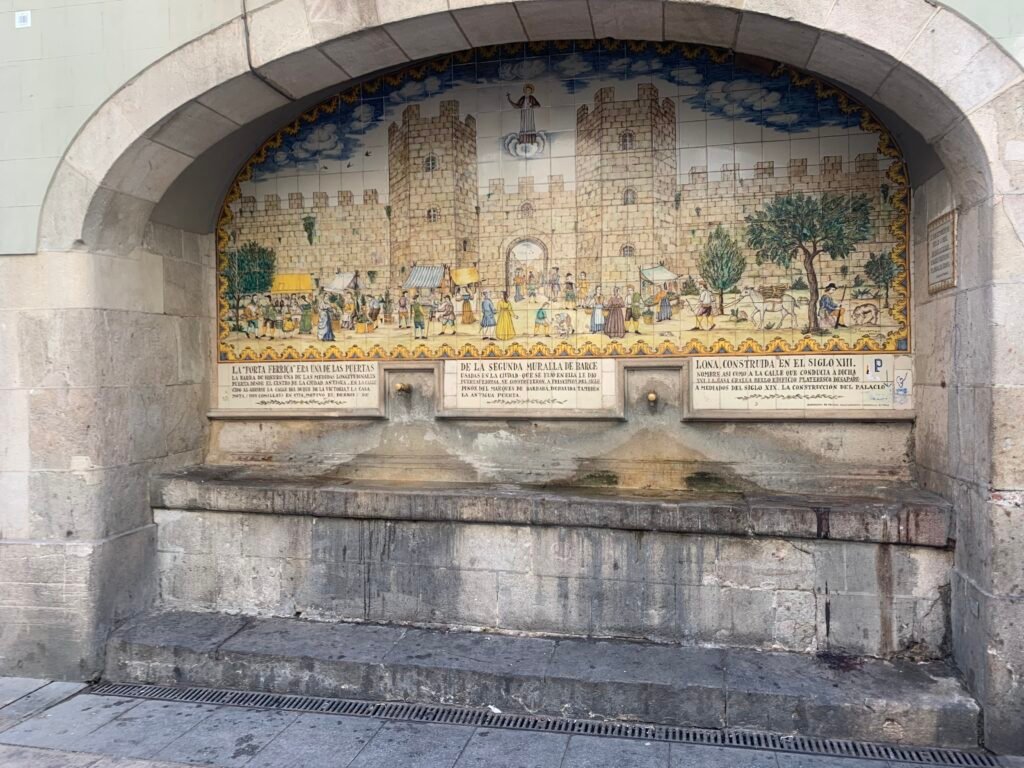
Barri Gòtic. Cross into the Gothic Quarter through the old Roman walls and walk without a specific plan — the lanes are too narrow and too tangled for navigation to feel natural anyway. The Cathedral de Barcelona is the anchor: sometimes free during limited worship or visiting windows, with paid cultural-visit access at other times, with a quiet cloister where geese have been kept since the 14th century for reasons that remain disputed. The Plaça Reial is a five-minute walk south — a grand colonnaded square with bars and restaurants under the arches, most of which are fine for a drink and overpriced for a meal.
La Boqueria is on Las Ramblas at the edge of the Gothic Quarter. It’s worth a ten-minute walk through if you haven’t been — the produce stalls and the fish displays are genuine and impressive — but the food stalls along the central aisle are tourist-trap pricing and the crowds by mid-afternoon are significant. Walk through, don’t eat.
Evening: Barceloneta & Dinner
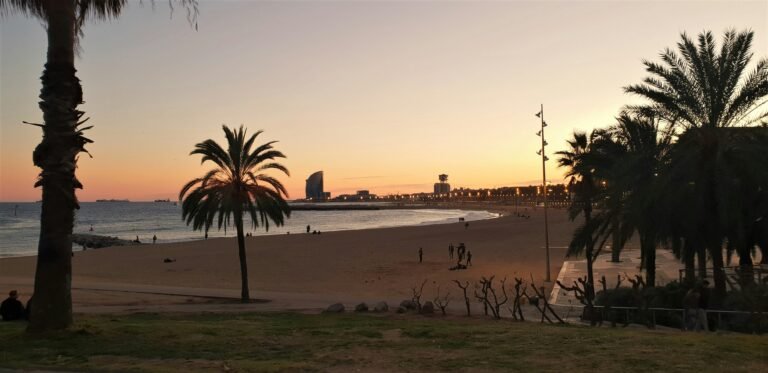
Barceloneta is a ten-minute walk from the southern edge of the Gothic Quarter, past the Columbus monument and along the port. The neighborhood was built in the 18th century to house workers displaced by the construction of the Ciutadella fortress, and it retains a grid of narrow streets that feels separate from both the Old Town and the tourist beach strip immediately behind it.
The beach itself is wide and crowded in summer — arrive after 6:00 PM when the midday density has thinned. The Mediterranean light in the hour before sunset is genuinely beautiful from the waterfront. Walk south along the Passeig Marítim if the energy is still there, or find a seat at one of the chiringuitos along the beach for a drink.
For dinner, stay in Barceloneta rather than going back to the Gothic Quarter. The side streets behind the main beach drag have seafood restaurants at honest prices — fideuà (the noodle paella), gambas al ajillo, and grilled fish landed from the nearby port. Eat later than you would at home: Barcelona’s dinner hour is often 9:00 PM or later, and restaurants before 8:30 PM can feel either quiet or tourist-heavy.
Planning Tips
- Sort Park Güell and Sagrada Família first. These are the two timed-entry decisions that can shape the whole day, especially in July and August. The combined Viator tour handles both with one booking; if you prefer to book direct, check availability as soon as your travel dates are confirmed.
- Getting around. Public transport is the easiest way to cover the north-to-south route of this itinerary. Check the current TMB ticket options before you travel; a multi-ride card can make sense if you plan to use the metro several times. Park Güell is usually reached by bus or by walking uphill from a nearby metro stop, while Sagrada Família has its own L2/L5 metro stop.
- The heat. Barcelona in July and August is genuinely hot by midday. Park Güell’s terrace is fully exposed; Sagrada Família’s interior is cool. Plan your outdoor walking for morning and late afternoon. The Old Town lanes are shaded and tolerable even around 3:00 PM.
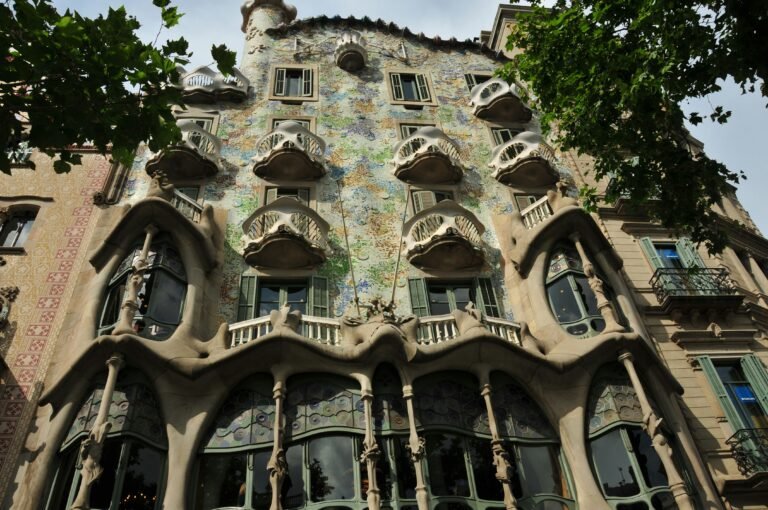
- What to leave out. Casa Batlló and La Pedrera are a full afternoon on their own and deserve a separate day — see the Gaudí trail guide for how to structure that day. The Picasso Museum is 90 minutes and competes with the Old Town walk for afternoon time; choose one or the other.
- La Boqueria. If the market is a priority, it’s significantly better before 10:00 AM — the stalls are fully stocked, the tourists haven’t arrived, and you can actually see the fish. By mid-afternoon it’s a crowded corridor. If you want to experience it properly, go early and work backwards to Park Güell.
More from Barcelona
This itinerary covers the Gaudí highlights and the Old Town — the two things most first-timers come to Barcelona for. For a deeper look at the Gaudí buildings specifically, the Park Güell & Sagrada Família guide covers both sites in detail: ticket tiers, what’s included in each tower, and the difference between the two facades of Sagrada Família that most visitors don’t notice until they’re already inside.
If you have a second day, the Casa Batlló and the complete Gaudí trail takes you along Passeig de Gràcia to the Block of Discord, La Pedrera, and the other buildings Gaudí left across the city — a completely different day from this one and equally worth your time.
Frequently Asked Questions
Is one day enough to see Barcelona?
One day is enough to see the highlights — Park Güell, Sagrada Família, and the Old Town — if the itinerary is efficient. What one day doesn’t cover: the Passeig de Gràcia Gaudí buildings (Casa Batlló, La Pedrera), Montjuïc, the Picasso Museum in any depth, and the neighborhoods north of Eixample. If those are priorities, plan for two days minimum.
Do you need to book Sagrada Família tickets in advance?
For June through September, I would sort this before you arrive. Same-day availability can be limited in peak season, and tower access is a separate add-on that may not be available for every time slot. Check the official site or your chosen tour listing as soon as your dates are set.
Do you need to book Park Güell tickets in advance?
Yes — the Monumental Zone of Park Güell (the mosaic terrace, dragon staircase, and hypostyle hall) requires a timed-entry ticket that must be booked in advance. Popular morning slots in summer can disappear early. The rest of the park — the hillside paths, gardens, and upper viewpoints — is free and does not require a ticket.
What is the best order to visit Barcelona in one day?
Park Güell first (around 9:00 AM), then Sagrada Família (around 11:00 AM), then lunch and the afternoon in the Old Town, then Barceloneta in the evening. This order follows the geography north to south — Park Güell and Sagrada Família are both in the northern part of the city, the Old Town is in the south near the port, and Barceloneta is on the waterfront at the southern edge of the Old Town. No backtracking required.
What is the difference between Barri Gòtic and El Born?
Both are part of Barcelona’s Old Town (Ciutat Vella), but they have different characters. Barri Gòtic — the Gothic Quarter — is the medieval core of the city, with Roman ruins under some of the streets, the Cathedral de Barcelona, and the tightest and most labyrinthine lanes. El Born is immediately east of the Gothic Quarter, slightly more open, and has more independent shops, better restaurants at reasonable prices, and the Picasso Museum. Most visitors spend time in both on the same afternoon.