

Best Travel Money Card for 2026: How to Pay Abroad Without Getting Ripped Off
Affiliate disclosure: This post contains affiliate links. If you book or buy something through these links, I may earn a small commission at no extra cost to you. I only recommend things I genuinely use or believe in. Learn more.
With a background in statistics and a habit of treating every decision like an optimization problem, you’d think I’d be immune to getting ripped off on exchange rates. I wasn’t. On my first trip abroad I got hit with a 4% currency conversion fee because I used the wrong card — and only noticed it weeks later, buried in my bank statement. That was the last time. Here’s the exact three-card setup I’ve used on every trip since — and why most travel advice on this topic gets it wrong.
This is part of our complete trip planning guide. If you’re still sorting flights and hotels, start there. But once you’re booked, the right travel money card setup is one of the highest-ROI things you can do before you leave.
| Best Travel Money Card: Quick Summary | |
|---|---|
| Best everyday travel card | Wise — transparent conversion fees, strong exchange-rate visibility, multi-currency balances |
| Best backup card | Revolut — instant notifications, virtual cards, fast card freeze in the app |
| Best for deposits and rewards | A no foreign transaction fee credit card for hotel holds, flights, and larger bookings |
| Always avoid | Airport exchange counters and Dynamic Currency Conversion (DCC) |
| Typical benefit | Often $100+ per trip compared with using a normal bank card badly, depending on spending and fees |
Table of Contents
| Before You Choose a Travel Money Card | |
|---|---|
| Use a system, not one card | My default setup is one travel debit card for everyday spending, one backup card, and one no foreign transaction fee credit card for hotel deposits and larger bookings. |
| Check fees in your own app | Wise and Revolut limits vary by country, card issuer, account plan, and month. Treat any published number as a starting point, then verify the current fee screen before your trip. |
| Protect yourself at checkout | Always choose local currency when a terminal asks. If a screen offers to convert to your home currency, that is usually Dynamic Currency Conversion, and it can quietly make the purchase more expensive. |
| Use credit for hotel holds | For deposits and larger bookings, I prefer a no foreign transaction fee credit card so a hold does not lock up cash I may need during the trip. |
| Do this before departure | Order physical cards early, add both cards to Apple Pay or Google Pay, test them locally, and save emergency freeze/contact steps offline. |
The Best Travel Money Card Setup: 3 Cards, Zero Surprises
The best debit card for travel abroad isn’t a single card — it’s a system. Here’s what I use on every trip, and why each card has a specific job:
- Wise — primary card for everyday card spending and occasional ATM withdrawals. I use it because the conversion fee is transparent and the exchange rate is easy to check before paying. Set up Wise before your trip.
- Revolut — backup card and virtual card for online bookings. The instant freeze feature is the reason I like having it as a separate safety layer. Set up Revolut as your backup card.
- No foreign transaction fee credit card — hotel deposits, flights, larger purchases. Earn points on everything you’d spend anyway.
Set this up once before your first trip. After that, it becomes a repeatable system: you still check current fees before each trip, but you are no longer deciding from scratch at the airport or hotel desk.
3 Money Traps That Cost Travelers Hundreds Abroad
Most people lose money abroad without realizing it. These three traps account for the vast majority of unnecessary travel spending.
Trap 1: Airport Currency Exchange
Airport bureaux de change often build a large spread into the rate. On a $1,000 cash exchange, even a 5-10% worse rate means $50-100 lost before you have left arrivals. If you need cash, I prefer a bank ATM in the city and a card where the fee is visible before the withdrawal.
Trap 2: Dynamic Currency Conversion (DCC)
This is the trap most travelers don’t know about — and once you understand how exchange rates work, you’ll never fall for it again.
When you pay by card abroad, a terminal sometimes offers to charge you in your home currency instead of the local one. It sounds convenient. It can cost several percent extra. The merchant’s bank sets the rate — and it is usually worse than letting your own card handle the conversion.
The rule: choose local currency. At a restaurant terminal in Barcelona, at an ATM in Istanbul, at a hotel in Amsterdam, I choose the local currency and let my own card do the conversion.
Trap 3: Your Home Bank’s Foreign Transaction Fee
Most standard bank cards charge 1–3% on every international purchase. It’s buried in your statement and easy to miss — but on $3,000 of trip spending, a 2% fee costs you $60 you didn’t need to spend. The fix is simple: stop using your home bank card abroad and use a travel money setup with transparent foreign spending and conversion fees instead.
Best Travel Debit Card for Abroad: Wise vs Revolut
Both Wise and Revolut are excellent travel money cards — but they work differently. Here’s the honest comparison after using both across multiple countries.
| Wise | Revolut | |
|---|---|---|
| Exchange rate / conversion | Transparent rate and conversion fee shown before you confirm | Strong app experience, but fair-usage limits, plan rules, and weekend fees can apply |
| Foreign spending | Good primary spending card if the currency/fee screen works for your trip | Good backup card and virtual-card layer for online bookings |
| ATM withdrawals | Free allowance and fees vary by card issue country; check the Wise app | Free allowance and fees vary by country and plan; check the Revolut app |
| Card cost | Physical card fee varies by country | Standard plan is usually free, but card delivery/replacement fees can apply |
| Best for | Everyday travel spending and controlled cash withdrawals | Backup card, virtual cards, quick freeze, online bookings |
Wise: Best Travel Card for International Spending
Wise is strongest when you care about seeing the exchange rate and conversion fee clearly before you pay. The exact fee depends on the currencies and transaction type, so I do not treat one percentage as universal. The important point is transparency: check the conversion screen before you confirm.
Compare that to a standard bank card that adds a foreign transaction fee or a weaker exchange rate, and the logic is obvious. On a trip with meaningful card spending, even small percentage differences become real money. Wise can also hold multiple currencies, which is useful if you want to convert before the trip rather than at the point of purchase.
This is my primary card for everyday spending in every destination — from Barcelona restaurants to Istanbul markets to Amsterdam supermarkets.
For most trips, I set up Wise first because it handles everyday spending clearly. You can set up Wise before your trip here.
Revolut: Best Backup Travel Money Card
Revolut is very useful, but the fee rules depend on your country, plan, fair-usage limit, and sometimes the day or time of the exchange. I treat it as my backup and virtual-card layer, then check the app before relying on it for a large currency exchange.
Where Revolut genuinely stands out is the spending experience. Instant push notifications for every transaction, one-tap card freeze if you can’t find it, and the best virtual card feature I’ve used — a separate card number for online bookings so your main card details stay protected. I prefer using a virtual card for online hotel and activity reservations because it protects my main card details if a booking site, hotel, or activity provider has a problem.
As a backup layer, Revolut is the second card I want available before a trip. You can set up Revolut here.
How to Avoid Foreign Transaction Fees Completely: The Credit Card Layer
A no foreign transaction fee credit card adds something Wise and Revolut can’t: rewards on every purchase. I travel anyway. I spend money on hotels, restaurants, and activities regardless. Using a credit card with no foreign transaction fee and a travel rewards program means I’m earning points on spending I’d make anyway — and those points convert into future flights and hotel stays.
I think about this the same way I think about long-term investing: you’re not doing anything complicated, you’re just making sure every transaction is working slightly in your favor. Over dozens of trips, it adds up to real money.
What to look for in a travel credit card for international use:
- No foreign transaction fee — non-negotiable
- Travel rewards or cashback on international spending
- Purchase protection for hotels and larger bookings
- No annual fee (or an annual fee that’s worth it for the rewards)
Pro tip on hotel deposits: Some hotels hold $200–500 on your card at check-in. Always use a credit card for this. It ties up credit rather than real cash, and a credit card gives you purchase protection if the hotel makes an error at checkout. Your Wise card will work — but a credit card is cleaner.
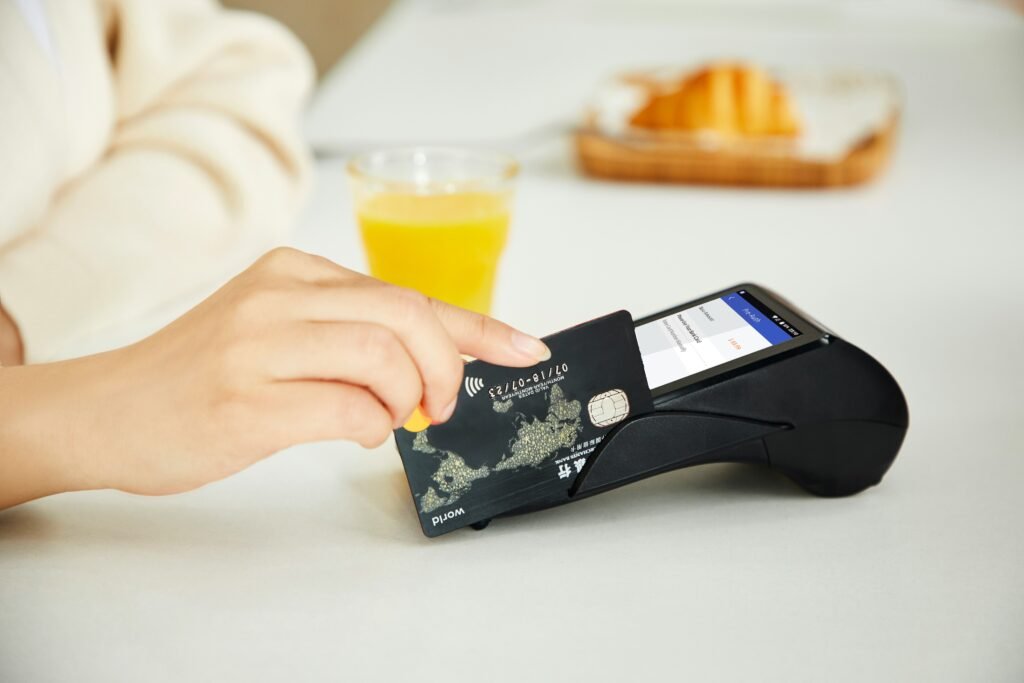
My Exact Travel Money Card System: What I Use and When
| Situation | Card to use | Why |
|---|---|---|
| Coffee, restaurants, shops | Wise | Clear conversion screen; good fee visibility |
| ATM cash withdrawal | Wise (then Revolut) | Use within the current monthly allowance, then check fees |
| Hotel check-in deposit | Credit card | Ties up credit not cash + purchase protection |
| Flights, tours, larger bookings | Credit card | Earn points + purchase protection |
| Online hotel/activity bookings | Revolut virtual card | Protects main card details |
| Emergency backup | Revolut | Separate account, instant freeze |
The key to this system is that each card has exactly one job. There’s no confusion about which card to reach for — and if one ever fails, you have two more immediately available.
Traveling with a Toddler: Why the Right Card Setup Matters Even More
Traveling with a young child changes the calculus on a lot of things — including how you pay. When you have a toddler in tow, you don’t have the bandwidth to stand at a broken ATM for 20 minutes, or discover your card is blocked because your bank flagged a foreign transaction.
The three-card system is especially good for family travel because it builds in redundancy. Revolut’s instant card freeze is genuinely useful when you’re wrangling a toddler and a suitcase simultaneously and you can’t immediately find your wallet. And having both a Wise and Revolut card means a lost card is an inconvenience rather than a crisis.
How Much Does This Actually Save? Real Numbers
| Cost on a $3,000 trip | Standard bank card | Wise + Revolut + credit card |
|---|---|---|
| Possible foreign transaction fee (2.5%) | $75 | $0 |
| Exchange rate markup (1.5%) | $45 | ~$6 (Wise’s transparent fee) |
| Airport currency exchange ($200 cash) | $20 lost | Depends on ATM and card fee screen |
| ATM fees | $15–25 | May be $0 within allowance; check current limits |
| Rewards earned (credit card) | $0 | +$30–60 in points |
| Net savings per trip | — | Often $100+ if your old setup was expensive |
On two trips per year, that’s $300–430 saved — enough to significantly offset the cost of the next trip. Over five years, it’s real money. This is why I treat the travel money card setup the same way I treat any long-term financial decision: optimize it once, then let it work quietly in the background.
Setting Up Your Travel Money Card Before You Leave
Allow at least 2 weeks before your trip — physical cards take time to arrive and you’ll want to test them before you’re at a checkout abroad.
- Wise: Download the app, verify your identity, order the physical card early, and add money before you travel. Card fees and delivery times vary by country, so check the current screen before confirming. Set up Wise before your trip
- Revolut: Download the app, verify your identity, order the card early, and set up a virtual card before your first booking. Plan availability, card delivery, and fees vary by country. Set up Revolut as backup
- Credit card: Apply at least 4–6 weeks ahead — allow time for approval and delivery.
Before every trip: screenshot the emergency contact numbers for both Wise and Revolut and save them separately from your wallet. Test both cards at a local store. Convert some currency in the Wise app if you want to lock in a favorable rate before you travel.
Travel Money Card FAQ
Is Wise or Revolut better for travel?
For most travelers, Wise is the better primary card and Revolut is the better backup — which is exactly why I carry both. Wise shows you the exchange rate and conversion fee clearly before you confirm, so it’s my default for everyday spending. Revolut’s app is excellent — instant notifications, one-tap card freeze, and virtual cards for online bookings — but its fee rules depend on your country, plan, and fair-usage limits, so I treat it as a backup and check the app before any large exchange. The honest answer isn’t either/or: use Wise to spend, Revolut as your safety layer.
Should you use your normal bank card abroad?
Usually not. Most standard bank cards add a foreign transaction fee of 1–3% on every international purchase, plus a weaker exchange rate — costs that are easy to miss because they’re buried in your statement. On a $3,000 trip, a 2% fee alone is $60 you didn’t need to spend. A dedicated travel money setup with transparent fees avoids this. Keep your home bank card as an emergency fallback, not your everyday card abroad.
Should you pay in local currency or home currency?
Always choose local currency. When a card terminal or ATM abroad offers to charge you in your home currency, that’s Dynamic Currency Conversion (DCC) — the merchant’s bank sets the rate, and it’s almost always worse than letting your own card handle the conversion. It can quietly add several percent to the purchase. The rule is simple: if a screen asks, pick the local currency every time.
Do you still need cash when traveling?
Less than you used to, but yes — some. Cards cover the large majority of spending in most destinations now, but small vendors, markets, tips, and the occasional taxi or rural area still run on cash. I withdraw a small amount from a bank ATM in the city (never the airport bureau), choose local currency at the machine, and use a card where the fee is visible before I confirm. Carry enough to be covered, not so much that losing your wallet ruins the trip.
Final Thoughts: Best Travel Money Card for International Travel in 2026
The best card for international travel isn’t a single card — it’s a three-part system. Wise as your primary spending card. Revolut as your backup and for online bookings. A no foreign transaction fee credit card for larger purchases and earning rewards on everything else.
The three rules that matter most: never exchange currency at the airport, always choose local currency when a terminal offers a choice, and never use a card with foreign transaction fees abroad. Those three alone save most travelers meaningful money over multiple trips with no major lifestyle change.
Set it up before your next trip. It takes an afternoon. Then, before each trip, you only need to check current limits, add the right card to your phone, and avoid expensive conversion prompts.
| Build Your Travel Money Setup | |
|---|---|
| Step 1 | Set up Wise as your primary travel money card |
| Step 2 | Set up Revolut as your backup and virtual card |
| Step 3 | Apply for a no foreign transaction fee credit card |
| Step 4 | Never use an airport exchange bureau again |
For everything else that goes into planning a great trip, start with the complete trip planning guide. Then pair this money setup with the hotel booking strategy, the cheap flights guide, and a destination where money decisions matter, like our 4 Days in Barcelona itinerary.