
Central Park NYC: Pedicab Tour, Walking Tour or Self-Guided? (Visitor Guide)
Central Park is 843 acres in the middle of Manhattan — and genuinely large enough to spend a full morning there and still feel like you missed something. The entry is free, which makes the whole thing feel casual. But 843 acres doesn’t do “casual.” Most first-timers come out the other side having seen only the southern third. How you experience Central Park matters. Three options compete for your time: explore on your own, join a guided walking tour, or take a pedicab. Here’s the honest breakdown of what each one actually delivers.
In this article
Quick answer: If this is your first visit and time is limited, a pedicab is the easiest way to see more of Central Park without turning the morning into a long walk. If you want the history and context behind what you’re seeing, a guided walking tour is better. If you have a full unhurried morning, self-guided with a Citi Bike is the most satisfying of the three, but check current Citi Bike pricing before you rely on it as the budget option.
Affiliate disclosure: This post contains affiliate links. If you book through them, I may earn a small commission at no extra cost to you. I only recommend things I would genuinely use or shortlist myself. Learn more.
Lili’s Picks
This is what I’d book
The tour I would shortlist for a first Central Park visit is the Central Park Pedicab Tour on Viator rather than negotiating at the park entrance. Best if you want: to cover more ground without asking everyone in your group to walk for hours. Why I like using Viator here: it gives you the comfort of seeing the route, duration, meeting point, and price structure before you show up. When Reserve Now & Pay Later or free cancellation is available, you can hold the plan, check the terms before committing, and avoid negotiating while a driver is waiting beside you. Not ideal if: you want a slow, quiet, photography-heavy morning where you stop whenever the light is good. Before booking: confirm the exact route, duration, meeting point, passenger limit, weather policy, Reserve Now & Pay Later availability, cancellation window, and recent traveler comments for your date.
If the walking-tour angle appeals more, the Central Park Small-Group Walking Tour on Viator is the better fit. Best if you want: the design history, movie locations, and small details you would walk past on your own. Why it works: Central Park is not just green space; it is planned landscape architecture, and a good guide makes the park feel more intentional. Not ideal if: you mainly want to cover distance or you are traveling with tired kids. Before booking: check the group size, route, pace, start point, cancellation terms, and whether the tour still runs in light rain.
| Self-Guided | Walking Tour | Pedicab | |
|---|---|---|---|
| Cost | Free (Citi Bike from $4.99/ride) | ~$40–55/person | ~$50–85/person |
| Duration | 2–3 hours | ~2 hours | 1–1.5 hours |
| Coverage | Southern half | Southern highlights | Broader loop-route highlights |
| Commentary | None | Yes — in depth | Yes — guide narrates |
| Best for | Slow wanderers | History lovers | First-timers, families |
Option 1: Self-Guided (Free)
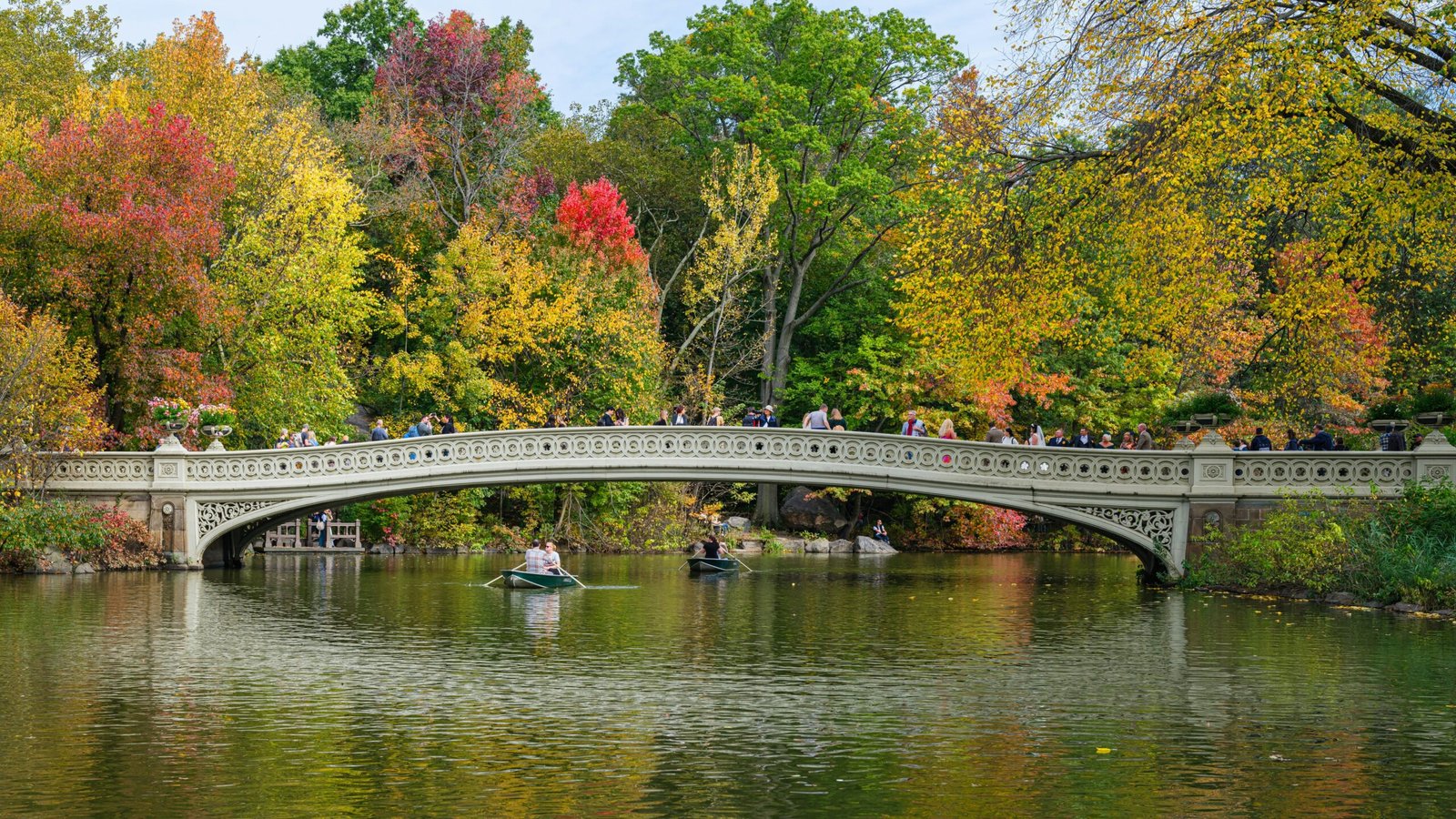
The park opens at 6:00 AM and entry costs nothing. A self-guided walk is the most personal way to see Central Park — you can spend 40 minutes at Bow Bridge if the light is right, sit on Sheep Meadow for an hour watching New Yorkers pretend the city isn’t directly above the treeline, or disappear into the Ramble without anyone moving you along. The tradeoff: 843 acres is genuinely disorienting without a map or context, and most people who go self-guided come out having covered only the southern half — the part every other tourist also covered.
The essential southern route — 59th Street entrance north along The Mall to Bethesda Fountain, then west to Bow Bridge and Strawberry Fields — fits comfortably in 2–3 hours at an unhurried pace. Anything north of 72nd Street requires additional time and deliberate planning. The Conservatory Garden, the Reservoir, the Great Lawn, the Harlem Meer: all worth seeing, all missed by most self-guided visitors who don’t budget for them.
Tip: Rent a Citi Bike at the south entrance and ride the loop road instead of walking. The park makes significantly more sense from a bike — you cover roughly twice the ground, the loop road itself is beautiful, and you can still stop wherever you want. At the time of this update, Citi Bike lists single rides from $4.99 for 30 minutes and day passes at $25, with extra fees for longer rides and e-bikes. Check the current app pricing before you build your whole route around it.
Option 2: Guided Walking Tour (~$40–55 per person)
A guided walking tour covers roughly the same ground as a self-guided walk but adds the layer most visitors miss: the story. How Frederick Law Olmsted and Calvert Vaux converted 843 acres of swamp and rocky farmland in the 1850s into engineered nature that would still look natural 170 years later. Why every bridge in the park is designed differently. What the Angel of the Waters fountain at Bethesda actually represents, and why it matters that it was the first public artwork in New York City commissioned from a woman. The celebrity buildings visible from the western edge. The films shot at Bow Bridge. None of this is on a sign.
The standard format is often a small-group walk of around 2 hours, with stops at The Mall, Bethesda Terrace, Bow Bridge, and Strawberry Fields. The best tours also cover Belvedere Castle and the Ramble, not just the postcard stops.
Price: around $40–55 per person. Booking ahead helps if you want a specific morning departure, especially on spring and fall weekends. Walking tours don’t cover as much ground as a pedicab, but the pace lets you actually look at things rather than ride past them, and you retain more of what you see.
Option 3: Pedicab Tour (~$50–85 per person)
A pedicab is a three-wheeled cycle with a passenger seat — your guide pedals, you sit back and watch the park unfold while they narrate. In an hour you see significantly more of Central Park than two hours of walking would cover. Depending on the exact route, you can reach sections most walking tours skip, from the Reservoir views to the Great Lawn and Delacorte Theater area. A pedicab is the option that makes the scale of the park easiest to understand without spending half the day on your feet.
It’s also genuinely enjoyable in a way the other options aren’t — the movement, the breeze, the novelty of someone else doing the work while the park scrolls past. Families with young children, travelers on tighter schedules, and anyone who wants to understand more of the park than just its southern section tend to come away glad they did it.
One important note: book online before you arrive. Walk-up pedicab rides negotiated at park entrances can become expensive quickly if the rate, route, and total time are not clear before you start. A pre-booked tour with a visible route, duration, and terms is the calmer way to handle it.
The Honest Verdict
For a first visit to Central Park, I’d take the pedicab if time is limited. The park is too large to walk comprehensively in one morning, and the majority of self-guided visitors leave having seen only the route every other tourist walked. A pedicab gives you a broader sense of the park with context included — and the experience of riding through it is different from walking it in a way that’s hard to describe until you’ve done it.
If I was returning, or had a full unhurried morning with no other plans, I’d do self-guided with a Citi Bike. Slower, more personal, and you can stay at Bow Bridge until the light is exactly right.
A guided walking tour is the right call if the design and history of the park genuinely interests you — why it looks the way it does, what Olmsted intended, why the Ramble feels like wilderness in the middle of Manhattan. The park looks different once you understand it was all engineered from scratch.
Central Park Highlights Worth Your Time
Regardless of which option you pick, these are the spots worth building your route around.
Bethesda Terrace & Fountain
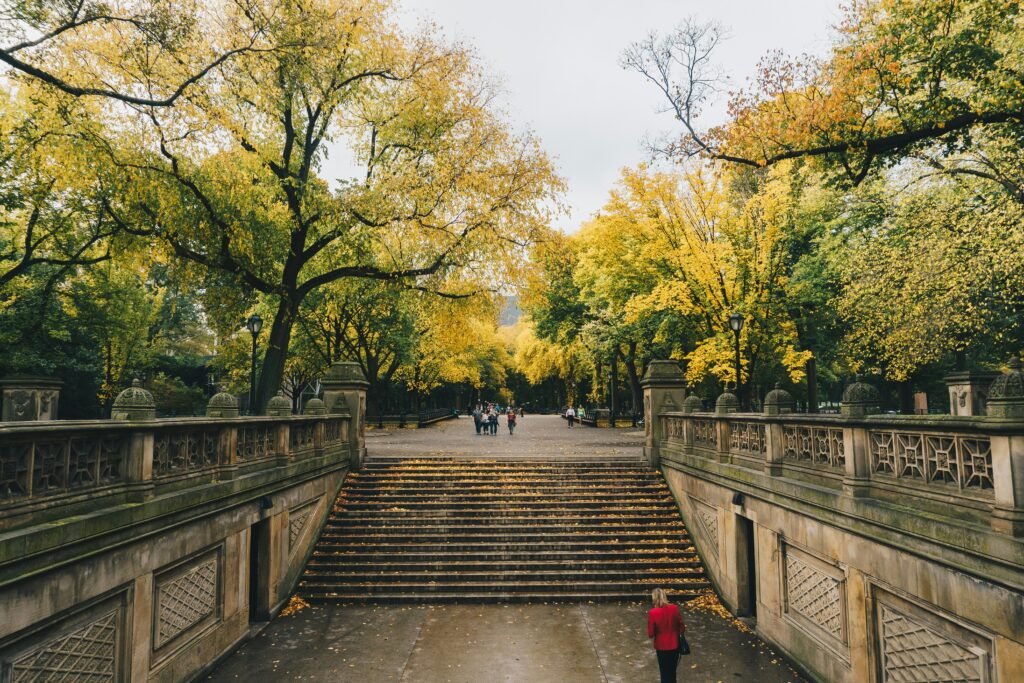
The park’s most iconic interior view — the terrace overlooks the Lake, with Bow Bridge visible through the trees to the left. The Angel of the Waters fountain (1868) was the first public artwork in New York City commissioned from a woman (sculptor Emma Stebbins). Best time: morning before tour groups arrive. Time needed: 15–20 minutes.
Bow Bridge
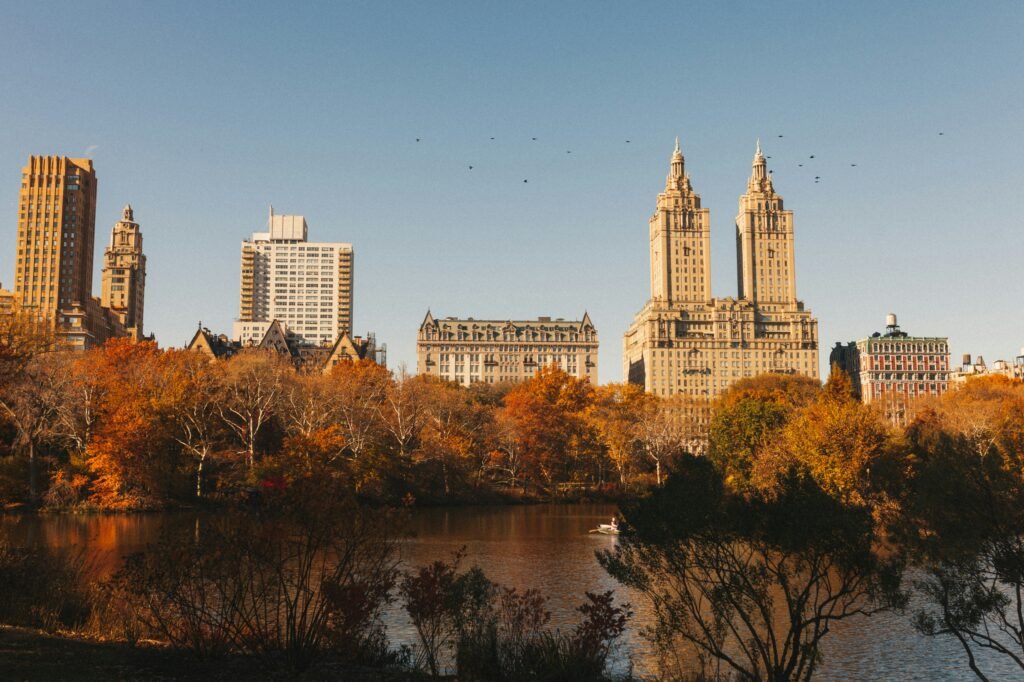
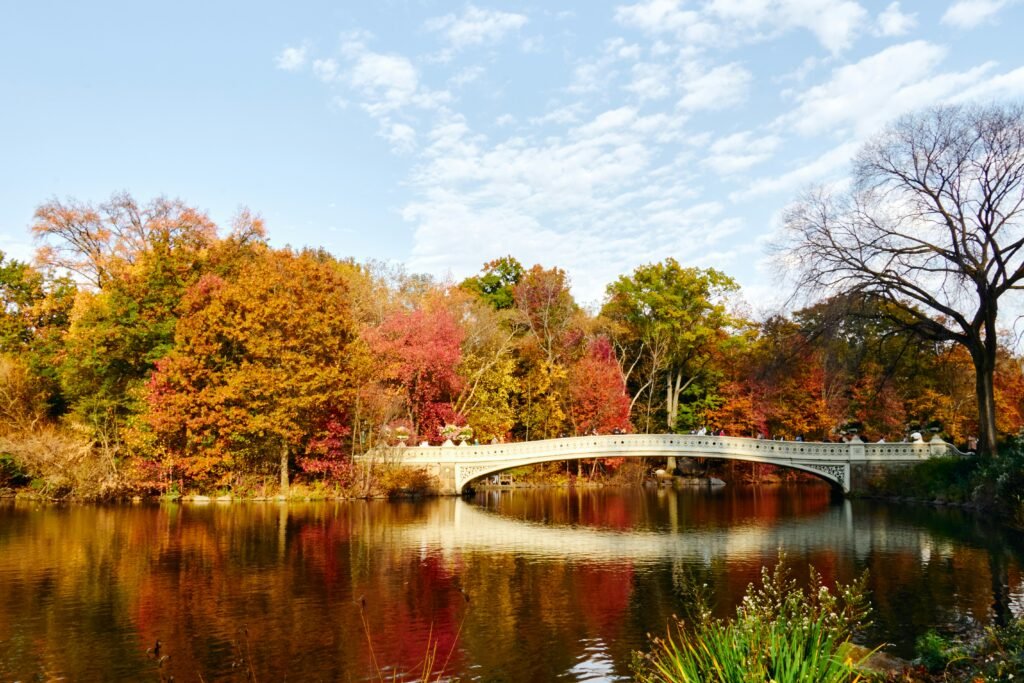
A cast-iron bridge built in 1862, connecting the Ramble to Cherry Hill across the Lake. The October light here — fall color on the water, the San Remo towers above the treeline — is worth the trip on its own. This is the Central Park shot most people have in their heads. It earns it.
Strawberry Fields
A quiet 2.5-acre memorial garden on the park’s west side at 72nd Street, dedicated to John Lennon by Yoko Ono after his death in 1980. The “Imagine” mosaic draws a steady crowd, but the surrounding garden is peaceful. His former home, the Dakota, is visible from the western edge of the park. Worth 20 minutes.
The Mall
A long straight promenade lined with American elm trees — one of the largest remaining stands of elms in North America — running from 66th to 72nd Street and ending at Bethesda Terrace. The canopy in summer forms a complete green tunnel. In fall, the color here is as good as anywhere in the park.
Sheep Meadow
A 15-acre open lawn south of 72nd Street where New Yorkers spread blankets, read, and take a collective breath. Skyscrapers are visible above the treeline in every direction. This is one of the great free outdoor experiences in any city — no reservation, no ticket, just grass and a skyline that shows up whether you want it to or not.
The Ramble
A 36-acre deliberately wild woodland in the park’s center, designed to feel like forest rather than manicured parkland. One of the best urban birdwatching spots in the United States, especially during spring migration. Most visitors walk past the entrance without going in. If you have an extra 30 minutes, it’s worth it.
Central Park with Kids
The carousel near 65th Street usually runs seasonally and requires a separate paid ticket, so check current operating dates and pricing before promising it to kids. The playgrounds near 72nd Street are genuinely good — adventure structures, not just swings. The Central Park Zoo at the south end is small but well-maintained; worth 90 minutes with young children. Park entry is always free; the zoo has a separate ticket.
Practical Information
| Entry | Free. Open daily 6:00 AM–1:00 AM |
| Conservatory Garden | Hours vary by month; generally opens at 8:00 AM and closes between late afternoon and dusk — check current Conservatory Garden hours before going north |
| Getting there | A/C/B/D to 59th St–Columbus Circle (SW entrance); 4/5/6 to 59th St (SE entrance) |
| Best time | Weekend mornings in spring or fall. October is the best single month for most visitors — fall color usually builds through the month and the light is extraordinary |
| How long to allow | 2–3 hours for self-guided southern route; 2 hours for walking tour; 1–1.5 hours for pedicab |
| Citi Bike | Stations at park entrances. From $4.99/30 min or $25 day pass; check current app pricing |
The closest neighborhoods for staying within easy walking distance of the park’s south entrance are Midtown West (Hell’s Kitchen and the 50s west of Fifth Avenue) and the Upper West Side between 72nd and 96th Streets, which puts you directly at the park’s western entrances. Full NYC neighborhood breakdown in our NYC hotel guide.
Final Thoughts
Central Park is one of those places that sounds like a checkbox and turns out to be a morning you actually remember. The scale of it — 843 acres of paths and water and trees with the Manhattan skyline hovering above the treeline on all sides — doesn’t come through in photos. You have to be in it. Whether you ride a pedicab through the full loop, walk it with a guide who can explain why Olmsted designed the Ramble to feel wild on purpose, or just rent a Citi Bike and figure it out yourself, the park rewards the time you give it. Just don’t show up without a plan and expect the southern entrance to tell you the whole story.
More from New York City
Central Park is one morning of a New York trip well spent — here’s how to plan the rest. Our NYC bucket list ranks the 25 best things to do in the city honestly, with Central Park at #2 and everything else in order of what actually earns your time.
If you’re planning several days, the 5-day NYC itinerary places Central Park on Day 3 alongside the Metropolitan Museum — the combination that makes most people understand why people actually live here.
Trying to keep costs down? Our NYC free things guide covers everything worth doing in New York that doesn’t cost a ticket — Central Park is on the list, but so is the Staten Island Ferry, the High Line, Brooklyn Bridge Park, and more.
Still choosing a neighborhood for your hotel? The where to stay in NYC guide covers Midtown West, the Upper West Side, Brooklyn, and everything in between — so you pick the right base before you book.
Frequently Asked Questions
What is the best way to see Central Park as a first-time visitor?
For a first visit, a pedicab tour is the easiest option if you want to see more than the southern highlights in 1–1.5 hours with a guide narrating as you go. A pre-booked tour also lets you check the route, duration, price structure, and cancellation terms before you arrive instead of negotiating with walk-up drivers at the park entrance.
How long does it take to walk Central Park?
A self-guided walk covering the southern highlights — The Mall, Bethesda Fountain, Bow Bridge, Strawberry Fields — takes 2–3 hours at a comfortable pace. Walking the full park from south to north and back covers more than 6 miles and takes most of a day. A guided walking tour covers the highlights in around 2 hours.
Are Central Park pedicab tours worth it?
Yes — particularly for first-time visitors who want to see more than just the southern section. Pre-booked pedicab tours often give you a clearer price, route, duration, and meeting point than walk-up rides negotiated at the park entrance. Prices vary by date, duration, and provider, so compare the current listing details before choosing.
Is Central Park free to enter?
Yes — Central Park is free to enter and open daily from 6:00 AM to 1:00 AM. The Conservatory Garden is free, but hours vary by month and it generally closes earlier than the rest of the park. The Central Park Zoo at the south end has a separate paid ticket. Guided tours (walking or pedicab) are the main paid option for seeing the park.
What is the best time to visit Central Park?
Weekend mornings in spring or fall are ideal. October is the best single month for most visitors — fall color usually builds through the month, the light is extraordinary for photography, and temperatures are comfortable. The light on Bow Bridge in October is worth a trip to the park on its own.