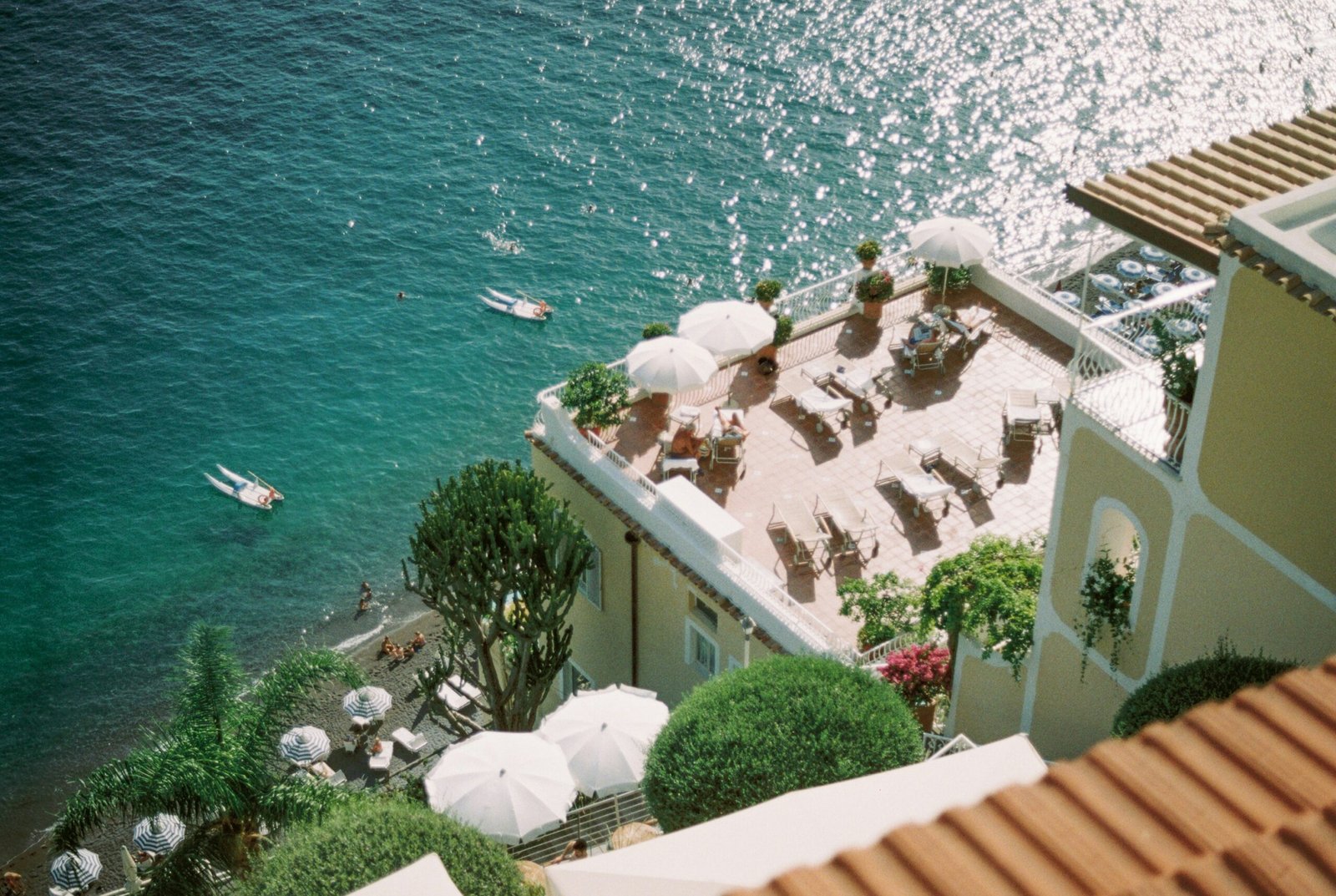
Where to Stay on the Amalfi Coast: Best Towns & Hotels for Every Trip
Affiliate disclosure: This post contains affiliate links. If you book or buy something through these links, I may earn a small commission at no extra cost to you. I only recommend things I genuinely believe are useful for planning this trip. Learn more.
The Amalfi Coast is one of those destinations where your base can make the whole trip easier — or quietly make it expensive, crowded, and exhausting. Positano, Praiano, Amalfi town, Ravello, Sorrento, Maiori and Minori all work, but they work for very different travelers.
We’ve stayed in both Positano and Praiano, and the difference was striking: same coastline, same sea views, completely different pace and a very different bill at checkout. This guide combines our own stay notes with current transport and booking checks so you can choose the right town before you commit money.
My honest shortcut: choose Positano for one iconic splurge night, Praiano for the best value with views, Amalfi town for the easiest logistics, Ravello for romance, and Sorrento if you care more about day trips and budget than staying directly on the coast.
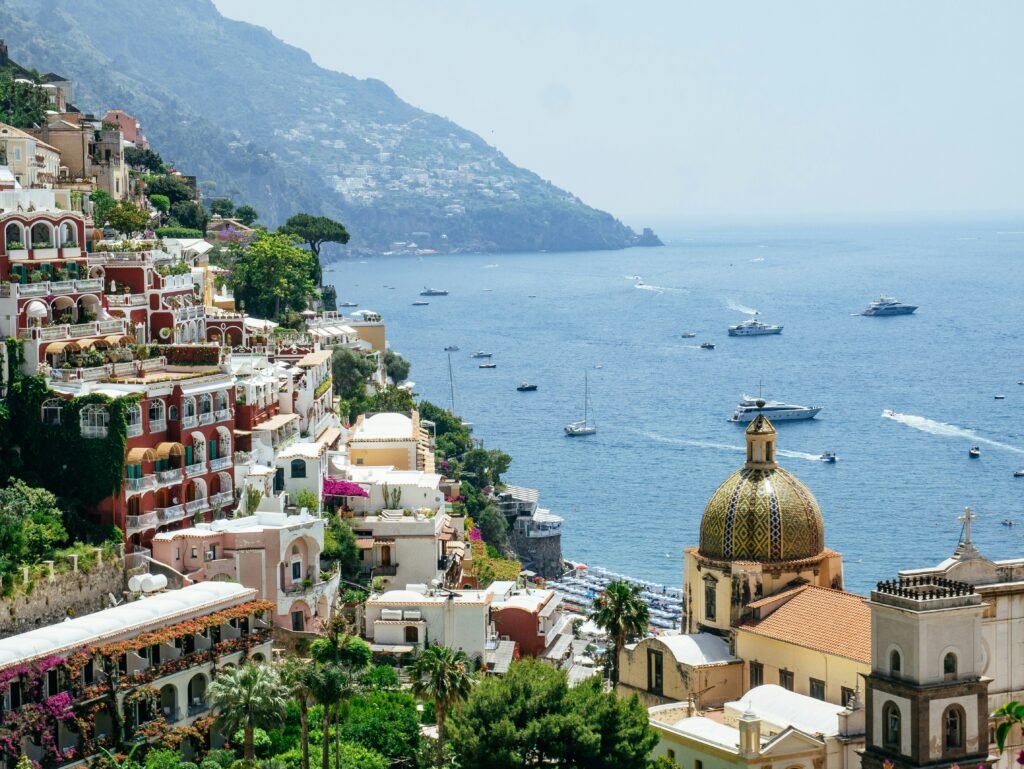
Table of Contents
Quick Summary: Which Town is Right for You?
| You want… | Stay in… | Why it works | Watch out for |
|---|---|---|---|
| The iconic Amalfi Coast experience | Positano | Best views, restaurants, evening atmosphere | Highest prices, stairs, crowds |
| Views without Positano prices | Praiano | Quieter, romantic, excellent value | Fewer restaurants and shops |
| The easiest base without a car | Amalfi town | Central ferries, buses, flatter streets | Busier during the day |
| A romantic, quiet trip | Ravello | Gardens, views, slower pace | No beach and more transfer time |
| Capri, Pompeii and Naples day trips | Sorrento | Better transport and lower prices | Not on the Amalfi Coast proper |
| Beach time and lower prices | Maiori or Minori | Flatter, family-friendly, better beaches | Less glamorous than Positano |
| Complete quiet | Scala | Low prices and valley views | Limited accommodation and services |
The map below shows all seven base towns, the hotels referenced in this guide, and the key spots — ferry pier, Path of the Gods, Terrace of Infinity — that affect which base makes most sense for your trip.
Before You Book — Quick Decision Links
If you are still choosing a base, book free-cancellation accommodation first, then refine the exact town once your flights, ferry routes, and day trips are clearer. The Amalfi Coast has limited rooms in the most useful locations, and the best-value places disappear much faster than the expensive ones.
- First-timers: compare Positano hotels, Praiano hotels, and Amalfi town hotels before you lock the trip.
- Best value: start with Praiano, Maiori, Minori, and Sorrento.
- Activities worth planning around: compare a Capri boat tour, a Path of the Gods guided hike, and an Amalfi Coast cooking class.
- Transport check: verify seasonal ferry routes on Travelmar and bus routes on the SITA bus schedule page before choosing a town without a car.
Reader note: this is not a place where I would book purely by hotel rating. Location matters more than almost anything else: stairs, ferry access, parking, and the walk back after dinner can change how the trip feels every single day.
1. Positano — The Iconic Choice
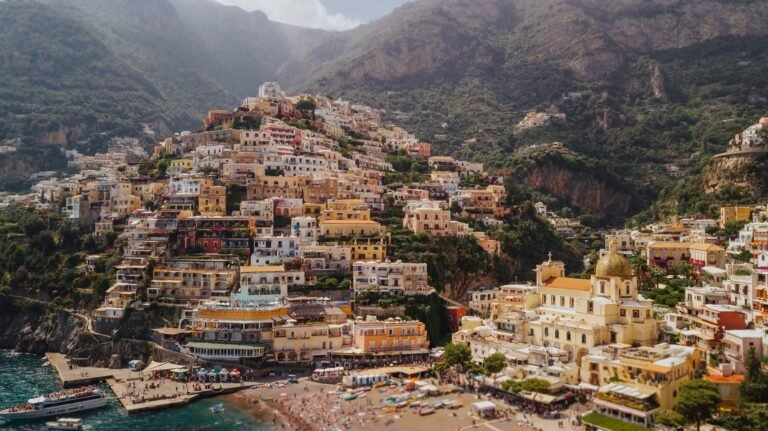
Positano is the most photographed town on the Amalfi Coast and the one that defines most people’s idea of what the coast looks like. Pastel houses stacked up the cliff face, a majolica-tiled church dome, the beach with the whole town rising behind it — these images are even more extraordinary in person than in photographs. We spent one night here and it was worth every extra dollar compared to our Praiano base.
Staying in Positano means waking up to those views before the day-trippers arrive, and experiencing the town in the evening when the tour buses have gone and the restaurants fill with candlelight. That evening atmosphere is something you genuinely can’t replicate from another base.
The trade-offs are real: it’s the most expensive town on the coast, the stairs are endless (expect 300–400 steps between levels daily), and July–August gets very crowded. For families with young children or anyone with mobility concerns, the steep terrain is worth factoring in seriously.
Where to Stay in Positano
Best area: Mid-level — close enough to walk to the beach, high enough for views, not so high that every trip is a 20-minute climb.
Pros: Most iconic views, walkable to beach and restaurants, magical evening atmosphere, closest to Path of the Gods trailhead
Cons: Most expensive on the coast, endless stairs, very crowded July–August, limited parking
Budget-conscious: ~$120–180/night | Comfortable: ~$200–350/night | Splurge: ~$500–1,500+/night
Le Sirenuse is one of the finest hotels on the Italian coast — exceptional service, extraordinary views, and a position right in the heart of Positano. Check Le Sirenuse availability here. For a well-reviewed mid-range option with genuine sea views, Hotel Marincanto is consistently reliable. Check Hotel Marincanto here. For the full range of Positano options, browse all Positano hotels on Booking.com.
2. Praiano — The Best Value on the Coast
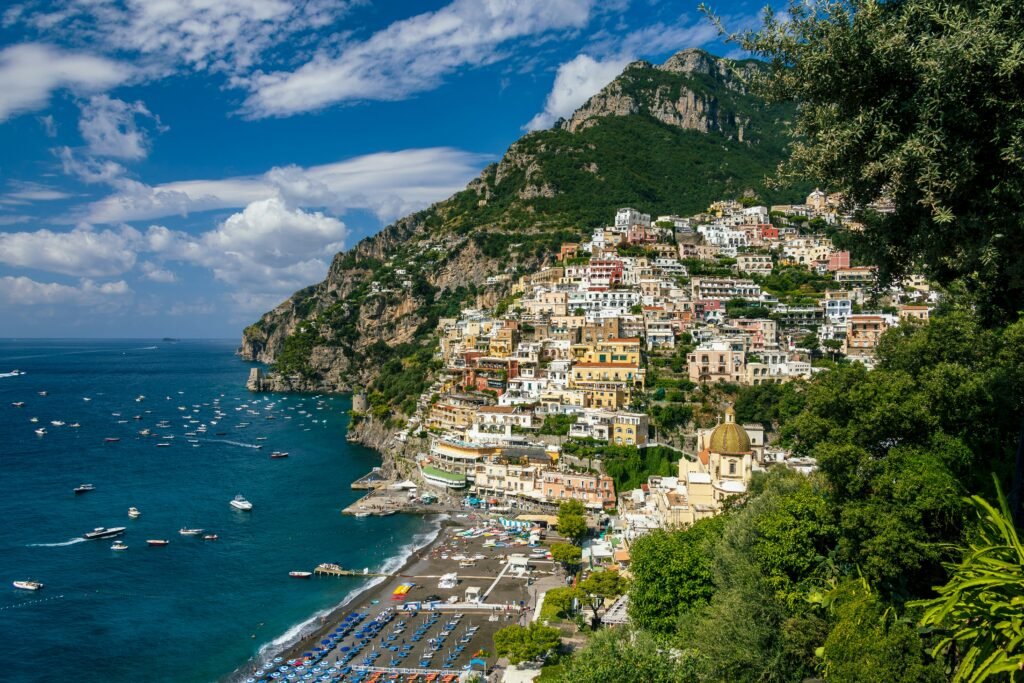
Praiano is my first recommendation for anyone who wants the full Amalfi Coast experience without the Positano price tag. Located 10 minutes east of Positano, it offers cliff-edge views equal to its famous neighbor, significantly lower prices, far fewer crowds, and a genuinely local atmosphere. This is where we based ourselves for most of our stay, and I’d choose it again without hesitation.
The Church of San Gennaro with its majolica-tiled dome is one of the most beautiful small churches on the coast. Marina di Praia — a hidden beach in a cove below the town — is one of the finest swimming spots in the region. And the sunset views from Praiano, facing west toward Positano and Capri, are extraordinary.
Five-star hotels in Praiano often cost hundreds of dollars less per night than comparable properties in Positano. The trade-off is fewer restaurant and shopping options — which many consider a bonus rather than a drawback.
Where to Stay in Praiano
Best area: On or near the main coast road for best bus and ferry connections, or on the cliff face for the most dramatic views.
Pros: Best value on the coast, equal views to Positano, quieter and more authentic, ideal base for Path of the Gods, sunset facing west toward Capri
Cons: Fewer restaurant options, quieter nightlife, slightly less convenient for Amalfi and Ravello
Budget-conscious: ~$80–130/night | Comfortable: ~$150–250/night | Splurge: ~$300–600/night
Casa Angelina is one of the most beautifully designed boutique hotels on the entire coast — white minimalist interiors, extraordinary cliff-edge pool, and prices well below comparable Positano properties. Check Casa Angelina availability here. For a reliable mid-range option, Hotel Onda Verde is consistently well-reviewed. See Hotel Onda Verde here. For the full range, browse all Praiano accommodation on Booking.com.
3. Amalfi Town — The Most Practical Base
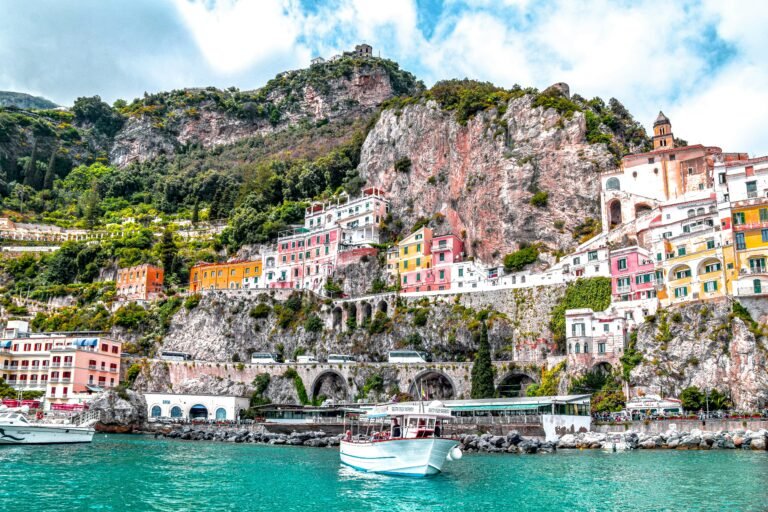
Amalfi town sits in the middle of the coast geographically, making it the most practical base for exploring in both directions. Ferry connections are excellent — Positano is 25 minutes west, Salerno 35 minutes east, Capri reachable in about an hour. The bus network from Amalfi is the best on the coast for reaching Ravello and the inland towns.
The town itself is genuinely beautiful — the cathedral, the historic center, the harbor. It’s flatter than Positano, considerably more lived-in, and the main piazza at night with the illuminated cathedral is one of the finest evening atmospheres on the entire coast.
Where to Stay in Amalfi
Best area: As close to the Duomo and harbor as possible.
Pros: Best transport connections, central for the whole coast, flatter terrain, good restaurant scene, beautiful cathedral
Cons: Busier with tour groups, beach is not the finest on the coast
Budget-conscious: ~$80–130/night | Comfortable: ~$150–220/night | Splurge: ~$300–500/night
Hotel Luna Convento is a converted 13th-century convent with a cliff-edge pool and extraordinary sea views — one of the most characterful stays on the coast at prices well below comparable Positano hotels. Check Hotel Luna Convento here. For the full range, browse all Amalfi town hotels on Booking.com.
4. Ravello — The Most Romantic Option
Ravello sits 350 meters above the coast and has a completely different character from every other town on the Amalfi Coast. Quiet, refined, slightly aristocratic — consistently described as one of the most romantic places to stay in Italy. Wagner composed here. The Ravello Music Festival brings world-class classical music to Villa Rufolo’s terrace every summer with the coast far below as backdrop. Villa Cimbrone’s Terrace of Infinity is a 10-minute walk from the main piazza.
The trade-off is distance from the beach — 15–30 minutes by bus or car — and fewer dining options. For couples who want quiet and extraordinary hilltop views over beach and activity, Ravello is the finest choice on the coast.
Where to Stay in Ravello
Pros: Most romantic atmosphere, extraordinary views, no beach crowds, Villa Cimbrone walkable, Ravello Music Festival in summer
Cons: 15–30 minutes from the beach, fewer restaurants, higher prices for limited accommodation
Comfortable: ~$150–250/night | Splurge: ~$400–800+/night
Belmond Hotel Caruso is widely considered one of the finest hotels in Italy — an infinity pool that appears to float above the sea, extraordinary service, and a position at the very edge of the Ravello cliff. Check Belmond Hotel Caruso here. For the full range, browse all Ravello hotels on Booking.com.
5. Sorrento — Best for Families & Budget Travelers
Sorrento is technically not on the Amalfi Coast — it sits at the western end of the Sorrentine Peninsula on the Bay of Naples. But for travelers combining the coast with Capri, Pompeii, and Naples, it’s often the most practical and affordable base in the region. Train access to Naples via the Circumvesuviana or Campania Express, easy ferry access to Capri when routes are running, the widest range of accommodation at lower prices, and significantly better infrastructure for families with luggage or strollers.
Where to Stay in Sorrento
Pros: Best value, best transport, easiest for families, good restaurant scene, access to Capri, Pompeii, Naples
Cons: Not on the Amalfi Coast proper, beach is rock platforms rather than sand
Budget-conscious: ~$60–100/night | Comfortable: ~$120–200/night | Splurge: ~$250–500/night
For Sorrento accommodation at every price point, browse all options on Booking.com here.
6. Maiori & Minori — Best Beaches & Lowest Prices
Maiori and Minori are at the eastern end of the coast and most visitors skip them entirely — which is exactly what makes them worth considering. They have the longest, widest, and most accessible beaches on the coast (proper sandy beaches rather than rocky coves), prices significantly lower than anywhere to the west, and a genuinely local atmosphere. Particularly good for families with young children and anyone on a tighter budget.
Pros: Best beaches, lowest prices, most local atmosphere, flat terrain ideal for families, good bus connections
Cons: Less glamorous, further from the most iconic spots
Budget-conscious: ~$60–90/night | Comfortable: ~$100–160/night
For Maiori, browse accommodation here. For Minori, see options here.
7. Scala — For Those Who Want to Escape Completely
The oldest town on the Amalfi Coast and almost nobody stays here. If complete quiet, extraordinary valley views, and zero tourist infrastructure is what you want, it’s worth knowing about. Directly across the valley from Ravello, connected by a beautiful 30-minute walking path. Accommodation is extremely limited — a handful of B&Bs and agriturismi — but prices are low. Best for a night or two as part of a longer trip rather than as a primary base.
For what’s available, browse Scala accommodation options here.
Is the Amalfi Coast Worth It?
Yes — and more beautiful in person than in photographs, which is saying something. But it helps to go in with the right expectations. The coast is genuinely crowded in peak season, genuinely expensive, and genuinely difficult to navigate with large luggage. May, June, and September are the months when it delivers everything it promises without the peak-summer downsides.
Worth it if: you love dramatic coastal scenery, excellent food, and can embrace a slower pace. Less ideal if: you’re visiting in July–August without booking months ahead, or expecting everything to be easy and polished.
What We’d Do Differently
- Book even earlier — three months wasn’t quite enough for our first choice in Praiano in May.
- Pack a much smaller bag. Narrow stairs and no elevators made a rolling suitcase a genuine problem.
- Use the ferry between towns more and drive less — faster, more relaxing, and the views from the water are extraordinary.
- Spend one night in Positano even when basing ourselves in Praiano. The evening atmosphere is worth the extra cost for at least one night.
Best Time to Visit the Amalfi Coast
May–early June: Ideal — warm weather, clear seas, far fewer crowds, lower prices. The coast is green and every outdoor experience is better without the peak-season heat and crowds.
September–October: Equally excellent — the sea is still warm, prices drop significantly after August, and September light is extraordinary for photography. This is when I’d recommend a first visit.
July–August: Peak season — hot, crowded, and most expensive. Book everything 4–6 months ahead if this is your only option.
Shoulder season tip: September is often much better value than August — same coastline, more breathing room, and still-warm sea. Waiting a few weeks from peak summer to September is one of the smartest value moves on the Amalfi Coast.
Practical Tips for Staying on the Amalfi Coast
Pack light: Narrow stairs, no elevators, and limited car access make large suitcases genuinely difficult. A carry-on size bag is significantly better. This is the single most practical piece of advice for this destination.
Parking: Check parking availability before booking — it’s very limited in Positano and Amalfi. Praiano has somewhat easier parking.
Breakfast: Many hotels include breakfast — often extraordinary, with fresh pastries, local cheeses, and sea views. Always check whether it’s included before booking.
Free cancellation: Always book free-cancellation rates if the price difference is reasonable. It gives you a safe base early, then you can re-check prices and switch towns if your itinerary changes.
Final Thoughts: Where to Stay on the Amalfi Coast
The right base on the Amalfi Coast is the one that matches what you actually want from the trip. For a first visit: one night in Positano for the full iconic experience, then Praiano or Amalfi town for the remainder. That combination gives you the best of what the coast has to offer without paying Positano prices for the entire stay.
Whatever you choose: book early, get a room with a sea view if the budget allows at all, and leave the large suitcase at home.
Frequently Asked Questions
Where is the best place to stay on the Amalfi Coast for first-timers?
Praiano or Positano depending on budget. Positano gives you the full iconic experience but at a significant cost premium and with a lot of stairs. Praiano gives you equal views, a more relaxed atmosphere, and noticeably lower prices — just 10 minutes from Positano by road or ferry. The ideal combination for a first visit is one night in Positano and the remaining nights in Praiano or Amalfi town.
Is Positano worth the extra cost?
For one or two nights, yes — the evening atmosphere after day-trippers leave is genuinely worth the premium. For a longer stay of 4–5 nights, the value proposition weakens significantly and Praiano becomes the smarter choice.
Is the Amalfi Coast good for families with young children?
Yes, with the right base. Sorrento is the most practical family base — flat terrain, easy transport, no endless stairs. Maiori and Minori have the best family beaches — shallow, sandy, and calm. Positano is the most challenging for families with toddlers due to the steep stairs, though it’s absolutely doable with a carrier and patience.
How far in advance should I book Amalfi Coast accommodation?
3–4 months for May–June and September; 4–6 months for July–August. Always book free cancellation rates so you can adjust if prices change.
What is the best month to visit the Amalfi Coast?
September: The sea is still warm, crowds thin out after summer, and accommodation is often better value than August. May and early June are close behind. Avoid July and August if possible unless you are booking well ahead.
More Amalfi Coast Guides
- Planning your days on the coast? Our Amalfi Coast itinerary guide covers the best day-by-day plan and how to pace the coast without rushing.
- Want to know what’s worth doing? Our Amalfi Coast bucket list covers the 25 best experiences with honest assessments.
- Traveling on a budget? Our Amalfi Coast budget guide breaks down exactly what everything costs.
- Looking for free experiences? Our guide to free things to do on the Amalfi Coast covers the best no-cost options.
- Combining this with a wider Southern Italy trip? Our 14-day Southern Italy road trip itinerary shows how to fit the Amalfi Coast into a longer Naples, Puglia, Matera and Calabria route.