Amalfi Coast Bucket List: 25 Best Things to Do
Affiliate disclosure: This post contains affiliate links. If you book or buy something through these links, I may earn a small commission at no extra cost to you. I only recommend things I genuinely believe are useful for this trip. Learn more.
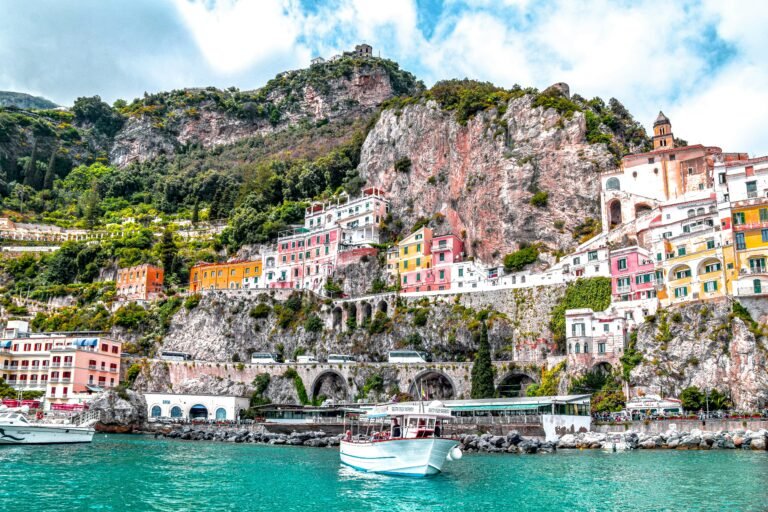
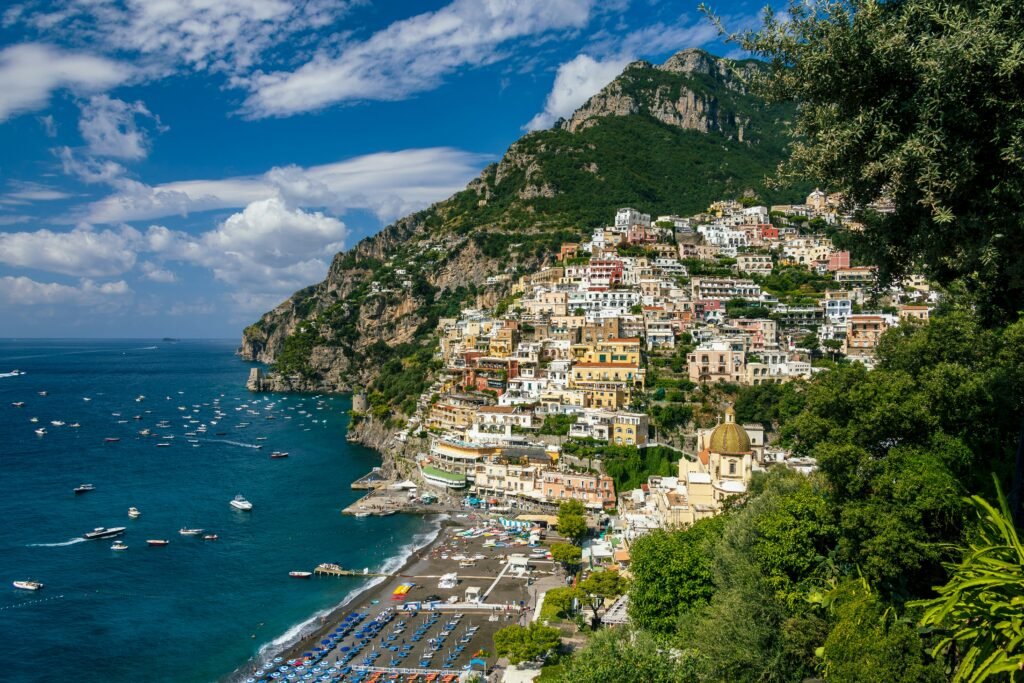
The Amalfi Coast earns its place on every serious traveler’s bucket list: dramatic coastal cliffs, medieval towns, clear water, lemon terraces, and some of the most memorable coastal scenery in Europe. This is a research-backed bucket list for planning a first trip, with the famous experiences included alongside quieter stops that help the coast feel less like a postcard and more like a real itinerary.
Quick Summary
| Best time to visit | May–June or September–October |
| How many days | 5 days ideal, 3 minimum |
| Best base | Positano or Praiano |
| Getting around | Ferry first when running, bus second, car last resort |
| Don’t miss | Path of the Gods + boat tour |
| Best for | Couples, honeymooners, bucket list travelers |
Amalfi Coast Bucket List Map
Use this map to group the coast by area: Positano and Praiano, Amalfi and Atrani, Ravello and Scala, Capri, and the Sorrento side. It helps avoid wasting half a day crossing the coast in the wrong direction.
Quick Tips for the Amalfi Coast
Still in the planning stages? Our complete trip planning guide covers exactly how to find cheap flights to Naples, book the right accommodation, navigate ferry connections, and make every dollar count on a trip like this.
Transport note: Amalfi Coast ferries are the easiest way to move between towns when they are running, but routes are seasonal and weather-dependent. Check the official Travelmar timetable before locking in day plans: Travelmar ferry schedules.
Where to Stay
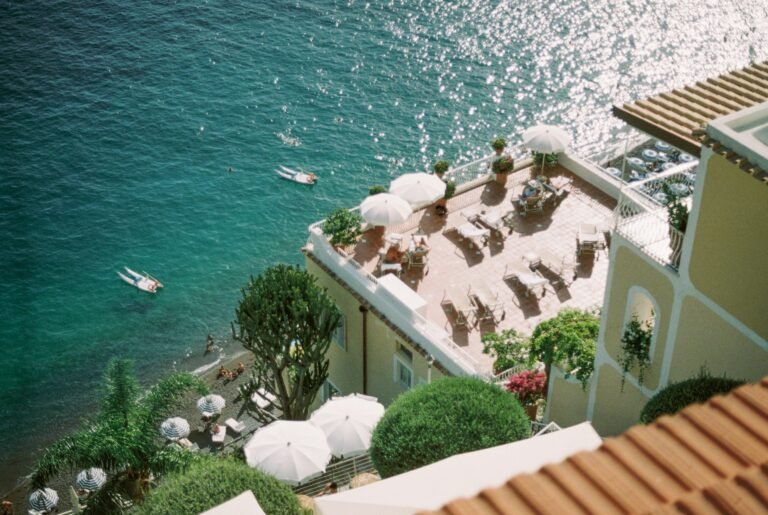
For a first visit, Positano gives you the full iconic experience, while Praiano is usually better value: similar sea views, easier evenings, and a short ride from Positano. For the full town-by-town breakdown, our Amalfi Coast accommodation guide covers every option honestly.
- Luxury Positano: Le Sirenuse is one of the finest hotels on the Italian coast. Check Le Sirenuse here.
- Luxury Ravello: Belmond Hotel Caruso — infinity pool above the sea, extraordinary service. Check Belmond Hotel Caruso here.
- Mid-range Amalfi: Hotel Luna Convento, a converted 13th-century convent with cliff-edge pool. Check Hotel Luna Convento here.
- Mid-range Praiano: Casa Angelina — beautifully designed, well-priced. Check Casa Angelina here.
- Budget base: Sorrento — best value and ferry connections. Browse Sorrento options here.
Experiences Worth Booking in Advance
- Amalfi Coast private boat tour — choose a date early if you are traveling in summer. Book here.
- Capri boat tour from Positano — popular morning departures sell out first. Book here.
- Path of the Gods guided hike. Book here.
- Amalfi Coast cooking class – best-reviewed classes can book out early in peak season. Book here.
Amalfi Coast Bucket List: 25 Best Things to Do
1. Watch the Sunrise Over Positano
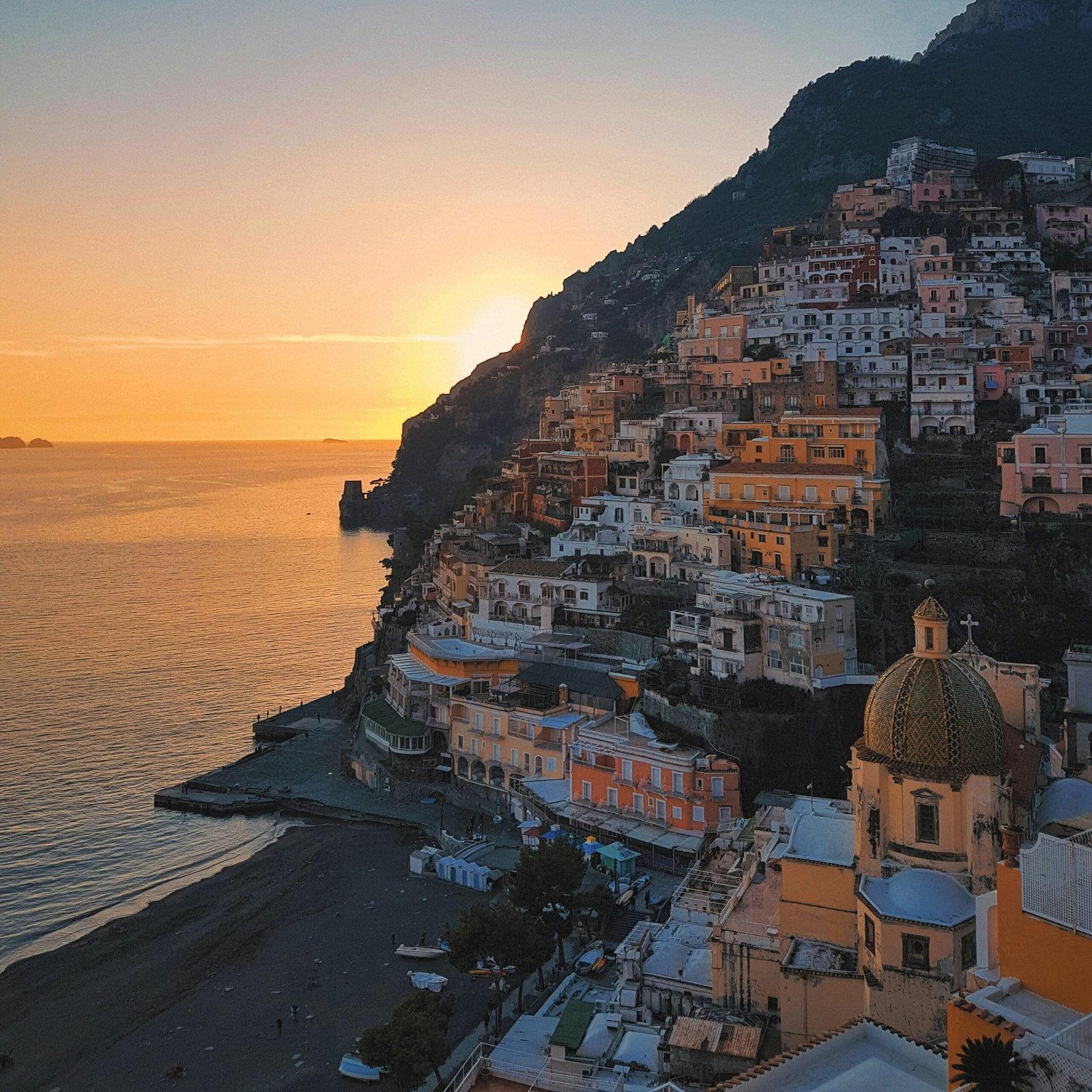
If there is one free experience to prioritize on this Amalfi Coast bucket list, make it sunrise from the heights above Positano. The town is beautiful in the daytime, but at dawn, before day-trippers and boat traffic arrive, the light hits the pastel buildings in layers and the whole coast feels quieter.
Price: Free | Best time: June–September (5:30–6:00am)
Tip: Stay overnight in Positano — this is impossible as a day-tripper and worth the higher accommodation cost just for this one experience.
2. Hike the Path of the Gods
The Path of the Gods (Sentiero degli Dei) is the finest hike on the Amalfi Coast and one of the best in all of Italy. For the entire 7.8-kilometer route, you’re walking above the coastline looking simultaneously at the sea far below, the towns clinging to the cliffs, and the mountains rising behind you. The name is not hyperbole. The final descent into Nocelle delivers you above Positano with the whole town and bay spread out below — one of the great arrival moments in European hiking.
Price: Free | Best time: Early morning, May–June or September–October | Difficulty: Moderate | Time needed: 3–4 hours
Tip: Start at 7am in summer — the exposed sections become genuinely uncomfortable by midday. Bring 2 liters of water and proper shoes. A guided hike adds local stories that transform what you’re seeing. Book a guided Path of the Gods hike here.
3. Take a Boat Tour Along the Coast
If there is one paid experience to prioritize on the Amalfi Coast, make it a boat tour. From the water, the cliffs rise higher, the towns look more dramatically positioned, and you can reach sea caves, hidden beaches, and coastline that cannot be seen properly from the road. A private boat gives you the most freedom; a shared tour is more affordable and still gives you the essential coast-from-the-water perspective.
Price: Shared tours often start around €70-120 per person; private boats vary widely | Best time: Morning for calmer water and better light
Choose your date early in summer, especially if you want a small boat or a morning departure. Book a private Amalfi Coast boat tour here. See shared boat tour options here.
4. Visit the Terrace of Infinity at Villa Cimbrone, Ravello
The Terrace of Infinity at Villa Cimbrone is one of the most celebrated viewpoints in Italy — a row of marble busts at the edge of a cliff, 350 meters above the sea, with the Amalfi Coast stretching to the horizon. It’s one of those views that makes you stop completely and just look. Ravello itself feels like a completely different world from the coastal towns below — quieter, more refined, and with a long history of attracting artists and composers who came for the views and stayed for months.
Price: Around €10 for the gardens | Best time: Late afternoon when the light is warm | Time needed: 1-2 hours
Tip: Combine with Villa Rufolo next door — the gardens and 13th-century architecture are equally beautiful and the combined visit takes 2–3 hours.
5. Swim at Fornillo Beach, Positano
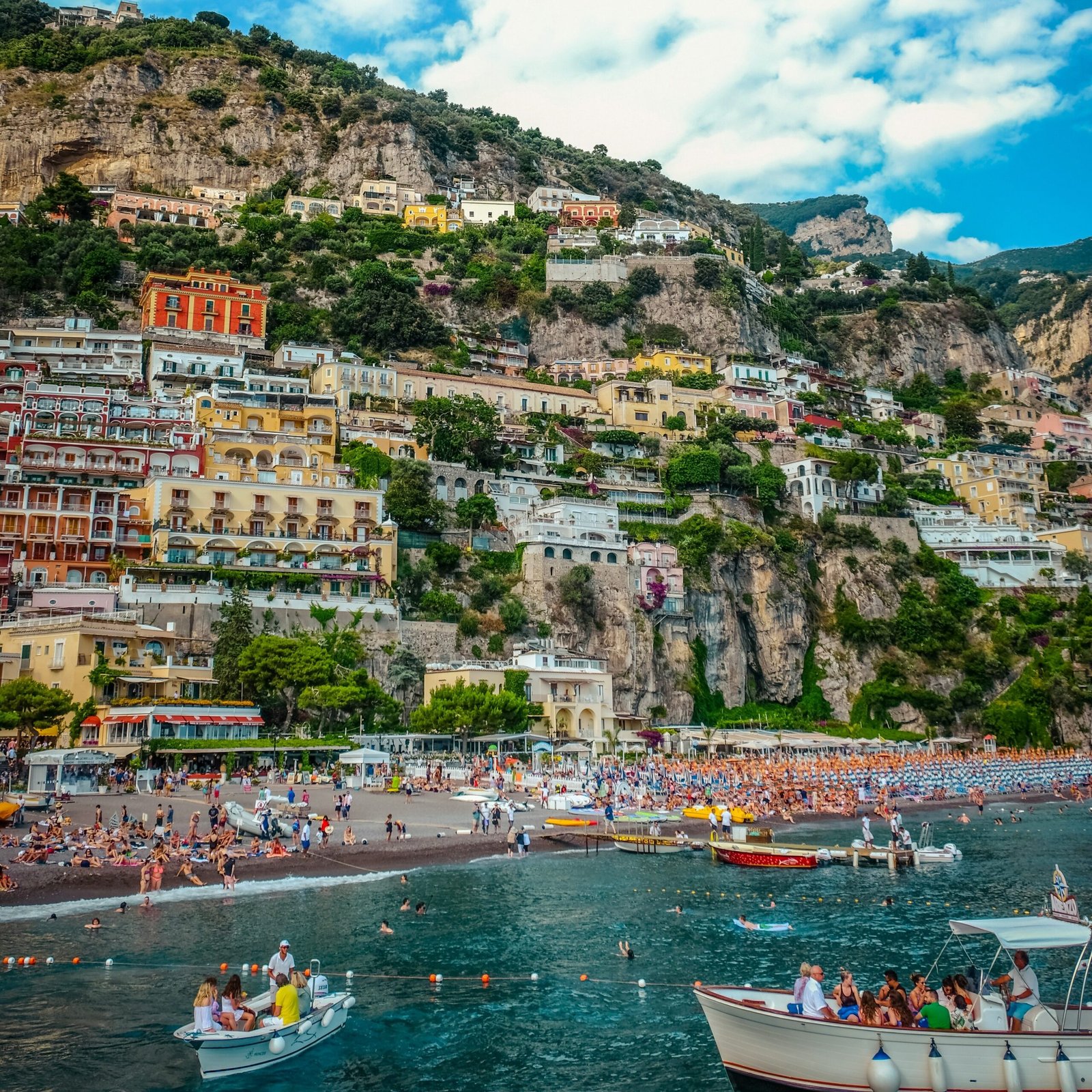
Spiaggia Grande is the famous Positano beach — the one in every photograph, beautiful and worth visiting. But Fornillo Beach, a 10-minute walk west around the headland, is the better place to spend an actual beach afternoon: smaller, less crowded, more local in atmosphere, and usually less expensive at the beach clubs and restaurants.
Price: Free (public section) / Beach club ~€20–35 for two chairs | Best time: Mornings or late afternoon
With kids: The water at Fornillo is calmer than Spiaggia Grande — better for young children and easier for swimming without getting knocked around by boat wake.
6. Visit Capri — Blue Grotto & Faraglioni
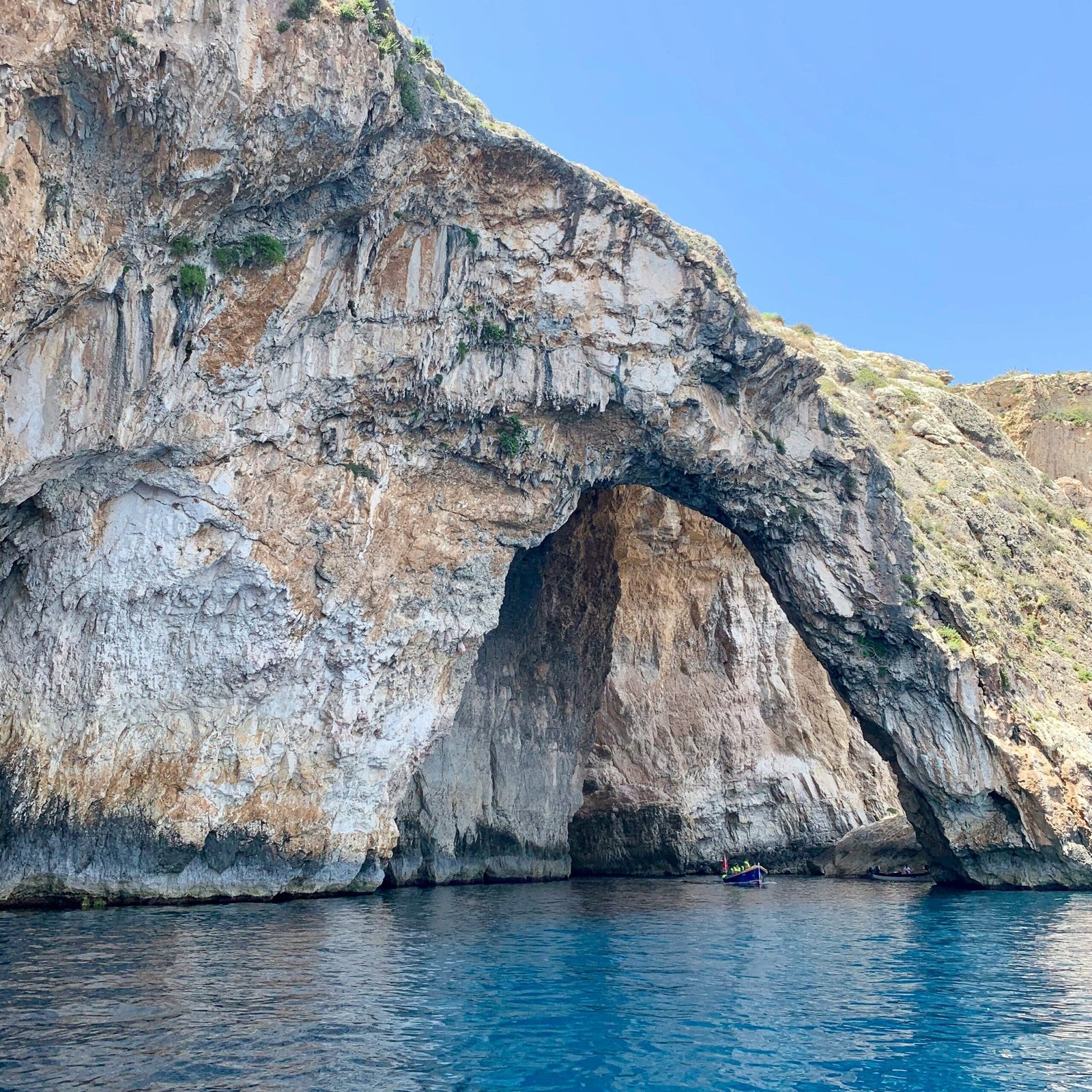
A day trip to Capri is one of the best things you can do from the Amalfi Coast — and most people who do it say it was their favorite day of the trip. The Blue Grotto is the famous sea cave where the water glows electric blue from an underwater light source. You enter lying flat in a tiny rowboat while your guide sings. It lasts about 5 minutes and is genuinely magical. The Faraglioni — three towering rock stacks rising from the sea — are Capri’s most iconic image and best seen from a boat passing through the natural arch.
Getting there: Ferry from Positano, Sorrento, or Amalfi depending on season | Blue Grotto: €18 per person in 2026; open only when sea conditions allow and the inside visit lasts about 5 minutes
Tip: Arrive early — Capri fills with day-trippers by 10am. Book morning ferries or boat tours early in peak season, and keep a backup plan because the Blue Grotto can close suddenly in rough seas. Book your Capri ferry here.
7. Explore Amalfi Cathedral & the Chiostro del Paradiso
Amalfi Cathedral (Duomo di Amalfi) is an extraordinary Arab-Norman building dating to the 9th century — one of the most beautiful facades on the coast. The Chiostro del Paradiso, the cathedral cloister built in 1268, is the hidden gem most visitors walk straight past. It combines Moorish arches and Norman columns into a space of extraordinary beauty, decorated with 13th-century mosaics and ancient sarcophagi. One of the finest medieval spaces in southern Italy.
Price: Cathedral access is limited/free for worship; cloister and museum visits are paid | Best time: Early morning | Time needed: 45 minutes
Tip: Don’t rush through. The crypt holds the relics of Saint Andrew — brought from Constantinople in 1208 — and is the genuine heart of the building.
8. Discover the Emerald Grotto
The Emerald Grotto (Grotta dello Smeraldo) near Conca dei Marini is a sea cave where the water glows vivid green from a submerged opening that filters light differently from Capri’s Blue Grotto. Less famous, shorter wait times, and one of the best-value experiences on the coast. Visit by boat from Amalfi for the best experience — the cave approach from the water is how it was designed to be seen.
Price: Around €5–7 per person; check locally | Best time: Midday when the light through the water is brightest | Time needed: 30 minutes
9. Walk Through Villa Rufolo’s Gardens in Ravello
Villa Rufolo is a 13th-century estate with terraced gardens overlooking the sea and a tower with one of the finest panoramic views in the entire region. The gardens inspired Wagner to write the flower meadow scene in Parsifal after visiting in 1880, and they’re still extraordinary — formally planted, maintained to near-perfection, with direct views down to the coast 350 meters below. The Ravello Music Festival takes place on the villa’s terrace every summer.
Price: Around €7-8 | Best time: May-June when the gardens are in full bloom | Tip: Arrive at opening time for the best light on the gardens and the coast below.
10. Eat Sfogliatella and Drink Limoncello
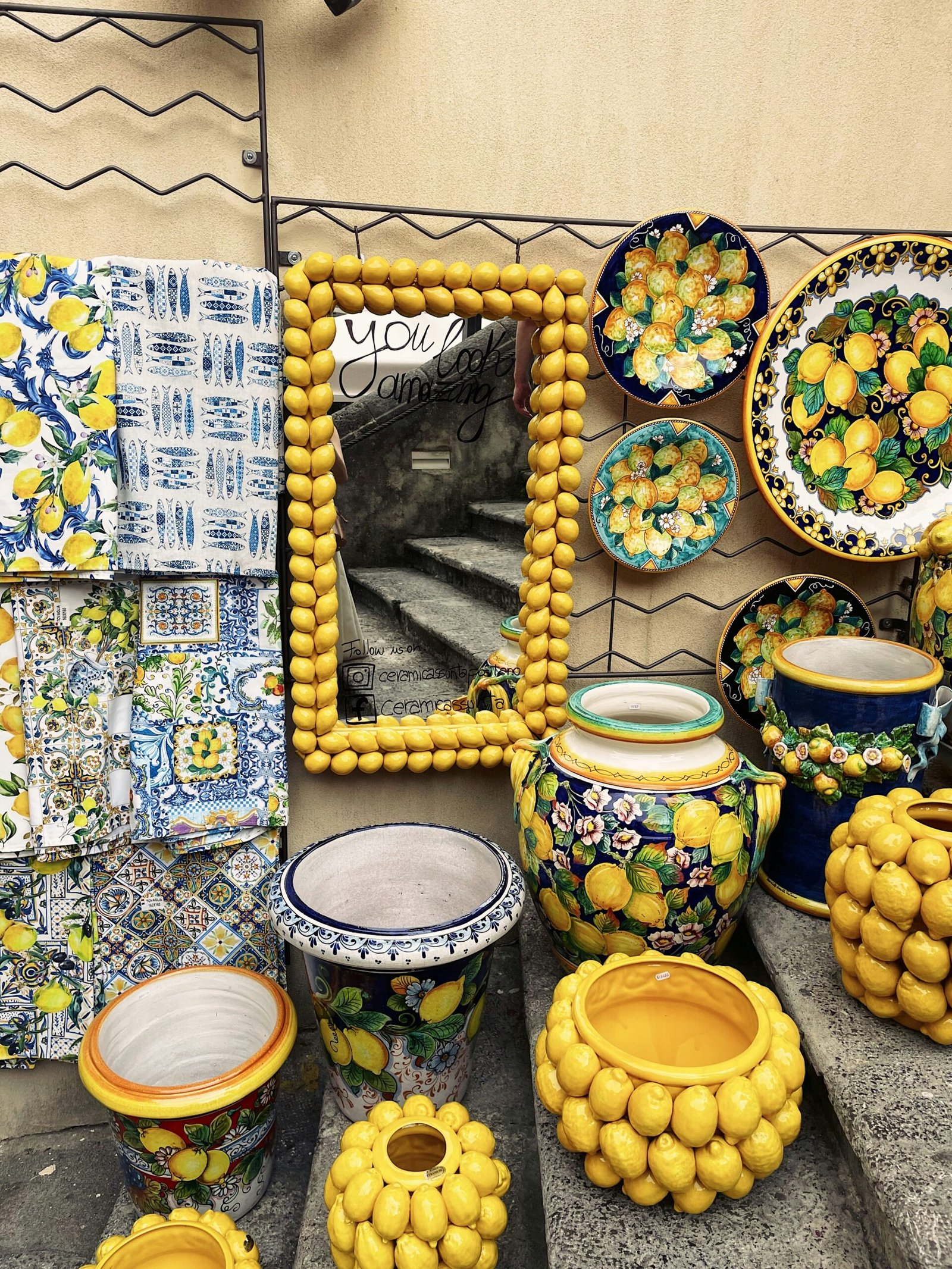
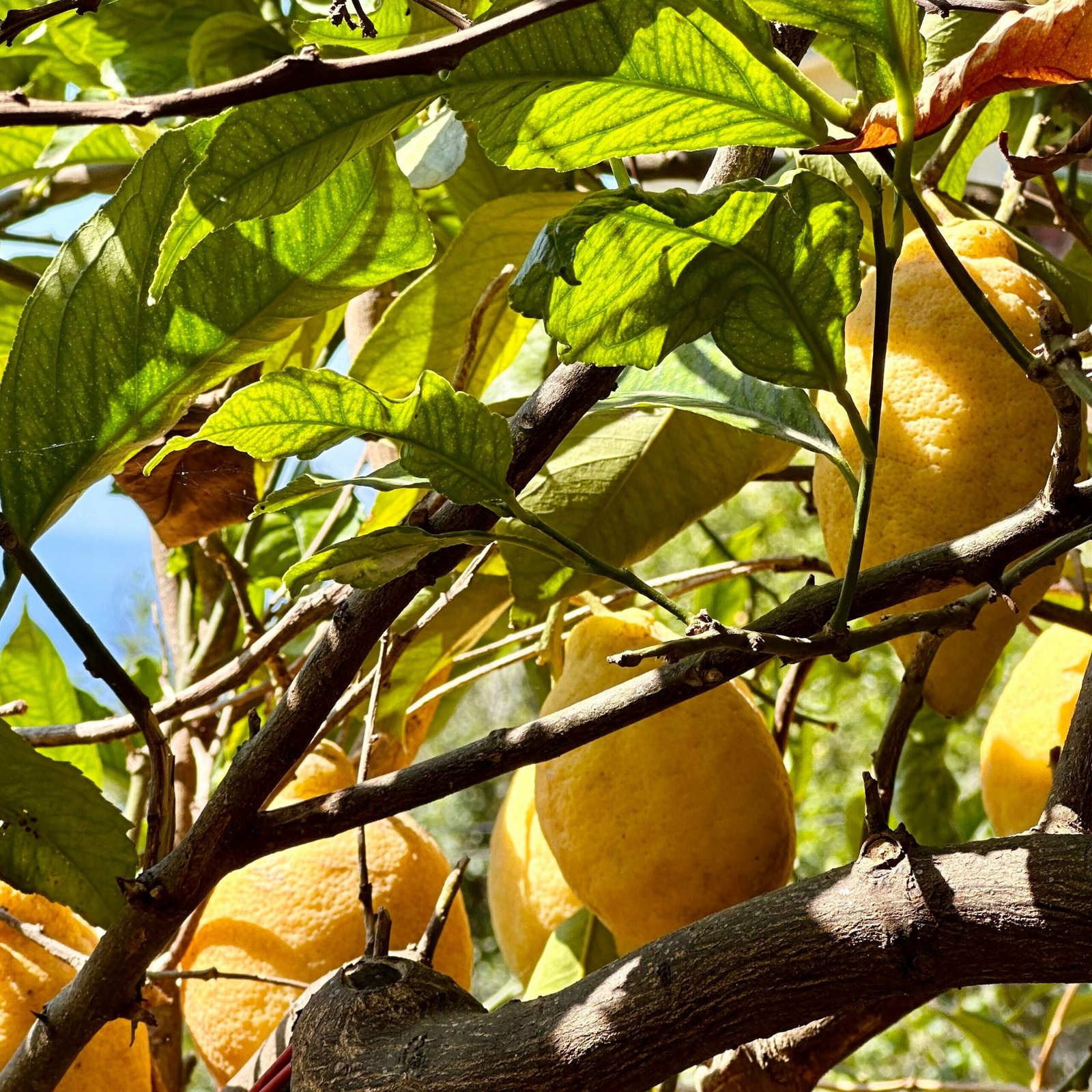
Two things you absolutely must try: sfogliatella (a shell-shaped pastry filled with ricotta and citrus) from any of the pasticcerie in Amalfi town, and limoncello made from the local Sfusato Amalfitano lemons — larger, more fragrant, and more intensely flavored than any limoncello you’ve had elsewhere. The lemons here are extraordinary — terraced groves on the cliffs above the towns, cultivated for centuries, producing a fruit that tastes like nothing else.
Price: Sfogliatella ~€2–3 / Limoncello tasting ~€5–10
Tip: Buy limoncello directly from a small producer rather than from tourist shops — the quality difference is significant and the price is lower. Also try the lemon granita and the lemon sorbet served in a half-lemon shell.
11. Explore Atrani — The Town Nobody Visits
Atrani is directly next to Amalfi town — about 10 minutes on foot – but feels like a completely different world. One of the smallest municipalities in Italy, it has a quiet beach, a compact main square, a medieval church, and far fewer crowds than the famous towns. It is the kind of place worth adding early in the trip, not as an afterthought.
Price: Free | Best time: Late afternoon when tourist crowds have moved on
Tip: Have lunch here instead of Amalfi or Positano — the food is equally good and prices are noticeably lower.
12. See the Furore Fjord
The Furore Fjord (Fiordo di Furore) is one of the most dramatic and unexpected sights on the Amalfi Coast — a narrow cleft in the cliffs where a river meets the sea, creating a tiny beach 25 meters wide framed by vertical rock walls on both sides. The famous annual cliff-diving competition happens here, with competitors jumping from the 28-meter bridge. Swimming here, looking up at the cliffs rising on both sides, is one of the most unusual experiences on the coast.
Price: Free | Best time: Early morning to avoid bus crowds | Time needed: 1–2 hours
Tip: Take the SITA bus and get off at the bridge — the staircase down to the beach is steep but short. Arrive early in summer as the tiny beach fills up quickly.
13. Take a Cooking Class
A cooking class on the Amalfi Coast stays with you long after the trip ends — not just because you learn recipes you’ll actually cook at home, but because it connects you to the food culture in a way that no restaurant meal can. The best classes are small-group or private sessions in local homes or farmhouses — you cook alongside the host, eat what you’ve made, and leave with handwritten recipes. Some combine the cooking with a visit to a lemon grove or a local market.
Price: Check current tour pricing | Best time: Morning sessions (some include a market visit or lemon grove stop) | Book: In advance for popular dates
For the best cooking class options on the Amalfi Coast, see options here.
14. Drive the Amalfi Coast Road
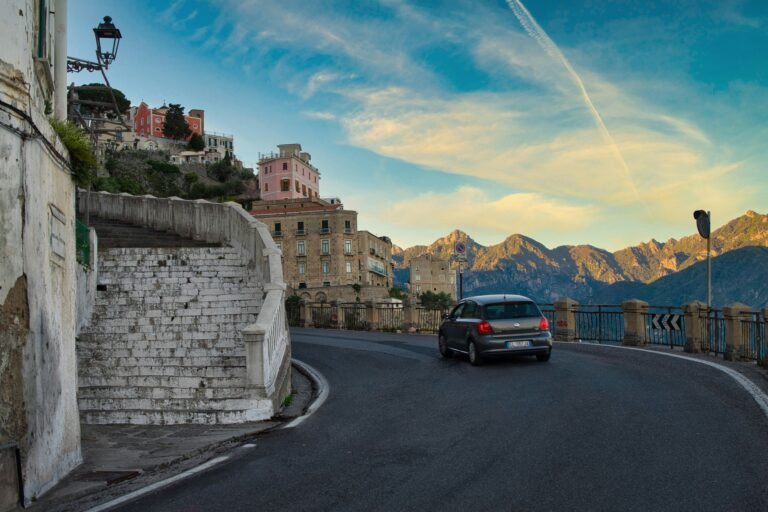
The SS163 Amalfitana — the coastal road connecting Sorrento to Salerno — is one of the most scenic drives in the world. It clings to the cliffs, tunnels through rock, crosses bridges over ravines, and offers views at every turn that make it almost impossible to keep your eyes on the road. If driving isn’t your thing, the SITA bus covers the same route and lets you watch the views without concentrating on narrow bends. There’s also the option of a private driver — flexible routing without the stress.
Price: Bus tickets are low-cost; private drivers vary by route and season | Best time: Early morning for best light and least traffic
Tip: If driving yourself, go in shoulder season and check current SS163 traffic rules before renting. Recent rules have included alternating-license-plate restrictions for non-resident cars during busy periods. If you still need a rental for Pompeii, inland villages, or airport logistics, compare prices before committing: Discover Cars.
15. Visit the Paper Museum
Amalfi was the first city in Europe to produce paper — learning the technique from Arab traders in the 11th century. The Paper Museum, housed in a 13th-century mill that still operates, tells this story with working demonstrations and hands-on exhibits. It sounds niche but it’s genuinely interesting — particularly the demonstration of hand papermaking — and mercifully short at 20–30 minutes.
Price: Around €5; check current demonstration times locally | Best time: Morning when demonstrations run most frequently
Tip: Buy a sheet of handmade Amalfi paper as a souvenir — beautiful, lightweight, and inexpensive compared to most things on the coast.
16. Snorkel in the Crystal Clear Water
The water along the Amalfi Coast is among the clearest in the Mediterranean — protected as part of a UNESCO World Heritage coastline. Snorkeling here gives you visibility of 15–20 meters on a good day, with rocky reefs, sea caves, and occasional ancient amphora fragments from the Roman period. The best spots are away from the main beaches — around rocky headlands between towns and near the quieter beaches like Marina di Praia in Praiano.
Price: Free with your own equipment / Snorkeling tours often run around €50-90 per person
Tip: Bring or rent reef-safe sunscreen — the coast’s marine protected areas are strict about chemical sunscreens.
17. Explore Praiano at Golden Hour
Praiano is the Amalfi Coast town that the right kind of traveler discovers and immediately falls in love with. Quieter than Positano, 30–40% more affordable, and with views that are absolutely equal to the famous towns. At golden hour — the last 45 minutes before sunset — the Church of San Gennaro with its majolica-tiled dome glows warm orange and the cliffside houses turn amber. Walk to the church terrace for the view west along the coast.
Price: Free | Best time: 5:30–7pm in summer for golden hour light
Tip: Praiano is 10 minutes from Positano by bus or ferry. Stay here instead of Positano and save significantly on accommodation without losing any of the actual experience.
18. Rent a Vespa and Explore the Coast Road
Renting a Vespa on the Amalfi Coast is one of those experiences that feels exactly as romantic as it looks in photographs — and it’s genuinely one of the best ways to experience the coast road on your own terms. You stop when you want, find viewpoints that buses don’t stop at, and the combination of coastal scenery and open road creates something that’s hard to replicate any other way. That said: this is only for confident riders. The roads are narrow and shared with buses and cars.
Price: ~€60–100 per day | Best time: Early morning — quieter roads and better light
Tip: Avoid July and August unless you’re an experienced rider — peak summer traffic is genuinely challenging on this road.
19. Find the Belvedere Viewpoint Above Amalfi Town
Most visitors to Amalfi town spend all their time at sea level. Almost none of them climb the stairs on the left side of the cathedral up to the Belvedere Cimitero Monumentale — a viewpoint 10 minutes above the town that offers one of the most dramatic overhead views of Amalfi anywhere. From here you see the full layout of the town from above — the cathedral dome, the harbor, the beach, the valley behind, and the coast stretching in both directions. One of the best free views on the entire coast and entirely off the tourist radar.
Price: Free | Best time: Late afternoon for best light | Time needed: 30 minutes up and back
20. Take the Monte Solaro Chairlift on Capri
The chairlift from Anacapri to the summit of Monte Solaro (589 meters) is one of the most extraordinary short experiences in the region — a 12-minute open-air ride to the highest point on Capri, with views that expand with every meter until you reach the summit and see the full Gulf of Naples, the Amalfi Coast, and Mount Vesuvius. The summit is far quieter than the famous spots at sea level, and the views in every direction are genuinely extraordinary.
Price: €14 return / €11 one-way in 2026 | Best time: After 10:30am on clear days, when haze is less likely
Tip: Go to Anacapri first (bus from Marina Grande) before it fills with day-trippers. The chairlift queue gets long by midday.
21. Have Dinner with Sea Views in Positano
A cliffside dinner in Positano with the sea below and the lights of the town reflected in the water is one of those experiences that earns the Amalfi Coast its reputation as one of the most romantic destinations in the world. La Tagliata in the hills above Positano serves a multi-course feast of whatever is fresh that day — the taxi ride up is worth it for the panoramic views alone. Il Ritrovo is the more accessible alternative with outstanding pasta and coast views.
Price: Usually around €60-100 per person with wine
Tip: Book days in advance in peak season, when the best-known restaurants in Positano can be fully reserved. If you arrive without a reservation, ask about cancellations around 6pm.
22. Visit the Ancient Town of Scala
Scala is the oldest town on the Amalfi Coast — older than Amalfi itself — and almost no tourists go there. It sits directly across the valley from Ravello, connected by a walking path that takes about 30 minutes each way. No tourist shops, prices set for locals, and views across the valley to Ravello and down to the sea that are extraordinary in the afternoon light. The most genuinely local experience on the entire coast.
Price: Free | Best time: Afternoon for the light on the valley
Tip: Walk the path between Scala and Ravello — it’s one of the best short hikes on the coast and gives you views of both towns from the valley.
23. Visit Baia di Ieranto — The Hidden Bay
Baia di Ieranto is one of the most beautiful and least visited beaches near the Amalfi Coast — a protected bay accessible only by foot (a 1-hour hike from Nerano) or by boat, with some of the clearest water on the entire coast and none of the crowds. The bay belongs to FAI (Italy’s National Trust) — no motorized boats allowed, which keeps the water extraordinarily clear. Pliny the Elder wrote about this bay in antiquity, claiming it was where Odysseus encountered the sirens.
Price: Free | Best time: Weekdays, early morning | Difficulty: Easy 1-hour hike each way
Tip: Bring everything you need — no facilities at the bay itself. The hike follows terraced lemon groves with sea views throughout.
24. Take a Vintage Fiat 500 Photo Tour
The vintage Fiat 500 photo tour looks slightly ridiculous in the brochure and turns out to be one of the best things you do on the trip. A local guide drives you through the most photogenic spots on the coast in a classic 1960s Fiat 500, stopping at viewpoints and pulling over wherever the light is good. It’s genuinely fun, produces great photographs, and is a surprisingly efficient way to see the coast on your own schedule.
Price: Check current tour pricing | Best time: Golden hour tours for the best photography | Book: In advance for popular dates
For Fiat 500 photo tour availability, compare Amalfi Coast Fiat 500 tour options here.
25. Watch the Sunset from Marina Grande, Positano
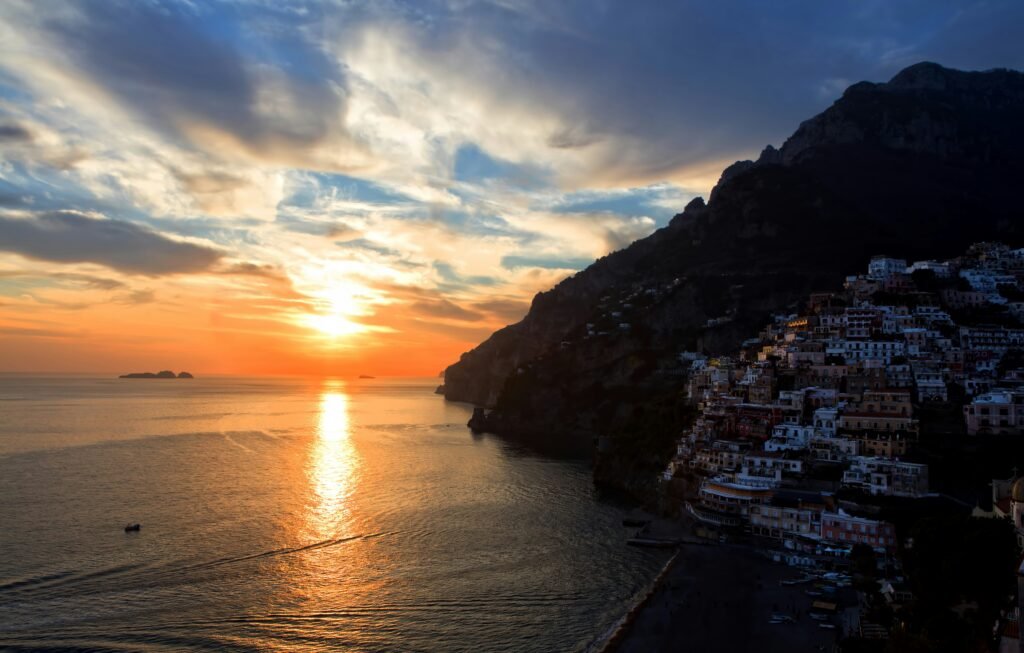
The last item on this Amalfi Coast bucket list is also the simplest — and possibly the best. On your final evening, walk down to the waterfront at Marina Grande in Positano, find a spot at one of the bars or restaurants right on the water, and watch the sun set over the sea. The light on the Amalfi Coast at sunset is extraordinary — warm and golden, turning the white buildings amber and the sea every shade from turquoise to deep blue. The boats rock gently in the harbor. The town rises behind you in its impossible layers.
Price: Free / Aperitivo ~€8–15 | Best time: June–September (8–9pm)
Tip: Order an Aperol Spritz or the local Fiano di Avellino white wine and stay long enough for the lights to come on across the bay.
Is the Amalfi Coast Worth It?
Yes — with the right expectations. The Amalfi Coast is expensive, crowded in peak season, and logistically awkward, but the combination of views, food, water, and golden-hour light is still strong enough to justify the effort. The key is planning it in a way that avoids the worst of the crowds and transport friction.
Go in shoulder season, base yourself in Praiano or Amalfi town rather than paying full Positano rates for every night, use the bus and ferry rather than taxis, and eat one street back from the waterfront. Do those things and the Amalfi Coast is one of the best-value extraordinary destinations in Europe.
What to Plan Differently
- Watch the Positano sunrise early in the trip, before later mornings get swallowed by ferries, beaches, and day trips.
- Add Atrani early rather than treating it as a last-minute stop next to Amalfi.
- Choose your boat tour date before you arrive if you are traveling in summer or only have a short trip.
- Give Praiano more than a quick pass-through; it is one of the best places for sunset and a calmer base.
Best Time for the Amalfi Coast Bucket List
May–early June is the ideal window — warm enough to swim, significantly fewer crowds than peak summer, and accommodation 20–30% lower than July–August. Every outdoor experience on this list is better in these months.
September–October is equally excellent — the sea is still warm from summer, prices drop after August, and the September light is extraordinary for photography. Hotel rates drop 25–40% compared to August peak — for exactly the same coast.
July–August is peak season — crowded, expensive, and hot. If this is your only option, book everything months ahead and start early every day.
Final Thoughts: Your Amalfi Coast Bucket List
The Amalfi Coast rewards the traveler who goes beyond the obvious. Positano and Capri are genuinely worth your time — but so are Atrani, Praiano, Scala, and the Furore Fjord. The Path of the Gods costs almost nothing and is worth more than most paid experiences on the coast. The sunrise over Positano is free and one of the most beautiful low-cost experiences on the coast.
Work through this list at your own pace. The coast does not release people easily — and that’s entirely the point.
Frequently Asked Questions
What is the best thing to do on the Amalfi Coast?
The Path of the Gods hike and a boat tour along the coast are the two experiences that make everything else make sense — and between them, they cost very little. If you only have time for one paid experience, choose the boat tour. If you only have time for one free experience, walk the Path of the Gods. Both together in the same 5-day trip is the ideal combination.
How many days do you need for the Amalfi Coast bucket list?
Five days covers the essential bucket list items comfortably — Positano, Amalfi, Ravello, Capri, Path of the Gods, boat tour, and several free experiences. Three days covers the core highlights without feeling rushed. Seven days allows a genuinely slow pace with time for Pompeii, Sorrento, and the quieter towns like Atrani and Scala.
What is free on the Amalfi Coast?
More than you’d expect. The Path of the Gods hike, all public beaches, Atrani village, the Furore Fjord viewpoint, Positano sunrise, Ravello town center, all coast road viewpoints, the Belvedere above Amalfi town, Praiano at golden hour, and the Ravello to Atrani walking path are all completely free. For a complete list, our guide to free things to do on the Amalfi Coast covers every no-cost experience.
Is the Amalfi Coast suitable for families with young children?
Yes — with the right base and expectations. Sorrento is the most practical family base (flat terrain, easy transport). Maiori and Minori have the best family beaches — shallow, sandy, and calm. Positano is the most challenging for families with toddlers due to the steep stairs everywhere, though it’s absolutely doable with a good carrier and some patience. With toddlers, a carrier is more useful than a stroller because stairs and uneven paths are part of the coast.
What is the best month to visit the Amalfi Coast?
September is the best month for most travelers — the sea is still warm, crowds thin significantly after summer, and hotel prices drop 25–40% compared to August. May and early June are close behind. Avoid July and August if possible — the most crowded and expensive months by a significant margin.
More Amalfi Coast Guides
- Ready to plan your days? Our 5-day Amalfi Coast itinerary covers exactly how to fit the best experiences into a realistic day-by-day plan.
- Still deciding where to stay? Our Amalfi Coast accommodation guide covers every town with honest pros, cons, and price ranges.
- Traveling on a budget? Our Amalfi Coast budget guide breaks down exactly what everything costs with real numbers.
- Looking for free experiences? Our guide to free things to do on the Amalfi Coast covers the best no-cost options.
- Still in the planning stages? Our complete trip planning guide covers flights, accommodation, budgeting, and every logistical step of planning a trip to Italy.