14-Day Southern Italy Road Trip Itinerary: The Complete Guide
Southern Italy does not need much convincing: dramatic coastlines, cave cities, baroque towns, Greek and Roman history, and food that changes completely from one region to the next. This researched 14-day Southern Italy road trip is built around driving logic, seasonal crowd patterns, and the stops that give the route real variety: Naples, Pompeii, Puglia, Matera, Calabria, Maratea, and the Amalfi Coast.
Planning note: This is a research-based itinerary, not a personal trip diary. Before booking, confirm official ticket rules, ferry schedules, car rental terms, and Amalfi Coast driving restrictions for your exact dates.
This 14-day Southern Italy road trip itinerary is built for people who already know they’re going and want a route that actually works — organized by driving logic so you’re never doubling back, never wasting a morning on the road when you could be on a terrace somewhere eating something extraordinary.
Contents
- Lili’s Picks
- Quick Summary
- Your 14-Day Southern Italy Road Trip: Overview
- Before You Go — Car Rental in Southern Italy
- Quick Tips for Your 14-Day Southern Italy Road Trip
- Day 1–2: Naples
- Day 3–4: Pompeii & Sorrento
- Day 5–7: Puglia
- Day 8: Matera
- Day 9–10: Calabria
- Day 11: Maratea
- Day 12–14: Amalfi Coast
- If You Have Less Time
- Is Southern Italy Worth It?
- Smart Route Adjustments
- Best Time for a Southern Italy Road Trip
- Practical Info
- Where to Stay: Best Bases
- Final Thoughts
- Frequently Asked Questions
- More Italy Guides
Quick answer: Yes — 14 days is the right length for Naples, Puglia, Matera, Calabria, and the Amalfi Coast without rushing. Fly into Naples, rent a car, and drive the route so the Amalfi Coast comes last — you’ll appreciate it more after two weeks of seeing the rest of the south first. May–June or September–October avoid both the summer heat and the summer crowds.
Affiliate disclosure: This post contains affiliate links. If you book or buy something through these links, I may earn a small commission at no extra cost to you. I only recommend things I genuinely believe are useful for planning this trip. Learn more.
Lili’s Picks
How I’d do this Southern Italy road trip
If I were planning this whole loop, I’d start with the car — every other decision on this route depends on it.
Discover Cars is where I’d compare Naples Airport pickup rates before locking anything in.
For the one splurge night, I’d book Le Sirenuse in Positano — and I’d save it for the very last night of the trip, once I’d actually earned it.
And for the single experience on this whole route I wouldn’t skip, it’s the guided Path of the Gods hike above Positano.
- Best if you want: a full 14-day loop through Southern Italy that actually covers Naples, Puglia, Matera, Calabria, and the Amalfi Coast without doubling back.
- Why it works: the car rental and the Path of the Gods hike both have free cancellation, so booking early doesn’t lock you into anything if your dates shift.
- Not ideal if: you only have a week — see If You Have Less Time further down for a shorter version of this same route.
- Before you go: sort money and connectivity too — my guides to travel money cards, eSIMs for travel, and planning a trip cover the setup.
Quick Summary
| Best time to visit | May–June or September–October |
| How many days | 14 days minimum |
| Starting point | Naples (NAP airport) |
| Do you need a car | Yes — essential for this route |
| Don’t miss | Matera cave city + Tropea beaches |
| Book in advance | Amalfi Coast accommodation (3 months ahead), Naples Underground, Pompeii tickets |
| Best for | Couples, families, road trip lovers |
Quick Tips for Your 14-Day Southern Italy Road Trip
Renting a Car
A car is the backbone of this itinerary — you simply cannot reach many of the best beaches, hill towns, and viewpoints efficiently without one. Compare rates before booking because prices vary a lot by supplier, insurance excess, transmission type, and pickup time. Start with Discover Cars for Naples Airport options, then read the supplier reviews and deposit rules before paying.
Accommodation
For hotels and agriturismi along the route, Expedia has strong coverage in Southern Italy — including smaller masserie in Puglia that can be harder to find elsewhere, plus refundable hotel rates, package pricing, and family-friendly properties in the coastal towns. Every stop on this route gets its own specific pick in Where to Stay: Best Bases further down.
Experiences Worth Booking in Advance
A few experiences on this itinerary can sell out or become awkward to book last minute — especially in summer. Consider locking these in early:
- Naples Underground is one of the most impressive things you can do in the city — a guided tour through 2,000 years of tunnels beneath the streets. Book your skip-the-line ticket here.
- The Amalfi Coast boat trip is the single best way to see the coastline — from the water, everything looks completely different. Check availability and book here.
- The Path of the Gods hike above Positano is the highlight of Day 13 — a guided option is worth it for the local context and stories. See guided hike options here.
- Pompeii skip-the-line tickets are essential in peak season — the queues without them are genuinely painful. Get your ticket here.
Pro tip: Book your Amalfi Coast accommodation at least 3 months in advance — even in shoulder season it sells out fast.
Your 14-Day Southern Italy Road Trip: Overview
- Day 1–2: Naples — pizza, history, and the chaos you’ll fall in love with
- Day 3–4: Pompeii & Sorrento — ancient ruins and the gateway to the coast
- Day 5–7: Puglia — Polignano a Mare, Alberobello, Ostuni
- Day 8: Matera — the cave city that will stop you in your tracks
- Day 9–10: Calabria — Tropea and Scilla
- Day 11: Maratea — the hidden gem almost nobody visits
- Day 12–14: Amalfi Coast — Positano, Amalfi, Ravello
Before You Go — Car Rental in Southern Italy
A car is non-negotiable for this itinerary. Public transport exists between major cities, but it won’t get you to the hidden beaches, the hilltop villages, or the viewpoints that make Southern Italy what it is.
Where to pick up: Naples International Airport (NAP) is the logical starting point. Pick up your car when you’re ready to leave Naples on Day 3, not on arrival — you don’t need it in the city, and parking will cost you money and stress.
What to rent: Get a small car. Roads in Southern Italy — especially in Puglia towns and on the Amalfi Coast — are narrow in ways that will genuinely concern you if you’re driving something large. Manual transmission is standard and significantly cheaper than automatic.
Licence note: If your driving licence was issued outside the EU/EEA, Italy generally requires an International Driving Permit or an official Italian translation alongside your original licence. Check the ACI car-rental guidance before you leave home.
ZTL zones: Many Italian town centers are ZTL (limited traffic zones) — driving into them triggers automatic fines that follow you home. Always park outside the historic center and walk in. If you’re traveling with a baby or toddler, note that car seats fly free as checked baggage on most airlines — worth bringing your own rather than paying rental rates.
Amalfi Coast road rules: The SS163 Amalfitana can have seasonal alternate-plate restrictions and local traffic controls in peak periods. For 2026 rules, check the Costa d’Amalfi tourism district traffic guidance before deciding whether to drive between towns or use ferries/buses.
Where to Stay on the Amalfi Coast
Choosing your base makes a real difference to your experience and your budget:
- Positano — the most iconic and most expensive. Worth it for one night if the budget allows, but challenging for families with young children due to the endless stairs. Le Sirenuse is the town’s landmark stay if you’re splurging.
- Praiano — 10 minutes from Positano, significantly cheaper, quieter, and with some of the best views on the coast. Best-value base for this route. Hotel Il Pino is a well-reviewed, reasonably priced option here.
- Amalfi town — most central, easier for exploring, good mid-range options. Hotel Amalfi is a solid, centrally located pick.
Day 1–2: Naples
Day 1 — Morning
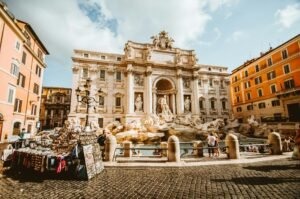
Start at Caffè Gambrinus on Piazza Trieste e Trento — Naples’ most historic café, open since 1860. Order a cornetto and a cappuccino and watch the city wake up around you. Naples moves at its own pace and this is the right way to meet it.
The historic center of Naples is a UNESCO World Heritage Site and one of the most visually intense urban environments in Europe. Walk the full length of Spaccanapoli — the long straight street that cuts the city in half. Every block is different. Naples Cathedral (Duomo) is worth stepping inside — the Chapel of San Gennaro, with its silver baroque interior, is genuinely extraordinary and free. The National Archaeological Museum is one of the finest in the world, housing treasures from Pompeii and Herculaneum.
Tip: Naples rewards wandering more than it rewards planning. Don’t rush.
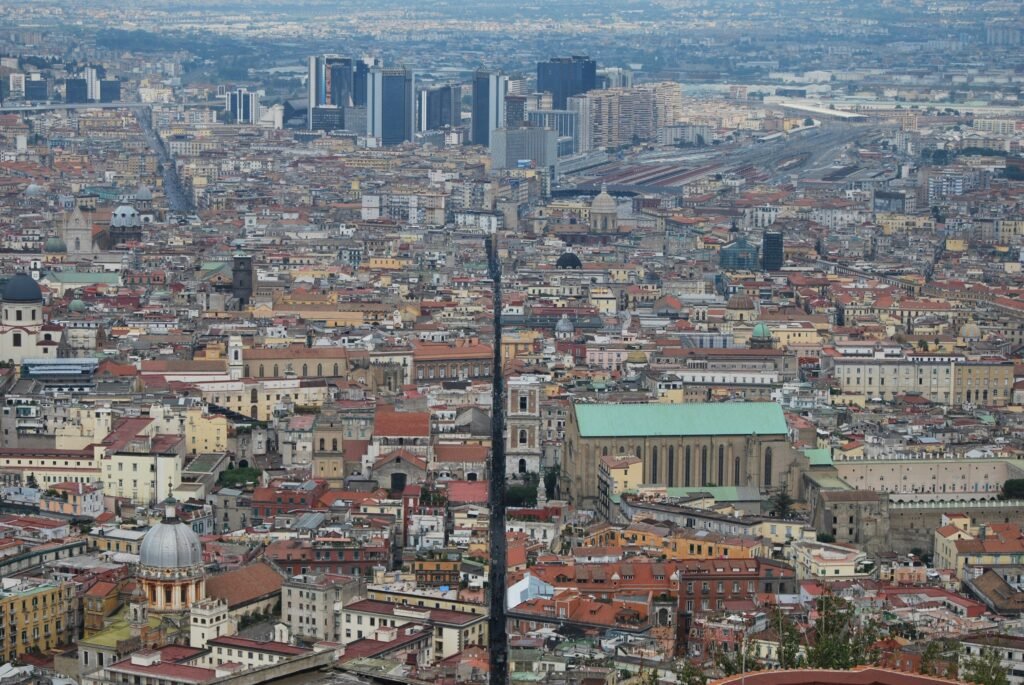
Day 1 — Afternoon & Evening
Lunch: Sorbillo on Via dei Tribunali. One of the most famous pizzerias in Naples and the wait is worth it — a Margherita here is as good as pizza gets anywhere in the world.
Afternoon: Walk to the waterfront at Lungomare Caracciolo for views of the Bay of Naples and Mount Vesuvius. Castel dell’Ovo — the egg-shaped castle jutting into the sea — is one of the classic waterfront stops, but check current opening status before planning around going inside.
Dinner: Head to the Quartieri Spagnoli — tiny restaurants, loud conversations, and food that has nothing to do with the tourist trail. This is Naples at its most authentic.
Price: Budget dinner ~$15–20 per person | Mid-range ~$35–50 per person
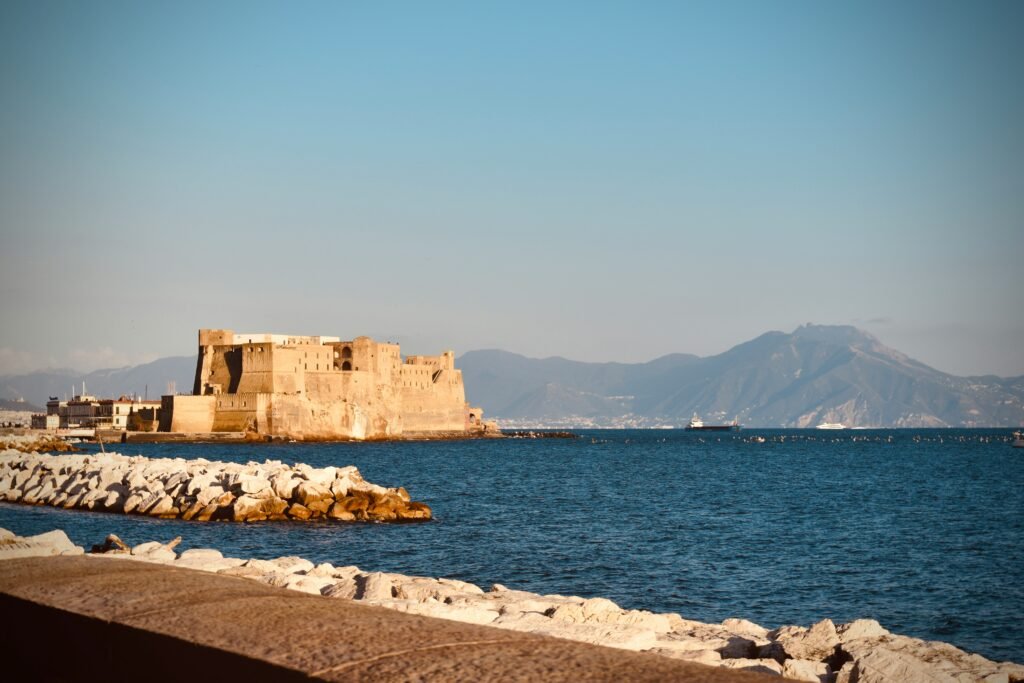
Day 2 — Morning & Afternoon
Spend the second morning underground. Naples Sotterranea (Naples Underground) is one of the best experiences in the city — a guided tour through tunnels, cisterns, and wartime shelters beneath the streets. Check current times on the official Napoli Sotterranea route, or use Viator for guided Naples Underground options.
The National Archaeological Museum in the afternoon — allow 2–3 hours. The collection from Pompeii alone is worth the trip, and seeing it before you visit the ruins in person makes Pompeii dramatically more meaningful. Book a guided museum tour here.
Tip: Leave Naples after lunch on Day 2 — the drive to Sorrento takes about an hour and gives you a relaxed late afternoon arrival.
Day 3–4: Pompeii & Sorrento
Day 3 — Morning: Pompeii
Pompeii is one of those experiences that exceeds every expectation. Walking through a complete Roman city frozen in 79 AD — the streets, the bakeries, the houses, the graffiti still on the walls — is genuinely overwhelming. The highlights are the Forum, the Villa of the Mysteries, the amphitheater, and the plaster cast figures in the Garden of the Fugitives.
Tickets: Official Pompeii tickets are sold through the ticket portal linked from Pompeii Sites; guided tours and timed third-party options cost more. Best time: First thing at opening — very crowded by 11am | Time needed: 3–4 hours
Tip: Wear comfortable shoes and bring water. The site is large and there is almost no shade. If you want the history to really come alive, going with an archaeologist guide transforms the experience. See guided Pompeii tour options here.
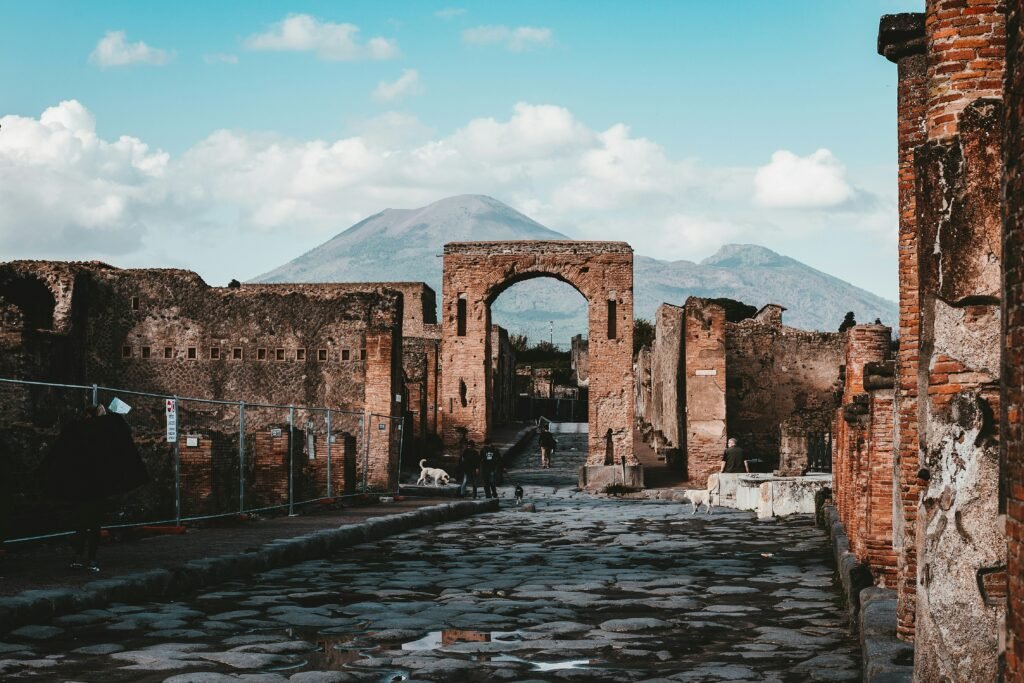
Day 3 — Afternoon: Sorrento
After Pompeii, drive to Sorrento — about 30 minutes. Walk through the old center, browse the lemon shops on Corso Italia, and find a terrace with views over the Bay of Naples. Dinner at the waterfront restaurants near Marina Grande — fresh seafood, reasonable prices, and views that justify every dollar.
Tip: Sorrento is the best base for the next day’s activities — central, well-connected, and significantly cheaper than the Amalfi Coast towns. Majestic Palace Hotel is a well-reviewed, central option.
Day 4 — Day Trip: Capri or Vesuvius
Option A: Capri — The ferry from Sorrento takes about 25 minutes when conditions and schedules line up. Capri is expensive and crowded in peak summer, but the Blue Grotto, the boat tour around the island, and the views from Monte Solaro are genuinely extraordinary. Go first thing in the morning to beat the day-trippers, check ferry times before locking the day, and compare Capri boat tour options here.
Option B: Mount Vesuvius — Drive up toward the crater of the volcano that buried Pompeii. Crater access is ticketed and capacity can change, so check the official Vesuvius National Park ticket page before you go. A guided tour adds significant context to what you are seeing. Book a Vesuvius guided tour here.
Day 5–7: Puglia
Day 5 — Polignano a Mare
Leave Sorrento after breakfast — the drive to Puglia takes about 3.5 hours. Polignano a Mare is one of those places that looks almost too beautiful to be real — a small town perched on dramatic limestone cliffs above the Adriatic Sea, whitewashed buildings stacked right to the edge, crystal-clear water in coves far below.
Walk through the old town, find the main terrace at Terrazza Santo Stefano for the classic view, then work your way down to Cala Porto (Lama Monachile) — the small beach tucked into the cliff below. Swimming here with the town rising above you is one of the best moments on the entire itinerary.
Tip: Arrive before 3pm to get a parking spot without stress. For a splurge with a view, Grotta Palazzese Beach Hotel is built directly into the cliff, right in town.
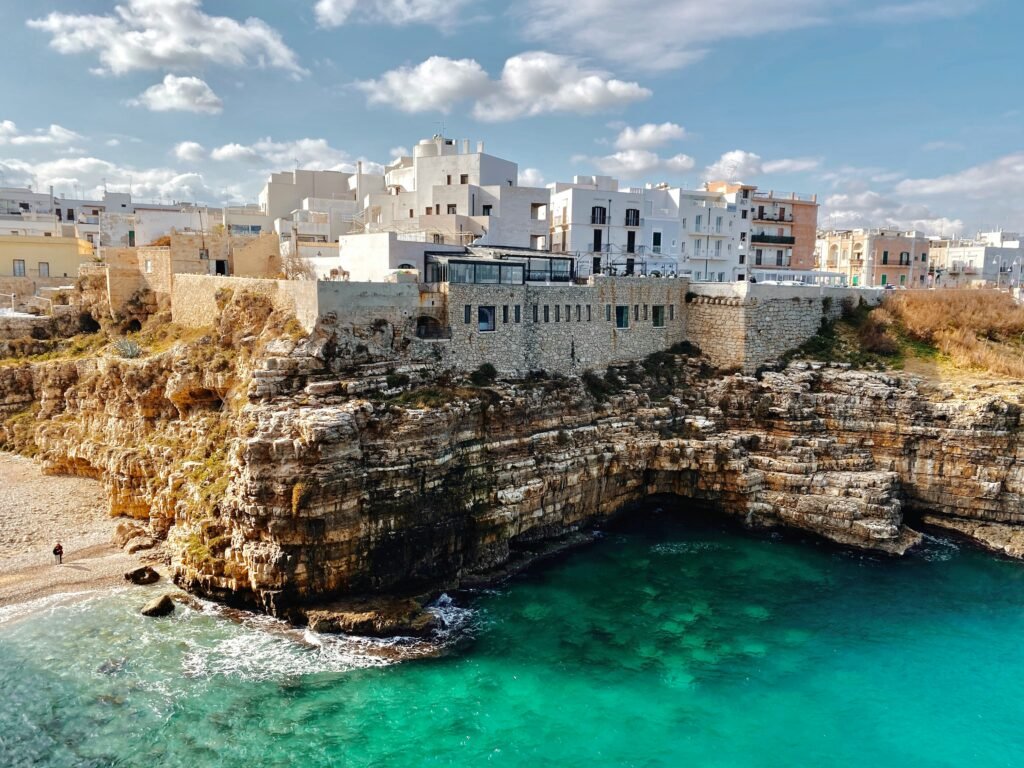
Day 6 — Alberobello & Ostuni
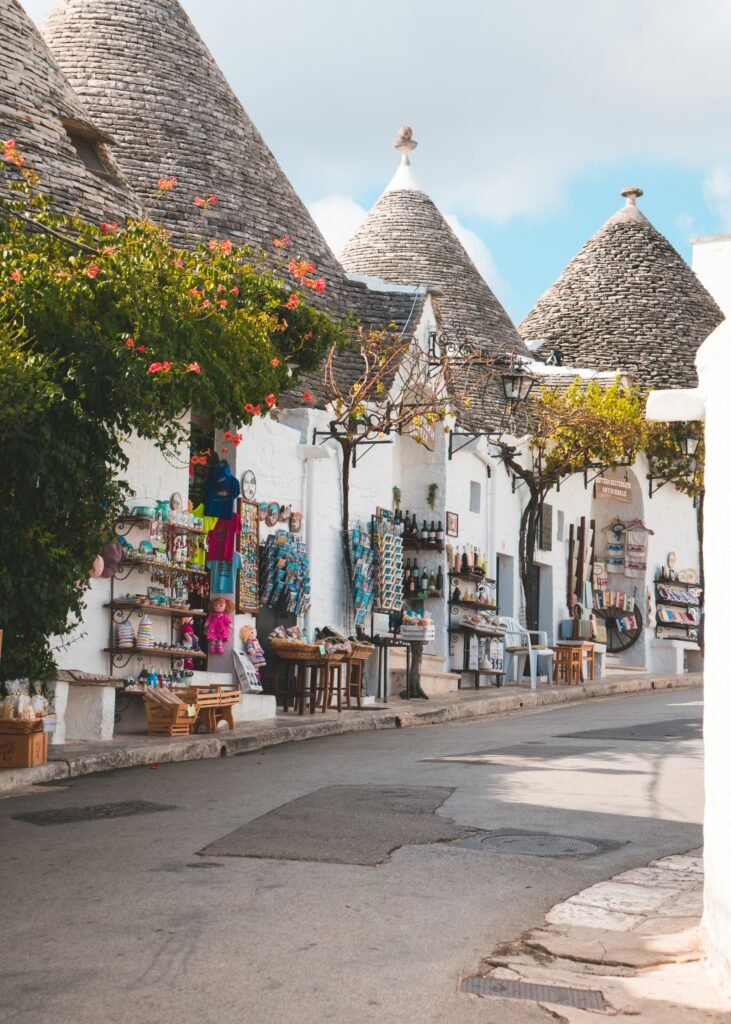
Morning: Alberobello — Drive 40 minutes inland to this UNESCO World Heritage Site famous for its trulli — ancient whitewashed houses with conical stone roofs that look like something from a fairy tale. Nothing else in the world looks like this. Arrive early — tour buses start arriving by 10am. Walk through the Rione Monti neighborhood, visit Trullo Sovrano (the only two-story trullo), and take your time.
Price: Free to walk / Trullo Sovrano ~$3 | Time needed: 2–3 hours | Tip: Staying overnight in Alberobello — some guesthouses in town are converted trulli — is one of the most unique accommodation experiences in Italy and not as expensive as you’d expect. Hotel Ramapendula is a well-reviewed base right in town.
Afternoon: Cisternino & Ostuni — Drive 20 minutes to Cisternino for lunch. The bombette (stuffed pork rolls cooked on an open grill) from any of the butcher-restaurants on the main street are extraordinary — one of the best lunches on the whole route. From Cisternino, 30 minutes to Ostuni — the White City. This hilltop town glowing brilliant white above the olive groves is one of the most beautiful sights in Southern Italy.
For the most memorable base in Puglia, a masseria near Ostuni — a traditional fortified farmhouse, often with a pool and olive groves — is hard to beat. La Piana degli Ulivi, set in the countryside among the olive trees just outside town, fits that brief well.
Day 7 — Beach Day: Puglia Coast
Day 7 is a deliberate slow day — beaches, swimming, and doing very little. Punta Prosciutto (45 minutes from Ostuni) is one of the best beaches in Italy — long stretches of white sand, shallow clear water, and significantly fewer people than the famous Amalfi beaches.
Tip: Bring your own food and drinks — the beach bars are expensive and the picnic approach is infinitely more enjoyable. This is also a fantastic family beach — the water is very shallow for a long way out, perfect if you’re traveling with small children.
Optional addition: Lecce (1 hour from Ostuni) is one of the most beautiful baroque cities in Europe — a compact old town covered in extraordinary stone carvings that earned it the nickname “the Florence of the South.” Worth at least 2–3 hours if you have the energy.
Day 8: Matera
Nothing fully prepares you for your first view of Matera. A city literally carved into the sides of a ravine, with thousands of years of human habitation written into the stone. Matera is one of the oldest continuously inhabited cities in the world — the Sassi cave districts were inhabited for around 9,000 years. Walking through them today, with restaurants and boutique hotels carved into the same rock where prehistoric families lived, is one of the most extraordinary experiences in Italy.
Morning: Drive straight to the Belvedere di Murgia Timone viewpoint on the opposite side of the ravine for the first view — the full panorama of the Sassi from across the canyon is breathtaking.
Afternoon: Cross into the Sassi and wander. The two cave districts — Sasso Caveoso and Sasso Barisano — are a maze of staircases, tunnels, cave churches, and extraordinary views. The Chiesa Rupestre di Santa Maria di Idris, built directly into the rock, is the highlight.
Price: Free to walk / Cave church combo ~$5 | Time needed: Full day | Guided tour: ~$25–35 and genuinely worth it — the history is so dense that context transforms what you’re seeing. Book a Matera guided tour here.
Tip: Stay overnight — Matera at night, with the cave city illuminated across the ravine, is one of the most beautiful sights in Italy. A cave hotel in the Sassi is an experience unlike anything else on this road trip. Locanda di San Martino, built into the Sassi with its own Roman-style thermal baths, is exactly that kind of stay.
Day 9–10: Calabria
Day 9 — Tropea
Drive 3 hours from Matera. Tropea is one of the most beautiful coastal towns in Italy and one of the most overlooked — the town sits on a high cliff above a sweep of white sand and extraordinarily clear turquoise water. The Santuario di Santa Maria dell’Isola, a church built on a rocky outcrop at the edge of the beach, is the iconic image of the town.
Walk through the old town, work your way down to the beach, and stay for dinner — Tropea is famous for its sweet red onions, which appear in everything and somehow make everything better.
Tip: Stay in the old town if you can — waking up to those cliff views is worth the slightly higher price. Townhouse Tropea is a well-reviewed option right in the historic center. To see the coastline from the water, a boat trip and snorkeling tour from Tropea is excellent value. See Tropea boat tour options here.
Day 10 — Scilla
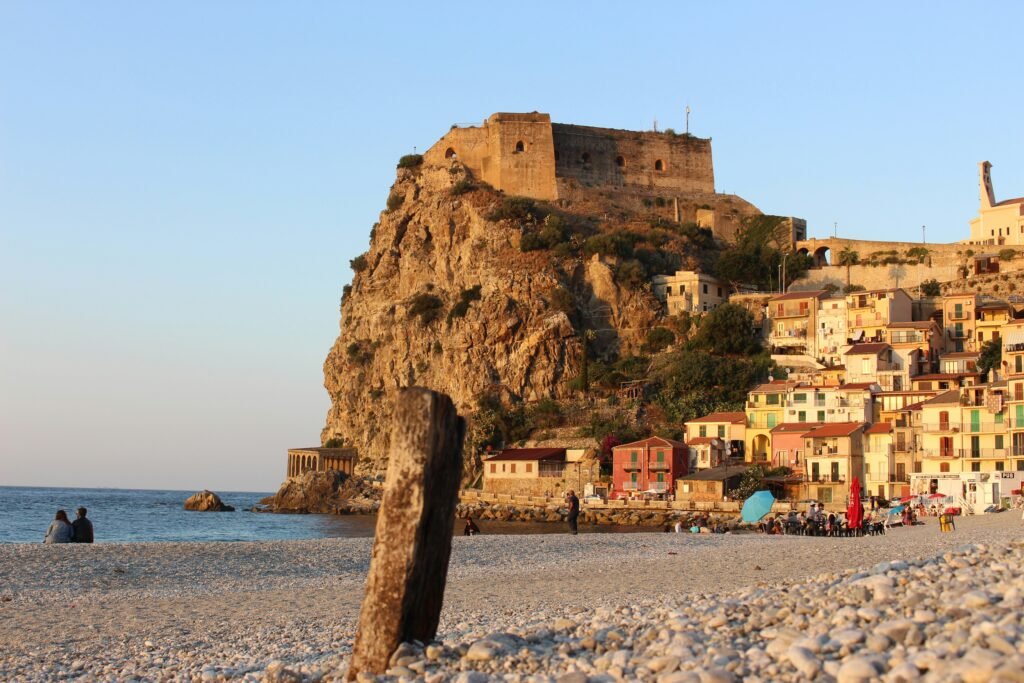
Drive 1.5 hours south to Scilla — less famous than Tropea and better for it. Explore Chianalea — the lower village where the houses are built so close to the sea that fishing boats moor directly outside front doors. Walk up to Castello Ruffo for views over the Strait of Messina — on a clear day you can see Sicily, just three kilometers away.
Tip: Try the swordfish — Scilla is famous for it. Staying right on the waterfront in Chianalea is one of the most atmospheric nights on the entire route. Signora Tita B&B puts you right in Chianalea, steps from the water.
Day 11: Maratea
Drive 2.5 hours north to Maratea — the place on this itinerary that almost nobody knows about, and the one that almost everyone ends up calling their favorite. Often called “the Pearl of the Tyrrhenian Sea,” Maratea sits on the Tyrrhenian coast in a landscape of dramatic cliffs and deep blue water that earned it the name.
Morning: Drive up to the Cristo Redentore statue — a 21-meter white marble figure on the peak above the town, with panoramic views of the entire coastline that are among the most extraordinary on this route.
Afternoon: Find a beach. Spiaggia Marina di Castrocucco is one of the most beautiful — a small rocky cove with remarkably clear water.
Tip: Maratea is the perfect place to slow down before the final push to the Amalfi Coast. Don’t rush through it — it’s the kind of place you’ll wish you’d given an extra day. Hotel Murmann is a good-value, well-reviewed base here.
Day 12–14: Amalfi Coast
Day 12 — Arrival & Positano
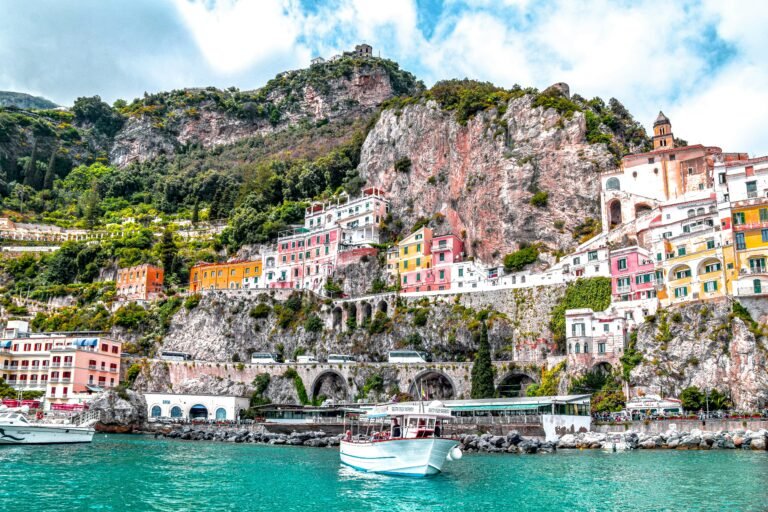
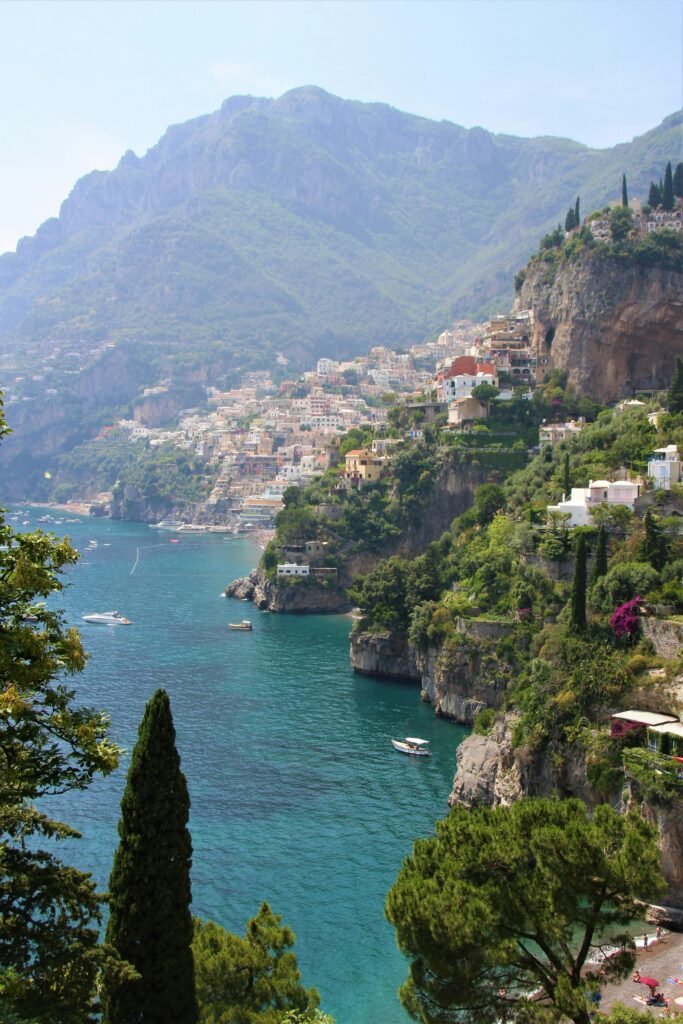
The drive from Maratea takes about 2.5 hours. By the time you arrive, you’ve seen enough of Southern Italy to understand why the Amalfi Coast is famous — and to appreciate it properly rather than simply photographing it. That’s the point of saving it for last.
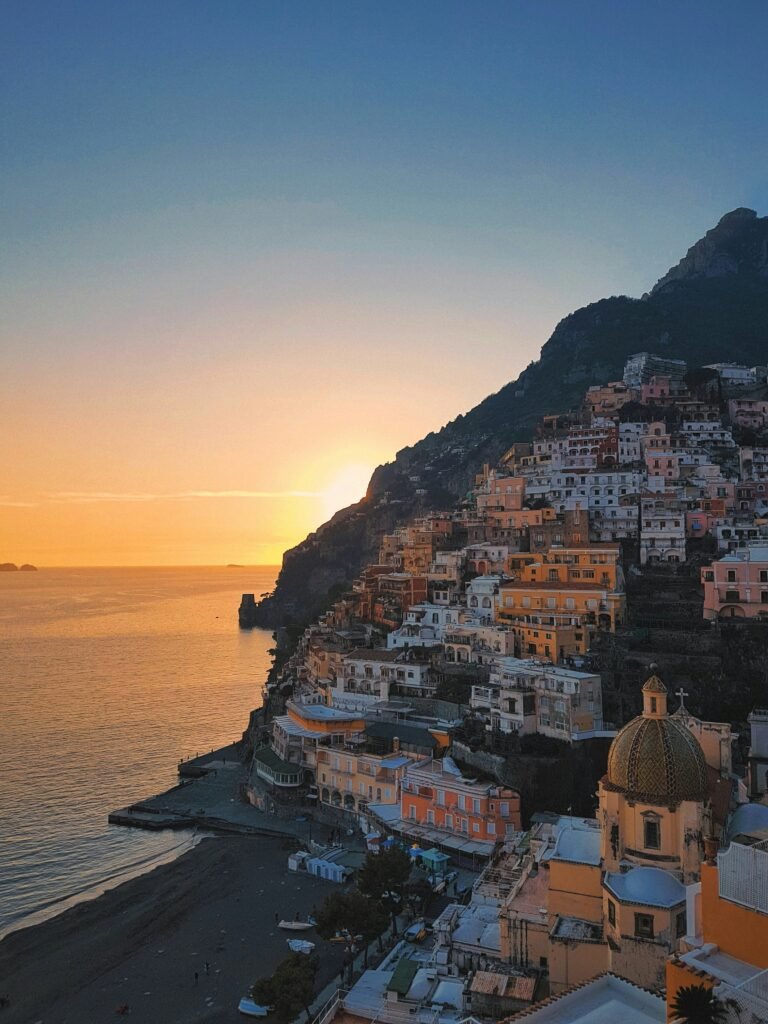
Afternoon: Walk down through Positano’s colorful streets to the Spiaggia Grande beach. Find a spot for an aperitivo as the sun gets lower over the sea.
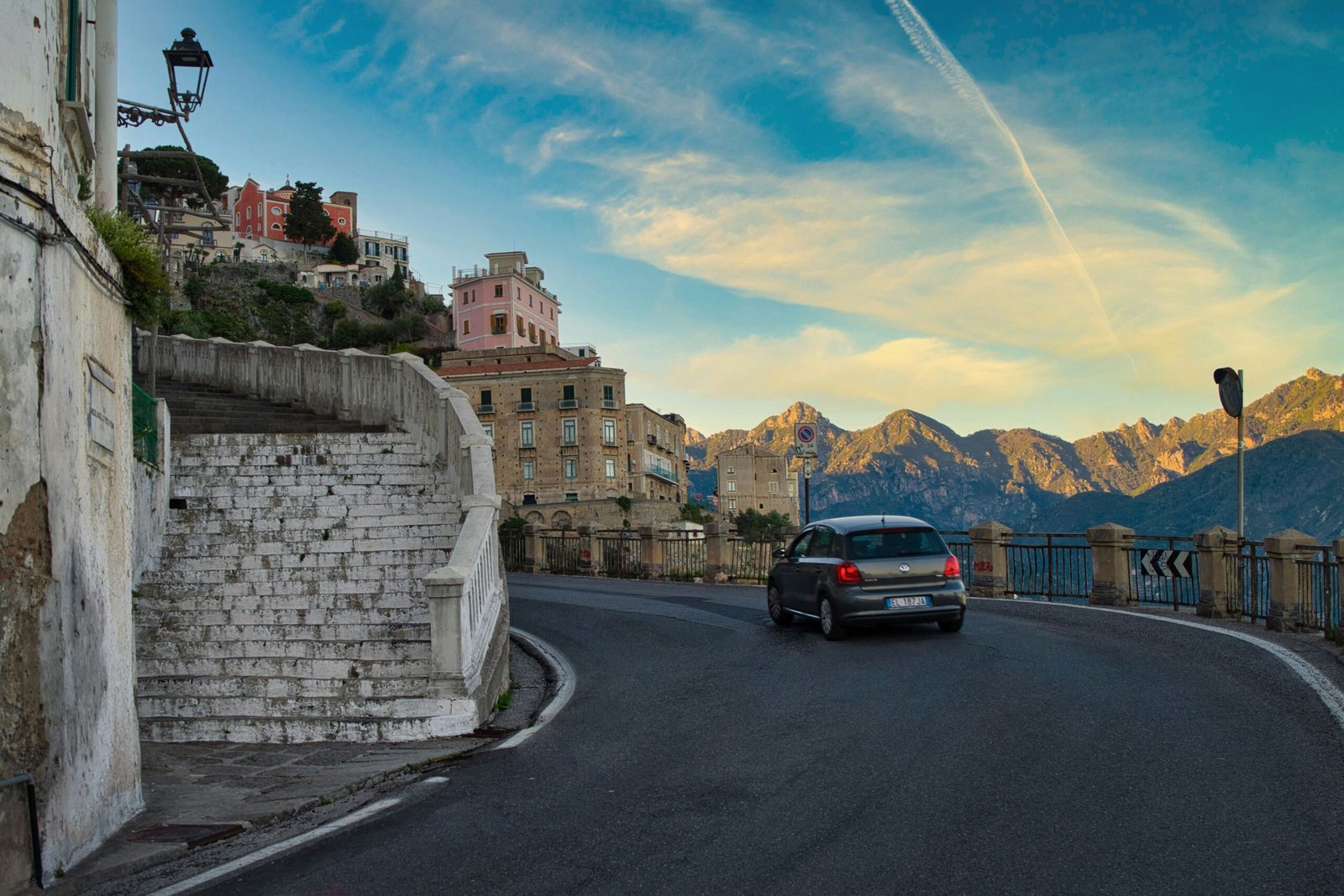
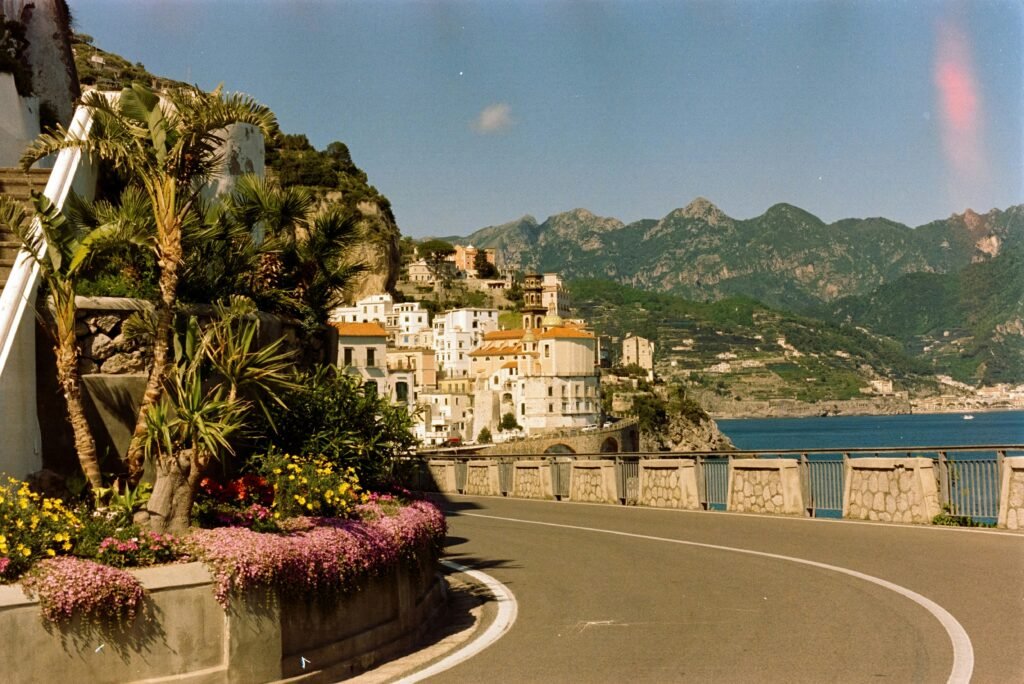
Driving tip: On the Amalfi Coast road, go early or go by ferry. The road is narrow, the buses are large, summer traffic can mean hours of waiting, and seasonal SS163 restrictions may affect rental cars. The ferry between towns is often faster and gives you the best views of the coastline.
Day 13 — Ravello, Amalfi & The Path of the Gods
Morning: Ravello — Drive up to Ravello — 10 minutes above Amalfi town, sitting at 350 meters above the sea. Villa Cimbrone’s Terrace of Infinity is one of the most celebrated viewpoints in Italy — a row of marble busts at the edge of a cliff with the sea stretching to the horizon far below. Come in the morning before the tour groups arrive.
Price: Villa Cimbrone ~$8 / Villa Rufolo ~$8 | Time needed: 2 hours
Afternoon: Path of the Gods — If you only choose one active experience on the Amalfi Coast, make it this. The hiking trail runs along the clifftops above Positano with views of the entire coast that no photograph does justice to. The classic route runs from Agerola to Nocelle and takes 3–4 hours one way.
Best time: Early morning in summer | Difficulty: Moderate | Tip: Take the bus from Amalfi to Agerola to start, walk down to Positano, take the ferry back.
A guided hike adds local stories and context that transform the experience. Book a guided Path of the Gods hike here.
Day 14 — Boat Tour & Farewell
The last day of this Southern Italy road trip should be slow. You’ve earned it.
A boat tour along the Amalfi Coast is the best way to end the trip — from the water, you see the entire coastline you’ve been exploring from a completely new angle, including grottos, hidden beaches, and sea caves that can’t be reached any other way. A private boat gives full flexibility and is worth splitting costs for a small group; a shared tour is excellent value if you’re happy to go with others.
Book a private Amalfi Coast boat tour here. | See shared boat tour options here.
Afternoon: Return to Amalfi town for a final long lunch by the harbor. Order the spaghetti alle vongole, drink the local white wine, take your time. The drive back to Naples airport takes about 1.5 hours — allow 2 with traffic, more in summer.
Tip: If your flight is early the next morning, stay overnight in Naples rather than driving the Amalfi Coast road in the dark.
If You Have Less Time
7 days: Naples (2) → Puglia (2) → Matera (1) → Amalfi Coast (2)
10 days: Naples (2) → Puglia (3) → Matera (1) → Calabria (1) → Amalfi Coast (3)
Extend to 21 days: Add Sicily by ferry from Calabria — one of the best travel decisions you can make.
Is Southern Italy Worth It?
Yes — if you like road trips with real contrast. Southern Italy is one of the most underrated travel regions in Europe because it does not rely on one famous coastline. The Amalfi Coast may be the headline, but Matera, Tropea, Maratea, Naples, and Puglia give the route its depth.
It’s worth it if you love food, history, dramatic coastlines, and destinations that feel genuinely different from each other. Every stop on this route has a completely distinct character — from Naples’ chaotic energy to Matera’s eerie timelessness to the laid-back pace of Calabria.
It’s less ideal if you need everything to be easy and polished. Southern Italy rewards patience and flexibility — roads can be narrow, signs confusing, and plans sometimes need adjusting. That’s part of what makes it extraordinary.
Smart Route Adjustments
- Book Amalfi Coast accommodation earlier than feels necessary — for June to September, 4–6 months ahead is safer than 3 months if you want Praiano or Positano.
- Add an extra night in Matera. One night is enough to see it, but two nights lets you experience it properly — including the illuminated cave city at midnight when all the day visitors are gone.
- Do not skip Maratea if the route allows it. It breaks up the long Calabria-to-Amalfi drive and adds a quieter coastal stop before the busiest part of the trip.
- Take the ferry between Amalfi Coast towns instead of driving wherever possible — it’s faster, more relaxing, and the views from the water are extraordinary.
Best Time for a Southern Italy Road Trip
Spring (May–early June) is the ideal time — warm weather (70–80°F), clear seas, far fewer crowds than summer, and lower prices on accommodation. The landscape is green, the wildflowers are out, and every outdoor experience is better without summer heat and crowds.
Fall (September–October) is equally excellent — the sea is still warm from summer, prices drop significantly after August, and the September light is extraordinary for photography. For a first Southern Italy road trip, September is the strongest overall balance of weather, prices, and crowd levels.
Summer (July–August) is peak season — hot (85–100°F in Calabria), crowded, and significantly more expensive. The Amalfi Coast in particular becomes extremely busy. If summer is your only option, book everything months in advance.
Shoulder season tip: September in Southern Italy is the sweet spot – hotel rates are often less punishing than August, the sea is usually still warm, and the most popular stops feel calmer. The difference in price and experience between August and September can be dramatic on this route.
Practical Info
Getting to Naples
Naples International Airport (NAP) has seasonal direct transatlantic flights, including New York-area routes in current schedules, but routes and dates change by year. From other US cities, connect through Rome (FCO) or a European hub. Compare prices on Google Flights and Skyscanner before committing to the road trip dates.
How Much Does This Southern Italy Road Trip Cost?
| Expense | Budget-conscious | Comfortable | Splurge |
|---|---|---|---|
| Accommodation | $60–90/night | $110–160/night | $200+/night |
| Food (daily) | $25–35/day | $50–70/day | $100+/day |
| Activities | $20–30/day | $40–60/day | $80+/day |
| Car rental (14 days) | $350–500 total | $500–700 total | $800+ total |
What to Pack
- Comfortable walking shoes — cobblestones everywhere
- Light layers — evenings can be cool even in summer
- Reef-safe sunscreen
- A light jacket for evenings on the coast
- Power adapter (Italy uses Type F/L plugs)
Money & Paying
Italy is straightforward for card payments, but on a 14-day road trip you will pass through smaller towns and rural areas where cash is still useful — especially at local markets, agriturismi, parking areas, and roadside stops. Wise is useful for withdrawals and payments abroad, but carry some euros for small-town logistics.
Staying Connected
On a road trip across multiple regions, reliable data matters more than in a city — you’ll need maps, restaurant lookups, and navigation constantly. An eSIM is the cleanest solution: set it up before you leave, activated the moment you land. Holafly (code MILESANDFLAVORS for a discount) has Italy eSIM plans sized for a single week or the full two weeks.
Travel Insurance
A 14-day road trip through Southern Italy can involve driving on mountain roads, hiking around Vesuvius, boat trips to Capri, and cliff paths on the Amalfi Coast. Before booking, compare travel insurance and check the policy wording for rental car excess, hiking, boat activities, medical cover, and cancellation. EKTA is a useful starting point for travel medical cover, but it does not replace checking the rental car insurance terms.
Where to Stay: Best Bases on the 14-Day Southern Italy Road Trip
- Naples: Centro Storico for atmosphere, Chiaia for quiet and waterfront access
- Puglia: Ostuni masseria — the most memorable accommodation on the route
- Matera: Cave hotel in the Sassi — genuinely extraordinary and not as expensive as you’d expect
- Calabria: Old town Tropea or waterfront Chianalea in Scilla
- Amalfi Coast: Praiano for value and views, Positano for one splurge night
Final Thoughts: Your 14-Day Southern Italy Road Trip Itinerary
Fourteen days in Southern Italy is enough to understand why people come back. The food, the coastline, the history, the pace — it all adds up to a route that feels far more varied than a standard Amalfi Coast holiday.
Don’t try to see everything. The best moments on this 14-day Southern Italy road trip will be the ones you don’t plan — the lunch that turns into three hours, the viewpoint you stumble on by accident, the town you weren’t going to stop in that turns out to be your favorite of the whole trip.
Drive slowly. Eat everything. Stay a little longer than you planned.
Frequently Asked Questions
Is 14 days enough for Southern Italy?
Yes — 14 days is the ideal length for this route. It covers Naples, Puglia, Matera, Calabria, and the Amalfi Coast without feeling rushed, and includes a deliberate slow day in Puglia for beach time. You could do it in 10 days by cutting Calabria, but you’d miss Tropea and Scilla — which would be a genuine shame.
Do I need to speak Italian for this road trip?
No — English is widely spoken in tourist areas, hotels, and restaurants. In smaller towns and villages like Maratea or Scilla you may encounter less English, but Italians are generally warm and patient with visitors. A few basic phrases (thank you, please, the bill) go a long way.
Is Southern Italy safe for tourists?
For most visitors, the main tourist route through Naples, Puglia, Matera, Calabria, and the Amalfi Coast feels manageable with normal big-city awareness. Naples is more intense than the coastal towns, so keep an eye on your belongings, do not leave valuables in your car, and use the same common sense you would in any busy European city.
What is the best base on the Amalfi Coast?
Praiano is the strongest value recommendation for this route — it is close to Positano by road or ferry, significantly quieter, and has some of the best views on the coast. Positano is worth one night if your budget allows, but as a base for 3 days it is expensive and the endless stairs can be tiring. Amalfi town is the most practical if you want central access to everything without the premium pricing.
What is the best month for a Southern Italy road trip?
September is often the best month – the sea is usually still warm, the coast feels calmer after August, and accommodation can be better value than peak summer. May and early June are close behind. Avoid July and August if you can – the heat in Calabria is intense and the Amalfi Coast becomes genuinely overcrowded.
More Italy Guides
- Spending more time on the coast? Our guide to the best things to do on the Amalfi Coast goes into much more detail on Days 12–14.
- Still deciding where to base yourself on the coast? Our Amalfi Coast accommodation guide covers every town with honest pros and cons.
- Working out flights and logistics? Our complete travel planning guide walks you through booking flights, finding accommodation, and budgeting any trip.