5-day New York City Itinerary for first-time visitors
Five days in New York sounds like a lot until you realize what you’re working with: five boroughs, 470 subway stations, and a list of “must-sees” that would take three weeks to finish properly. The classic first-timer mistake is trying to do everything and ending up exhausted, overcharged, and disappointed by the things that actually matter.
This itinerary is built differently. It’s organized by neighborhood so you’re not crisscrossing the city burning half your day in transit. It’s honest about what’s worth the money and what you can safely skip. And it leaves room for the thing that New York does better than any other city in the world: just walking around and letting it happen.
Five days is genuinely enough to see the city’s best — if you plan it right. Here’s how.
Contents
- Lili’s Picks
- The 5-Day NYC Itinerary at a Glance
- Day 1: Midtown
- Day 2: Downtown Manhattan and Brooklyn
- Day 3: Central Park and the Met
- Day 4: Statue of Liberty, Ellis Island, and the Best Views in the City
- Day 5: Greenwich Village and Chelsea
- Where to Stay for a 5-Day NYC Trip
- What 5 Days in New York Actually Costs
- Getting Around NYC: The Subway
- Your NYC Itinerary Questions Answered
- More New York City Guides
Quick answer: five days covers the essential New York — Midtown, Downtown and Brooklyn, Central Park and the Met, the Statue of Liberty, and a neighborhood day in Greenwich Village and Chelsea. Base yourself in Midtown West for the easiest access across all five days. Book the Statue of Liberty ferry, your hotel, and any Broadway show before you leave home — everything else can be handled closer to the trip.
The map below shows all five days of the itinerary by neighborhood — use it to see how each day is anchored in a different part of the city and how the route avoids unnecessary back-and-forth before you start planning transport and accommodation.
Affiliate disclosure: This post contains affiliate links. If you book or buy something through these links, I may earn a small commission at no extra cost to you. I only recommend things I genuinely use or believe in. Learn more.
Lili’s Picks
Five days in New York needs a few decisions made before you land. Here’s what I’d have sorted first — the one booking that genuinely sells out and two others that make the trip noticeably smoother.
Where I’d stay
Pod Times Square for the easiest Midtown base — compact rooms but walking distance to Rockefeller Center and Grand Central, subway to Brooklyn in 20 minutes. If you want neighbourhood atmosphere from day one, Pod Brooklyn in Williamsburg puts you on the right side of the river — L train to Manhattan in 12 minutes. Full breakdown of every area and price range in the where to stay in NYC guide.
Book before you arrive
- Statue of Liberty & Ellis Island — the one booking on this itinerary that genuinely sells out. Morning ferry slots on summer weekends go weeks ahead. Lock this in first — no upfront payment on eligible bookings, free cancellation up to 24 hours before if plans change.
- Top of the Rock — sunset slots sell out weeks ahead in summer. This is the one booking that makes or breaks the golden hour view. No upfront payment on eligible bookings, free cancellation up to 24 hours before if plans shift.
- Broadway show — book 2–3 weeks ahead for the shows people are actually talking about. Check availability and seat category before buying — some packages include pre-show dinner or a backstage element.
Travel smarter
- Wise card — spending USD from a non-US bank means conversion fees on every coffee, taxi, and museum ticket. I use Wise to avoid the markup entirely. Set it up before you fly.
- Holafly US eSIM — NYC subway kills signal underground. Install the US data plan before boarding so maps and OMNY tap-to-pay work from the moment you clear customs at JFK.
- Omio — if Boston or DC is on the same trip, the Amtrak Northeast Regional is worth comparing here.
5 Days in New York City
By neighborhood — no criss-crossing Manhattan every morning
First-timer’s guide · Self-guided
The 5-Day NYC Itinerary at a Glance
Here’s the logic behind how the days are structured — each one is anchored in a different part of the city so you’re not commuting back and forth across Manhattan every morning:
- Day 1: Midtown orientation — Times Square, Grand Central, Bryant Park, first dinner
- Day 2: Downtown & Brooklyn — 9/11 Memorial, Brooklyn Bridge, DUMBO, the High Line
- Day 3: Central Park & the Upper West Side — the Met, the Reservoir, the museum mile
- Day 4: Statue of Liberty + Midtown icons — the ferry, Rockefeller Center, Top of the Rock
- Day 5: Greenwich Village & Chelsea — the West Village, Chelsea Market, a final neighborhood meal
Book three things before you leave home: your hotel, the Statue of Liberty ferry or guided tour, and any Broadway show you genuinely care about. Observation decks, museum tickets, and most food plans can usually be handled closer to the trip, but Liberty Island access is the one worth booking early.
Day 1: Midtown — How to Arrive Without Getting Overwhelmed
Your first day in New York has one job: get your bearings without wearing yourself out. Midtown is the obvious starting point — it’s where most hotels are, it’s walkable, and it gives you the New York skyline experience in concentrated form.
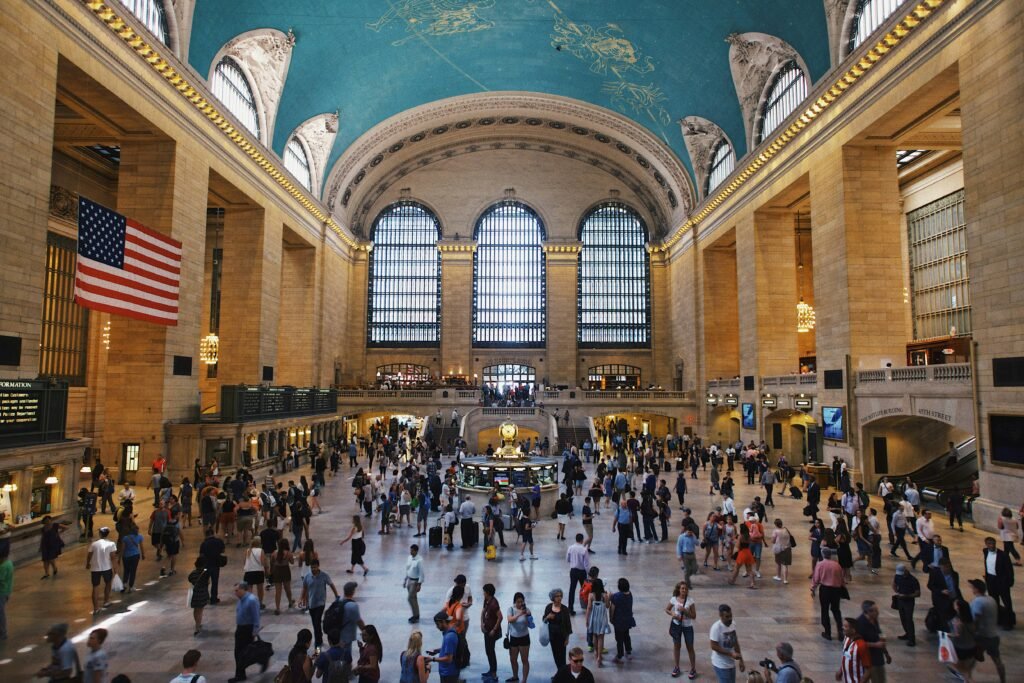
Morning: Grand Central Terminal and Bryant Park. If you’ve flown in the night before, start Day 1 late morning. Grand Central Terminal on 42nd Street is one of the most beautiful buildings in the city and costs nothing to enter. Stand on the main concourse and look up. The celestial ceiling covers 2,500 square feet of gold-leaf constellations. The Oyster Bar downstairs is a New York institution for lunch — the pan roast is excellent.
From Grand Central, it’s a short walk west to Bryant Park, the small green square behind the New York Public Library. The library itself is free to enter — the Rose Main Reading Room on the third floor is one of the most stunning interiors in New York and almost no one goes in. Worth 20 minutes.
Afternoon: Fifth Avenue and Rockefeller Center. Walk north on Fifth Avenue. The window displays at Saks, Bergdorf’s, and Tiffany’s are worth a slow pass regardless of season. St. Patrick’s Cathedral at 51st Street is open to visitors and the interior scale is genuinely impressive — free to enter, 15 minutes inside. Rockefeller Center just north is the plaza most people associate with NYC Christmas but it’s worth seeing year-round: the sunken plaza, the Art Deco architecture, and the channel gardens leading to Fifth Avenue.
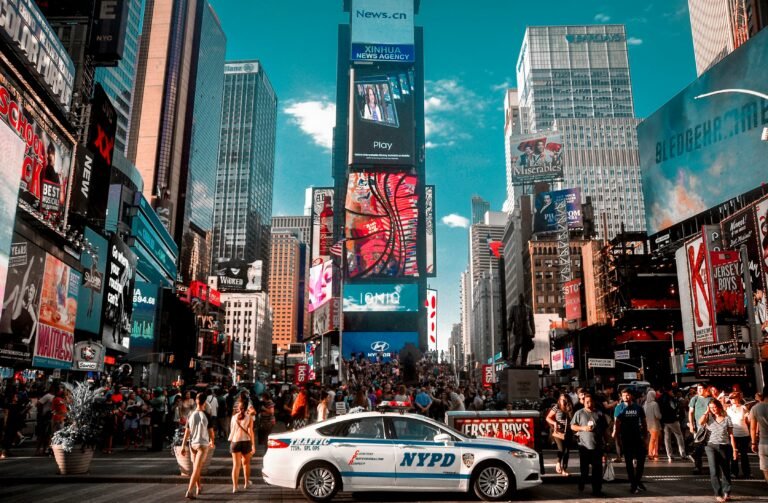
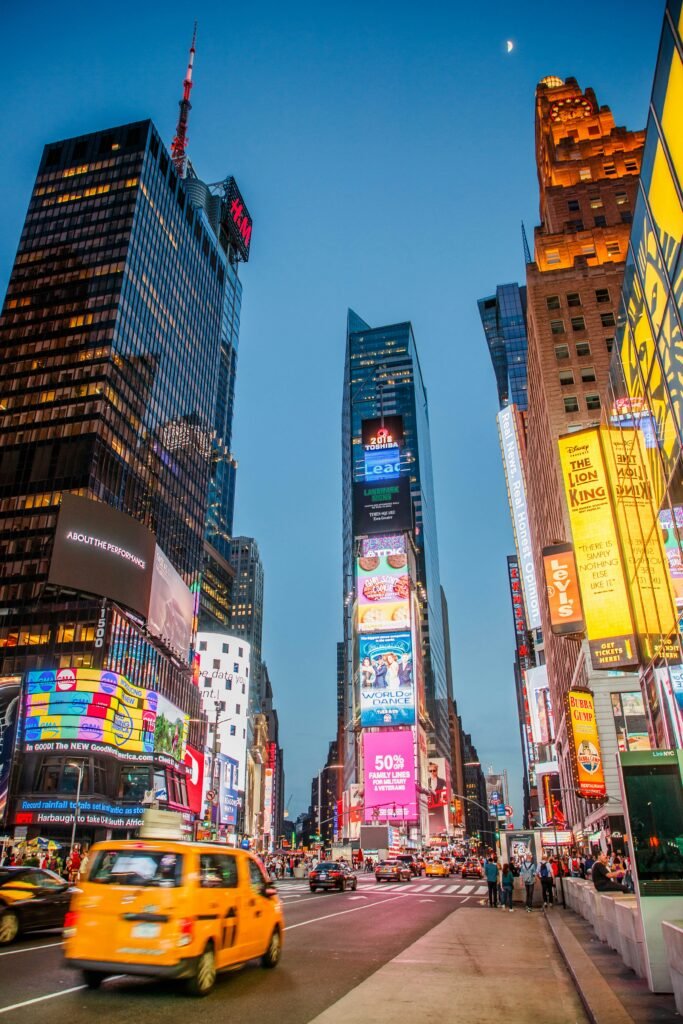
Evening: Times Square (briefly) and Hell’s Kitchen for dinner. Times Square at night is something you should see once. It’s overwhelming, loud, and expensive if you stop to buy anything — but the scale of the signage is genuinely remarkable. Give it 20 minutes, then walk west to Hell’s Kitchen (the 9th Avenue strip in the 40s and 50s), which has some of the best and most affordable restaurants in Midtown. The neighborhood is full of pre-theater spots that turn tables fast and cook well.
Day 2: Downtown Manhattan and Brooklyn — the Views That Actually Deliver
Day 2 takes you to lower Manhattan and across the river — the historical core of the city, some of its most powerful memorials, and the Brooklyn neighborhood that looks like every cinematic version of New York you’ve ever seen.
Morning: 9/11 Memorial and Financial District. Start at the 9/11 Memorial pools in lower Manhattan. The memorial is free to visit; the museum requires a ticket but is worth it. The pools themselves — two vast reflecting pools set in the footprints of the original towers — are quiet and genuinely moving in a way that’s hard to describe in advance. Go early before tour groups arrive.
From the memorial, Wall Street and the Financial District are a short walk. The area is surprisingly interesting on foot — the Charging Bull sculpture, Federal Hall, the narrow colonial-era streets around Stone Street. The New York Stock Exchange facade on Broad Street is impressive even from outside. None of this takes more than 45 minutes at a comfortable pace.
Midday: Brooklyn Bridge on foot. Walk to the Brooklyn Bridge entrance on the Manhattan side (Centre Street and Frankfort Street) and cross on foot. The bridge walk takes about 20–30 minutes one way, with views of the East River, lower Manhattan’s skyline behind you, and the Brooklyn towers ahead. Go in the morning if possible — the Manhattan-to-Brooklyn direction gives you better light, and by midday the bridge gets crowded. Stay in the pedestrian lane marked on the wooden planks; cyclists use the adjacent lane and move fast.
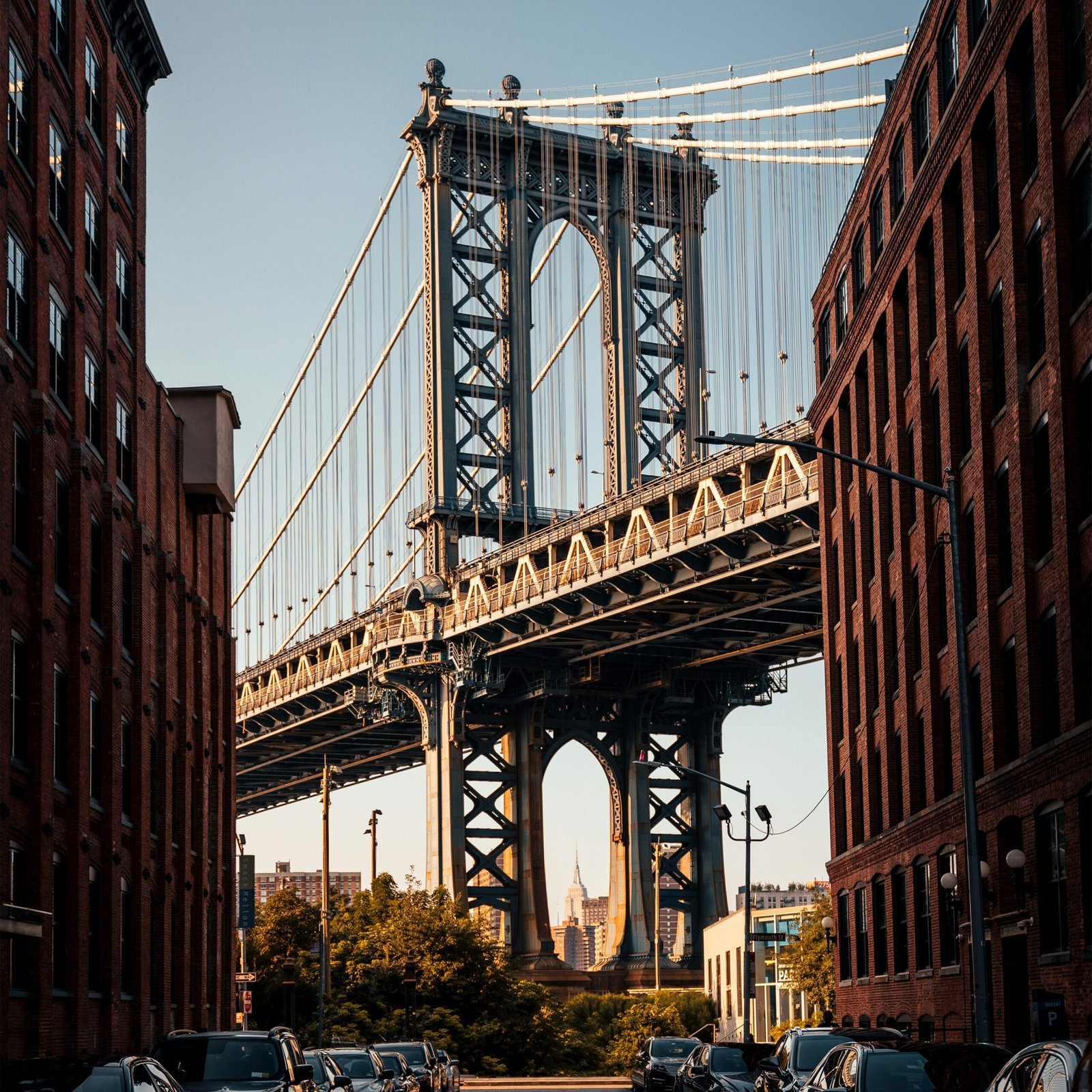
Afternoon: DUMBO and Brooklyn Bridge Park. Coming off the bridge into DUMBO (Down Under the Manhattan Bridge Overpass), you’re in one of the most photogenic neighborhoods in the city. The view of the Manhattan Bridge framed by Washington Street is the shot you’ve seen everywhere. The cobblestone streets and converted warehouse buildings give the neighborhood a completely different feel from Manhattan. Brooklyn Bridge Park runs along the waterfront below DUMBO — multiple piers, lawns, and one of the best direct views of lower Manhattan’s skyline from water level. Bring something to eat from the Time Out Market in DUMBO and find a bench at Pier 1.
If you want a guided introduction to Brooklyn that covers more ground than you’d cover on your own, a Brooklyn Bridge and DUMBO walking tour on Viator pairs the bridge walk with neighborhood history and local context — useful if you want to understand why DUMBO looks the way it does.
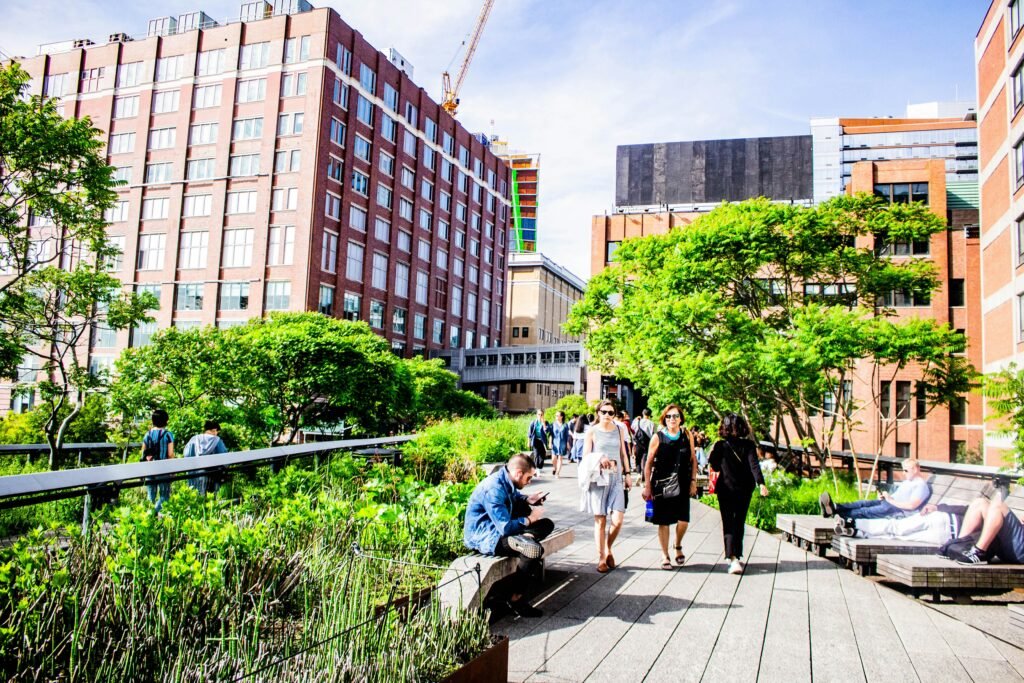
Late afternoon: The High Line. Take the subway back to Manhattan and head to the High Line, the elevated park built on a former freight rail line running from the Meatpacking District north through Chelsea to Hudson Yards. It’s 1.45 miles long, packed with interesting plantings, rotating art installations, and views over the Hudson River to the west and the Manhattan grid to the east. Enter at Gansevoort Street (the south end) and walk north. The section above 14th Street through Chelsea has the best views. Exit at 34th Street and you’re at Hudson Yards if you want to see Vessel (the honeycomb-shaped staircase structure — free to view from outside, with ticketed access if you want to enter; check the current rules before planning around it).
Day 3: Central Park and the Met — the Day That Makes You Understand Why People Live Here
Day 3 is the one that converts people. Central Park in good weather, the Metropolitan Museum in the afternoon — it’s the version of New York that feels like it justifies every expense of getting here.
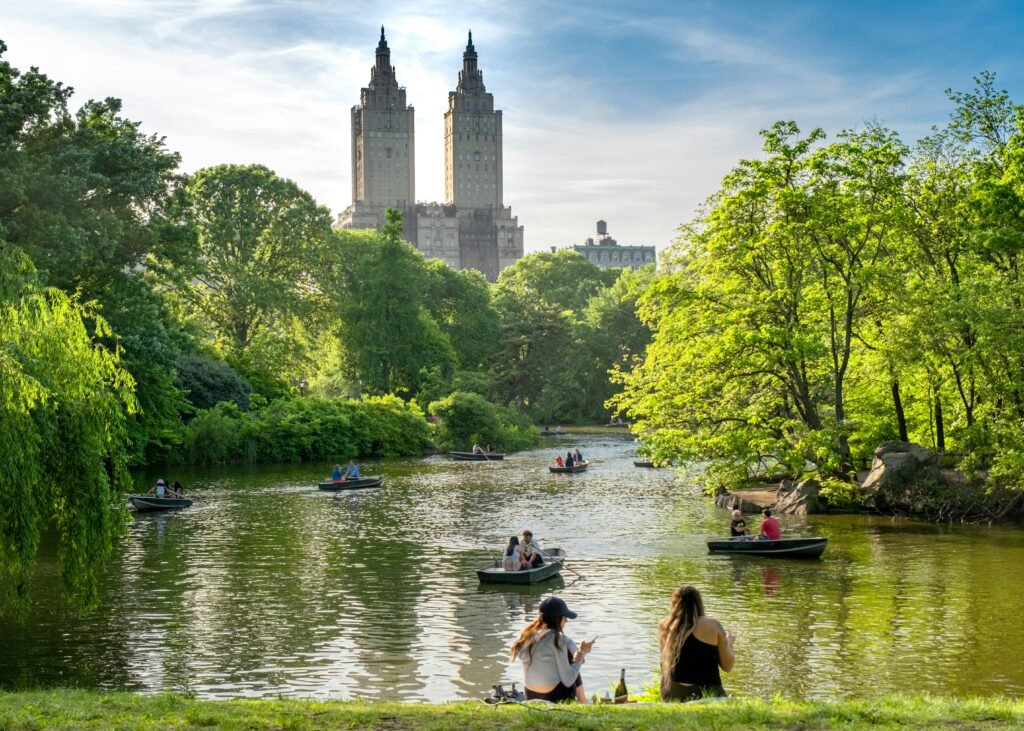
Morning: Central Park. Enter the park at the south end (59th Street and Fifth Avenue) and walk north along the eastern path toward the Mall. The Mall is a long straight promenade lined with American elm trees — one of the largest stands of elms in North America — that leads to the Bethesda Terrace and Fountain at the park’s center. The terrace and its view across the Lake is the park’s most iconic interior view, and it earns the reputation.
From Bethesda, walk north through the Ramble (the wooded section — quiet, birds, genuinely wild-feeling for the middle of a city) to the Jacqueline Kennedy Onassis Reservoir. The 1.6-mile running path around the reservoir gives you views of the Midtown skyline to the south and the Upper West Side apartment buildings to the west. It’s beautiful in any season.
If you want to cover more of the park in less time, a Central Park bike tour is the practical solution. The park’s paths are easy to enjoy but not always obvious for first-timers, and a guided ride can connect the main highlights in two to three hours at a pace that still lets you look around. Check Central Park bike tour options on Viator — morning departures on weekends can fill first, especially in fall.
Afternoon: The Metropolitan Museum of Art. The Met is on Fifth Avenue at 82nd Street — a short walk from the park’s eastern edge or a quick cab from anywhere on the Upper East Side. It is, without exaggeration, one of the greatest museums in the world. The permanent collection covers 5,000 years of art across two million square feet of gallery space. You cannot see it all in one visit. You shouldn’t try.
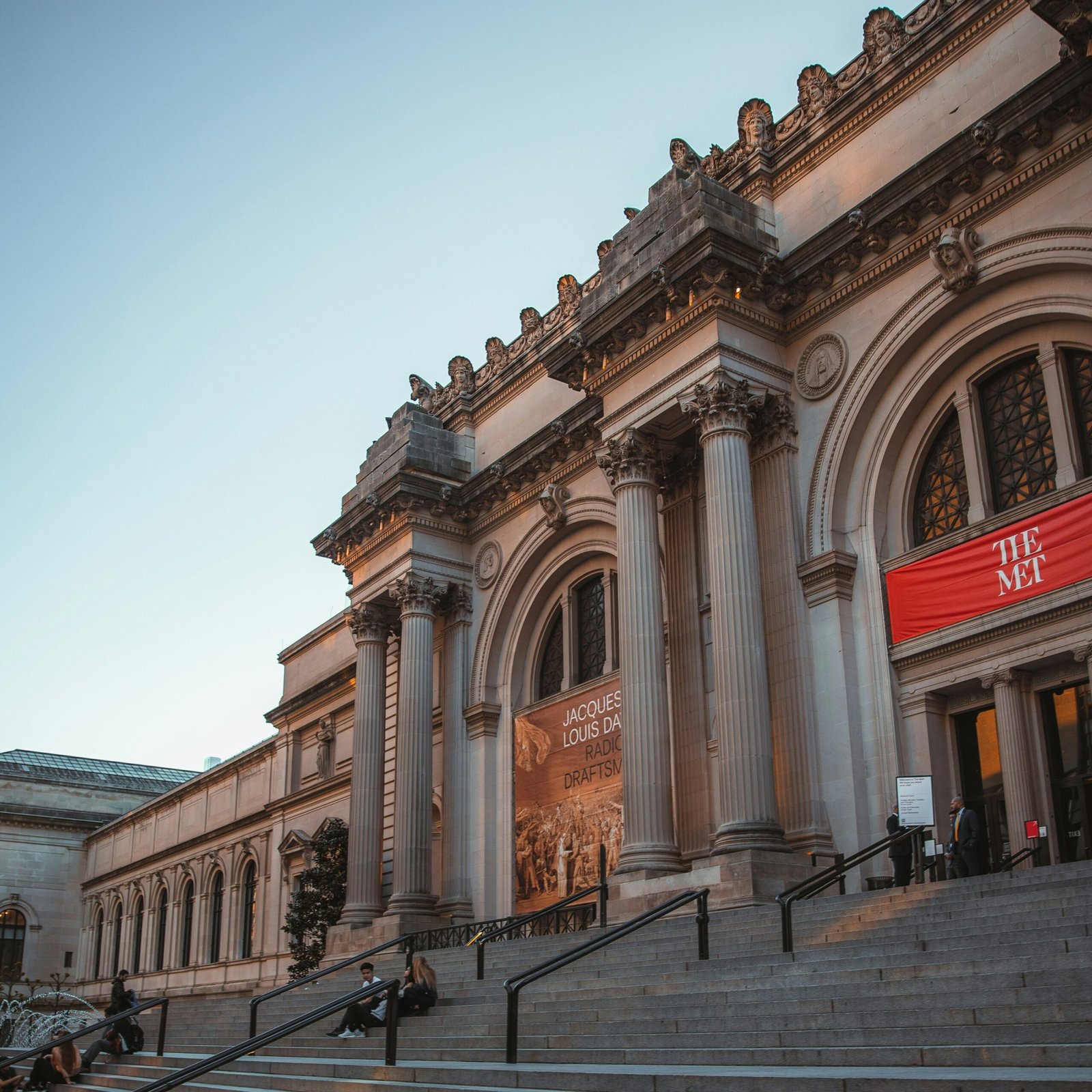
The approach that works: pick two or three collections and go deep. The Egyptian Wing (including the Temple of Dendur in its own glass-enclosed hall) is unmissable. The European paintings galleries on the second floor — Rembrandt, Vermeer, Caravaggio — are extraordinary. The American Wing with its period rooms and the glass-enclosed sculpture court is quietly one of the best parts of the museum and often less crowded than the headline rooms. Admission rules change, but the key point is this: New York State residents and New York, New Jersey, and Connecticut students can use pay-what-you-wish admission, while most other visitors pay the general admission price. Check the current Met admission policy before you go.
Evening: Upper West Side dinner. The Columbus Avenue and Amsterdam Avenue strips between 72nd and 86th Streets on the Upper West Side have some of the best neighborhood restaurants in the city — less expensive than Midtown, more neighborhood, genuinely good. The area around 79th Street has a cluster of Italian, Thai, and American spots that are worth a slow browse before picking one.
Day 4: Statue of Liberty, Ellis Island, and the Best Views in the City
The Statue of Liberty is on most first-timer lists, and it belongs there — but the ferry and the logistics require more advance planning than almost anything else in New York. Do this right and it’s one of the best days of the trip.
Morning: Statue of Liberty and Ellis Island. Ferries depart from Battery Park at the southern tip of Manhattan. Morning departures are the easiest to plan around because you still have enough time for Ellis Island without rushing the rest of the day. Get there early for security screening, especially in summer and around holidays. The ferry ride itself is short, but the full visit takes longer than people expect once you include lines, security, Liberty Island, Ellis Island, and the return boat.
The ticket tiers matter. General admission covers the ferry, Liberty Island grounds, the Statue of Liberty Museum, and Ellis Island. Pedestal reserve adds access inside the pedestal, which gives you a better sense of the monument’s scale. Crown reserve is the most limited option and must be booked well ahead through the official ticket provider. For most first-time visitors, pedestal reserve is the sweet spot if you can get it; otherwise, general admission plus Ellis Island still makes a strong half-day.
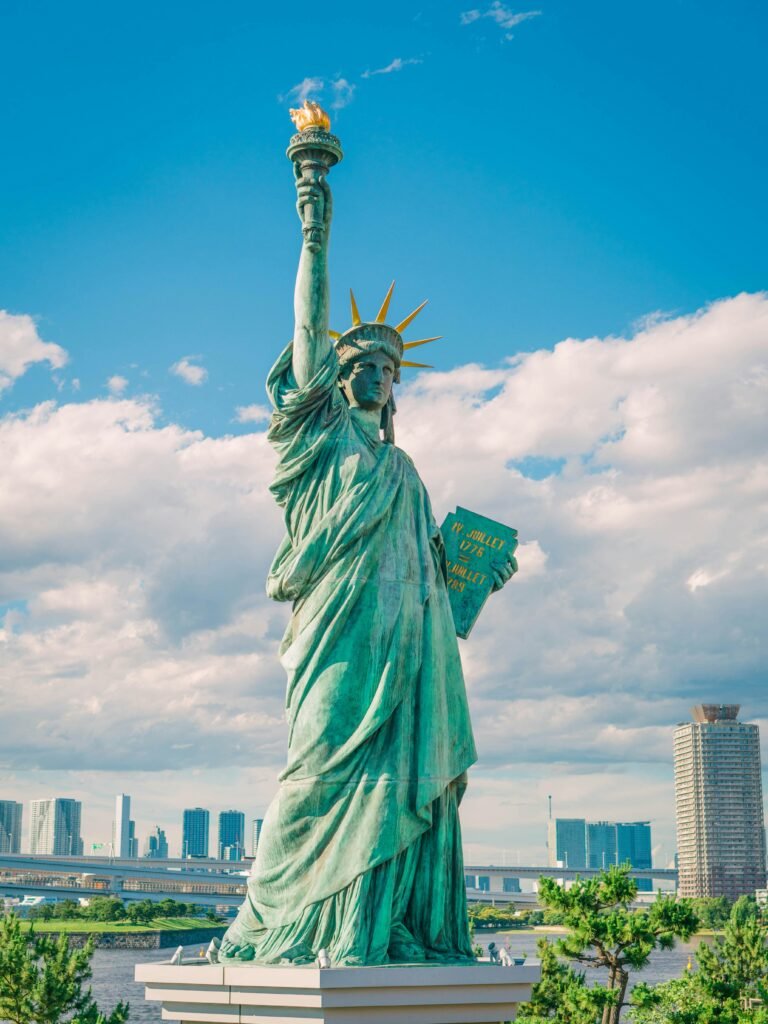
The Ellis Island National Museum of Immigration is the part of this day that most people underestimate. The stories documented there — the 12 million immigrants who passed through between 1892 and 1954, the processing halls, the medical inspection rooms — are genuinely affecting. Budget 90 minutes minimum.
Booking in advance is essential, but the route depends on what you want. If pedestal or crown access is the priority, use Statue City Cruises, the official ferry and ticket provider. If you want a guide to add context and make the logistics easier, compare Statue of Liberty and Ellis Island tours on Viator and check exactly which ferry/ticket type is included before you book.
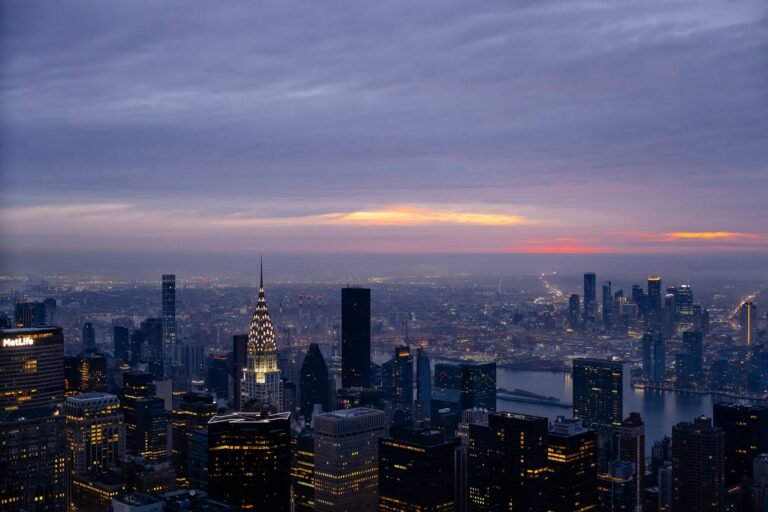
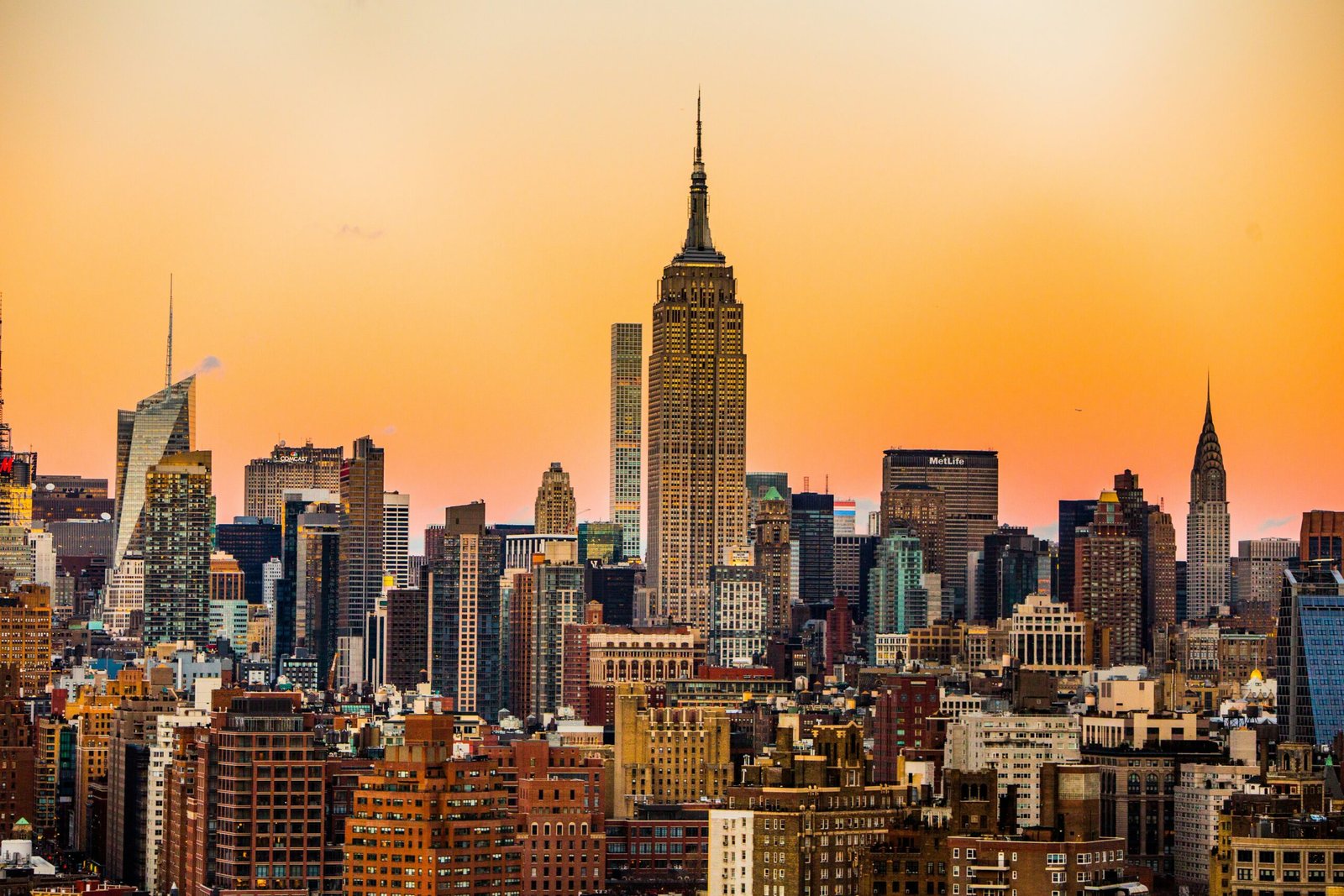
Afternoon: Top of the Rock vs. Empire State Building. This is the most common question in NYC planning, and the honest answer is: Top of the Rock. The Empire State Building is iconic from the outside; the Top of the Rock gives you a better view because you can see the Empire State Building from it. The outdoor observation deck at 30 Rock also has more space, less crowding, and a cleaner 360-degree sightline. Go at dusk — the transition from golden hour to full city lights from 70 floors up is the best view New York offers.
That said, if you’ve always wanted to stand on the Empire State Building specifically — book it. The experience of the building itself, its Art Deco lobby and the history of it, is part of what you’re paying for. The Empire State vs Top of the Rock guide breaks down the differences by time of day, price, and what you actually see from each.
Evening: Broadway. If you’re going to see a Broadway show, tonight is the night to do it — you’ve done the big physical days, you’re in Midtown, and an evening at the theater fits naturally after the observation deck. Popular shows can sell out, so book before you leave home if there is one specific production you would be disappointed to miss. Browse Broadway ticket options on Viator and check the seat category, date, and included extras carefully before checkout.
Day 5: Greenwich Village and Chelsea — New York’s Most Walkable Neighborhood Day
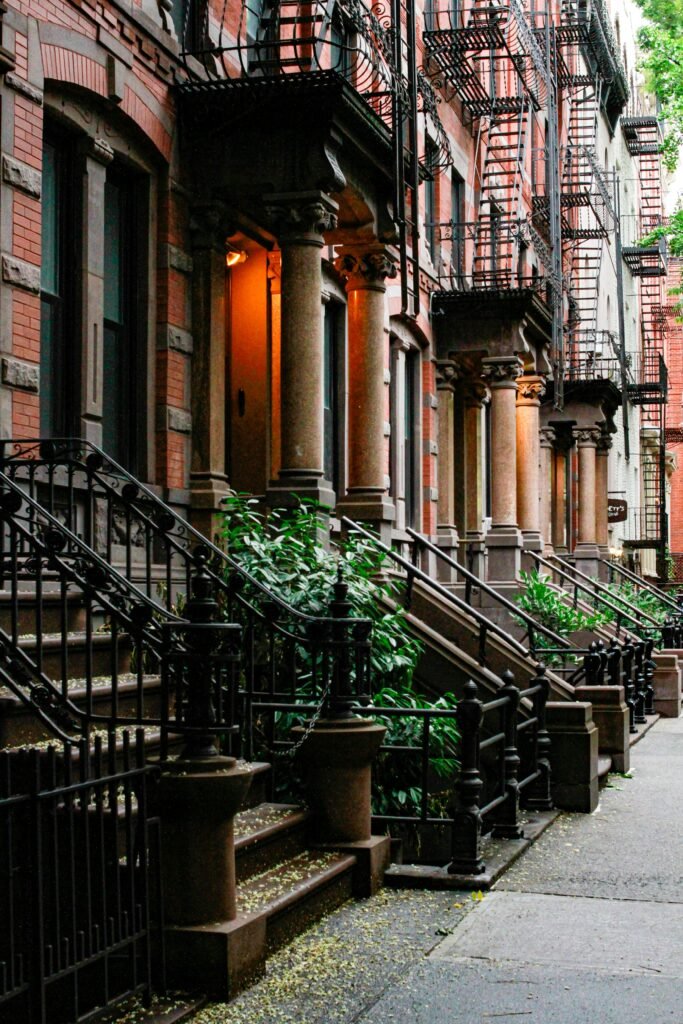
Day 5 is for slowing down and seeing the city at street level. Greenwich Village and Chelsea are the neighborhoods that feel most like what people imagine New York to be — brownstones, independent bookshops, restaurant-lined blocks, and enough to fill a day without a single museum or observation deck.
Morning: Washington Square Park and the West Village. Start at Washington Square Park — the social center of Greenwich Village, ringed by NYU buildings, full of chess players, street musicians, and New Yorkers sitting in the sun. The arch at the north end frames the view down Fifth Avenue. From the park, walk west into the West Village. The streets get narrower, the brownstones taller, the coffee shops better. The area around Bleecker Street, Hudson Street, and Jane Street is some of the most beautiful residential streetscape in the city. There’s no particular agenda — this is a morning for wandering.
If food is important to you, consider a Greenwich Village food tour for this morning. The neighborhood has one of the highest concentrations of independent food businesses in the city — Italian bakeries, cheese shops, the original Magnolia Bakery, Murray’s Cheese, the Bleecker Street Pizza block. A local guide covers the history and gets you into the spots that don’t have obvious storefronts. Browse Greenwich Village food tours on Viator — small group morning options run about 2.5 hours.
Midday: Chelsea Market and the Meatpacking District. Walk north to Chelsea Market on 9th Avenue between 15th and 16th Streets — a converted factory building filled with food vendors, restaurants, and specialty shops under one roof. The exact vendor mix changes, so do a quick lap before committing. Los Tacos No. 1, seafood counters, bakeries, and small specialty stalls are usually the reason this stop works: you can eat well without building the whole day around a reservation.
From Chelsea Market, the Meatpacking District is steps away — the cobblestone streets and low-rise former meatpacking warehouses now house boutiques, restaurants, and the Whitney Museum of American Art. The Whitney’s permanent collection focuses on 20th and 21st century American art, and the building’s design (by Renzo Piano) is outstanding. The outdoor terraces on each floor have views of the Hudson and the High Line below. If you didn’t walk the full High Line on Day 2, the Gansevoort Street entrance is right here.
Afternoon: The Strand and a final neighborhood wander. If books matter to you, the Strand Bookstore on Broadway at 12th Street — “18 miles of books” — is worth an hour. It’s the last surviving bookshop of what was once a stretch of 48 bookstores on Book Row. The rare books room on the third floor is particularly good. From here, Union Square is steps away, with its year-round Greenmarket and the subway connections to take you anywhere for a final dinner.
Evening: A proper farewell dinner. The East Village along St. Marks Place and 2nd Avenue has excellent and affordable restaurants — Japanese, Korean, Indian, Vietnamese — in a neighborhood that still feels like New York used to before everything got expensive. Alternatively, the West Village streets around Carmine and Bedford have some of the most charming restaurant blocks in the city for a slower final dinner. Make a reservation for wherever you go on Day 5 — the good spots fill up.
Where to Stay for a 5-Day NYC Trip: The Neighborhood That Actually Makes Sense
For a first-timer doing this itinerary, the strongest base is Midtown West — the area between 34th and 59th Streets, west of Fifth Avenue. You’re central to Days 1 and 4 without any commute, and the subway connections to downtown (Day 2), the Upper West Side (Day 3), and the Village (Day 5) are fast and direct. The hotel density here is the highest in the city, which means more options and occasionally competitive pricing despite the location.
Specific neighborhoods to consider within Midtown West: the area around Hell’s Kitchen (9th and 10th Avenues in the 40s and 50s) gives you the best restaurant-to-hotel-price ratio in Midtown. Murray Hill (30s on the east side) is quieter and slightly cheaper. The cluster of hotels immediately around Times Square is convenient but noisy and rarely the best value — pick something a few blocks from the square itself.
If your priority is the Central Park and museum side of the trip, the Upper West Side between 72nd and 96th Streets is a legitimate alternative base — quieter streets, better neighborhood feel, and steps from the park’s western entrances. Hotels here can be better value than comparable Midtown properties, especially outside the busiest holiday weeks.
What to pay: a solid 3–4 star property in Midtown often lands somewhere around $220–450/night before taxes and fees, depending heavily on season, event dates, and how far ahead you book. The free-cancellation approach works well here — book a refundable rate early to lock in availability, then recheck the price 3–4 weeks before your trip. NYC hotel rates fluctuate significantly.
For specific hotel picks in Midtown West, Hell’s Kitchen, and the Upper West Side — with real prices and honest pros and cons for each — see the full where to stay in NYC guide.
What 5 Days in New York Actually Costs — a Realistic Budget Breakdown
New York is expensive. That’s not an opinion — the average cost of a Midtown hotel room, a sit-down dinner for two, and a museum ticket adds up faster than almost any other American city. But there’s a wide range between “overpaying for everything” and “doing it well at a reasonable cost,” and most first-timers land somewhere between those.
Here’s a realistic breakdown for two people, 5 nights:
| Category | Budget range (2 people) |
|---|---|
| Flights (round trip from Europe) | $700–1,400 |
| Hotel (5 nights, 3–4 star Midtown) | $1,300–2,500 before taxes/fees |
| Food (mix of casual and sit-down) | $650–1,000 |
| Statue of Liberty + Ellis Island | $25–80+ per person depending on ticket/tour type |
| Top of the Rock or Empire State | $40–75+ per person |
| Metropolitan Museum | Check current adult general admission |
| Broadway show (optional) | $100–300+ per person |
| Tours and activities | $100–250 |
| Subway and transit | $60–100 |
| Total (without Broadway) | $3,300–5,700 |
The biggest variable is accommodation — Midtown pricing in July or December runs significantly higher than shoulder season. If your dates are flexible, late January through March and September to early October offer the best hotel value.
For managing day-to-day spending: NYC is almost entirely tap-to-pay — subway, restaurants, street food, museums. The Wise card can be useful if you want to hold or convert USD before the trip, but check the current fees and conversion rules for your own currency before relying on it as your main travel card.
Travel insurance for a New York trip of this length is worth comparing — not because the city is dangerous, but because medical care in the US can be genuinely expensive, and a flight delay can cascade into hotel and activity costs. EKTA is one option to quote, but read the policy wording for medical limits, delays, cancellations, and any activities you plan to do before buying.
For a full breakdown including food costs, tipping norms, and where to save without sacrificing quality, see the NYC travel costs and budget guide.
Getting Around NYC: What First-Timers Get Wrong About the Subway
The New York City subway is the fastest, cheapest, and most reliable way to get around — and it’s less confusing than it looks on the map. A few things worth knowing before you arrive:
Tap to pay with OMNY. The OMNY tap-to-pay system works with contactless cards, Apple Pay, Google Pay, wearable devices, or an OMNY card. As of May 2026, the standard subway/local bus fare is $3, and using the same card or device caps subway and local bus spending at $35 over a 7-day period. Check the current MTA subway and bus fare page before you travel, because fare rules can change.
Uptown/Downtown, not North/South. The subway signage uses “uptown” (toward higher street numbers, north) and “downtown” (toward lower street numbers, south). Once you internalize this, the system is logical. The lettered lines (A, C, E / B, D, F, M / N, Q, R, W) run roughly north-south on the west and east sides; the numbered lines (1, 2, 3 / 4, 5, 6) do the same on the west and east. The L train connects 14th Street across to Brooklyn. The crosstown S shuttle on 42nd Street connects Times Square to Grand Central in 90 seconds.
Google Maps is accurate for subway routing. Enter your destination and select “Transit” — it will give you the correct lines, the right platform direction, and accurate transfer instructions. The subway runs 24/7; some express trains don’t run late night on weekends, but there’s always a local train option.
Don’t take taxis or Uber for short Midtown trips. Midtown traffic at peak hours is genuinely gridlocked. A 10-block taxi ride can take 25 minutes in the 40s and 50s during afternoon rush. The subway covers the same distance in 4 minutes. Save taxis and rideshares for late night, outer borough trips, or airport transfers where the subway math doesn’t work.
Airport transfers. From JFK, take the AirTrain to Jamaica and connect to the E/J/Z subway or the LIRR; the subway route is usually about $11.50 as of current MTA fare rules, while LIRR costs more but can be faster. From Newark (EWR), NJ Transit to Penn Station is usually the cleanest public-transit route, but check the current fare in the NJ Transit app before travel. From LaGuardia, the free Q70 bus connects to the subway in Queens; the M60-SBS is another option from uptown Manhattan and uses the regular MTA fare. Rideshare can still make sense late at night or with heavy luggage, but traffic can erase the convenience quickly.
For navigation without burning through your home phone plan: set up an Holafly US eSIM before you fly and follow the activation steps for your exact plan. The point is simple: you want maps, subway routing, hotel directions, and messaging working before you are standing in an airport arrivals hall trying to decode your first transfer.
Your NYC Itinerary Questions Answered
Is 5 days enough for New York City?
Five days is enough to see the city’s best without rushing: the major landmarks, at least one museum day, the Brooklyn Bridge, Central Park, Liberty Island or a harbor view, and a few proper neighborhoods. It’s not enough to see everything, and you shouldn’t try. The itinerary above covers the non-negotiables and leaves room for the wandering that makes New York worth visiting.
What’s the best area to stay in NYC for a first visit?
Midtown West — roughly the area between 34th and 59th Streets, west of Fifth Avenue — is the strongest base for a first-timer. You’re walking distance from Rockefeller Center, Bryant Park, and the main subway hubs that connect to every other part of the city in under 20 minutes. The Upper West Side is a quieter alternative with better neighborhood feel and slightly lower average hotel prices.
How much does a 5-day NYC trip cost?
A realistic total for two people including flights from Europe, 5 nights in a Midtown hotel, food, major attractions, and one Broadway show is roughly $4,300–7,000. The biggest variables are accommodation, taxes and resort/facility fees, holiday dates, and whether you include Broadway. Without flights, the in-city budget for two people over 5 days often runs around $2,300–4,000 depending on hotel category and how often you eat at sit-down restaurants.
Do I need to book things in advance for NYC?
Three things deserve advance booking: your hotel, Statue of Liberty access or a guided Statue/Ellis Island tour, and any Broadway show you specifically want to see. Observation decks can often be booked closer to the date, but sunset slots, summer weekends, and holiday periods are safer booked earlier. The Met and many other museums are easier to handle than the big-ticket views, but always check the official site for current hours, closures, and ticket rules.
Is the subway safe in New York?
Yes — the NYC subway is a normal part of daily life for millions of riders, and it is the most practical way for most visitors to get around. Stations vary in feel: Midtown and Upper West Side stations are usually busy and well-lit, while some stations late at night can feel quieter and more isolated. Use the same awareness you would in any major city: keep valuables close, stay alert on platforms, and move to a busier car or wait near the station booth if something feels off.
What’s better — Top of the Rock or the Empire State Building?
For views: Top of the Rock, consistently. The outdoor deck at 30 Rockefeller Plaza gives you a clear 360-degree view that includes the Empire State Building — the most iconic skyline element — which you can’t see from the Empire State itself. The crowds are also generally smaller than the Empire State Building. The Empire State wins on history, Art Deco lobby design, and the specific experience of standing on the building you’ve seen in a hundred films. For a first visit, Top of the Rock at dusk is the better call. The full comparison is in the Empire State vs Top of the Rock guide.
More New York City Guides
Everything else you need to plan the trip:
- Want the full activity list without a fixed schedule? See the 25 best things to do in New York City
- Not sure where to base yourself? The where to stay in NYC guide breaks down every area with transit access, vibe, and price range
- Need the full numbers? The NYC travel costs guide covers everything from food to tipping to daily budgets
- Visiting in December? Read NYC at Christmas: what to see and do
- Visiting in October? Read NYC in fall: why October is the best month
- Still in early planning mode? How to plan a trip from scratch is the right starting point
New York doesn’t require a perfect plan. It requires enough of a plan that you’re not spending the first two hours of every day figuring out what to do next. This itinerary gives you that structure — and enough flexibility to let the city do what it does best. You’ll end up somewhere unexpected on Day 3. That’s not a flaw in the plan. That’s the point.