

How to Plan a Trip: Complete Step-by-Step Guide
Affiliate disclosure: This post contains affiliate links. If you book or buy something through these links, I may earn a small commission at no extra cost to you. I only recommend things I genuinely use or believe in. Learn more.
Trip planning gets expensive when you book in the wrong order. A cheap flight can become a pricey trip if the hotels are sold out, a beautiful road trip can fall apart if you choose the wrong base, and a flexible itinerary can quietly turn stressful when you leave transport, money, or phone data until the last minute.
This is the booking system I use before spending money on a trip. It works for a Barcelona city break, a Dolomites road trip, a Japan multi-city itinerary, or a beach week in Egypt because it keeps the expensive decisions in the right order: destination, dates, flights, refundable accommodation, transport, insurance, money, phone data, and only then the fun extras.

Table of Contents
Quick Summary
| Main idea | Plan the trip in the right order before you spend money. |
| Start with | Destination shortlist, season, entry rules, and rough total cost. |
| Book first | Flights only after you know the destination is affordable for your dates. |
| Book next | Refundable accommodation in the right area. |
| Check before departure | Airport transfer, travel insurance, payment card, eSIM, and essential tickets. |
| Biggest mistake | Booking one cheap part of a trip before checking the expensive parts around it. |
Jump to the decision you need
- The booking order I use before spending money
- Choose your trip type: city break, road trip, beach trip, or multi-city route
- City break examples: Barcelona, Amsterdam, New York
- Road trip examples: Dolomites, Amalfi Coast, Istria
- Beach trip examples: Zakynthos and Marsa Alam
- Apply the system to a real destination
The Booking Order I Use Before Spending Money
If you only remember one thing from this guide, make it this: do not book travel in random order. The right order depends slightly on the trip, but this is the framework I use before I commit money.
- Choose 2-4 possible destinations instead of locking into one expensive idea too early.
- Check season, weather, holidays, and entry rules before you fall in love with a date.
- Compare total trip cost: flights, hotel, local transport, food, activities, insurance, and phone data.
- Search flights with flexible dates, then book directly with the airline when possible.
- Book refundable accommodation in the area that makes the itinerary easier.
- Plan airport transfer and local transport so the first hour of the trip is not chaos.
- Compare insurance, money, and eSIM options before departure, not at the airport.
- Book only the scarce experiences early: special tickets, limited tours, sunset slots, popular ferries, or car rentals in high season.
- Recheck prices before your cancellation deadline and rebook if a better refundable option appears.
Choose Your Trip Type First
The system stays the same, but the first decision changes depending on the kind of trip you are planning. This is where most people accidentally overspend: they use the same booking order for a city break, a road trip, a beach resort week, and a multi-city itinerary.
City break: Barcelona, Amsterdam, or New York
For a city break, I check the neighborhood before I commit to a hotel. A cheap room in the wrong area can cost more in transport, time, and frustration than a slightly more expensive stay in the right base. This matters in walkable cities like Barcelona, canal-heavy cities like Amsterdam, and expensive cities like New York.
Road trip: Dolomites, Amalfi Coast, or Istria
For a road trip, I decide the route and car situation before choosing accommodation. In places like the Dolomites or the Amalfi Coast, the wrong base can add hours of driving or parking stress. This is also why I compare car rental and parking rules early instead of treating them as an afterthought.
Beach or island trip: Zakynthos or Marsa Alam
For a beach trip, the first question is not always price; it is location. In Zakynthos, your base affects whether you need a car. In Marsa Alam, resort area affects reefs, transfers, food options, and how independent the trip feels. I check the area first, then the hotel.
Multi-city trip: Japan, Italy, or Greece
For a multi-city trip, I build the route before booking hotels. A Japan itinerary works best when Tokyo, Kyoto, Osaka, and Hakone are in a logical sequence. The same is true for Southern Italy or a Greek island route: the transport connections decide the shape of the trip.
Step 1 — Do Your Research First
Most people start planning a trip by locking in a destination and then trying to make the budget work around it. Here’s what I do instead — and it consistently saves hundreds of dollars.
Start with a shortlist, not a single destination
If you have three or four places on your bucket list, search them all. Go wherever the best combination of flight price and accommodation value takes you. This single mindset shift is the most powerful thing in this entire guide. If you already have a specific dream destination in mind, that’s completely fine — there are still plenty of ways to make it work. But flexibility, even just on dates, makes a significant difference.
Before you book anything, check these
- What’s the weather like during your travel window?
- Is it peak season, shoulder season, or off-season?
- Are there any visa or entry requirements for your passport?
- Are there major local holidays or events that could affect prices?
That last point matters more than most people realize. A “cheap” flight to a destination during a major local festival can quickly become an expensive trip when every hotel in the city is booked solid.
Pro tip: The best time to travel is almost always shoulder season — just before or just after peak. You get good weather, significantly lower prices, and far fewer crowds. For Europe: May–early June and September–October. For the Caribbean: May and November.
Step 2 — How to Find Cheap Flights
This is where most people either save the most money or overpay significantly — and the difference almost always comes down to one thing: flexibility.
When should you book?
- Budget airlines (Spirit, Frontier, Southwest): 1–3 months before departure
- Major carriers (Delta, United, American, international): 2–6 months before departure
- International flights (transatlantic, Asia): 3–6 months ahead for the best prices
Great deals appear unexpectedly. Start searching early, set up price alerts, and move quickly when you see a good fare.
The best flight search tools
Don’t search just one platform — prices vary significantly between tools. The four I always check:
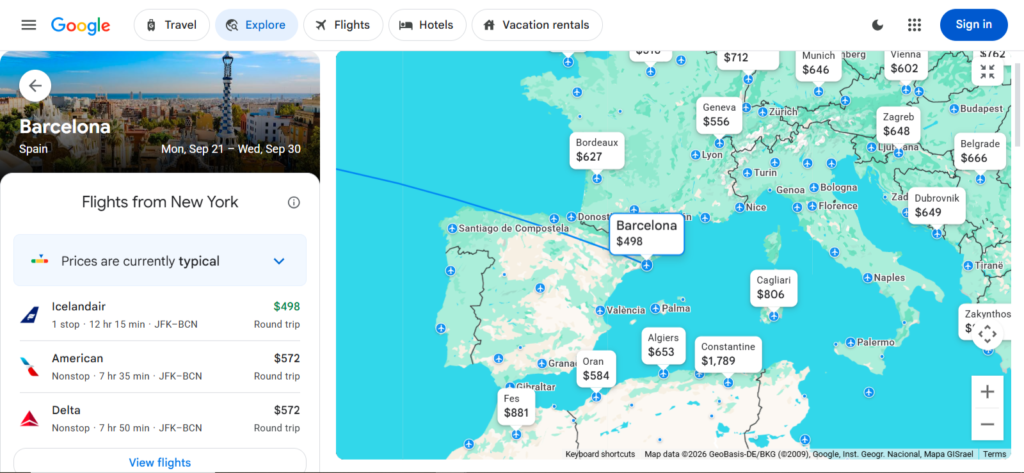
- Google Flights — Best for flexible date searches and price calendars. The “Explore” feature shows the cheapest destinations from your airport at a glance. Search on Google Flights.
- Skyscanner — Excellent for “Everywhere” searches if you’re flexible on destination. The monthly price view is particularly useful. Search on Skyscanner.
- Momondo — Often surfaces deals the others miss. Worth checking as a third opinion. Search on Momondo.
- Kayak — Good price alerts and flexible date tools. Search on Kayak.
How to search smarter
If you have a specific destination: Use Google Flights’ flexible dates calendar. You’ll see a full month view showing the cheapest day combinations at a glance. Flying Tuesday–Wednesday instead of Friday–Sunday can save $100–300 per person on popular routes. Flying from New York to Rome, the price calendar might show $480 for a Friday departure and $310 for a Tuesday — same airline, same route.
If you’re flexible on destination: Go to Skyscanner, enter your departure airport, and select “Everywhere” as the destination. You’ll immediately see the cheapest flights available across hundreds of destinations.
Stopover tip: Long layovers can become free bonus destinations. Turkish Airlines (Istanbul), Emirates (Dubai), and Qatar Airways (Doha) offer free or heavily discounted stopover programs — meaning you can spend 1–3 nights at no extra cost as part of a longer journey. Two destinations for the price of one.
What to watch out for
The price you see first is rarely the final price. Before clicking “book,” always check: baggage fees (budget carriers charge $50–75 each way for carry-ons), seat selection costs, and booking fees from comparison sites.
One more thing: Once you’ve found your flight through a comparison tool, go directly to the airline’s official website to book — not through third-party sites. If there’s a delay, cancellation, or you need to make a change, dealing directly with the airline is dramatically easier.
Step 3 — How to Find Great Accommodation
Good accommodation doesn’t mean expensive accommodation. It means finding the right place at the right price — and knowing a few tricks to get better value than most travelers.
The golden rule: always book free cancellation
This is the accommodation habit I use most often: book a refundable rate unless the non-refundable price is dramatically lower and you are absolutely sure your plans will not change. Prices move, plans shift, and better options appear. If your booking is refundable, you can cancel and rebook when the price drops or when a better location becomes available. On longer trips, this can easily protect far more money than the small difference between refundable and non-refundable rates.
Where to search
For hotels and resorts, I usually compare Booking.com, Expedia, and the hotel’s own website before booking. Booking.com is useful for filters and review volume, Expedia can be useful for package-style comparisons, and direct booking is sometimes better for perks or flexible terms. For apartments, longer stays, or if you want a kitchen, Airbnb can still make sense, but I check cleaning fees, location, and cancellation rules carefully.
Pro move: Once you find a hotel you like on Booking.com, check the hotel’s own website directly. Hotels often offer their best rates — or additional perks like free breakfast or upgrades — when you book direct.
How to search smart
Start with destination + exact dates + guest count. Then filter immediately: free cancellation, your price range, rating 8.0+, and any specific needs (pool, breakfast, parking). Sort reviews by lowest rating first — you’ll quickly spot any dealbreakers like persistent noise, cleanliness problems, or misleading photos.
Keep checking after you book. Set a weekly reminder to look at your hotel’s price. If it drops, cancel and rebook. This is only possible if you followed the golden rule above — and it regularly saves $100–300 on a week-long trip.
Step 4 — Getting from the Airport to Your Hotel
This step gets forgotten in the excitement of booking flights and hotels — and it can completely derail your first hours of a trip if you’re not prepared. Land in a new city, jet-lagged, with luggage, and no plan: it’s one of the most stressful travel experiences there is.
Public transport is the best value in most major cities, but the exact airport route and fare changes by city. Before you land, check the official airport or transit website and save the route offline. I want to know three things before arrival: the ticket type, the final stop, and whether I need to tap in/out, validate a ticket, or buy a separate airport supplement.
Rideshare (Uber/Lyft) is the most convenient option — available in virtually every major US city and most international destinations. In Southeast Asia it’s Grab; in much of Latin America it’s InDriver or Cabify.
Car rental is the best option for road trips or exploring beyond a single city. Book in advance — prices are significantly lower than at the airport counter. For the best rates, I compare at least two platforms: Rentalcars.com for a broad overview and DiscoverCars, which often surfaces smaller local suppliers with better rates for longer rentals. Always check what insurance is included — a cheap rental can become expensive if something happens and you’re underinsured.
Hotel transfer is the easiest option but the priciest — worth it for late-night arrivals in unfamiliar cities, or when traveling with young children and a lot of luggage.
Step 5 — Travel Insurance
Travel insurance is the part of trip planning that feels easy to skip until you need it. I treat it as a comparison step, not a checkbox. The right policy depends on where you are going, what you already have through your health insurance or credit card, and whether your trip includes non-refundable bookings, rental cars, adventure activities, or expensive medical destinations.
Check your existing coverage first. Some health insurance plans include limited emergency coverage abroad, and some premium credit cards include trip delay, baggage, rental car, or cancellation benefits, but the rules vary. Read the benefit guide before assuming you are covered.
If you need dedicated travel insurance, compare the actual policy wording, not just the brand name. Medical limits, evacuation coverage, excluded activities, trip cancellation rules, pre-existing condition language, and rental-car wording matter more than the homepage headline. Providers such as Allianz, Travel Guard, World Nomads, and SafetyWing can be worth comparing depending on the trip type, but always check the current terms for your own itinerary.
Practical tip: Set a reminder after booking your first major trip expense. Some cancellation or pre-existing condition benefits require buying coverage within a specific window after the first deposit, while medical-only cover can often be arranged closer to departure. Do not leave this decision for the airport.
Step 6 — Documents, Visas & Entry Requirements
This step should technically happen before you book anything — but many people leave it until last.
- Passport validity: Many countries require 6 months of validity beyond your travel dates. Check your expiration date now — before you book anything.
- Visa requirements: US passport holders have visa-free access to most of Europe, UK, Japan, and many popular destinations. For others (Brazil, India, Australia) you may need to apply in advance.
- Europe authorization rules: Check whether ETIAS or any other pre-travel authorization is active for your passport before booking. Rollout dates and requirements can change, so use the official EU or government source rather than old blog posts.
- Travel advisories: Check the US State Department’s website before booking unfamiliar destinations.
Quick check: Google “[country name] entry requirements US citizens” — the official State Department page appears in the first results.
Step 7 — Money & Payments Abroad
This is where many travelers quietly lose $50–200 on a trip without realizing it — in foreign transaction fees, poor exchange rates, and ATM charges.
Best cards for international travel
- Charles Schwab Investor Checking — Reimburses all ATM fees worldwide. One of the best travel cards available to US residents.
- Wise (multi-currency card) — Useful for holding or converting multiple currencies and paying abroad with transparent fees. I like it for multi-country Europe trips, but check the current fees and limits for your own currency before relying on it as your only card. Compare Wise fees here.
- Chase Sapphire Preferred/Reserve — No foreign transaction fees plus strong travel insurance benefits.
- Capital One Venture — No foreign transaction fees, straightforward rewards.
The rule: Never use a card with foreign transaction fees abroad. Most standard debit cards charge 1–3% on every transaction — that adds up to $50–150 on a two-week trip without you noticing.
Cash vs. card
Cards are accepted widely in many major destinations, but the cash/card balance changes by country. Amsterdam and Barcelona can be almost cash-free for a visitor, Japan still rewards having some cash for smaller places, and beach/resort destinations can be mixed. Always carry a little local cash for taxis, markets, rural areas, and situations where card readers are down. Avoid airport exchange kiosks when possible; a bank ATM or a card with clear conversion rules is usually better.
Step 8 — Internet & Staying Connected
Don’t arrive in a foreign country assuming you’ll find WiFi everywhere. When you need maps or a translation in the middle of nowhere, you’ll want a backup plan.
eSIM is usually the easiest option. An eSIM lets you activate a data plan without swapping physical SIM cards, as long as your phone supports it and is unlocked. I compare providers such as Airalo and Holafly by destination, data amount, validity, hotspot rules, and refund terms. For trips where navigation matters — Japan trains, New York subway routing, Amsterdam trams, or a Dolomites road trip — I prefer setting this up before departure.
International plan from your carrier works fine for short trips. T-Mobile includes basic international data with most plans. Verizon and AT&T offer day passes (~$10/day) — convenient but expensive for longer trips.
One thing people forget: Download your maps offline before you leave. In Google Maps, search your destination city and tap “Download.” Full navigation without any data connection — this has saved us more than once.
Step 9 — Avoid Tourist Traps & Overspending On the Ground
You’ve planned the perfect trip — don’t let on-the-ground decisions undo the savings.
- Restaurants: The restaurant right next to a major tourist attraction is almost always 30–50% more expensive than one two blocks away. Walk further — the food is usually better too.
- Tickets: Always buy tickets to paid attractions online in advance on the official website. You avoid lines, price markups from resellers, and often get a small discount.
- Taxis: In many destinations, unofficial taxis near airports and tourist sites quote inflated prices. Use Uber, Lyft, or the local equivalent — the price is always shown upfront.
- Timing: Visiting popular attractions at opening time (8–9am) or in the final two hours before closing is consistently less crowded. The best photos and the most peaceful experience are almost always early morning.
- With kids: Many major attractions offer free or heavily discounted entry for children under 6. Car seats fly free as checked baggage on most airlines — bring your own rather than paying rental rates.
For destination-specific tips on what is free and what is worth paying for, start with guides that compare real trade-offs: free things to do in Chicago, the Chicago bucket list, free things to do in Barcelona, and free things to do on the Amalfi Coast.
Sample Budget: 7-Day Europe City Trip
| Expense | Budget-conscious | Comfortable | Splurge |
|---|---|---|---|
| Flights (round trip) | $380–500 | $550–800 | $1,200+ |
| Accommodation (7 nights) | $70–90/night | $120–180/night | $250+/night |
| Food (daily) | $30–45/day | $55–80/day | $100+/day |
| Local transport | $15–20/day | $20–30/day | $40+/day |
| Activities | $50–80 total | $120–180 total | $300+ total |
| Total (approx.) | $1,400–1,900 | $2,500–3,500 | $5,000+ |
The difference between the budget-conscious and comfortable columns is almost entirely driven by accommodation choice and flight flexibility — not by sacrificing experiences.
Is Planning Your Own Trip Worth It?
Yes — and the savings are significant. A travel agency typically marks up flights and accommodation by 15–25% and charges service fees on top. For a week in Paris for two people, planning yourself versus going through an agency can easily save $400–800 — enough to pay for three extra nights or a dozen excellent dinners.
The other benefit nobody talks about: when you plan your own trip, you make choices that actually match what you want. Travel agencies optimize for packages that are easy to sell, not for what would make your specific trip better. You know whether you’d rather spend $50 on a museum or $50 on a good dinner. They don’t.
What We’d Do Differently
- Start researching flights earlier — good fares disappear fast, and we’ve paid significantly more by waiting one week too long.
- Always, always book free cancellation. We made the mistake of booking a non-refundable hotel once when plans changed. Never again.
- Check your travel card setup before every international trip. We used to rely on random ATMs abroad and consistently paid more than necessary in fees and exchange rate margins.
- Download offline maps before every departure. Sounds obvious until you’re standing in a Sicilian village with no data and no idea which way to the car park.
Final Thoughts: How to Plan a Trip
Planning your own trip is not complicated. It’s a system — and once you’ve done it once, every trip after becomes faster and more enjoyable. The biggest savings don’t come from sacrificing comfort. They come from flexibility on dates, booking free cancellation accommodation, using the right tools, and knowing which decisions actually move the needle.
Start with one trip. Pick a destination from your list. Use these nine steps. The first one is always the hardest — and after that, it becomes second nature.
Frequently Asked Questions
How far in advance should I plan a trip?
For international trips, start 3–6 months ahead for the best flight prices and accommodation availability. For domestic trips, 4–8 weeks is usually sufficient. The exception is popular destinations in peak season (Amalfi Coast in July, Paris in June) — those need 4–6 months of lead time for the best options.
Is it cheaper to book flights or accommodation first?
Book flights first. Flight prices are more volatile and time-sensitive than accommodation. Once you have your flights locked in, you have a fixed framework for accommodation. Always book accommodation with free cancellation so you can adjust if plans change or prices drop.
What is the best way to save money on a trip?
The two biggest levers are flight timing flexibility (flying mid-week vs. weekend can save $100–300 per person) and shoulder season travel (the same destination in May vs. July can be 20–40% cheaper for both flights and accommodation). After that: free cancellation rates that you rebook if prices drop, and a no-fee travel card to avoid foreign transaction charges.
Do I need travel insurance?
Yes, for international trips. Medical emergencies abroad can cost thousands out of pocket, and trip cancellation insurance protects expensive non-refundable bookings. Check your credit card benefits first — Chase Sapphire and Amex Platinum include meaningful travel insurance. For anything not covered, dedicated travel insurance is worth the cost.
What is the best credit card for international travel?
The best card depends on where you live and how you travel. Look for three things: no foreign transaction fees, clear ATM rules, and travel benefits you will actually use. Wise can be useful for multi-currency trips, Charles Schwab Investor Checking is popular with US travelers who need ATM reimbursements, and travel rewards cards can be useful if the annual fee makes sense for your habits. Always check current fees, limits, and benefit terms before applying.
Use This System With a Real Destination
If you want to apply the booking order to a specific trip, start with one of these guides:
- For an expensive city trip where hotel area and advance tickets matter, apply the system to the 5-day New York City itinerary.
- For a European city break, see Barcelona travel costs and where to stay in Barcelona — a good example of how neighborhood choice changes the whole trip.
- For multi-city trip planning before booking hotels, use the Japan 10-day itinerary and Japan travel costs as a reference.
- For a road trip where transport, parking, and base choice decide the budget, start with the 14-day Southern Italy road trip itinerary and Amalfi Coast travel costs.
- For a beach trip where location affects transfers, activities, and daily spending, see where to stay in Zakynthos and Marsa Alam travel costs.